Tag: VIsionTech Angels

  • February Pitch Week Preview: Roomored Brings TV Magic to New Home Construction

    Ben Pidgeon

    VisionTech Angels’ Executive Director Ben Pidgeon recently sat down with Farrukh Malik, founder and CEO of Roomored, to learnmore about the company that’s disrupting the residential construction industry by taking the pain out of buying and selling new homes and eliminating the need for expensive spec homes. Farrukh will be presenting Roomored during our first Pitch Week of 2019, February 25-28. Read on!

    BP: You have an interesting story behind Roomored.
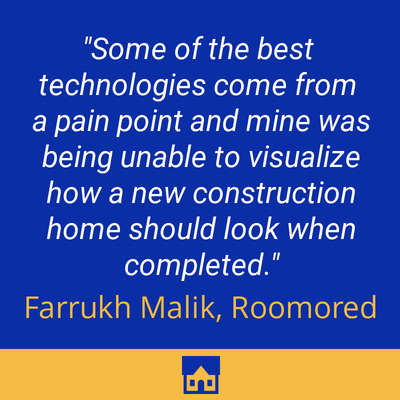
    FM: I’m somewhat of a citizen of the world. I was born in India, but my family moved to Australia when I was 15. After university, I was an investment banker for Macquarie Infrastructure Partners for nine years, moving from Sydney to Abu Dhabi and ultimately to New York City. Great companies and technologies are often born of pain points. Early in my career I bought a new construction condo. When it was completed, I was disappointed; it looked nothing like what I expected. With each move, the pain continued. Will my furniture work here? How will this two-inch flooring swatch look throughout my home? I have a numbers brain so visualizing what a condo or home would look like was extremely difficult for me.
    I wanted to start my own company and partly because of my pain point, I believed the residential construction industry was ripe for change. At the time, virtual reality technology was new and I saw an opportunity to create a tool for custom home builders that would replace the need to build model homes and support the sales process in a way that no one else was doing.

    BP: How have home builders traditionally marketed new developments?
    FM: Most will build and furnish one or more spec homes, which have to be staffed with sales people. They put together literature on floor plans and options. They have boards with swatches showing colors, tiles, flooring, shingles – you name it. Home buyers have to come out to development, which is usually just a dirt patch, tour the model home and then spend hours trying to visualize their dream home. It’s a tedious, frustrating process!

    BP: How does Roomored solve this problem?
    FM: Roomored provides a virtual reality (VR) experience not unlike what people see everyday on HGTV. Imagine Fixer Uppers’ Joanna Gaines and the VR designs she shows her clients. Roomored is just like that. We make TV magic real for builders and customers using actual photo-real floor plans, paint colors, finishes, and options offered by the home builder. Roomored creates the home buyer’s dream home in real time so no visualization skills are necessary.

    The benefits to home builders are significant. They can avoid the expense of building, furnishing and staffing model homes. Instead, they can have an onsite design center with design stations equipped with Roomored. They can also use the platform on their website, so home buyers can go to the site and design their home online when it’s convenient for them. Roomored cuts the consultation time—the average engagement time is 30 minutes—and shortens the sales cycle time. There’s also higher satisfaction at the end of the project because the home meets the buyers’ expectations.

    Farruhk Malik, Roomored

    BP: Did you have any unforeseen hurdles as your were creating Roomored?
    FM: We’re very proud of our photo-realism, but early in our product development, we determined that photos are often inaccurate, particularly when we used images supplied by other companies. Lighting and retouching remove the reality of an image pretty quickly. In building our finishes database, we use our own photography to ensure colors, scale, textures, and patterns are as accurate as possible.

    BP: What’s your business model?
    FM: Software as a Service based on the number of floor plans. Very simple and affordable.

    BP: What differentiates Roomored from competitors?
    FM: Roomored’s competitive advantage is our ability to provide photorealism that is customizable, while achieving scalability and volume. There are a number of companies (mainly rendering studios and agencies) that can provide really nice photorealism, but zero customization, and it is pretty easy to provide custom layouts, but no photorealism. Roomored is doing both in a way that it makes sense for homebuilders to license a software that helps their buyers visualize what they are buying pre-construction, and make design decisions.

    BP: Do you have customers and are you generating revenue?
    FM: Yes and yes. We are targeting high-volume builders of residential communities first, followed by mid- to small-sized builders. Our clients currently include Mattamy Homes in Canada, Hillwood Communities in Dallas that has 35 active communities on their books and M. Signature Homes in Austin. The M. Signature Home development, The Grove, is a perfect example of how Roomored supports the sales effort. They are building 1,500 homes and have 25 base floor plans and numerous options and finishes. They’ve chosen to skip the model homes the model homes in favor of a sales center with Roomored for support. With the homes priced from $500,000 up to $1.5 million, that’s a vote of confidence!

    BP: Looking forward to your pitch!
    FM: We’re looking forward to the road show!

    To learn more about Roomored, visit their website and watch this cool video. For details on VisionTech Angels’ February Pitch Week, visit our events calendar.


  • 5 Steps for Avoiding Risk-Related Accidents, Mistakes and Mishaps

    5 Steps for Avoiding Risk-Related Accidents, Mistakes and Mishaps

    Hylant’s Mike Cremeans

    After 25 years of helping more than 450 clients in the life sciences industry, I have plenty of war stories about what can happen to startup companies.

    Like the time a device company startup was shipping a $100,000 load of products to a distributor and the train derailed, destroying everything. No insurance.

    Or the time another startup company’s contract manufacturer had a fire that shut down production, leaving the startup unable to fill critical orders. No insurance.

    Or the time a startup drug company entered the European market without telling their insurance broker (me), got sued and then wondered if they were covered. Yes, but not in Europe.

    I could go on, but you get the picture. When you least expect it, something can happen to slow your momentum or even put you out of business. Life doesn’t have to be this way. Here are the five steps for avoiding risk-related accidents, mistakes and mishaps:

    • Recognize that risk exists and be open to discussion. It’s not if something will happen, it’s when. No company is immune to accidents, mistakes or mishaps. No matter how much money you have in your accounts, one mishap can explode your carefully calculated burn rate. You avoid unnecessary costs; why not make avoiding unnecessary risk a priority?
    • Identify exactly where you’re vulnerable. It’s better to know your risks before they become costly liabilities. A thorough risk assessment can pinpoint immediate and even longer-term vulnerabilities and help you develop strategies for mitigating risk through policies, procedures, and protection (insurance).
    • Recognize that insurance—and insurance brokers—are not commodities. Life sciences are very different from other industries. Before doing a risk assessment, make sure you have a broker who is qualified to help. Companies will spend painstaking amounts of money and time selecting the right consultants, accountants and lawyers, but have no problem randomly pulling a few names off the Internet and getting quotes. Invest time in finding a broker with experience in your industry to do the assessment.
    • Don’t procrastinate. Do a risk assessment now. You don’t have to purchase insurance, but you should know your risk.
    • Use the risk assessment to guide insurance decisions. The worst thing a startup can do is be reactive rather than proactive. Case in point: A startup I know landed a huge contract with a group purchasing organization. Buried deep within the contract were insurance requirements. The startup signed the contract without knowing the cost of coverage, making a $50,000 mistake. A risk assessment would have helped identify potential issues like this and eliminated costly surprises.

    If you’d like more tips and strategies for avoiding costly risk-related accidents, mistakes and mishaps, attend a special VisionTech event, “War Stories from a Life Sciences Risk Strategist,” on Wednesday, January 16, 5:45 pm at Leaf Software. The event is open to members of VisionTech Angels and their portfolio companies, AngelBOM, the Society of Physician Entrepreneurs Indiana Chapter, and other guests. Please RVSP here. I look forward to meeting you and swapping war stories and advise.

    Mike Cremeans calls himself the luckiest man in the world. VisionTech thinks his clients – all 450 of them – are pretty lucky to have him watching their back. Mike is the Life Sciences Industry Leader for the Hylant Group, an insurance brokerage firm with 14 offices nationwide, more than 700 employees and 84 years in business. Learn more about Mike here>

  • SIMBA Chain: Blockchain’s Next Blockbuster?

    SIMBA Chain: Blockchain’s Next Blockbuster?

    VisionTech Angels’ Executive Director Ben Pidgeon recently sat down with Joel Neidig, CEO of SIMBA Chain, to learn more about his company, how it’s disrupting the block chain space and the opportunity that will be presented to our angel investors during October Pitch Week. This is our first pitch company with Notre Dame ties and it’s an impressive one at that. Read on!

    BP: We’ve had other pitch companies with university ties, but never one from Notre Dame. What’s the connection?
    JN: When you think Notre Dame, you probably think football, but a growing number of people are recognizing the robust tech transfer opportunities in South Bend. In 2017, I licensed technology from Notre Dame that resulted in a 3D metal printing software company called Atlas 3D. That company is doing really well so we went back to Notre Dame’s Center for Research Computing and licensed the blockchain technology platform that is the core of SIMBA Chain, our new venture in the blockchain space.

    SIMBA Chain was founded and incorporated in 2017 by co-founders Jarek Nabrzyski, director of Notre Dame’s Center for Research Computing, Ian Taylor, a Notre Dame research professor and computational scientist; Gary Neidig; and me. The technology platform was originally developed for DARPA, the U.S. Defense Advanced Research Projects Agency, which awarded a grant to the Center and ITAMCO to develop a secure, unhackable messaging and transaction platform for the U.S. military.

    BP: Block chain is a hot technology space. What is SIMBA Chain’s play?
    JN: Blockchain is best known for underpinning cyber currencies like Bitcoin, but other industries like manufacturing supply chains, health care, energy/smart grids, music licensing, law and government, offer significant opportunities for leveraging blockchain. Up until now, developing blockchains has been very expensive and complex; developers typically have to know multiple languages to code. SIMBA Chain is disrupting the space by offering developers and business and government enterprises a cloud-based, blockchain-as-a-service (BaaS) platform that enables users with even minimal technical skill sets to easily and affordably create and implement dapps (decentralized applications) for specific user bases. To put it simply, SIMBA Chain is to blockchains as WordPress is the website development world.

    BP: Why do you think users, including those less familiar with blockchains, will be excited about what you’re doing?
    JN: Blockchains enable secure, direct connections between users and providers. For example, a hospital and its patients, a financial institution and loan holders. Users and providers share resources – they are linked together in a “chain.” This has distinct advantages. First, a blockchain is decentralized; there is no central data server or “middle man” controlling the flow of data and transactions. Eliminating the central hub also means there’s no longer a single point of failure in the event of hacking or other cyber threat. The blockchain can’t be altered; once a transaction is verified, it’s combined with others to create a new block. The data is very secure, and less subject to cyber threats, which makes blockchains attractive for any industry handling sensitive personal, financial, or mission critical data subject to cyber threats.

    What’s exciting about SIMBA Chain is we’re making blockchain technology accessible in terms of development, cost, speed, and security to those who want to deploy it. We eliminate third parties so users and providers connect more efficiently, have more control over the relationship and a lower transaction cost. Our platform is also very flexible and user friendly. Users choose their network, file storage, create their smart contract, and they’re ready to deploy their dapp.

    BP: In addition to DARPA, Notre Dame and ITAMCO, you have an impressive list of partners.
    JN: We sure do. When Microsoft, NavAir, and the U.S. Department of Energy came on board, we knew we had something. SIMBA Chain is also a “Partner of Choice” of the Government Blockchain Association, which is instant credibility among government enterprises, and has partnered with BlockGeek, which has 100,000 members who are developers.

    BP: You have a very active pipeline. Tell us about it.
    JN: We are actively recruiting developers on our website and the response is great; developers are the early adopters. Our enterprise client list is strong and includes Dow, HealthSpace and EY, which is remarketing to their clients. We’re in discussions with other recognizable enterprises, both corporate and government. Currently, we have more than $1 million in revenue on the books. 

    BP: What is your revenue model?
    JN: Very simple. Like SaaS, our revenue model is subscriptions for developers with the cost based on the number of transactions per month. For business and government enterprises, we offer custom engagements.

    BP: What’s your goal for VisionTech Angels Pitch Week, October 22-25?
    JN: Getting in that car with you and touring Indiana! (Laughs) Pitch Week is a great opportunity to tell our story, answer questions, and ultimately, move us closer to closing a $2 million investment round. While in its infancy, the blockchain industry is moving quickly and we need to finalize our go-to-market strategy, make key hires and assemble what will be a massive team of developers. SIMBA Chain represents a great opportunity to get in on the ground floor of what is projected to be a $2.3 billion industry by 2021.

    VisionTech Angels October Pitch Week is open to our members and their guests. If you are an accredited investor and would like to attend, please contact Ben Pidgeon at bpidgeon@visiontech-partners.com.

  • A Conversation with Kim Frazier of TEC Dayton, VisionTech’s Newest Angel Chapter

    VisionTech Partners Executive Director Ben Pidgeon recently sat down with Kim Frazier, Director of Growth Initiatives for The Entrepreneurs Center, also known as TEC Dayton. Formerly an international economic development executive in Washington D.C., Kim returned to her home state of Ohio to work on regional economic development, which ultimately led to creating new opportunities for entrepreneurs. She is leading the effort to establish a new VisionTech Angels chapter in Dayton that will further expand opportunities for the regions’ angel investors and entrepreneurs. Here’s their conversation.

    BP: Tell us about The Entrepreneurs Center.
    KF: We are a technology accelerator and business incubator in Dayton, Ohio, that’s focused on helping entrepreneurs achieve their business dreams. The organization was founded as Tec Dayton in 2000 and was strictly an incubator. When Scott Koorndyk came on as president in 2014, the organization became more of a commercialization center. Scott and I had worked together in economic development in the past and he recruited me to TEC in 2016 to help build out our pathways to commercialization programming.

    BP: You had a big win not long after you joined TEC.
    KF: Yes, we did! In 2017, the Ohio Third Frontier Commission selected TEC as the Dayton Region’s Entrepreneurial Services Provider (ESP). This two-year award gave TEC and our collaborative partners about $6.1 million to support the growth and development of regional technology start-ups, including those originating from the Air Force Research Laboratory (AFRL). Thanks to the award, we can provide more early stage services to entrepreneurs. It really helps us fill a critical gap in the Dayton area ecosystem.

    BP: Who are your partners in the ESP?
    KF: Our lead partner is Wright State University, which has strong programs in business, engineering and medicine. Other collaborators include The University of Dayton, Wright Brothers Institute, The Dayton Area Chamber of Commerce, CreativeFuse, and Nucleus CoShare. All of these organizations have a stake in growing Dayton’s commercialization and business startup efforts.

    BP: How did you learn about VisionTech Angels?
    KF: One of our local angel investors, Andy Cothrel, knew VisionTech Partners Co-founder Oscar Moralez and introduced us. Oscar was very generous in sharing his expertise and explaining VisionTech’s investing model. I’m a skeptic, but Oscar impressed me.

    Ben Pidgeon, VisionTech Executive Director

    BP: What makes VisionTech Angels attractive to TEC Dayton and its community of investors and entrepreneurs?
    KF: I really like VisionTech Angels’ overall investing process, from identifying and screening investable companies, to pitch week and the thoroughness of the due diligence. I also like the low barriers of engagement. Angels can invest as little as $5,000 per deal. For startups, they don’t have to pay to pitch. Instead, they are selected on their merits. The other side of it is Dayton’s industry mix, which is primarily aerospace and manufacturing, is much like Indiana’s. VisionTech “gets” us so with the support of many people associated with TEC, we decided to pursue becoming a VisionTech Angel chapter.

    BP: Dayton has a connection with VisionTech Angels. Explain.
    KF: (Laughs) Yes, Spintech LLC , a Dayton area company, is a VisionTech Angels portfolio company. They are a perfect example of the powerful technology being developed in our region— they produce shape memory polymer technologies for composite manufacturing and structural repairs in aerospace, automotive, defense, and other markets—and solid leadership. Spintech CEO Patrick Hood and its president, Craig Jennings, are both serial entrepreneurs. Dayton has a wealth of technology talent like this.

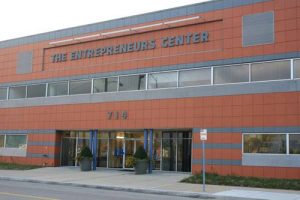
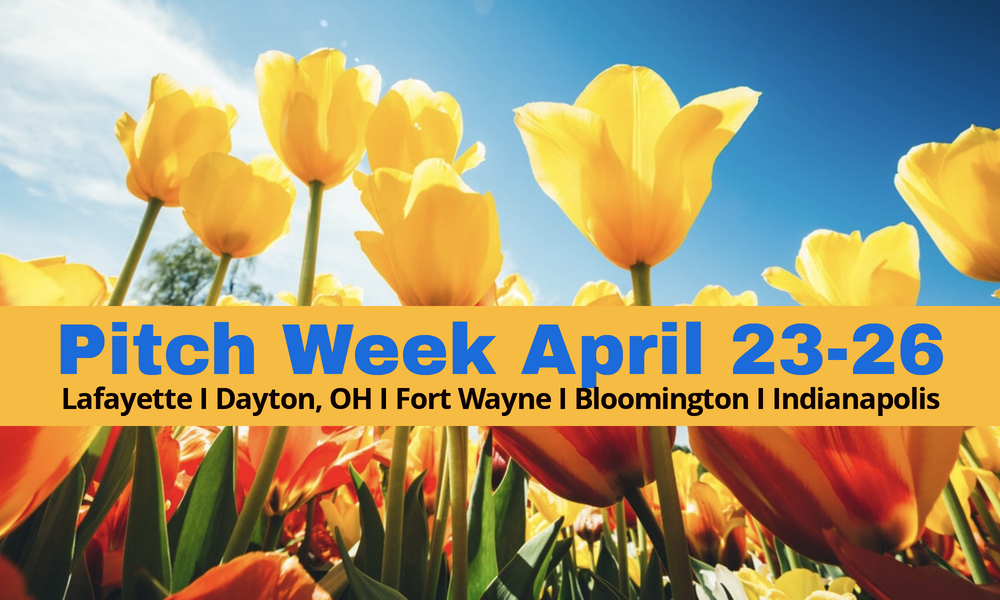
    BP: TEC’s first VisionTech Angel Pitch Week event is next Monday, April 23 at TEC Dayton at 714 E Monument Avenue from 11 am-1 pm What’s the response been?
    KF: We had a kick-off event in mid-February and more than 50 people came to learn about VisionTech Angels; it was great! So far, ten have RSVP’d for Pitch Week next week. Our local angels and entrepreneurs are very excited to have a VisionTech Angel chapter in Dayton. Our investors are excited to be part of a largely, very dynamic and informed angel investing group and entrepreneurs appreciate that they will have broader access to capital. I have gotten so many emails from people interested in what we’re doing. We’re really looking forward to next week!

    To learn more about The Entrepreneurs Center, please visit their website.


  • VisionTech Angels Injects $2.6 Million in Eight Promising Startups in 2017

    INDIANAPOLIS, Indiana (February 27, 2018) – – VisionTech Angels, Indiana’s largest and most active angel investing group with five chapters across the state, invested a total of $2.6 million in eight early growth startup companies in 2017. Even more impressive, $2.1 million was specifically directed to Indiana-based companies. The eight companies raised a total of $13.3 million in the investment rounds in which VisionTech Angels participated.

    The companies receiving first-time and follow-on capital from VisionTech Angels in 2017 include: Boardable, Boosterville, InScope Medical, PhotoniCare, SeikoWave Energy, SonarMed, Tenant Tracker, and WorkHere. PhotoniCare is based in Illinois and SeikoWave Energy in Kentucky. The remaining companies are headquartered in Indiana.

    Commenting on last year’s investments, VisionTech Executive Director Ben Pidgeon says the group’s growing investment portfolio is reflective of Indiana’s growing reputation as a hotbed of tech startups and a greater appetite for startup capital.

    “The volume of deals presented to VisionTech Angels has grown exponentially over the last year; it’s like someone turned on the faucet of entrepreneurs with great tech ideas and interesting business models. Last year, we were approached by more than 300 startups and after a rigorous screening process, 15 were invited to present to our members. The eight we invested in are truly cream of the crop.”

    Pidgeon says that VisionTech Angels’ sweet spot is early growth startup companies that have proved their business models and are near to or in the early stages of generating revenue, yet have limited sources of investment capital. Up to this point, they have typically relied on friends and family or are self funded and need additional capital. VisionTech Angels fills the gap between self-funding and venture capital with initial investments, follow-on rounds and strategic mentoring that helps startup companies to continue to advance.

  • PPC Pro and Hero Conference Founder Is Also VisionTech Angels’ PPC Expert

    VisionTech Angels’ bi-monthly pitch weeks have a stealth expert in the audience listening to startup companies present their case for funding.

    He listens with neutral interest. But when a presenter starts talking about pay per click (PPC) or digital advertising, he leans forward, expression suddenly serious, intent on the speaker. He holds his thoughts until the presenter leaves the room. His insight is invaluable to other VisionTech Angels considering investing in early growth companies.

    The stealth expert is Pat East, president of VisionTech Angels’ Bloomington chapter and also founder of one of the nation’s top five PPC marketing agencies and its top industry event, the Hero Conference. He started his company when the digital marketing industry was in its infancy. Now Pat and his colleagues at Hanapin Marketing advise a client base that includes The Home Depot, The Weather Channel, Uggs, Shoe Carnival, and Purdue University.

    One of Pat’s hot buttons during pitch week is how presenters often overestimate how easy PPC advertising is and how effective it will be. This from a person whose strategy helped Icelandair increase its flight bookings by 80 percent.

    “When I hear a presenter say they got an estimate from an agency and this is how many leads they will generate when they get funding, it’s a red flag. You don’t just turn on pay per click and your business takes off,” says Pat. “There’s a tremendous amount of research, messaging, testing, retesting, and analysis that makes a PPC campaign work.”

    On the flip side, Pat’s surprised to hear companies say they’re not using PPC, retargeting website visitors and converting them into leads. “It’s the best way to generate leads and reduce the costs associated with lead generation.”

    He should know. In 2000 when he was working for another company, he started dabbling in PPC before Google was GOOGLE. At his suggestion, his boss bought a single keyword and soon the company had quintupled its leads for a fraction of the cost. The company saw its sales grow from $6 million a year to $20 million. In 2004, Pat opened Hanapin Marketing; his former boss was his first client.

    Since then, Pat and Hanapin Marketing have become one of the industry’s most gracious ambassadors. In addition to freely sharing their expertise and knowledge through blogs and webinars, they sponsor the Hero Conference, the world’s largest PPC conference series. This year the events are in Austin (April 16-18) and London (October 22-24). Attendees come from around the world to learn the latest in PPC and digital advertising from innovators and thought leaders from Google, Bing, Facebook, Twitter, Pinterest, and more.

    Pat’s other passion is angel investing. He joined VisionTech Angels in 2014 because of a desire to support entrepreneurs in Bloomington and across Indiana. VisionTech Angels Executive Director Ben Pidgeon says having Pat as a chapter president and resident PPC expert is beneficial to his fellow investors, pitch companies and portfolio companies (those receiving VisionTech Angels investments).

    “With so many companies relying on digital advertising to drive sales, we are fortunate to have an industry pioneer like Pat. His knowledge base is invaluable when we’re evaluating investment opportunities or providing advice to our portfolio companies,” said Ben. “The more informed our members are, the better our investment decisions.”

    Would you like to know more about using pay per click advertising to launch or grow your start-up company or existing business? Or, are you an angel investor who wants to amp up your knowledge base? Hanapin Marketing’s next Hero Conference is April 16-18 in Austin, Texas. Learn more and register here.

    Editor’s Note: One VisionTech Angel is attending Hero Conference in April. Stay tuned!

  • Former FDA regulatory scientist joins Pearl Pathways, a VisionTech Sponsor

    INDIANAPOLIS, INDIANA – January 18, 2018— Pearl Pathways announces the hiring of Robert Seevers, PhD as senior advisor to serve biopharmaceutical companies.

    Seevers brings over 40 years of experience in pharmaceutical research and development for both large and small molecules. His expertise includes CMC regulatory, cold chain shipping, setting global specifications, quality by design (QbD), global regulatory submissions, and interactions with global regulatory agencies. His knowledge spans all major therapeutic areas with specific expertise in CNS, endocrine, metabolism, autoimmune, oncology, radiopharmaceuticals, and drug delivery systems. Seevers’ robust clinical research experience includes acting as a primary investigator, vice-chair of an Institutional Review Board, FDA reviewer/team leader, and medical writer.

    Seevers’ career includes eight years at the United States Food and Drug Administration (FDA). At FDA, Seevers served as a team leader responsible for managing a team of reviewers for the evaluation of CMC sections of INDs, NDAs and BLAs. Prior to joining Pearl Pathways, Seevers spent 16 years with Eli Lilly and Company in Regulatory Affairs, where he led the regulatory CMC submission strategy for drugs in preclinical development through their NDA/MAA submission and the approval process for both small and large molecules.

    As senior advisor at Pearl Pathways, Seevers is responsible for the development of the regulatory strategy for early through late-stage regulatory filings of both large and small molecules, interactions with global regulatory agencies, leading cross-functional CMC development teams, and helping clients identify product development vendors (e.g. CROs, CMOs, contract laboratories). He  will serve on Pearl IRB, an AAHRPP accredited Independent Review Board.

    Seevers is a member of the United States Pharmacopeia Packaging, Storing, and Distribution Expert Committee; acts as a Stability Consultant for the World Health Organization (WHO); speaks regularly at nation and international life science conferences; and continues to be an active writer of industry publications.

    Pearl Pathways President and CEO DIana Caldwell shares, “Our clients will benefit from Robert’s unique life science portfolio as an ex-FDA regulator coupled with extensive leadership experience within the biopharmaceutical industry. His dual-sided industry experience will be invaluable for our clients to navigate a variety of regulatory compliance challenges in both large multi-national companies and small startups. He brings expert technical knowledge; we are thrilled to have Robert join our team.”

    Pearl Pathways is a sponsor of VisionTech Partners/VisionTech Angels, Indiana’s most active angel investing group with chapters in Bloomington, Fort Wayne, Greater Lafayette, Indianapolis and a physician-led chapter called AngelBOM.

    Contact: Waylon Wright
    Pearl Pathways
    (317) 602-5479
    wwright@pearlpathways.com

  • Numbers Guy Steve Sehy Knows How to Position Companies for Capital Raises

    In his first job out of college, Steve Sehy earned his CPA while at former Big Eight accounting firm Arthur Anderson. Instead of number crunching, Steve jumped into software development, creating accounting software for the firm that eventually became global consulting firm Accenture. Twenty years later, he applied his CPA as an auditor for one of the top U.S. accounting firms. Steve now provides fractional CFO services to SaaS companies. Later this month he’s leading a special VisionTech seminar for the group’s portfolio companies – specifically those without CFOs – preparing for their next capital raise. VisionTech is pleased to support the success of our portfolio companies. Here’s more of Steve’s story:

    VT: The name of the seminar is “Igniting Your Next Capital Raise.” This is obviously a hot topic for early growth companies.

    SS: Absolutely! This seminar is specifically for the CEOs of VisionTech portfolio companies and other invited startups that have successfully secured angel funds, have momentum and are planning another capital raise in the next 24 months. A professional money capital raise will be a totally different experience; a lot like making the leap from Double-A to the major league. This seminar gives CEOs the game plan they need to prepare for and successfully ignite future fundraising efforts.

    VT: What’s the difference between fundraising with angels and Series A rounds?

    SS: Angel investors get in on the ground floor of companies so our investment decisions are often based on a company’s leadership, business model and plan, and early successes. In later rounds, investors are laser focused on a company’s financials. Accounting systems must be in place and numbers have to be tight if professional investors are going to trust and ultimately invest.

    VT: What was your “ah-hah!” moment regarding the importance of sound accounting systems in capital fundraising?

    SS: I was working as a contract CFO for a SaaS company in the K-12 education market that had self-funded for 10 years. They needed an infusion of capital, but even with 20% annual growth, they couldn’t raise the money. One of the challenges was an accounting system that was not based on GAAP. So we attacked that first and by working through other issues to get their financial house in order, they became an attractive acquisition target. A private equity firm made an offer and the deal closed in 30 days. Having the right accounting infrastructure and presenting accurate numbers – in this case, GAAP numbers versus billed or cash – was critical for professional investors and led to a quick close.

    VT: Do startup companies overlook the importance of financials?

    SS: They don’t overlook financials; they just get busy. What happens is this: the CEO is running the company, marketing, selling, and looking ahead to the next market, the next version of the software, product or service, the next raise. Basic operations sometimes take a back seat. When it’s time to start the next raise, companies aren’t totally prepared. Often they don’t know what they don’t know in terms of what professional investors are looking for in accounting and financial reporting and forecasting.

    VT: What will CEOs walk away with from this seminar?

    SS: The big takeaway is they will learn what they need to do to meet the financial expectations of potential investors. Each participant will leave the seminar with a to-do list of financial/accounting projects that should be completed before they approach investors for professional money growth financing. If they complete their to do list, they will ignite their fundraising efforts.

    VT: Is their something extra for SaaS companies?

    SS: Yes, we’ll be taking a deep dive into SaaS accounting for 30 minutes after the main session. So if your company is SaaS, you’ll want to stick around.

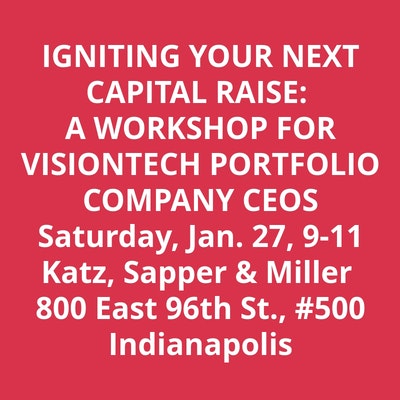
    VT: There are only 15 spaces for this VisionTech event, Igniting Your Next Capital Raise, on Saturday, January 27, 9-11 am at Katz, Sapper & Miller, a VisionTech sponsor. Click here to RSVP. Event is open to VisionTech Portfolio Companies and guest startups.


  • Don’t Wine About the FDA Regulatory Pathway: A Special VisionTech Event

    If you’re an angel investor, this has probably happened to you. You’re sitting through a startup company’s pitch and they’ve got a very compelling medical device and go to market strategy. You’re doing the numbers in your head, considering how much you might like to invest, when you hear a dreaded phrase:

    “We’ve just started the FDA clearance process.”

    Your mind immediately puts on the brakes as you process what the speaker means by this statement. Is FDA clearance going to take months or years? What’s it going to cost? Is there a chance they don’t get clearance? The clarity of the pitch has just gone to mud.

    On Thursday, November 30, VisionTech Angels is hosting a special event – Don’t Wine About the FDA Regulatory Pathway – to help angel investors, life sciences startup companies, and other special guests better understand the FDA’s processes. Leading the discussion is VisionTech sponsor, Pearl Pathways, an expert in FDA regulatory affairs.

    Prior to the discussion, we’ll enjoy wine tasting and networking with vintages selected by Crossroads Vintners. This will be followed by Pearl Pathways’ presentation, which will focus on medical device development, the 501(k) process – a particular pain point! – and alternatives to this pathway. Pearl Pathways will draw upon their first-hand experiences on behalf of both startup and established companies in the medical device space. You will have the opportunity to ask questions.

    Our goal is to give you greater understanding and insight into the FDA and its regulatory processes so that your, as an investor, can make better-informed decisions when considering investing in a life sciences company. We also want this event to give startups more confidence when working with the FDA.

    This special event is open to VisionTech Angels members, VisionTech portfolio companies in the medical device and life sciences sector, and special friends of VisionTech.

    If you would like to attend in person, email VisionTech. (Details below.) You can also join us on Facebook Live at 6 pm on the VisionTech Facebook page.

    Don’t Wine About the FDA Regulatory Pathway 

    Thursday, 11 /30, 5:30-7:30 pm

    Katz Sapper & Miller,  800 East 96th Street, #500,  Indianapolis, IN 46240

  • VisionTech Partners, Pearl Pathways Form Alliance to Fuel Growth in Indiana’s Life Sciences Startup Community

    INDIANAPOLIS, Indiana (August 30, 2017) – – VisionTech Partners, the parent of Indiana’s most active angel investing group, and Pearl Pathways, a provider of life sciences product development services, have joined forces to fuel Indiana’s life sciences startup community, which includes biopharmaceutical, medical device and diagnostics technology.

    The VisionTech Partners-Pearl Pathways alliance will focus on three essential goals. First, identify the most promising early stage/early growth companies for potential investment by VisionTech’s statewide network of angel investors. Second, connect entrepreneurs with individuals who have already achieved success in the life sciences and are willing to serve as mentors and business advisors. And finally, provide entrepreneurs with access to the highly specialized services required to negotiate the FDA approval process.

    VisionTech Partners Executive Director Ben Pidgeon said both companies are eager to leverage their respective strengths through the alliance, which will formally launch Thursday, August 31, at VisionTech Angels’ “Pitch Night” in Indianapolis, featuring two life sciences startups.

    “VisionTech Partners is extremely committed to growing Indiana’s life sciences industry and we’ve proven ourselves to be a valuable contributor to this effort as a source of financial and human capital. Of the 24 portfolio companies our angel network has invested in, 10 are in the life sciences and healthcare space; it’s definitely a sweet spot,” said Pidgeon.

    “The alliance with Pearl Pathways will not only ensure a high quality deal flow, it will also help us make better investment decisions. Most of these companies must secure FDA approval in order to commercialize their drug, device or diagnostic tool. Pearl Pathways will, in effect, be VisionTech Partners’ resident expert on all things FDA,” he added.

    Based in Indianapolis, Pearl Pathways is a life science product development services company that provides clinical research, regulatory, quality compliance, and independent review board services to life sciences companies. Among Pearl Pathways’ clientele are five of the top 20 medical device companies and six of the top 11 pharmaceutical companies in the world.

    The balance of their business, said President and CEO Diana Caldwell, is startup companies with pre-commercialization technology that need access to early stage or “seed” funding provided by groups like VisionTech Partners.

    “VisionTech Partners is unique in the angel investing space. Yes, they are a source of capital, but more importantly, they have deep experience and success in the life sciences industry. They also have a chapter composed entirely of physicians. These are the people who are around medical technology on a daily basis and have knowledge and insight few investors have. Partnering with VisionTech will not only open doors for our clients, startup companies across Indiana will benefit from the combined talents and resources of our two companies,” Caldwell said.

    About VisionTech Partners I VisionTech Angels
    Founded in 2008, VisionTech Partners is a privately held company focused on linking investors to high-potential early-stage companies. Headquartered in Indianapolis, among the nation’s most vibrant innovation regions, VisionTech is where inventors, entrepreneurs, investors, universities, and strategic partners convene to share, fund, and launch novel technologies. VisionTech Angels has chapters in Bloomington, Fort Wayne, Indianapolis, Lafayette, and an Affinity chapter, AngelBom.

    About Pearl Pathways.
    Founded in 2010, Pearl Pathways is a comprehensive life science product development consulting services company with expertise in regulatory, quality compliance, and clinical trial services including an AAHRPP accredited commercial IRB, Pearl IRB. Pearl Pathways works with clients’ clinical teams, in-house regulatory experts, the quality compliance specialists, quality auditors, and the senior leadership team to get life saving diagnostics and therapeutics on the market sooner.