Tag: VIsionTech Angels

  • Onboard Dynamics’ Green Natural Gas Fuel Solution Headlines VisionTech Angels’ August Pitch Week

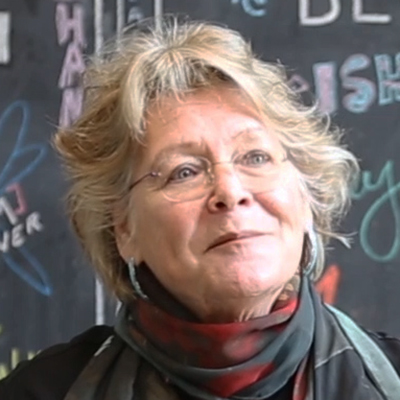
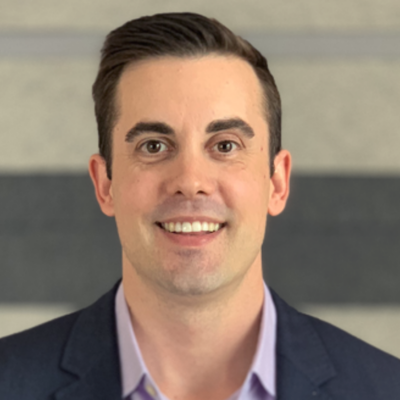
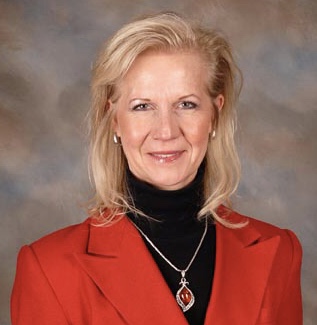
    VisionTech Angels’ Executive Director Ben Pidgeon recently sat down with Rita Hansen, CEO of Onboard Dynamics, to learn more about how the company’s GoFlo® compressors are enabling municipal and commercial fleetswaste haulers, school buses, delivery companiesto replace diesel fuel with clean, zero-carbon emitting natural gas. Interest in the mobile natural gas compressors is high, particularly in states that have mandated all waste haulers move to green-powered vehicles by 2020. Rita, who recently represented the United States as a delegate to the 2019 Global Entrepreneurship Summit in The Hague, Netherlands, will present Onboard Dynamics during VisionTech’s upcoming Pitch Week, August 26-29. Read on!

    Ben Pidgeon, VisionTech

    BP: VisionTech Angels is excited to host Onboard Dynamics during our August Pitch Week. What’s your story?
    RH: Jeff Witwer and I co-founded Onboard Dynamics in 2013 with Dr. Chris Hagen after licensing technology developed in Chris’ clean energy systems lab at Oregon State University (OSU) and initially funded by the U.S. Department of Energy. Jeff is a serial entrepreneur with experience in the energy and software industries. My interests are clean technologies, alternative energy, and renewables that present opportunities domestically and internationally. We saw the tremendous potential of natural gas compression technology to lead the clean fuel revolution in a way that disrupts the status quo without being disruptive to fleet managers and organizations.

    The company got immediate validation. After we licensed the technology, ARPA-E, a government agency that advances energy technologies with the potential to radically improve the U.S. economy, national security and environmental wellbeing, awarded us a $6.6 million cooperative agreement. This allowed us to develop and now commercialize a product from the technology, the GoFlo compressor. We just recently hit $1 million in sales!

    Rita Hansen, CEO
    Onboard Dynamics

    BP: Nice! We like revenue! What problem are you solving in the marketplace?
    RH: The macro problem is a global lack of infrastructure for refueling natural gas vehicles. Currently there are fewer than 1,000 public compressed natural gas stations. These refueling stations are also expensive; they cost more than $1 million to build. If you have a fleet of more than 50 vehicles, the cost can be justified. But for small fleet operators, you need an option that’s more affordable and in many cases, more flexible than a fixed fuel station.

    Another big problem we solve is the push—and in some cases, a mandated push—to convert fleets of vehicles to clean and/or renewable energy sources to reduce emissions of regulated pollutants like NOX and reduce one’s carbon footprint. NOX is a very poisonous emission of diesel fuels. Some people are turning to electric vehicles; I’m sure a few of you drive Teslas and love them. But electric vehicles for fleet use—school buses for example—are very expensive. And in many cases, the electricity to fuel these buses comes from coal-generated electricity. So where’s the win in that?

    BP: How easy are these compressors to use?
    RH: The GoFlo compressor makes the transition from diesel to natural gas-powered vehicles easy and affordable. It can be used in a fleet yard or off-site. It doesn’t require electricity to run, which is great for remote locations and disaster situations. And it accepts any low-pressure natural gas or renewable natural gas source for compression into a cost-effective, clean fuel for vehicles.

    BP: What types of fleets are you targeting?
    RH: We’re targeting government and commercial fleets, including light duty CNG trucks, school and transit buses, delivery vehicles, and a big one for us, waste haulers. California has mandated that the waste hauling industry move to alternate fuels by 2020, creating a significant market for us. What makes the GoFlo compressor attractive to this group—beyond regulatory compliance—is the refueling system pays for itself in less than two years due to lower fuel and labor costs

    One of our customers, an independent waste hauler in Southern California, is going live with a full system in mid-August. They’ve agreed to be a showcase for the more than 100 other similar independent waste haulers. The total market size of independent waste haulers in Southern California alone is 150-200 companies. We’ve also piloted GoFlo with a number of school districts and getting traction there.

    BP: Are there other markets for GoFlo, here or internationally?
    RH: Glad you asked that, Ben. Natural gas utilities are perfect channel partners for us as they can sell the GoFlo compressors to their customer or offer as “Compressed Natural Gas as a Service” with monthly billing. We are also working with Canada’s Department of Natural Resources to certify GoFlo for the Canadian market. We’ve received payment toward the first unit and expect to start installation in Ontario in late fall with full deployment in the first quarter of 2020. Other markets such as Mexico, Latin America, and India represent opportunities to expand due to a lack of natural gas infrastructure and also a real need reduce air pollution.

    BP: What kind of IP protection do you have?
    RH: The original technology has two international patents, and we’ve applied for six PCTs (patent cooperation treaty) on the compressor for national and international protection.
    BP: Why should VisionTech Angels invest in Onboard Dynamics?
    RH: As a nation, leaders in business, and members of the global community, we have a responsibility to adopt green energy technologies to protect the world for future generations. With the GoFlo compressor, Onboard Dynamics has a practical solution that meets government, business and social goals. It reduces emissions, its carbon neutral, it leverages existing natural gas pipeline distribution systems, and saves money. Our team is really good, too. Even with our lean sales team, our pipeline is full. We expect to sell 15 units in 2019 and 55 in 2020. We’re a company that’s in the right place at the right time.

    To learn more about Onboard Dynamics, visit their website. You can also watch their video. To RSVP for VisionTech Angels’ August Pitch Week, visit our events calendar.

  • What Do The Innovation Showcase Speakers Have in Common? A Passion for Startups

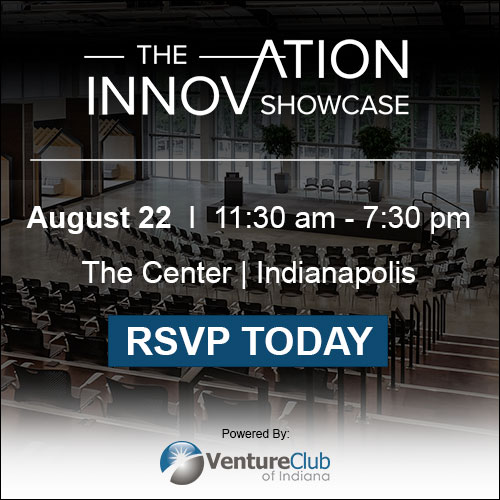
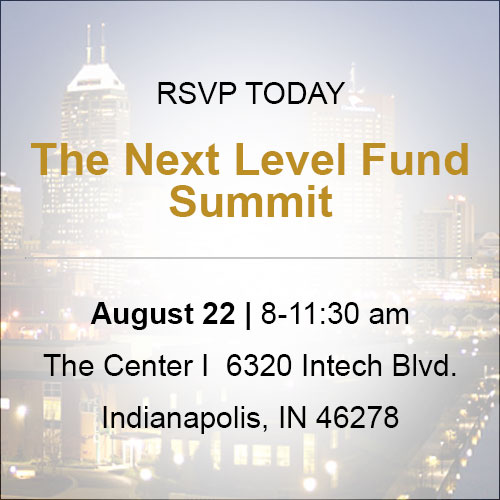
    Excitement is growing as the Venture Club of Indiana counts down to its premier, carefully curated startup pitch event, The Innovation Showcase on August 22 in Indianapolis. This year, a companion event joins the Showcase: The Next Level Fund Indiana Venture Summit. The Summit is designed to introduce venture capitalists and others to the exciting opportunities available through the Next Level Indiana Fund. I’ve invited Venture Club of Indiana Board Member and Program Committee Leader Sandy Wilcox to tell us about The Innovation Showcase, how the day will roll out, and the all-star line-up of speakers whose experiences as entrepreneurs, educators, and investors are legendary. VisionTech Angels is pleased to share Sandy’s inside perspective. Read on!

    Sandy Wilcox, The Innovation Showcase Program Chair

    In planning to hold the Next Level Fund Indiana Summit the same day as the Innovation Showcase, our objective was to encourage venture capitalist from all over the country to participate in The Innovation Showcase along with our statewide investment community. We all know that Indiana has long been considered a flyover state. The Venture Club Board and our president, Aaron Gillum, who is also senior vice president with 50 South Capital, are seeking to transform this perception and reflect the excitement and extraordinary progress of Indiana’s tech-driven innovation. By inviting investors to both events on the same day and putting our startups on stage in front of those investors, we know that we are fulfilling our objective, “Where Capital Meets Innovation!”

    When I volunteered to be program chair for The Innovation Showcase, I knew my committee and I had an amazing job ahead of us. Our goal was to make the Showcase a dynamic event for everyone regardless of your perspective, startup or VC, student or supporter.

    When the Next Level Fund Summit ends at around 11:30 a.m. and the attendees leave their seats, they will walk out of the hall and into The Innovation Showcase’s Entrepreneur’s Expo filled with booths hosted by some of Indiana’s finest startups for a “walking lunch.”

    At precisely 1 p.m., The Innovation Showcase will kick off with welcoming remarks from Venture Club President Aaron Gillum and Kip Frey, Executive Vice President, New Ventures, The Heritage Group.

    Don Brown, The Accidental Entrepreneur

    Seeking one of the most significant pioneers in Indiana’s technology space, we asked Don Brown, CEO of LifeOmic, to be our keynote speaker. As a leader at Software Artistry, and then as founder and CEO of Interactive Intelligence, Don negotiated the successful creation and sale of Interactive Intelligence to Genesys Telecommunications for a record $1.6 billion. His new adventure is LifeOmic, an Indianapolis-based software company that leverages the cloud, machine learning, and mobile devices to offer disruptive, precision medicine solutions to healthcare providers. A serial entrepreneur, Don still calls himself, an “accidental entrepreneur.” Sharing his entrepreneurial journey as well as lessons learned, Don will also outline his bold vision for the future of healthcare with Innovation Showcase guests.

    Don Kuratko, IU Kelley School of Business

    Following our keynote, the pitches begin! Two rounds of 10 of Indiana’s finest startup companies will present to Investors in the audience and to win a cash prize. Who better to serve as the emcee of this competition than Dr. Don Kuratko, the Gill Distinguished Chair and Professor of Entrepreneurship at the Indiana University Kelley School of Business. Recognized among the Top 10 entrepreneurship scholars in the world, “Dr K” created one of the country’s first entrepreneurship centers at Ball State University in 1983. His love, drive, and determination to build the foundation in education to prepare and support the growth of entrepreneurship make him a stunning choice to emcee our pitch competition!

    Jeff Ready, CEO, Scale Computing

    In between the two pitch segments, Jeff Ready, CEO of Scale Computing, will lead us on the “The Road… After the Showcase.” Jeff will share the impact winning The Innovation Showcase’s Venture Idol pitch competition in 2008 presented to him as CEO of an Indiana startup. Today, with 2,000 customers in 30 countries and a total capital raise of $96 million, Scale is poised for explosive growth through partnerships with much larger companies skillfully negotiated by Jeff and his team. He will also interview two other past winners to demonstrate the real impact of presenting and winning at the Venture Club’s Innovation Showcase. We ask from time to time, “Does the Showcase make a difference?” Jeff and the other winners prove that “YES,’ it absolutely does!

    Jane Martin

    After the final round of pitches, Jane Martin, a retired venture capitalist, will present “Seven Decades of Venture Capital, A Brief History.” A maverick as a women investor in the venture capital world, Jane was instrumental in numerous deals, investing in the likes of FedEx, MCI, Control Data, Sun Microsystems, Gymboree, and Calloway Golf to name a few. She will further discuss what it will take to bring venture capital investors to Indiana.

    The Showcase will wrap up with a dynamic panel of female VCs discussing venture investing from a woman’s perspective.  At 5:30 p.m., the winners of the pitch competition will be announced and we’ll celebrate with a VIP reception.  A full day to be sure, but a day that you won’t want to miss!

    The Venture Club of Indiana hopes you are as excited about the outstanding program and speakers we’ve assembled for The Innovation Showcase, Thursday, August 22, 11:30 a.m.-7:30 p.m. at The Center in Indianapolis. For more information about The Innovation Showcase, visit our website. If you don’t have you ticket yet, grab it now! Space is limited and you don’t want to miss out on Indiana’s largest pitch event.


  • Want to Connect with Capital? Don’t Miss the Inaugural Next Level Fund Summit

    The Venture Club of Indiana’s annual Innovation Showcase includes the state’s largest pitch event, with some 20 companies vying for prize money. This year the pot is sweeter thanks to a companion event, the 2019 Indiana Next Level Fund Summit, held the morning of The Innovation Showcase. The host of the Summit is 50 South Capital Advisors, the fund administrator of the Next Level Fund. Aaron Gillum, senior vice president at 50 South, is also the president of the Venture Club of Indiana and works with the state’s venture community. I recently sat down with Aaron to learn more about the Summit and how VisionTech Angels, startups, and others can get involved. Here goes!

    Ben Pidgeon, VisionTech

    BP: What’s the history of the Next Level Fund? It’s fairly new, right?
    AG: It is! The Indiana General Assembly announced the Next Level Fund in 2017 as a replacement of the Next Generation Trust Fund originally created by the Indiana Toll Road. We officially kicked off in March 2018. The Next Level Fund aims to invest $250 million over five years to encourage venture capital and philanthropic organizations to invest in Indiana’s innovation community. 50 South Capital manages the fund with oversight by the Governor’s Office and an Investment Board. While most of the money invested by venture capital firms (VCs) in our portfolio, the Next Level Fund can also make direct investments in companies alongside VCs in our program.

    BP: How many VCs are participating in the Next Level Fund so far? Is there a limit to how many that can get involved?
    AG: So far we have five groups that we have announced in our VC portfolio: Allos, High Alpha, the Foundry Group, Hyde Park Venture Partners, and Techstars SportsTech. There really isn’t a limit per se, but participants either have to be located in Indiana or have a track record of investing in Indiana companies. The objective is to get more venture funds in the state and deployed to Indiana startups and entrepreneurs.

    Aaron Gillum, Indiana Next Level Fund

    BP: That’s awesome! Tell me about the Next Level Fund Summit? This is a first-time event, right?
    AG: It is the first year for the Summit. I do want to stress while we share the same date and venue, the Next Level Fund Summit is a standalone event. At the same time, 50 South is heavily involved in the efforts of the Venture Club and thus The Innovation Showcase. The purpose of the Summit is to highlight our work to date, introduce our fund managers and what they’re working on, introduce portfolio companies, and ultimately, by exposing more people to the Next Level Fund, expand our list of VCs. We have invited venture firms from across the country to attend. To date we have more than 120 guests that have RSVP’d  for the event. Our goal is to double that number.

    BP: Is the Summit limited to VCs? Are angel investors welcome to attend?
    AG: We’ve extended a special invitation to all investors – anyone who writes checks! Indiana is blessed to have a thriving angel investing community and groups like VisionTech Angels, Elevate Ventures, and several other up and coming angel groups throughout the state that play a critical role in funding early stage companies. We want you guys at the Summit connecting with the VCs, the investment board and me. We want to grow our investment community; we’re all in this together! The general public is also invited to the Summit.

    BP: VisionTech Angels as well as other angel groups in Indiana have a number of Indiana-based portfolio companies in the middle of Series A Rounds. Can they attend?
    AG: Absolutely. We want them at the Summit. I would encourage them to go to our website, look at the venture firms that are currently participating, do some homework, and come prepared to network.

    BP: Any special guests you’d like to mention?
    AG: Every guest is special, but we are particularly pleased to welcome Governor Eric Holcomb as well as members of the Fund’s investment board. Our fund managers and many of their portfolio companies are looking forward to showcasing all the work they have been doing throughout the state.

    BP: Will we see Summit guests at The Innovation Showcase?
    AG: I am personally encouraging everyone who attends the Next Level Fund Summit to stay and attend the Venture Club of Indiana’s Innovation Showcase. It’s such a natural segue from what Indiana is doing as a state to increase the number of VCs firms and ramp up later stage investment, to the excitement of the pitch competition with 20 of Indiana’s most investable companies. Anyone with a stake in Indiana’s innovation and entrepreneurship community should attend both events.

    BP: I’ll be there.
    AG: I’m counting on you, Ben.

    For more information on the Indiana Next Level Fund, click here. RSVP for the 2019 Next Level Fund Summit on Thursday, August 22, 8-11 am at The Center here. There is no cost to attend. RSVP for The Innovation Showcase here.  We look forward to seeing you at both events!


  • The Road to the Showcase: Searching for Indiana’s Most Investable Companies

    The Innovation Showcase is Indiana’s largest curated event for entrepreneurs, investors, and supporters of the state’s vibrant ecosystem and includes a pitch competition with up to 20 startups representing a spectrum of industries. As a board member of the Venture Club of Indiana, I’ve personally been involved with the Showcase for seven years. While this year’s event isn’t until August 22, my fellow Venture Club board member, attorney and chair of the Showcase pitch competition, Travis Stegemoller, has spent the last six months crisscrossing the state in a search for Indiana’s most investable companies. I recently had coffee with Travis to learn more about “The Road to the Showcase.”

    Ben Pidgeon, VisionTech

    BP: I hear you and Aaron Gillum (Venture Club President) have been putting lots of miles on your cars on something called “Road to the Showcase.” What’s that all about?
    TS: You heard right; I’ve put at least 1,000 miles on mine on the Venture Club’s pitch company selection process. Two years ago, we took a look at how pitch companies are selected for The Innovation Showcase. At that time, most were from the Indianapolis area. As the Venture Club of Indiana, we realized we had to do a better job getting startups across the state represented in the Showcase and connecting them with venture capitalists. So we created the Road to the Showcase, where we hold pitch competitions in nine cities across the state. The winners of each go on to compete at The Innovation Showcase in Indianapolis in August.

    Travis Stegemoller,
    Barnes & Thornburg

    BP: Where all have you been?
    TS: We kicked off in South Bend at Notre Dame’s IDEA Center in April and from there went to Hammond, Evansville, New Albany, Lafayette, Fort Wayne, Indianapolis, and Terre Haute. We’re wrapping up in Muncie at an event called the Innovation Connector on July 23 at 6:30 p.m. I’ve been to nearly every Road to the Showcase event. I think Aaron’s been to all of them.

    BP: How did you pull this nine-city tour?
    TS: Sounds like a logistical nightmare, right? Actually, it’s been great thanks to some wonderful partners. Elevate Ventures has been deeply involved from the start and offered the services of their entrepreneurs in residence to connect us with local stakeholders around the state. In some cases, we joined existing pitch events like “The Big Sell” in Hammond sponsored by Purdue University Northwest. One of our Venture Club board members, Nick Arnett, was instrumental starting The Blaze pitch event in Fort Wayne, which was co-hosted by the Venture Club, Start Fort Wayne and Founders Spark. All of the events are volunteer-driven and we had no shortage of help. I encourage you to visit our website for details on the Road to the Showcase events and hosting venues.

    BP: What kind of turnout did you have at the Road to the Showcase events?
    TS: First, I want to thank our local partners. Each city rallied around their event and really invested in the success of their local startups. There was great involvement in recruiting and coaching startups, finding qualified judges and inviting people to just come and experience it all. It’s been amazing. The overall turnout was great everywhere, but I have to give a shout out to Fort Wayne with over 100 attendees and to Evansville, which had tremendous enthusiasm.

    In terms of the startups, the overall quality has been impressive. We had the opportunity to see pitch companies across many industries, including software, hardware, consumer, medical devices, and life sciences. Most were considered true startups, but were in the process of scaling their business.”

    BP: What were the criteria for selecting the winners to go on to The Innovation Showcase Pitch?
    TS: The Venture Club has developed a judging rubric that rates each company on their product, scalability, traction, and management team. Our goal is to identify the most investable companies. Our hope was to find two per city. We anticipate having up to 20 pitch companies at The Innovation Showcase pitch competition on August 22. We’re still finalizing the list, but it will be a highly competitive event.

    BP: Any surprises on the Road to the Showcase?
    TS: Two things: how much fun I had meeting people across the state who are truly passionate about encouraging and supporting entrepreneurs and secondly, just how barren I-69 is between Evansville and Indy. Nothing for 1.5 hours, not even a McDonalds!

    BP: That’s harsh.
    TS: Right?

    The Venture Club of Indiana invites you to attend The Innovation Showcase, Thursday, August 22, 11:30 am-7:30 pm at The Center in Indianapolis. Register here. If you would like to become an Innovation Showcase sponsor, find information here. See you in August!

  • Brickell Biotech Added to June Pitch Week Line-up

    As VisionTech Angels know, I hate to turn away interesting investment opportunities. That’s why our selection committee reviews some 400 startups a year; we’re hoping for a unicorn. So when Brickell Biotech contacted me earlier this week to see if they could participate in VisionTech’s June Pitch Week, I agreed to take a look.

    Ben Pidgeon, VisionTech Executive Director

    It didn’t take long for me to invite the Boulder, Colorado-based company to come on the road with me for Pitch Week, June 24-27, and pitch to VisionTech Angels’ chapters in Lafayette, Dayton, OH; Fort Wayne, Bloomington, and Indianapolis.

    Here’s what caught my eye about Brickell:

    Brickell is a clinical-stage pharmaceutical company focused on differentiated innovative prescription therapeutics for treating debillitating skin diseases. Their lead pipeline asset, sofpironium bromide, is a topical soft anticholinergic intended for axillary hyperhidrosis (uncontrolled excessive sweating) that recently completed Phase 3 in Japan, successfully meeting all primary and secondary endpoints, via Brickell’s partner, Kaken Pharmaceutical Co., Ltd. Brickell is eligible to receive sales-based milestones and royalties of future net sales from Kaken in Japan and other Asian countries.

    The market for sofpironium bromide is large. There are many individuals living with hyperhidrosis. Roughly 15.3 million in the United States alone suffer from hyperhidrosis. This condition is chronic and has the tendency to negatively impact virtually all important aspects of life.

    A competitor is paving the way for reimbursement in the United States. Dermira, a public company valued at $550 million, recently launched the first topical prescription treatment for hyperhidrosis, Qbrexza®, approved by the FDA. Brickell’s investigational product is being developed to offer potentially unique differentiating features that the company believes could be best-in-class.

    Brickell just announced a reverse merger with Vical Inc. (Nasdaq:VICL) and, in combination, is raising $25 million from a prominent life sciences investment firm to fund the pivotal U.S. registration trials that Brickell intends to start in Q4 2019. Brickell will merge with a wholly owned subsidiary of Vical in an all-stock transaction. When finalized, the combined company will operate under the name, Brickell Biotech, Inc., and trade on the Nasdaq under a new ticker symbol to be determined. Brickell will own 60 percent of the new company. Read the release here>

    Here’s the deal for VisionTech Angels investors: Brickell is raising $10 million in a convertible debt offering to get through the closing of the reverse merger. Just under half is already subscribed from current investors and the leadership team’s own personal investments, with an additional $1 million in commitments from two venture capital firms. The reverse merger is scheduled to close prior to the end of Q3 2019. The new company is estimated to have a post-merger valuation of approximately $90 million. Funds from the merger will get Brickell through completion of a Phase 3 clinical trial of the lead pipeline asset, sofpironium bromide, in the United States.

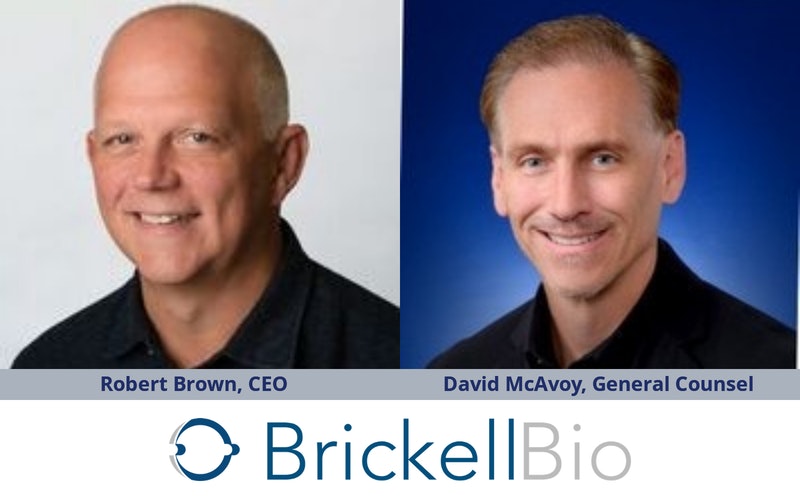
    Brickell’s management team is impressive. Its members have launched multiple billion-dollar blockbuster drug brands such as Prozac®, Cialis®, Taltz®, Cymbalta®, and Juvederm® and successfully built several biotechs that were acquired by big pharma at very attractive multiples. CEO Rob Brown and General Counsel David McAvoy are both former long-time Lilly executives.

    We now how two presenting companies for June Pitch Week, Xact Medical and Brickell Biotech and I’m excited by them both. If you have not RSVP’d yet, I encourage you to do so now. Find details here.


  • Insights from an Angel Investor: Patterns and Core Values

    I technically started angel investing in 2012, but I wasn’t serious about investing until I became a managing partner of VisionTech Angels in late 2014. With roughly 120 accredited investors who review up to 15 screened investment opportunities each year and about 30 portfolio companies we’ve invested in, we have a very active, very engaged group.

    Tony Petrucciani

    In my excitement to get in the game, my initial strategy was the shotgun approach. If the company made it through VisionTech’s fairly rigorous process, I figured it was good enough for me.

    Let me back up for a minute. I began my professional career writing code for small companies in the early 1980s while a student at Ball State University. (I tell my kids that I was a nerd before nerds were cool.) There are two things it takes to be a coder: the ability to learn a new language (C++, Java, Python) and the ability to create and debug an algorithm. By the time I graduated in 1985, I had my own startup company with half a dozen customers who paid me to customize their off-the-shelf software.

    Here’s what’s interesting. I realized at the ripe age of 20, I wasn’t creating one-off, custom solutions. What I was really doing while creating software products was pattern matching. Each company I worked with, while different, had similar needs that required similar solutions. Identifying the pattern helped me reach the right solution more efficiently without reinventing the wheel.

    The Power of Patterns

    It was a pivotal moment. Once I realized this, pattern matching showed up everywhere, from the gaps and shortcomings in standard software products to patterns in vertical and micro-vertical markets. I discovered common patterns in skill sets and how they could generate career options and salary increases. I found pattern matching in people who turned out to be my best friends. Like Malcolm Gladwell’s book Blink, our brains develop pattern matching algorithms way before we decide to do almost everything in life, and for me that included writing that first line of code.

    Still, I didn’t explicitly understand my propensity for pattern matching. When I founded Single Source Systems in 1985, I was pattern matching as I interviewed potential employees, explored potential vendors/partners, and even as I participated in sales cycles with potential customers. And it worked. Over the years, I built a team of talented individuals who allowed our company to grow rapidly. Twice we landed on Inc. Magazine’s list of the 500 Fastest Growing Privately Held Companies in the United States.

    It goes without saying, but nearly 100 percent of our best employees, partners, and customers shared our company’s core values. We didn’t set out to use our core values as a measuring stick, but consciously or unconsciously aligning core values worked.

    I was further reminded of the power of pattern when I was fortunate enough to go through a failed acquisition in 2007. I say fortunate because this was a first for me. The negotiations and ultimate breakdown offered no pattern upon which I could match. Our team learned from that experience, and when a similar opportunity arose in 2011, we were better prepared to take advantage of it. A global enterprise software provider acquired Single Source Systems for a much better number than we would have gotten just four years earlier.

    Isn’t it funny how a small amount of data points can give you so much information?

    I was reflecting on this recently as I look back on the 37 different companies in which I have invested since December 2014. How would I tell what kind of companies I would like/love/hate when I looked back over the years? You guessed it. It’s all about pattern matching. But unlike the time when I was six and warned not to touch the hot iron in my parent’s workroom only to go back to touch it when no one was watching (my dad may have left it hot on purpose as I blistered my finger really well!), you don’t get immediate feedback on what to pattern match when you are in angel/seed stage investing. (By the way, the phrase, “I bet you won’t do that again” sticks with me nearly 50 years later.)

    So what have I learned over the last five years?

    Five years is long enough for me to know there are certain types of companies and/or leadership teams that I don’t mix well with, but more on that in a minute.

    Early in my career, I was lucky enough to go through the Entrepreneurship Masters Program created by Inc. Magazine, MIT and EO. The facilitator was a guy named Verne Harnish, who had a book called Mastering the Rockefeller Habits. The program taught me a great process for managing companies, especially fast growth companies.

    One of the basic tenets is to identify your company’s core values, then honestly measure everyone in the company based on these core values. If they share your core values, you find the right seat on the bus for that person. If they don’t, they likely need to get off your bus and find a bus where they fit.

    I got into angel investing with the thought that in addition to providing startup capital, I’d have a seat on the bus of the companies I invested in as a coach/mentor. Fortunately, I’ve found that many companies want me to help based on my experience—after all, I have made many, many mistakes as well as achieved great success. I do it because I love product management, problem solving and providing stories of experiences to management teams. Not so they do what I say, but so they have more data points to do their own pattern matching. So far I have participated in more than 10 board of director positions.

    Not every startup has had a seat on the bus for me. Some don’t want my opinion, advice or involvement; they just want my money. And I appreciate that data point.

    What have pattern matching and core values taught me and how has it influenced my investments?

    The short answer is a lot.

    I’ve learned to recognize and appreciate pattern matching in the companies I’m considering for investment. If the patterns are positive, I’m much more likely to invest. If the patterns I value are not there, forget about it!

    I’ve also learned that if I don’t do a thorough job checking to see if the founders of my potential investment match (or don’t match) my core values, meaning their personal and company’s core values, I’m going to be frustrated at some level. This requires me to meet with founders and understand their core values. If they don’t know their core values, I need to talk them through it. If they don’t think it’s important, I probably need to wait for the next opportunity.

    A company’s patterns and core values influence my investment decisions. This type of investing isn’t the same as just buying stock in Apple, Amazon or Walmart (although it could be). My approach requires real person-to-person work with a lot of interaction. Each founder, no matter how much they think they know, will need help many times during their process. Even if they don’t think they need help, mine or someone else’s, they probably can’t argue that help would make things easier and/or faster. Founders need to understand that investors are not working against them, but with them. This should be clear in their core values. This is how they earn my support, financial and otherwise.

    Learn more about VisionTech Angels at our website. If you would like to speak with Tony personally, contact us and we’ll make an introduction.


  • IBJ’s May Power Breakfast on Life Sciences to Feature VisionTech’s Ben Pidgeon

    Ben Pidgeon, VisionTech

    INDIANAPOLIS (April 15, 2019) – – The Indianapolis Business Journal (IBJ) has selected VisionTech Partners I VisionTech Angels Executive Director Ben Pidgeon as a panelist at its upcoming Power Breakfast Series on Indiana’s life sciences industry. The discussion will focus on the sustainability of Indiana’s success in the life sciences space, which last year attracted a record $115 million in venture funding.

    The IBJ Power Breakfast is set for Friday, May 3 at the Indianapolis Marriott. Roche Diagnostics is the presenting sponsor.

    Since joining VisionTech as its first executive director in 2016, Pidgeon has become one of the most familiar faces in Indiana’s startup circles. Each year, he and his member-based selection committee screen some 400 startups before selecting the 12 to 15 invited to present to VisionTech Angels’ investor network across Indiana and Ohio. Under Pidgeon’s leadership, VisionTech’s investment portfolio has swelled to 30 companies, the majority of which are in the life sciences and/or headquartered in Indiana.

    Pidgeon will be joined on the panel by a respected group of life sciences executives and experts, including Marietta Harrison, associate director, Purdue University Center for Cancer Research; Ketan Paranjape, vice president, Diagnostics, Information Solutions, Roche Diagnostics; Mike Sherman, former president and CEO, Endocyte; Derek A. Small, president and CEO, Assembly Biosciences; and John Spegele, vice president, Business Solutions, Covance Central Laboratory Services. The Indianapolis Business Journal’s John Russell, the publication’s health care and life sciences reporter, will moderate.

    The IBJ Power Breakfast Life Sciences event will be held at the Indianapolis Marriott, 350 W. Maryland Street. Individual tickets and table sponsorships are available. Register now as space is limited.

    About VisionTech Partners I VisionTech Angels

    Founded in 2008, VisionTech Partners I VisionTech Angels is a privately held company that links investors to high-potential, early-growth companies. Based in Indianapolis, capital of one of the nation’s most vibrant innovation regions, VisionTech is where inventors, entrepreneurs, investors, universities, and strategic partners convene to share, fund, and launch innovative technologies and companies. VisionTech Angels has chapters in Bloomington, Fort Wayne, Indianapolis, Lafayette, Dayton, Ohio; and an Affinity chapter for physicians, AngelBom.

  • Atlas Energy Systems: Heat to Electricity, No Moving Parts


    Ben Pidgeon, VisionTech

    VisionTech Angels’ Executive Director Ben Pidgeon recently sat down with Ian Hamilton, founder and CEO of Atlas Energy Systems, to learn more about the company that’s repurposing technology originally developed in the 1960s by NASA for space applications into an exciting new solution for the oil and gas, nuclear and solar energy industries. Ian, a Purdue graduate with a Masters in Nuclear Engineering, will be presenting Atlas Energy during VisionTech’s upcoming Pitch Week, April 15-18. Read on!

    BP: The story behind Atlas Energy Systems’ technology is unique. Tell me about it.
    IH: Our thermionic energy converter (TEC) was inspired by technology previously developed in the 1960’s by NASA for space nuclear power. When the Soviet Union fell in the 1980s, NASA cancelled its space nuclear power programs. Russia was our competitor and with the end of the Cold Way, there was no reason to pursue it further despite the fact the technology was proven to work in space. So patents expired. I learned about it while an undergrad at Purdue, got interested, founded Atlas Energy Systems, and now we’re using NASA technology to develop plasma thermionic energy converters for waste heat power generation, concentrated solar and advanced nuclear reactors.

    BP: How does your technology work – in layman’s terms?
    IH: It’s all in our tagline: Heat to Electricity, No Moving Parts. What we’re doing is directly converting heat from any source you can think of, whether it’s sunlight, nuclear or the waste gas from oil wells, into electricity. If you have a source of high intensity heat, we can generate electricity with a convertor that has no moving parts. Digging deeper, Atlas Energy Systems is leveraging modern materials science, new plasma physics simulations, and advanced manufacturing techniques to develop a thermionic energy converter for the 21st century. Our novel device designs incorporate proprietary electrode materials and coatings as well as an electrode form factor to increase converter performance and reduce operating temperatures. Bringing this new capability to the technology is the necessary step in taking thermionic energy converters from a lab technology to a commercialized product.

    BP: What’s the driver behind the technology?
    IH: The short answer is that it’s a simple way to generate electricity. Also, the technology is proven; we’re not breaking new ground, we’re finding new applications. What makes it attractive is the simplicity of the process and the converter itself. The device has no moving parts so there’s nothing to break. It’s compact and saves space. We were originally thinking of compact power source for nuclear subs, but there are many other applications.

    BP: You were targeting the nuclear industry with batteries made from nuclear waste, but now you’re focused on the oil and gas industry. How did that come about?
    IH: We initially were working on nuclear batteries for NASA and the U.S. Navy and its nuclear subs. We got a call from far left field—a company in the oil and gas industry. They were interested in replacing current three-decades old technology used in oil and gas sensors combustion fuel systems with our thermal electric converters. So it seems oil and gas chose us.

    BP: What benefits do your thermionic energy converters offer the oil and gas industry?
    IH: Oil and gas production sites such as wells and offshore rigs use flare stacks, a gas combustion device, to burn off unusable, waste gas.  The main application of our thermionic energy converters would be to replace the old combustion device with ours and convert the flair gas into electricity. The advantages are significant. Current systems are inefficient and expensive. Our converters turn the waste gas into electricity that can be used at the well site or on offshore rigs. Our converters have no moving parts and are proven to survive in the harshest environment possible, space, so maintenance is minimal; always a good thing in remote locations. Repurposing the waste reduces CO2 emissions and methane, which is good for the environment. Overall, it’s a smart solution for the industry.

    BP: What type of patent protection do you have?
    IH: Original technology designs were either top secret or patent protected. What’s interesting is most of the original patents were for space and nuclear applications and expired in the 1980s when the government lost interest. Now anyone can access the old patents and use the information, which we have done. Atlas Energy Systems now has a patent pending on our plasma thermionic energy converter and will file additional patents on uses and applications.

    Ian Hamilton, CEO, Atlas Energy Systems

    BP: You have the unique honor of being included on Forbes’ 2018 “30 Under 30” list in 2018  that recognizes the brashest entrepreneurs across the United States. You were all of 25 years old when you won. That’s impressive.
    IH: It was exciting and also an honor as I was nominated by two different people. I’ve always been interested in entrepreneurship and, in fact, founded Atlas Energy Systems during my sophomore year at Purdue with three classmates. After earning my masters in Nuclear Engineering, I did a fellowship at Argonne National Labs Chain Reaction Lab in part because of their emphasis on entrepreneurship and how to translate energy tech into the marketplace. I’ve always thought it’s one thing to do research and scientific discovery, but if you can’t turn commercialize your technology and deliver a product the market cares about, it goes to waste.


    BP: Why should VisionTech Angels invest in Atlas Energy Systems?
    IH: Although we’re an early stage energy startup, we’re positioned as a hard tech scalable manufacturing company capable of providing thousands of units to companies. And the oil and gas industry is a great launch pad for us with interest from customers and a potential acquirer that I will discuss in my pitch. We currently have a demonstration unit and money from VisionTech Angels would fund our initial units for immediate sales and support our go to market strategy for oil and gas.

    To learn more about Atlas Energy Systems, visit their website. For details on VisionTech Angels’ April Pitch Week, visit our events calendar.

  • Don’t Panic: React Mobile Is Keeping Hospitality Industry Workers Safe

    Ben Pidgeon, VisionTech

    VisionTech Angels’ Executive Director Ben Pidgeon recently sat down with Robb Monkman, co-founder and CEO of React Mobile, to learn more about the company that’s dedicated to protecting people working in the hospitality industry from on-the-job assault, harassment and other dangers, Robb will be presenting React Mobile, a SaaS platform, during VisionTech’s upcoming Pitch Week, April 15-18. Read on!

    BP: What motivated you to found React Mobile?
    RM: When I was in college, I lived off campus with roommates. One night, two guys with guns broke into our apartment, held guns to our heads and robbed us. I was literally frozen; there was no way to call for help. That led me to create an app college students could use for emergencies. Since then, the app has grown into a powerful enterprise platform that gives people from all walks of life – at universities, in business environments and now the hospitality industry – a way to call for help. Ultimately, my partners and I are motivated to make the world a safer place.

    Robb Monkman, CEO, React Mobile

    BP: You started at universities and then moved to hotels and resorts. What attracted you to the hospitality industry?
    RM: It’s simple: the obvious need for personal safety and  increasing acknowledgement and action by lawmakers and leaders in the hospitality industry that the issue of employee safety has to be addressed. Here’s a quick fact for you: more than half of hotel workers, primarily housekeeping staff, face harassment and assault on the job. And it happens every day! Laws are now being passed to implement panic buttons for hospitality employees. React Mobile’s hometown, Seattle, was among the first in the country to pass a law. New York, Chicago, Miami, and other major destination cities have passed similar laws. They’re serious, too. Failure to comply could result in a hotel having their license revoked, fines and/or increased liability insurance costs.

    The hospitality industry has also addressed the problem, creating the 5 Star Promise to provide panic buttons to all employees by 2020 to keep people safe should they encounter any threat on the job. This initiative is backed by the top 19 brands, including Hilton, Marriott and Disney Resorts, for a total of more than 18,000 properties.

    BP: Explain how React Mobile works.
    RM: The React Mobile platform utilizes both GPS geolocation and blue tooth beacon technology that allows hotel security to pinpoint the whereabouts of employees in real time down to a specific room when a distress call is received. It works equally well in a high-rise property as is does in a sprawling casino property. Should a distress call be off-property on a golf course or in a pool area for example, we provide exact GPS coordinates for Google map tracking. React Mobile is cloud-based and integrates with the leading hotel platforms, making it easy to install. Finally, React Mobile is not a one-size-fits-all solution. Hotels can choose from several solutions.

    BP: I know this is intended for employee safety, but it could protect guests as well.
    RM: Absolutely! The sniper at the Mandalay Bay in Las Vegas in 2017 was an eye-opener for the industry. After that incident, employees were afraid to go to work. They never know what they’re going to find behind a hotel door. The unions began to pressure hotels to provide employees with panic buttons. I am proud to say that React Mobile was the first solution to be deployed on the Vegas strip.

    BP: Tell me about the market. Is there an ideal customer?
    RM: The market for React Mobile is huge; any hotel would benefit from our panic button solution. Our technology is particularly well suited for multi-story buildings, multi-building properties and golf, ski and other themed resorts. Currently, our focus is the major brands due in part to their commitment to implementing employee panic buttons by 2020.

    BP: What’s your traction look like?
    RM: It’s an exciting time for React Mobile. We have nearly 150 properties under contract and are a preferred vendor with a number of top brands, including Choice Hotels, Best Western Caesar’s Entertainment, Accor Hotels, and the Sands, owner of the Venetian in Las Vegas. We recently won an RFP with a major theme park company. We have a huge opportunity with hotel management groups and aggregators.

    BP: What’s your revenue model?
    RM: React Mobile is sold as a software-as-a-service, but we have three revenue streams: hardware that includes the Bluetooth beacons and panic buttons; recurring service fees based on room counts; and lastly, installation and onsite training.

    BP: What’s your exit strategy?
    RM: It’s fairly clear-cut. An acquisition partner would likely come from one of our integration partners or someone in the security industry.

    BP: Why should VisionTech Angels invest in React Mobile?
    RM: We have serious traction—almost 20,000 hotels are committed to implementing panic button technology. As one of the firsts in the space, we’ve built a strong foundation and our platform is easy to implement as it integrates with current security platforms. We’re trusted by large hotels, casinos and resorts. The 2020 implementation deadline is almost here. All we need is rocket fuel for our growth to take off.

    To learn more about React Mobile, visit their website. For details on VisionTech Angels’ April Pitch Week, visit our events calendar.

     

  • February Pitch Week Preview: Glutenostics Redefines Celiac Disease Diagnostics and Monitoring

    Ben Pidgeon, VisionTech

    VisionTech Angels’ Executive Director Ben Pidgeon recently sat down with David Winternheimer, co-founder and CEO of Glutenostics, to learn more about how his company is redefining how those with celiac are diagnosed and manage their disease. David will be presenting Glutenostics during our first Pitch Week of 2019, February 25-28.

    BP: What is the current state of celiac disease in the U.S. and how is it diagnosed?
    DW: Celiac disease is a serious autoimmune disease triggered by ingesting gluten that damages the villi of the small intestine and interferes with absorption of nutrients from food. More than 1% of the U.S. population—about 3.5 million people—have celiac disease. Of those individuals, 85% have yet to be diagnosed. As many as 10% of the population are gluten intolerant and have painful symptoms after eating products containing wheat, barley or rye. The standard test for diagnosing celiac disease involves an endoscopy and biopsy and requires eating gluten daily for four to six weeks before the procedure. Many patients seeking diagnosis are already gluten-free, so this ‘gluten challenge’ is a major barrier to diagnosis. Our new blood test circumvents the need to eat gluten in order to get a diagnosis, and is much easier than a biopsy. Additionally, there has been no way to monitor compliance with a gluten-free diet.

    David Winternheimer, Glutenostics

    It’s also worth noting that access to diagnostics and ongoing care for this condition is highly lacking. Family doctors and internists don’t do biopsies to diagnose celiac disease and gastroenterologists don’t have a way to diagnose patients who are gluten free and refuse to reintroduce gluten into their diet. There are; however, about 1,200 celiac physicians in the United States and about 200 celiac clinics nationwide. Glutenostics’ technologies were developed over the past decade in response to thought leaders’ explicit call for better tools to diagnose and manage the disease.

    BP: What solutions does Glutenostics offer?
    DW: Glutenostics was founded in 2016 with the mission of bringing new technologies to market that improve the diagnosis, monitoring, and quality of life of those with celiac disease and gluten intolerance. In 2017, we launched our first product line, Gluten Detective, a rapid at-home urine and stool monitoring test, that’s much like a pregnancy test, to measure compliance with a gluten-free diet.

    We’re now preparing to launch our lab tests, including a blood flow cytometry test for diagnosing celiac disease that involves a proprietary HLA gluten tetramer reagent and doesn’t require the eating gluten prior to the test. We also plan to launch a lab version of the urine/stool test for diet monitoring as well for physicians to order We’re working with multiple collaborators nationwide at major institutions to drive the adoption of both of these technologies into the official celiac clinical guidelines. The Harvard celiac program continues to be our biggest advocates.

    BP: Is this technology you developed or licensed? Is it patent protected?
    DW: Glutenostics has exclusive licensing rights for both the blood diagnostic and urine/stool monitoring tests in the U.S. and Canada. The blood test comes from Ludvig Sollid’s lab at the University of Oslo, Norway, a world-renowned immunology lab that is well respected among the celiac community. The urine and stool tests comes from Biomedal of Seville, Spain, whose CEO is also a co-founding member of Glutenostics and credited with developing the world’s second most commonly used test for assessing gluten content in foodstuffs.

    BP: What are the regulatory and reimbursement requirements?
    DW: As lab developed tests, the FDA does not regulate tests such as our flow cytometry and at-home rapid tests. CMS currently reimburses similar blood tests at a rate of about $400 and private payers reimburse at around $1,000, which is a third of the cost of a biopsy, hence the appeal to payers. We don’t yet have reimbursement rates yet for the at-home rapid test, but we’re working on that.

    BP: Does Glutenostics have an Indiana connection?
    DW: I’m a native of Evansville and our CLIA lab partner, Xeno Diagnostics, is located in Indianapolis, where we’re in the process of establishing our blood diagnostic test as a CLIA Lab Developed Test. Immediately after closing this round of financing, we will move our distribution center for the at-home kits to Indy as well as establish our physical headquarters office here, too.

    BP: What kind of patient advocacy support do you have?
    DW: The celiac community is extremely enthusiastic and supportive about what we’re doing. We have partnerships with Beyond Celiac and the Celiac Disease Foundation, which are both trusted U.S. non-profit groups for celiac disease. By partnering with these organizations, we will work to educate the celiac community about our diagnostic test and at-home testing product, Gluten Detective. We also have the support of all major celiac centers and key opinion leaders nationwide.

    BP: Do you have customers and are you generating revenue?
    DW: We are currently generating revenue from our direct-to-consumer at-home monitoring test, Gluten Detective. We have a clear plan to drive future sales and clinical adoption of our new tests.

    BP: Looking forward to your pitch!
    DW: We’re looking forward to the road show!

    To learn more about Glutenostics, visit their website. For details on VisionTech Angels’ February Pitch Week, visit our events calendar.