Tag: Midwest angel investing

  • Meet April Pitch Presenter #1: Greg Edwards of CryptoStopper, Detecting + Stopping Ransomware

    Meet April Pitch Presenter #1: Greg Edwards of CryptoStopper, Detecting + Stopping Ransomware

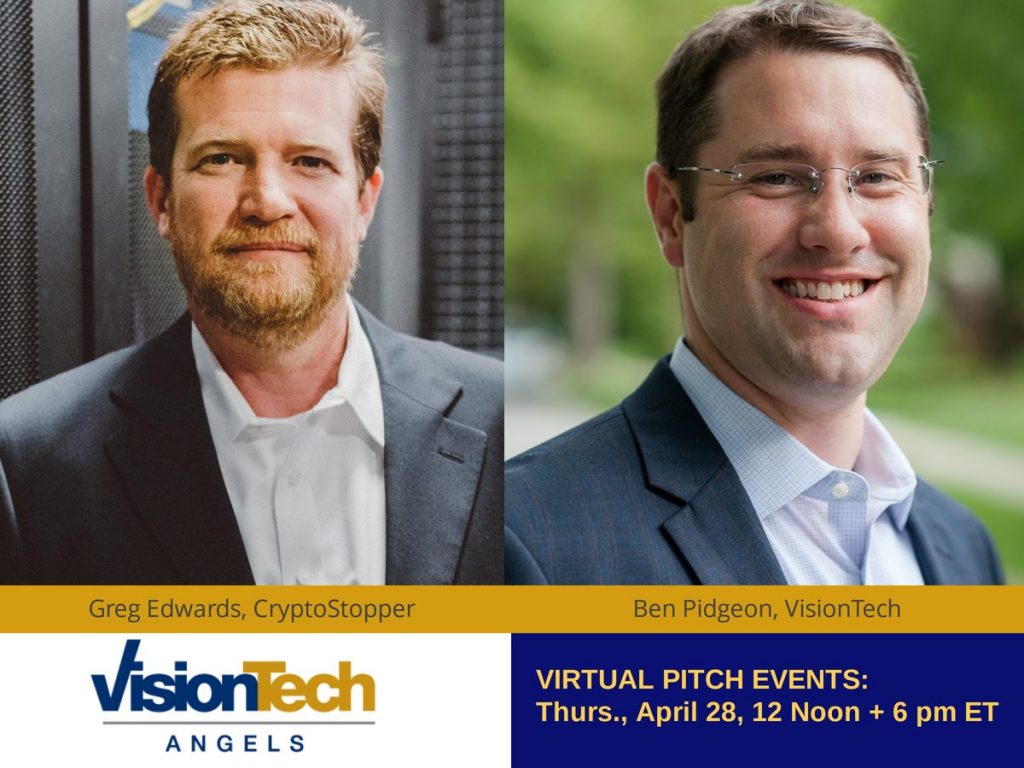
    Two angel investing group executives with whom we’ve done deals in the past suggested I take a look at CryptoStopper. What impressed them also impressed me. The CEO, Greg Edwards is an experienced entrepreneur and leader with a good track record. He’s taken three companies to liquidity events. His people are very loyal, following him from one company to the next. His current company, CryptoStopper, is on trend and has impressive traction. The VisionTech Screening Committee was also impressed with what Greg’s doing so we invited him to present at our April virtual pitch events. Here’s a preview.
    BP: You’re based in Iowa. How did you hear of VisionTech Angels?
    GE: Raising capital, you have to look beyond your backyard. I’ve been working closely with Frontier Angels in Bozeman, Montana, and NO/LA Angels in New Orleans, securing $860,000 toward our $1.5 million raise. They suggested I speak with VisionTech Angels and made the introduction.

    BP: Tell me about your company and how it came to be. What unmet need did you see?
    GE: I’ve been in the managed service provider (MSP) space for almost 25 years. Since 1998, I’ve owned WatchPointIT, reselling off-the-shelf security solutions. At the same time, I founded and successfully exited Axis Backup, an offsite backup company. I saw firsthand the rise of ransomware events happening in the backup space. Ransomware attacks accounted for 15% percent of all cyber attacks in the United States in 2018, and almost every business, government entity, university, healthcare system, and utility company are targets. I realized that backup was a horrible last line of defense against ransomware. CryptoStopper was created to stop the unnecessary destruction and chaos caused by ransomware. 

    BP: How are you solving your market’s pain point?
    GE: CryptoStopper solves the pain of ransomware attacks by stopping actively running ransomware that gets past traditional cybersecurity tools. CryptoStopper software tool literally shuts down active ransomware attacks in milliseconds, preventing the attack from encrypting  anything beyond “bait” files. This limits costs incurred by customers due to server down time, tracing the attack, restoring backup files, and paying ransoms to recoup data. If it sounds like a nightmare, it is. Best to avoid it with CryptoStopper.

    BP: How large is your addressable market?
    GE: Currently there are about 42,000 MSPs in the United States with a total addressable market of $252 million in annual recurring revenue. The mid-market and enterprise business represents another, larger opportunity down the road.

    CryptoStopper

    BP: What is your traction to date?
    GE:  For a young company, we’ve been strong out of the gate. We already have 94 MSP partners, more than 14,000 license in use and annual recurring revenue of $300,000. March was our best month to date with 21 new MSP partners. Our goal is to have 2,000 by the end of 2024.

    BP: What is your revenue model?
    GE: Simple and sticky: SaaS in the form of perpetual monthly recurring licenses sold to MSPs.

    BP: Do you have any competitors and if yes, what is your competitive advantage?
    GE: There are competitors entering the space. Our advantage is ease of deployment and configurability along with being a separate point product that can’t be stopped by the ransomware attackers. Also, we’re targeting small- and mid-size organizations , a market segment that’s relatively untapped. These entities have fewer resources, less infrastructure and many remote workers, which make their needs unique. They tend to outsource their cybersecurity solutions to a third-party MSP.

    BP: Do you have any IP protection?
    GE: We filed a provisional patent in March 2021 to protect trade secrets related to our detection algorithm; however, it has not been completed due to concerns the application may give away our competitive advantage. We have put in place Proprietary Information and Inventions Agreements with all founders, employees, and consultants. We’re also planning  to keep our techniques, algorithms, and strategies as trade secrets.

    BP: What raise is this?
    GE: This is our seed round. We have about $640,000 to raise before the round closes.

    BP: How do you plan to use the funds?
    GE: Primarily on sales and marketing. We want to expand our lead generation as we are ready to scale.

    BP:  Please give three reasons why VisionTech Angels should invest in your company?
    GE: I have four reasons! he opportunity and growth potential for CryptoStopper as an anti-ransomware cybersecurity company is massive and perfectly timed. The leadership team taking CryptoStopper to market is experienced and has an exceptional understanding of launching a product within the MSP space. We plan to supplement our leadership team with a board of directors that will include industry experts in cybersecurity and SaaS. Next, the scalability of the business is built-in using Azure Apps. Finally, with a 98 percent retention rate of customers and the ability to add thousands of additional MSP partners with limited additional resources, CryptoStoppers growth potential is exponential.

    BP: Sounds great! Thank you.
    GE: My pleasure.
    To learn more about CryptoStopper, visit  their website or listen to this podcast. VisionTech Angels’ March Pitch Events will be virtual on Thursday, April 28 at Noon ET and at 6 p.m. ET. Pitch events are open to our members and accredited investors interested in joining our group. To register, check your email for an invitation, go to our Events page or email Ben Pidgeon at bpidgeon@visiontech-partners.com.
  • Better Bovine Reproduction: Meet March Pitch Presenter Dr. Jim Donahue of ReproHealth Technologies

    Better Bovine Reproduction: Meet March Pitch Presenter Dr. Jim Donahue of ReproHealth Technologies

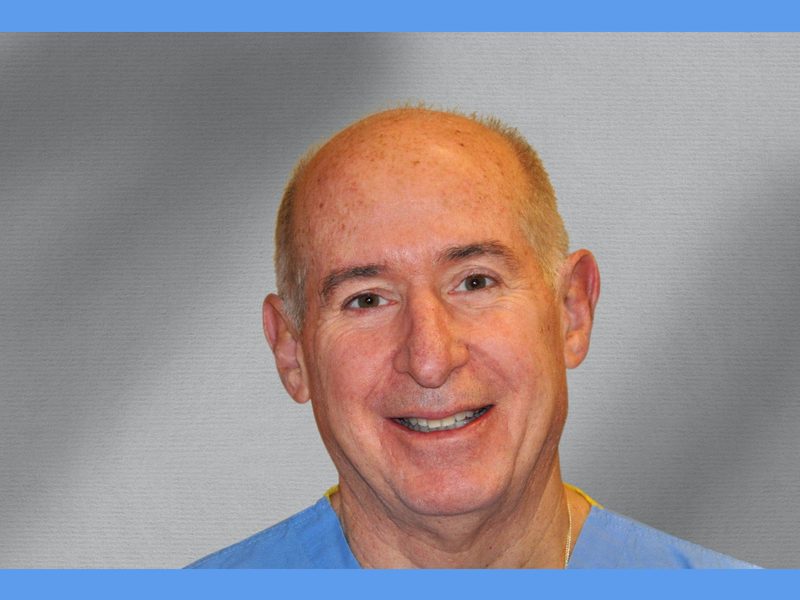
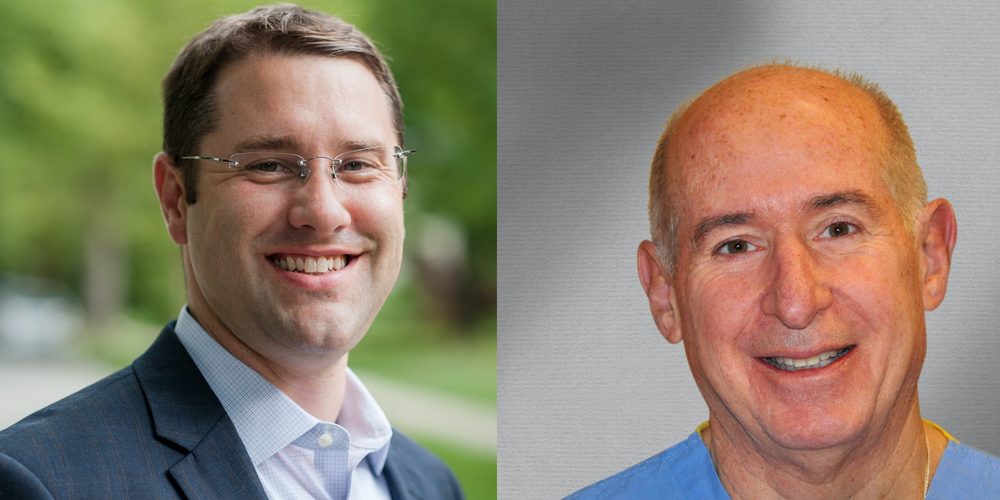
    I have known Dr. Jim Donahue since 2016 when he joined VisionTech Angels as an investor through AngelBOM, a chapter made up entirely of physicians. He is one of our more active members, often joining us for our “Breakfast with Ben” gatherings despite his busy schedule as a fertility specialist. I was a little surprised to learn that he was pivoting his career from helping human parents conceive to helping farmers and ranchers with cow reproduction with a startup called ReproHealth Technologies. Intrigued, I invited Jim to present to VisionTech’s Screening Committee. We were impressed by ReproHealth’s device and the potential to dramatically change this important part of agriculture with technology and invited him to present at our special March Virtual Pitch Events. Here’s a sneak  preview.

    BP: You’ve been an investor with VisionTech Angels? For six years. Did you ever see yourself pitching to the group?
    JD:  I had no idea! It is exciting being part of such a great group of docs and investors. That said, I’ve always been an innovator. Our medical practice did the first ever blastocyst embryo transfer in 1998, the first GIFT procedure at a Catholic hospital, and most recently, the first successful pregnancy with an intravaginal embryo culture device in 2018. ReproHealth was the next step.

    BP: You’re a fertility specialist for people. How did you get into the cattle reproduction business?
    JD: It’s kind of amazing on a number of levels. First, I’m a city boy from Miami. What do I know about cows? But here’s a little-known fact. Human in vitro fertilization (IVF) began with cattle. Dr. Bob Edwards did the first successful human IVF with the birth of Louise Brown in 1978, later winning the Nobel Prize for this breakthrough. I did my master’s degree in Human Embryology at the University of Leeds 20 years ago. Dr. Edwards trained the people who trained me. He said to me one time that since it worked in cows, he knew it would work in humans. It finally worked on the 101st attempt!   

    Fast forward to 2017, my medical practice team did the first human intravaginal embryo culture procedure in Indiana using an outdated FDA approved device. The patient got pregnant with twins and the embryos were of exceptional quality. We explored the market and we discovered that bovine IVF does not work well. I knew that we could create a better, more effective device that would solve a technical problem. In talking with farmers, they understand what we’re doing and want to try what is now known as the Embvita device. This led to the formation of ReproHealth Technologies.I have met a lot of farmers who seem to want to try the device. Seeing the problem, identifying a solution, and getting early market validation led to the formation of ReproHealth Technologies.

    BP: What pain points did you see in the cattle business?
    JD: In modern agriculture where farmers are breeding for very specific traits like milk production or more heavily muscled animals, cows are often impregnated with artificial insemination, embryo transfer or IVF. While IVF has overtaken embryo transfer as the preferred method, results are disappointing due to the fact that embryos do not grow well in lab incubators. Also, the eggs are typically collected at sites far removed from the farm and shipped to regional IVF labs for insemination and embryo culture. By the time the eggs make it to the lab, they’re old and less than ideal. Typically, of the 17 or so eggs collected, only 25% are fertilized and suitable for implanting in a cow. It’s not very efficient or effective.

    Our device, which is implanted in the cow vagina, is essentially a culture chamber, doing the same job as a lab incubator. It brings together the eggs and sperm in a more natural environment. This results in twice as many fertilized eggs that mature into healthy, transplantable embryos. Another advantage is the procedure is done at the farm rather than at a far-off lab. Farmers immediately see that it’s less complicated and results in more calves from their prized dairy or beef cow.

    BP: What makes the Embvita device a must have among cattle producers?
    JD: We recently met with a major U.S. dairy producer. Although they had never seen a company like ours before, they recognized our technology has the potential to completely change how they replace their cattle. They also invited us to come back and work with them for four weeks as part of their accelerator program. Although we’re not a must have yet, it’s impressive when a potential customer that produces over 20% of dairy in the U.S. pays you $10,000 just to travel to their headquarters and work with them.

    BP: The typical dairy or beef cow produces one calf a year. With the Embvita device, you can produce as many as eight embryos from one cow in a single season. In effect, you’re turning cows into super producers.
    JD:Amazing, isn’t it? But it’s not just about the volume of embryos.Our goal is to help farmers optimize the genetic traits that lead to dairy cows that produce more milk and beef cattle that are better meat producers. So yes, with the help of the Embvita device, cows with highly desirable traits have the potential to exponentially produce more high-quality offspring. And with cryopreservation, the farmer controls supply and demand in terms of deciding how many of the embryos are immediately implanted in surrogate mother cows and how many are held for a future date. There is huge potential in maximizing the number of offspring of these ideal mama cows.

    Additionally, we feel strongly that our technology and requirements to utilize it are simple enough that it can easily be deployed in parts of the world where there is food insecurity and a need to increase their cattle herds. Our technology could help them. Helping other parts of the world is very important to us.

    BP: The cattle industry is under fire by some because of their gas production. How do you counter this?
    JD: It’s possible that by breeding higher producing cattle with the Embvita device, we will need fewer cattle to produce the same amount of milk or meat. Fewer cows should lessen the greenhouse gas footprint of dairy farms and cattle operations, a plus for the environment .

    BP: Explain your revenue model.
    JD: Our revenue model is pretty simple; it’s based on selling the Embvita device and culture media to veterinarians or larger operations. A typical vet may purchase 600 devices and culture media a year. The device is single use. Depending on how the farmer uses the resulting embryos – either one at a time and freezing the rest or implanting all of the embryos into surrogate cows – we expect repeat sales over the life of the cow.

    BP: What is the market size?
    JD: There are about 40 million beef and dairy cows in the United States. Each year, some 15% (six million) are replaced using IVF, artificial insemination and embryo transfers. The artificial insemination market is much bigger than the IVF market, but the potential to optimize the number of desired trait offspring may make them switch to our device. A cow naturally produces only one offspring a year. With our device, she could produce many more per year. Capturing the current segment where human intervention is used is a significant opportunity. But looking at the market overall, it has the potential to be much bigger.

    BP: What’s your competitive advantage?
    JD: We have three main competitive advantages. First, there is little or no transporting of the cows; we bring the lab to the farm. The cows stay at their home farm which reduces stress on the animal and eliminates transportation time and expense. Second, our Embvita device results in two times as many embryos as the competition. From 17 eggs, we typically get eight embryos while the competition gets four. Third, we have incredible expertise on our team. In addition to my background in IVF, my co-founders include a biomedical engineer at Cal-Poly and an embryologist. We also have a partner who is a veterinarian who specializes in cattle.

    BP: Do you have IP protection?
    JD: We have filed for provisional and utility patents in United States, European Union and Brazil. We have 3D printed a prototype and have testing going on right now.    

    BP: What round is this and how will funds be used?
    JD: Up until this time, I have bootstrapped the company on my own. We’ve reached an inflection point where we need more capital to fast track our product development. We also would like to bring additional human capital onboard. So we are raising a $1 million pre-seed round.

    BP: What would you say to VisionTech Angels considering an investment in ReproHealth?
    JD: I have been a human fertility specialist for 30 years, and now plan to focus 100 percent of my time on ReproHealth. We have a unique opportunity to change entire industries, the dairy and beef industries, through a more modern process that also has the potential to decrease livestock-related greenhouse gas emissions. I’m a city boy raised in Miami, but I’m drawn to  agtech, the people and the opportunity. With that being said, investing is a personal decision, and I leave it up to each investor to make his or her own decision about investing in ReproHealth.

    To learn more about ReproHealth Technologies, visit  their website. VisionTech Angels’ March Pitch Events will be virtual on Thursday, March 24 at Noon ET and at 6 p.m. ET. Pitch events are open to our members and accredited investors interested in joining our group. To register, check your email for an invitation, go to our Events page or email Ben Pidgeon at bpidgeon@visiontech-partners.com.

  • Meet February Pitch Company #2: CRISPR QC, Quality Control for Gene Editing

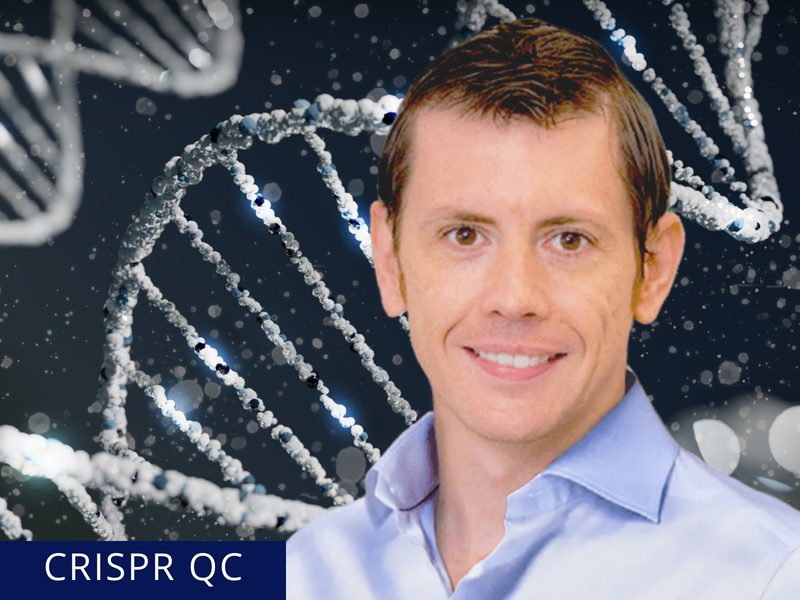
    Meet February Pitch Company #2: CRISPR QC, Quality Control for Gene Editing

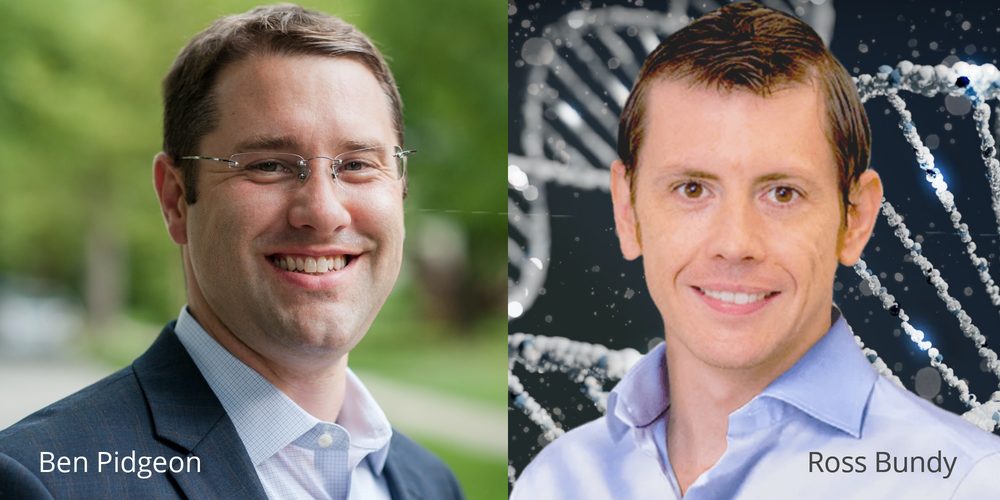
    “I was really excited to meet Ross Bundy, president of CRISPR QC, and learn what they’re doing in the hot biotech space of gene editing. There is incredible promise for treating and potentially reversing genetic diseases as well as opportunities in animal science and agriculture. Enjoy this short preview and plan to join VisionTech for Ross’ pitch on Thursday, February 24.”

    Ben Pidgeon, Executive Director, VisionTech

    Gene therapy, the ability to alter a gene in a living cell, is considered by some to be the greatest scientific breakthrough of the last decade. And it’s easy to understand why. If a person with an inherited disease such as sickle cell anemia , a disease without a cure, could be successfully treated with gene therapy, that would be huge. Indeed, scientists are getting very close to making this a reality

    There is a sticking point: gene editing, even when using a technology platform such as CRISPR, is very difficult to master. Accuracy is critical to avoided unintended consequences. Seeing an opportunity in this hot biotech space, San Diego-based CRISPR QC has set out to become the “quality control experts” with automated CRISPR QC testing tools, analytics, and knowledge to assist researchers in improving their CRISPR assay designs.

    CRISPR QC is currently raising a $2-$4 million seed round. Company President Ross Bundy will be pitching VisionTech Angels at the group’s February 24 virtual pitch events at 12 noon E.T. and 6 p.m. ET.

    Although it is an early-stage startup, CRISPR QC is attracting strong industry attention. Bundy reports that leaders in the CRISPR space are approaching his company and funding projects to advance tools and technology that will support greater accuracy. NIST, the National Institute of Standards and Technology, is also pushing for the development of standards for measuring and quality assuring gene editing outcomes. Also, Dr. Kiana Aran who is the inventor of  CRISPR QC’s underlying technology and who serves on the board of directors, recently received a $1.6 million grant from the National Institutes of Health to help establish quality control standards for CRISPR therapies.

    Please join VisionTech for what promises to be a fascinating pitch from Ross Bundy of CRISPR QC and Peter Dunn of Your Money Line. Choose from two events both on Thursday, February 24. Our 12 noon ET event offers an abbreviated session. Our evening event at 6 p.m. ET includes pitches and an expanded discussion period. Find details and registration links here.

    VIsionTech Angels virtual pitch events are open to VisionTech member investors and accredited investors interested in joining our group. To learn more, visit our website.

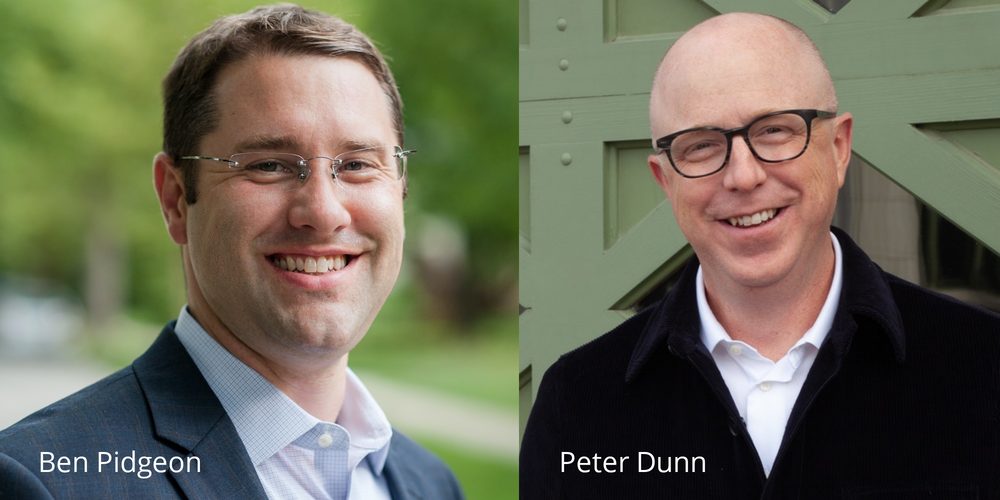
  • Meet February Virtual Pitch Presenter #1: Peter Dunn of Your Money Line

    Meet February Virtual Pitch Presenter #1: Peter Dunn of Your Money Line

    A colleague suggested that I meet Peter Dunn, CEO and founder of Your Money Line, as he was raising a seed round and I’m always interested in investing opportunities. Prior to meeting with him, I did a little research and discovered this was no ordinary CEO, this was Pete the Planner®, an award-winning comedian, USA Today columnist, and author of 10 books on financial wellness. It was really hard not to be intrigued. We met and after learning more about Your Money Line, a SaaS company that helps employers connect employees to confidential financial guidance to solve common money woes. The VisionTech Screening Committee was also impressed with what Peter’s doing so we invited him to present at our February virtual pitch events.

    BP: What’s the story behind Your Money Line?
    PD: I worked as an investment advisor from 2000 to 2012 in Carmel, where I live with my family. I soon realized that most people don’t need a wealth advisor, they need a personal financial advisor to help them through a myriad of financial issues such as dealing with student loan debt, buying a home, finding money to save for retirement. In 2005, I started my media career doing television appearances on the local news. That led to a radio show and eventually an opportunity to write for USA Today and the Indianapolis Business Journal. I ultimately wrote ten books, appeared on a number of national news shows, and made various appearances on Good Morning America.

    In 2017, I launched Your Money Line Powered by Pete the Planner®. Your Money Line is a fintech company that is the culmination of my experience and identifying a huge need among companies to help their people achieve financial wellness for productivity reasons, human reasons and ultimately, so people can achieve financial security to retire.

    BP: You launched five years ago. What makes Your Money Line a must-have now?
    PD: People have had money issues as long as there’s been money. But seriously, the last two years of COVID and the uncertainties it’s caused have put extreme financial pressures on everyone. Now with inflation, people are really stressed and need help. That goes for business owners and their employers. Given our offering, now is the right time to scale our company and start helping people get on track with their finances and sanity.

    BP: How does it benefit employees?
    PD: Employees have access to two things, the Your Money Line Call Line and the Your Money Line Dashboard. The call line is our financial concierge service. Employees with questions call into a dedicated line that connects them with one of our trained money experts. These experts provide answers and also follow up with additional resources if needed. The dashboard takes the call line a step further by providing an online hub for a wealth of money resources. This includes a personal debt tracker,  a budgeting tool and video courses. To really personalize the service, people can complete a brief quiz and the dashboard provides a specific financial path based on individual needs. This really helps people understand what they need to do and how to do it to overcome the financial stresses of life.

    BP: How does this benefit employers?
    PD: There are so many benefits. First, there’s the human factor. If you have employees who are constantly worried about money, who are faced with unexpected expenses, whose partner has lost their job—well, how well can they concentrate on work? Traditional employee benefits don’t address this kind of issue. Providing access to a service like Your Money Line is a much more empathetic, proactive approach to employees’ financial wellbeing and mental health! So we help employers solve underlying financial issues for many employees that keep them from living their best life, purchasing homes and saving for retirement.

    There’s also a significant financial benefit. Employees who aren’t burdened by debt are better able to participate in company 401(k)s and prepare for retirement at age 66 or 67. Unfortunately, employees who have not saved for retirement tend to work longer, which has huge financial ramifications for employers. It’s far better to prepare employees to retire “on time.”

    A final benefit and what’s truly unique is our technology which helps employers track employee engagement with the money line, dashboard,  videos, and other resources. We show on average where employees stand financially and their behavioral changes through on-demand reporting and quarterly reports. So companies see exactly how and where we are making a difference, and if an employee is having difficulties, it creates an opportunity for intervention: a conversation, show of empathy, kindness. And guidance.

    BP: What kind of traction do you have?
    PD: We currently serve employees in all 50 states, which is exciting because we know we’re making a difference for people. Our sweet spot is with legacy companies with large workforces that take a long-term approach to the needs of their employees, particularly within the realm of retirement readiness. We also have traction with school districts. You may be curious about that, but many teachers start their careers with tremendous debt due to student loans. It’s a huge financial burden. In the fall of 2021, we worked with teachers in three school districts to get their loans forgiven and succeeded in helping them increase their combined net worth by $3 million. They can now concentrate on teaching and also building retirement accounts.

    BP: What’s your financial model?
    PD: We are a SaaS model. Customers pay an annual, per employee fee for their entire workforce. Our target customers are companies with 1,000 plus employees. They typically sign three-year contracts with us so there is built-in stickiness.

    BP: How much are you raising?
    PD: Up until this point, I’ve bootstrapped the company. Now, however, we are ready to scale. This is a seed round and we set a goal of $2.5 million. I am happy to say we’ve oversubscribed but are keeping the round open for VisionTech Angels.

    BP: What will the funds from this round be used for?
    PD: We are really focused on executing our go-to-market strategy. The funds from our seed round will be used to add to our sales, marketing and technology team.

    BP: Why should VisionTech Angels investors write checks to Your Money Line?
    PD: I have four reasons. First, even at this early growth stage, we have great traction in revenue, renewal rates among existing customers are high, and we have a robust pipeline. Second, we have significant partnerships within the global financial industry. Some of the world’s largest financial companies entrust us with their clients. Third, we have the right team to scale the company. Finally, we’re providing a service that is sorely needed by many Americans.

    To learn more about Your Money Line, visit their website. VisionTech Angels’ February Pitch Events will be virtual on Thursday, February 24th at Noon ET and at 6 p.m. ET. Pitch events are open to our members and accredited investors interested in joining our group. To register, check your email for an invitation, go to our Events page or email Ben Pidgeon at bpidgeon@visiontech-partners.com.

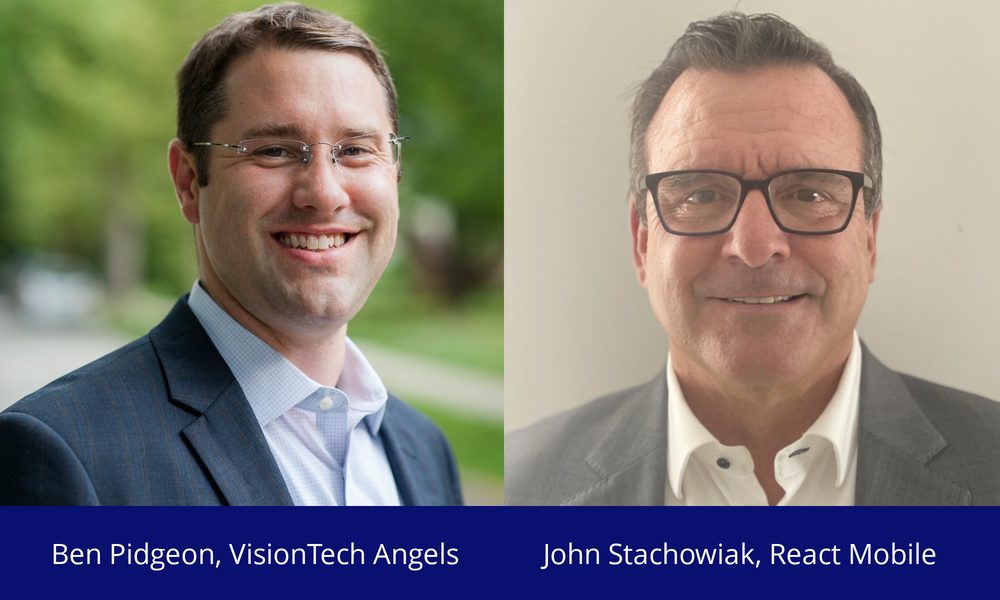
  • Meet November Pitch Presenter #2: John Stachowiak, React Mobile

    Meet November Pitch Presenter #2: John Stachowiak, React Mobile

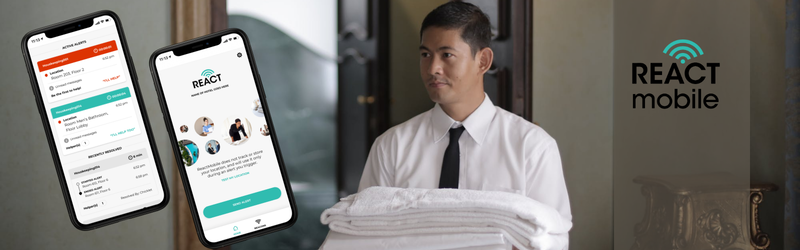
    Seattle-based React Mobile is a VisionTech Angels portfolio company with a workforce safety platform with solid traction in the hospitality industry. Our group initially invested in 2019. A lot has changed since then with new leadership and a new release of their solution. React Mobile is now raising a convertible round. Based on the company’s progress, VisionTech Angels investors have expressed $100,000 in soft interest prior to the formal pitch on Thursday, November 18. I recently sat down with CEO John Stachowiak and here’s our discussion.

    BP: Tell me about yourself and other leadership changes. I hear you have an Indiana connection.
    JS: I do! I am a proud Indiana University graduate. I’ve been on the React Mobile board of directors since mid 2018. During the pandemic, the board agreed that we needed to upgrade the leadership team with more seasoned members. The first change was replacing the CTO in December 2020. Riley Eller had worked with me at my last company for 10 years. He is without question the most talented CTO and strategic business thinker I have ever worked with. We also replaced the CFO position. I accepted the CEO position this year. This is my fourth time as a CEO, having led companies in the United States and Europe. My experience has been with early growth startups, and I’ve taken three companies to exit with returns of 8x, 13x and 26x respectively. I believe my experience and skills match up very well as React Mobile enters its growth phase.

    BP: Any changes in your product offering, technology, or business model?
    JS:  This year we unveiled version 2.0 of our workplace safety platform. It’s designed to deliver the highest panic button reliability and beacon location accuracy on the market while being radically simpler for hotel workers to use. We’ve also simplified our SaaS pricing. Here are some of the new features:

    • A new responder application that enables employees to receive safety alert notifications on their mobile devices and dispatch help. Management receives analytics measuring how long it took for an employee to respond to an active alert.
    • Support for all third-party iBeacons such as Aruba, Cisco Meraki and CommScope/RUCKUS®. With iBeacon functionality already existing in a hotel’s WIFI access points, hoteliers will save up to 80% of workforce safety platform install costs.
    • A double-redundant alert pipeline to ensure that alerts are dispatched from panic buttons to responders in the fastest time possible. React Mobile 2.0 delivers 99.9% of alerts in less than a half-second.
    • Two-way, multi-lingual conversations in English, Spanish, Tagalog, French, and Chinese. Any language can be supported on request.

    There are other important enhancements which I’ll share in my pitch.

    BP: What impact did COVID have on hospitality industry and React Mobile’s business? 
    JS: The pandemic has had a devastating effect on the hospitality industry, particularly in the early days when travel ground to a halt. Once areas of the country started to regain a sense of normalcy, the industry focused on adjusting processes and regaining their footing. Some areas around the country have rebounded significantly, which is welcome to all of us. In terms of React Mobile, 2020 and 2021 were both growth years. Our SaaS revenue grew more than 100% in 2020 over 2019 and is on track to grow 100% in 2021 over 2020. The number of installed properties grew by 133% in 2020 and in 2021, we’re up 48% to date.

    BP: That’s impressive given all of the disruptions of COVID and now the labor shortage. What do you attribute that to?
    JS: There are a couple of factors. Employee safety continues to be the number one driver. What’s shocking to me personally is 58% of hotel workers report being assaulted on the job. And 96% of housekeepers say they’d feel safer with a panic button. Leading brands  representing 23,000 hotels have signed the “Five Star Promise” committing their organizations to employee safety devices. Compliance must be met by the end of 2022. At the same time, the number of states mandating panic buttons in hotels with more than 50 rooms is increasing.

    As a result, demand is strong. We’ve signed 12 Master Service Agreement with major brands that represent 23,000 properties. Of these, about 25% – 5,729 properties – are exclusive agreements. The growth potential for React Mobile is huge.

    BP: Any other big wins?
    JS: We have a strong and growing presence in Las Vegas. Fourteen of the 30 major properties on the strip are React Mobile customers. We are currently covering 37,791 of the 93,022 rooms on the Las Vegas strip.

    BP: Now that the platform is proven, are you looking at other industries?
    JS: Absolutely. Education is a natural one for React Mobile. Looking at elementary, middle and high schools, as well as colleges and universities, we’re looking at a total addressable market of $490 million. There is definitely recognition for the need for improved security methods. We’re also looking at health care. Hospitals represent a total addressable market of $210 billion. A key strategic investor in React Mobile is a respected technology provider in these industries and has provided clear guidance for adapting our technology stack to better serve them.

    BP: How much are you raising and what will the proceeds be used for?
    JS: We are looking to raise up to $3 million with the same terms as our last convertible note. These funds will allow us to continue to scale the company.

    BP: Why should VisionTech Angels invest another round in React Mobile?
    JS: Despite COVID-19, our SaaS revenue will end the year at an ARR of approximately $2.4 million with a pre-money value of about $13.5 million, a multiple of less than 6x. Our new 2.0 product release is the best in the industry and with it, we expect to grow revenue another 100% in 2022 and again in 2023. At this point, we have our workplace safety platform where it needs to be, and in addition to expanding our beachhead in the hospitality industry, we are looking at new opportunities in education and health care. Bottom line, we would like VisionTech Angels to continue to grow with us.

    To learn more about React Mobile, visit their website. VisionTech Angels’ November Pitch Events will be virtual on Thursday, November 18 at Noon ET and at 6 p.m. ET. Pitch events are open to our members and accredited investors interested in joining our group. To register, check your email for an invitation, go to our Events page or email Ben Pidgeon at bpidgeon@visiontech-partners.com.

  • Meet November Pitch Presenter #1: Adam Steege, Trio Labs

    Meet November Pitch Presenter #1: Adam Steege, Trio Labs

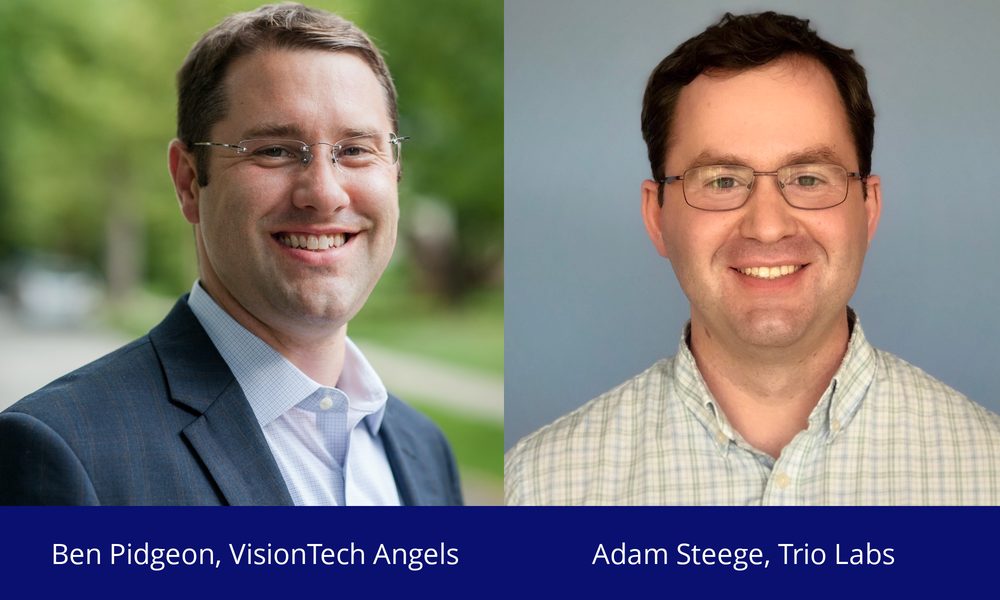
    I was introduced to Adam Steege, founder, president and chief technology officer of Trio Labs, by another investor in the angel space, John Lilly. He is impressed with the company’s novel imaging technology and materials manipulation techniques that enable rapid, high-precision, additive manufacturing of micro parts needed in medical devices. Given our group’s interest in life sciences startups and expertise in the medical device industry, I invited Adam to present to VisionTech’s Screening Committee. We were also impressed by Trio Labs’ technology and traction and agreed he should present at our November Pitch Events. Here’s a sneak  preview.

    BP: Tell me about how Trio Labs came to be.
    AS: I’m a serial entrepreneur and inventor. One of my previous companies was Agile Endo-surgery that developed articulated surgical instruments to expand the scope of minimally invasive surgery. During my six years with Agile, I really took a deep dive into medtech and more importantly, surgical trends pointing to the need for better, more cost-effective options for micro manufacturing on a millimeter scale. I recognized an opportunity to leverage metal additive manufacturing processes at the desired resolution of five microns, but do it at a high-volume manufacturing scale, something no one else was doing. Trio Labs uses its own technology to produce these miniaturized parts using ultra high-resolution 3D printing of metals. The manufacturing process is different. What’s also different is that we’re selling parts, not 3D printers.

    BP: What pain points did you see in the medical device market that you are solving?
    AS: Medtech is demanding miniaturization for surgical instruments and hollow microneedles to meet clinical demands. Here’s an example: vascular surgeries where the surgeon needs to deploy a valve in a heart procedure and a lot of small components are required to enable this mechanism. Other technologies can’t address this size. Here’s another example: the surgeon has to pull a clot in a stroke patient in blood vessels smaller than 1mm. Small parts make this type of life-saving instrumentation possible. The reality of human anatomy versus existing technology causes a significant pain point. With our ability to create micro parts with precision and manufacture at high volume will solve a lot of industry—and patient—pain.

    BP: Additive manufacturing has been around for a while. Manufacturing at scale has been the challenge. What’s your value proposition?
    AS: Frankly, our ability to scale manufacturing beyond prototyping is a large part of our value proposition. Couple that with the fact that we’re making high throughput micro manufacturing possible for the first time is significant. Innovators within the medical device and micro needle spaces looks at that and their eyes get big as it opens up so many doors to future innovation. In that respect, Trio Labs’ ability to produce micro components with exacting precision and in desired volumes makes us unique and a powerful partner.

    BP: How large is the market? What are your priorities in terms of market segments?
    AS: Globally, it’s a multi-billion market. We’ve identified several segments. First, minimally invasive surgical devices which has a total addressable market of $50 billion. The next largest segment is microneedles used for pain-free drug delivery and diagnostics. This includes auto injectors, infusion systems and blood sampling devices. Globally, this represents a $20 billion market. Diabetes care is a sub-segment of the microneedle application space. It represents a $5 billion market in the U.S. alone. Diabetes is a global issue so this is the tip of the iceberg.

    Trio Labs surgery

    BP: What’s your traction like thus far?
    AS: We have nine customers, many of them household names, with strong interest. They have sent us design files to begin working on. Our model is to acquire customers are the R&D stage and support development. This way our micro parts are specified in the device and support volume production. With all of the innovation in minimally invasive surgical devices as well as in other areas, we believe this approach is sound. We expect to start generating revenue before the end of this year.

    BP: What kind of IP protection do you have?
    AS: Our goal is to have a massive IP portfolio all of which we will own. We are currently working on global patents in 10 jurisdictions. These include our core process and provisional patents. When we’re done, we will have a few hundred patents, which will support our exit strategy.

    BP: What does the competitive landscape look like?
    AS: Micro manufacturing is very difficult to do and do well and that limits competition. However, there are options to Trio Labs: metal injection molding, CNC machining and electrochemical manufacturing. Each has its own set of limitations like cost, speed or lack thereof, and inability to meet the very precise micro specifications at scale. Trio Labs has proven our technology and we can produce at scale at very attractive margins, giving us a competitive advantage over these traditional manufacturing methods.

    BP: This is a $6 million Series A and you’ve raised $5.5M. Who are the other investors? What will the proceeds be used for?
    AS: We’ve gotten excellent support for our Series A so far. Two of our board members have personally invested, and we’ve also gotten support from VentureSouth and the Harvard Business School Alumni Angels Association. We hope to add VisionTech to our cap table.

    In terms of use of funds, we intend to build out our manufacturing infrastructure in 2022. Also, our Series A gives us the runway to continue developing strategic partnerships and ramping up the development projects in our pipeline.

    BP: What’s your exit  potential?
    AS: We believe we will have a number of options, one of which is to be acquired by a larger medical device company that will seize the opportunity to control the micro manufacturing space. Another option is to go the IPO route.

    BP: Why should VisionTech Angels invest in Trio Labs?
    AS: Trio Labs is truly defining a new space in the medical device industry and as minimally invasive surgical procedures have become the norm, the demand for smaller devices and miniaturized parts has grown exponentially. We have the technology, processes, and ability to scale to meet this demand. Our leadership and advisory team are truly impressive. Among our advisors is Bill Hawkins, former CEO of Medtronic, and Stephen Nigro, former president of 3D Printing at HP. Bill, Stephen, and our other advisors are actively involved in our strategy and day-to-day operations. Finally, the impact we can make on patients’ lives and potential financial return for investors will be significant.

    To learn more about Trio Labs, visit their website. VisionTech Angels’ November Pitch Events will be virtual on Thursday, November 18 at Noon ET and at 6 p.m. ET. Pitch events are open to our members and accredited investors interested in joining our group. To register, check your email for an invitation, go to our Events page or email Ben Pidgeon at bpidgeon@visiontech-partners.com.
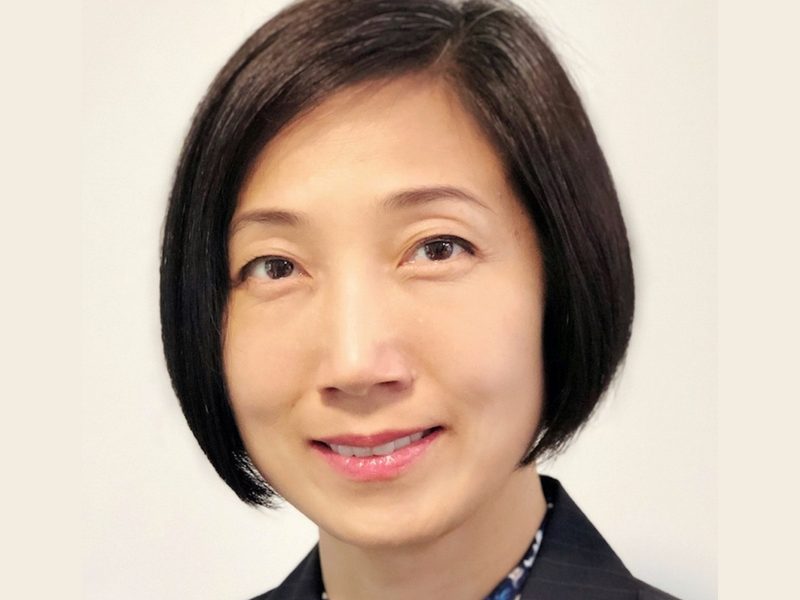
  • Clean Ingredients for a Healthier World: Meet Joanne Zhang of Flourring, October Pitch Presenter #1

    Clean Ingredients for a Healthier World: Meet Joanne Zhang of Flourring, October Pitch Presenter #1

    I can’t exactly remember when I met Joanne Zhang, but I’ve always been impressed with her professionalism. We reconnected at this year’s Innovation Showcase. I’m on the board of the Showcase sponsor, The Venture Club of Indiana, and met all of the startups nominated for the pitch competition. One of the finalists was Joanne, who is the CEO and co-founder of Flourring. Flourring was definitely the “sleeper” of The Innovation Showcase. It wasn’t an app, its financial model wasn’t SaaS, and it’s unlikely to inspire tech geeks. What Flourring does have is a huge market and consumers clamoring for its products. Not by name, but for the benefit of making many of the foods and beverages we eat everyday more natural, clean and healthy. I invited Joanne to present to VisionTech’s Screening Committee, and we all agreed she and Flourring should present at our October Pitch Events. Here’s a sneak  preview.

    BP: Tell me about your professional career before becoming an entrepreneur.
    JZ: My career track is very different than many entrepreneurs. I spent 20 years in the corporate world, including 14 years at Praxair and a year with Danisco, an ingredients company. Over the course of my corporate career I worked in marketing, procurement and supply chain, and finance. At Praxair, I was in charge of finances for a $200 million business unit. I’m grateful for my time in corporate because it created a strong foundation for my own startup company. I know how and where to avoid mistakes and have been able to run the company professionally from the start.

    BP: How did Flourring come to be?
    JZ: Flourring started as a part of Phytoption LLC, a Purdue innovation startup company I co-founded. We had an SBIR award from the National Science Foundation to develop ingredients for drug, food, cosmetics, and agriculture. During that project, we have developed clean and functional ingredients applicable to the food and beverage industries. So we plan to use Flourring to focus on commercializing FLOURA™, a series of all natural, functional flours that could replace traditional emulsifiers and texturizers, many of which are artificial. Traditional emulsifiers, while present in many, many processed or restaurant foods, are usually not natural ingredients and are heavily processed themselves.

    BP: What pain points did you identify in the market and how are you solving them?
    JZ: There are two big pain points: Consumers’ demand for cleaner, more natural foods and food producers’ needs for a natural alternative to traditional emulsifiers that works for their products. Our proprietary natural flours solves both.

    Natural and organic foods have been around and very popular with a segment of the population for a long time, but it’s only been recent years that the general consumer population has begun looking for and requesting more natural ingredients. As a mother myself, I had trouble finding healthy snacks for my own child that didn’t contain artificial additives. So there is now a growing “clean label” movement among consumers who are questioning the additives in foods and basing their purchases on what’s on a product’s label.

    Consumer packaged goods (CPGs) companies see what consumers want but up until now there were hardly any feasible substitutes for traditional chemical surfactants, gums, or other types of unwanted emulsifiers and stabilizers. And they can’t just remove them as emulsifiers are needed to prevent separation of ingredients, create a smooth texture and extend shelf life. As an example, a liquid coffee creamer would have separate layers, if they took out the emulsifier. Can you imagine how unappealing it is? With FLOURA™, we’re providing a single ingredient option that’s non-GMO, gluten free, all natural, and doesn’t require chemicals to produce it, and works for a variety of food and beverage, supplements, and even some personal care products.

    BP: What’s the FLOURA™ product range look like?
    JZ: We currently have several types of flours under the FLOURA™ brand that address the specific requirements of plant milks, creamers, shakes, and smoothies; sauces, soups, and salad dressings; bakery items such as cakes and tortillas; nutraceuticals like hemp oils and essential oils; frozen desserts like ice creams and ice cream novelties; and finally, natural lotions and creams for personal care. In each of these categories, FLOURA™ helps ensure the stability and texture with desirable natural ingredient for a cleaner ingredients label.

    BP: What’s your traction like thus far?
    JZ: We are building our customer pipeline, and have signed letters of intent from two customers, one in the U.S. and the other in Europe. Both were looking for natural alternatives to current emulsifiers and found Flourring.

    BP: How big is the market?
    JZ: The ingredients market in the United States, Europe and Asia is huge. The overall global emulsifier market is estimated at $8.4 billion (USD), along with another $12 billion for stabilizers or texturizers. If that surprises you, consider this: emulsifiers and texturizers are used in a wide range of not just food and beverage products but also personal care, pharmaceuticals and even industrial applications. Flourring is targeting is clean label products, a market projected to reach $51.1 billion (USD) by 2024. Consumers are driving growth in this segment. More than 90% of U.S. consumers believe food and beverage options with recognizable ingredients are healthier. Beyond this, the market is attractive because of the spend of individual companies, which can range from a hundred thousand a year to a couple of million dollars.

    BP: What’s your exit  potential?
    JZ: Very straightforward. There are only a few large players in the ingredients market and they’re watching the trend of clean labels, which has accelerated with COVID-19. Some have already been in contact with us.

    BP: Are you required to have FDA approval on your products?
    JZ: No, our ingredients are natural—corn, rice—so FDA approval is not required. We have gone through a legal review by one of the largest legal firms for the food industry to determine the labeling, and the conclusion was that FLOURA™ is labeled as a flour such as rice flour or corn flour.

    BP: Do you have any IP protection?
    JZ: I’m very proud of our IP protection. We have a lot of experience with patents so securing a worldwide patent for our process was a priority. That patent was filed in 2018 and is pending in many countries or regions worldwide. Ultimately, we’ll have several patents broken down from the initial filing that will protect our products and technology from different angles, which include materials, processing, and applications.

    BP: Do you have competitors beyond traditional emulsifiers?
    JZ: Our natural functional flours are the first of their kind emulsifiers on the market so no, we don’t currently have competitors other than the additives such as modified starches, gums, and synthetic chemicals we want to replace.

    BP: How much are you planning to raise and how will the proceeds be used?
    JZ: We are raising a $1 million seed round, of which we already have $800,000 committed. Half of the funds will be used to scale our manufacturing and the other half will fund our 2022 runway. We have a vice president of sales and will build a production team after the round is closed.

    BP:  Why should VisionTech Angels invest in Flourring?
    JZ: There are three very compelling reasons to invest in Flourring. The clean ingredients market is predicted to enjoy high growth for the foreseeable future. Consumers are communicating their preference for natural ingredients and CPGs are responding where they can. Flourring provides new options that can enable CPGs to meet consumer demand. Second, this is a low-risk opportunity. We have established our products and processes. Now, it’s time to scale, which is what this raise is about. Finally, cost will not be a barrier to market entry. Our products are priced at or below competing products. Too, our gross margins are high, about 75% at scale, because the costs of our raw materials are low.

    To learn more about Flourring, visit their website. VisionTech Angels’ October Pitch Events will be virtual on Thursday, October 28 at Noon ET and at 6 p.m. ET. Pitch events are open to our members and accredited investors interested in joining our group. To register, check your email for an invitation, go to our Events page or email Ben Pidgeon at bpidgeon@visiontech-partners.com.
  • URGENT ACTION NEEDED ON PROPOSED FEDERAL LEGISLATION: Angel Investors, Startups Contact Your Elected Officials Now

    URGENT ACTION NEEDED ON PROPOSED FEDERAL LEGISLATION: Angel Investors, Startups Contact Your Elected Officials Now

    Urgent Action Is Needed Now to Ensure Continued Investments in Early Stage Companies by Angel Investors

    President Biden’s proposed “Build Back Better Act” is being hotly debated by the House of Representatives and a proposal is likely to go to the Senate today or early next week.

    One element of the tax legislation being proposed is of grave concern to angel investors, entrepreneurs, and startups because it would severely curtail the capital gains tax exemption for Qualified Small Business Stock (QSBS) that currently exists in Section 1202 of the tax code. 

    For a qualified small business, investment in their stock currently benefits from 100% exclusion of capital gains tax on gains of up to the greater of $10 million or 10x your cost basis if the stock is held for at least five years. This incentive is extremely valuable to entrepreneurs/founders, key employees and investors, and serves to stimulate support of early-stage ventures and small businesses that by many measures generate all net new jobs in this country. 

    The new legislation would reduce the exemption from 100% to 50% and apply the alternative minimum tax that also is currently excluded for tax filers with average gross income over $400,000. One particularly punitive aspect to the change is that this would apply to all transactions after September 13, 2021, even though the investments could have been made many years ago under the assumption that gains would be excluded.

    CALL TO ACTION

    Please send a letter/note to your elected leaders in both the House and Senate please do so ASAP! A sample letter from the Angel Capital Association you can use or adapt is posted below.

    Here’s how you can find your:

    Senator Search by State
    Representative Search by Zip Code

    Sample Letter to Legislators:

    September ____, 2021

    Dear Senator/Congressman/Congresswoman __________,

    I am writing to you as a constituent who supports entrepreneurship, job creation, and innovation in your district/state.   I am deeply concerned that there are provisions in the Build Back Better Act that will set our nation back decades by discouraging investment in and support for start-up companies and small businesses —the backbone of job creation and innovation.  Specifically, this bill contains a provision that curtails the capital gains exclusion for Qualified Small Business Stock (“QSBS”).

    For years, the QSBS rule has proven effective in promoting the support of startups and early-stage growth companies in regions and communities across the country.  QSBS limits capital gains taxes for founders, employees, and investors in qualified small businesses, thereby encouraging investment at the earliest stage in a company’s life cycle. It enables employee-owners who take huge risks to join and build an early-stage company to receive a commensurate return on their investment of time, expertise, and hard work.  For this very reason bipartisan policymakers have supported and expanded this provision over the past 28 years. Even more importantly, at a time when our country is trying to expand opportunity to more people, our country’s tax regime should advance that ambition, not make it more difficult.

    Developing and investing in startups and early-stage growth companies carries substantially more risk than in more mature companies.  These companies fail at higher rates and even those that succeed often remain completely illiquid for years. Most investment capital avoids that kind of illiquid situation, meaning that any investment of time, resources, or capital must be for the long-term. The QSBS framework incentivizes that long-term investment and employee retention that are so vital to startup and early-stage company success.

    The House Ways and Means Committee recently approved a provision curtailing the QSBS exclusion as part of the Build Back Better Act and applied the tax change to sales of existing stock, as opposed to new investments. This change diminishes the incentives that have successfully bolstered small businesses and their employees and punishes taxpayers who invested in or earned QSBS shares years ago by changing the treatment for existing shares and imposing a tax on them. Employee-owners, founders, and investors made economic decisions in the past based on the QSBS construct supported on a bipartisan basis. This proposed curtailment changes the rules on them after they followed the rules applicable at the time and held up their end of the bargain.

    Finally, it is important to measure the ramifications of such a change against the revenue Congress is seeking to raise with the provision. The Joint Committee on Taxation’s own estimate is that the tax revenue gained by this change to QSBS will only generate approximately $570 million in additional tax revenue per year. This estimate completely fails to consider the impact of losing investment in many early-stage companies and the potential tax revenue those businesses generate. Further, it tends to undermine efforts to attract investment to underserved entrepreneurs (founders of color and women-led companies). By many measures early-stage and small companies are the source of all net new jobs in the United States, but this change in QSBS runs counter to the goal of building back our economy in a constructive manner. Frankly, it strikes me that now is the perfect time to enhance the creation and support of early-stage and small companies! Additional measures might include the reduction of the 5-year holding period to three years and incorporate the holding period to include the time that a limited liability company may have existed before converting to a c-corporation.

    I recognize and appreciate the objectives of the Build Back Better Act and policymakers’ desire to expand economic opportunity and accelerate domestic innovation. However, supporting small businesses and startups is a vital economic engine in realizing that vision and I urge you and other House/Senate members to preserve the current QSBS treatment, and even consider enhancing it, all to help drive the related positive impacts on the startup ecosystem and the broader economy.

    Thank you in advance for giving this matter your urgent time and consideration.

    Sincerely,

  • Meet VisionTech Angels’ August Pitch Presenter #2: GeoH

    Meet VisionTech Angels’ August Pitch Presenter #2: GeoH

    I was introduced to Doug Rowe and Dylan Vester, co-founders of GeoH, by Oscar Moralez, VisionTech’s managing director. He had worked with Doug years ago when still at Biostorage. After learning more about GeoH’s solution for the home health industry, Oscar referred them to me and I was immediately impressed. Doug owns a home care company, and he understands the pain and inefficiency of an industry still reliant on paper for billing and payroll. Three years ago, he and Dylan set out to provide a cloud-based alternative. Fast forward, and their traction is impressive. Both are running hard and enjoying every minute, so the VisionTech Angels Screening Committee invited them to pitch. Here’s a sneak preview. I hope you’ll join us to hear Doug and Dylan during our August Pitch events on the 24th and 26th of this month. 

    BP: Many founders have a personal passion behind their company. What’s the back story on GeoH?
    DR: I started a home care company in Indiana four years ago, and the business grew fast. The only problem was that everything about the business was paper based, from how caregivers tracked their patient visits to billing and payroll. Total and complete nightmare. I wanted an app  to solve the problems I was facing in the business, so I called my now co-founder Dylan Vester. We worked to make something that not only solved the problems I was facing in the home care space, but was built on bleeding-edge cloud technology so iterations and features can be easily added. As of today, we provide online scheduling, billing, payroll, reporting and analytics, user management, and notifications. Because of changes in the industry brought on by regulations and laws like the Cures Act and market events like COVID, we are constantly evolving and enhancing our platform to meet current and new pain points.

    BP: What pain point are you solving with GeoH?
    DR: The home health industry is primarily owned by small independent agency owners/operators. Some of them have been in the business for decades, and many still use paper forms as a tracking mechanism. It’s an issue because they have to save paperwork for seven years. If you have a larger operation, you have a warehouse full of old documents. Outside of the obvious administrative burdens we relieve as a digital solution, we also satisfy the 2016 Cures Act for Electronic Visit Verification (EVV). We make running an agency more efficient while simultaneously keeping agencies compliant.

    BP: When did you launch and what kind of traction are you getting to date?
    DR: We launched the company in 2017, spent a year in development, and began selling in 2019. We’ve been adding users and caregivers ever since. We’re now in 11 states with aggregators, with 130 agencies, plus more than 3,000 users and counting. I give a lot of credit to Dylan for our traction. The product, our user interface, and user experience drive agencies to us from other software solutions.

    DV: (smiles) I spent a lot of time on the user experience. Before this, I worked with Salesforce and Microsoft, and I’ve applied much of the same sophisticated backend computing and automation you find in their products. We may be a small company, but our platform and app are very sophisticated and work well.

    BP: What benefit is most appreciated by customers?
    DV: Our customers are not typically computer savvy, so we’ve designed the platform and the app to be super simple and intuitive to use. We can have new clients live in five minutes. There is not a long, steep learning curve to work in the solution from a functional side. People understand the platform and workflows immediately. Caregivers only have to go to one screen to document their visits. Again, super easy, intuitive, and they don’t have to spend time writing paper notes and turning them in. Their work notes go straight into the agency’s system.

    DR: As a home care agency owner myself, I like that we’ve made paper obsolete for operations like payroll. Our software tracks a caregiver’s days, hours, and waiver code for each patient visit, making documenting patient visits so much easier for caregivers. GeoH has a  client with 14 locations and 1,000 caregivers. It would take him two days to do payroll because each caregiver’s hours, visits, and coding differed. So basically, it was like doing payroll 1,000 different ways. Because employees’ time and visits are captured digitally, go straight to the cloud, and because the process is automated, payroll takes under an hour. This owner has a $20 million business and by switching to GeoH, we’re saving him $1.2 million annually in reduced overhead. That would not have happened if he’d stayed with paper.

    BP: What’s your revenue model?
    DR: As a cloud-based, SaaS solution, it’s a user-based pricing model determined by the length of the contract. Two-year contracts are $10 per user; one-year contracts are $12 per user, and month-to-month is $15 per user. We have a 97% retention rate with clients and are very sticky regardless of their plan. Once we launch the skilled version (nursing, therapy), our monthly recurring revenue jumps 4x based on current clients and the additional cost of the new features while opening a new vertical.

    BP: Is GeoH unique in the market or do you have competitors?
    DR: There are many competitors out there with home health management software but nothing like GeoH. The short answer is our platform and app work. But here are some examples. We’re a standalone solution but we’ve completed critical integrations with state aggregators in 11 states, with more coming on shortly. We work with government agencies like the Indiana Department of Health, CMS, and ACHC to stay informed on regulations and upcoming changes to add those nuances to the software. This advantage garnered my agency’s perfect survey results with zero deficiencies and zero tags the past two times. We’re also integrated with managed care organizations. Our users love us and refer others to us weekly.

    DV: From a software perspective, our app is native unlike competitors’ apps so it opens up much like Facebook without requiring a webpage login. We work equally well on iOS, Android,  tablets, and PCs. The app is intuitive and the workflow mimics that of a home health agency. Additionally, our support for the software is second to none. Not only do we have a standard call in/email support system, but we also utilize newer technologies for faster response through SMS messages.

    We are now working on our next release that will include the initial patient assessment, 485 doctors’ orders and sending the transmission of data to Oasis in Texas, which is how Medicaid determines billing amounts by service. These are the feature sets required for the skilled side that do not already exist in our platform. This functionality is huge and as Doug mentioned, will significantly increase our monthly recurring revenue.

    BP: Is there any IP or patents that protect your market position?
    DV: We have trade secrets in the way the platform is built to manage large volumes of data, provide safety and security of information, and to massively scale as the business grows. Our algorithms also help streamline operations across multiple operating systems and allow us to integrate seamlessly with multiple external applications to provide robust business tools. Many competitors are attempting to do what we do; however, we’re using new, cloud-based technology that is synchronous, giving us a significant advantage over competitors.

    BP: How big is the market? How are you prioritizing your rollout?
    DR: With the aging population, the market is huge. There are three million caregivers In the United States and the industry is expected to add another 1.5 million by 2024. We’re targeting states with the highest amount of Medicaid dollars where we can grow the fastest.

    BP: How much are you planning to raise and what will the proceeds be used for?
    DR: This is a seed round and our goal is to raise $1.5 million. Funds will be used primarily on head count and adding more functionality. A big focus will be on the development team and  sales team as this is a one-on-one sales play.

    10) Why should VisionTech Angels invest in your company?
    DR: The home care industry faces a government mandate to be EVV compliant with charting, billing and payroll practices. No one wants to change but they have to, and ours is the only solution that’s easy to implements and ensures compliance. To put it in perspective, in Indiana alone there are 1,400 agencies that need to be compliant now. The opportunity is significant. We are well-positioned and believe VisionTech Angels will want to be a part of GeoH’s success.

    To learn more about GeoH, visit their website. VisionTech Angels’ August Pitch Events will be virtual on Tuesday, August 24 and Thursday, August  26 at 6 p.m. Pitch events are open to our members and accredited investors interested in joining our group. To register, check your email for an invitation, go to our Events page or email Ben Pidgeon at bpidgeon@visiontech-partners.com.
  • Meet August Pitch Presenter #1: Doug Wilcox, CEO of Safekeeping

    Meet August Pitch Presenter #1: Doug Wilcox, CEO of Safekeeping

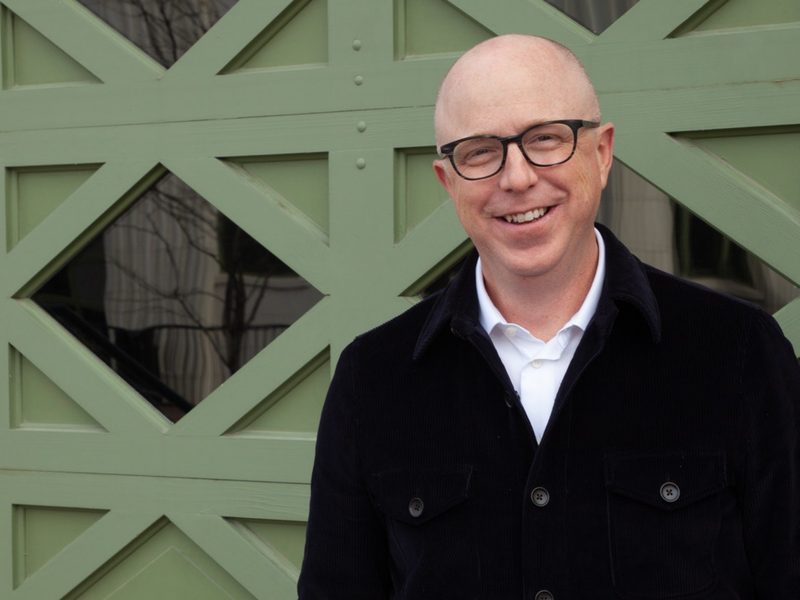
    Many years ago when I was a Purdue student, I worked part-time at a local retirement and long-term care facility in West Lafayette. It was the “cream of the crop” in terms of quality of care and resident experience, but even then, I could see the constant demand by family members for information on loved ones and how this challenged staff. That said, staff also had information needs not always easy or immediate to satisfy. I first met Doug Wilcox, CEO of Safekeeping, at a VisionTech Angels Screening Committee meeting a few years back. Although we liked the business model, it was very early stage, so we passed. Time passed and when Doug pitched the committee a second time we said yes because of Safekeeping’s impressive traction and market trends that could accelerate adoption. We invited Safekeeping to present during our August Pitch Week. Here’s a sneak preview. I hope you’ll join us to hear Doug and participate in the discussion on this investment opportunity.

    BP:  There’s a good personal story behind the founding of Safekeeping. Do you mind sharing it?
    DW: Not at all. It’s kind of a two parter. My co-founder, Matt Prasek, started the company while a senior at Ball State University. His grandfather had a skiing accident that left him incapacitated and in nursing facilities for the rest of his life. Matt felt like he was constantly badgering his grandfather’s caregivers for updates so for his senior class project, he came up with a communications tool, which was named Best New Venture at Ball State. The second part is my own experience with my mother who spent the last 18 months of her life in a long-term care facility. I would have to drive two hours just to get questions answered about her care and condition. The facility gave me a flier on Safekeeping and intrigued, I reached out to Matt and joined him in 2017. At the time, Safekeeping had one customer, the facility where my mother lived.

    BP:  What pain points do you address with Safekeeping and the How’s Mom platform and app?
    DW: America is aging out. Seventy percent of the population age 65 and over will require long-term care at some point in their lives. Every day, 10,000 Americans turn 65. This is a huge population. And all of them have families who want to know how mom or dad is doing in long-term care. Complicating matters is the fact that many adult children do not live in the same city or town as mom and dad, which makes it harder to get information on their loved one.

    Another pain point is at the caregiver level. The workforce is under incredible stress. Turnover is huge. Workloads are heavy. There simply is no time to respond to all the requests they get for information, the need to share information, and also, to gather critical information such as consents. The long-term care industry, users and providers, needs a digital solution that improves communication, quality of care and relieves a huge burden from caregivers and administrators.

    BP: What is your value proposition?
    DW: Safekeeping’s How’s Mom platform is an automated, self-service family connection integrated with a long-term care or senior care center’s electronic health record (EHR) system. At the core of the solution is the How’s Mom Connections Hub that allows a facility to easily manage all family interactions such as share details on their clinical charts, document compliance with CMS communications rules within the EHR, communicate with families via text, email and the How’s Mom app, and automatically synch family contacts.Families have real-time, on-demand access to information they want and need about their loved one. They can schedule visits and receive notifications through the app. Patients also benefit from our platform.

    BP: Where are you in the commercialization process?
    DW: We are fully commercial and working on platform enhancements and functionality.

    BP: What’s your traction like thus far? Any barriers to sales?
    DW: We currently have 172 paying facilities in 32 states, with another 128 facilities actively participating or planning 30-day pilot programs. The biggest barrier to sales is the perception that IT implementations are difficult and time consuming. So there’s this cringe factor when people hear “software deployment.” The reality is our How’s Mom platform is nothing like that. Because we integrate with existing EHR systems – PointClickCare and MatrixCare as of today – implementation can be done in days with a minimum of effort. And truthfully, from our end, it takes less than an hour. The platform is very intuitive, so staff training is minimal. Families simply download the app and they’re live. That said, we offer 30-day free pilots to facilities so they can try it with no obligations.

    BP: COVID had a profound impact on nursing facilities and created fear and anxiety among families, patients and caregivers. How has it affected Safekeeping?
    DW: As you mentioned, COVID created anxiety among families especially in states that locked down long-term care facilities. The need for information on loved ones exploded when families could not visit in person. On the other side of the spectrum, facilities were under enormous pressure to stay staffed and create a safe environment for workers. Because of COVID, there has been tremendous turnover in staff such as nurses, social workers and particularly among CNAs. Add to that, new demands on staff time and no money to fund new protocols so we’ve seen long-term care facilities shut down as a result. So this is a stressed industry.

    Safekeeping has thrived under COVID because we remove communication and administrative burdens from staff and provide that critical, real-time connection point to information for families and loved ones.

    BP: The federal Cures Act is also working in your favor, correct?
    DW: Absolutely. This is an act passed in 2016 and is intended to give patients safe and secure access to health data so they can better manage their care and make more informed healthcare decisions. It was first implemented in hospitals and medical practices – you’ve likely used the portals hospitals now have on their websites – and now it is set to be implemented in long-term care facilities. Healthcare providers need to be ready to share certain electronic health records with patients and family members on request to be Cures Act compliant.

    Here’s the deal. While some of our clients are aware of the Cures Act and are specifically implementing our platform as their solution, many long-term care facilities are not aware they have to be compliant with the Act. Those not in compliance will face financial penalties in the form of lower reimbursements. As far as we know, Safekeeping, with our clinical focus and EHR integration, has the only platform that is Cures Act ready. Other apps will pop up, but this is not an easy integration. It will take at least 12 months, and probably longer, for a competitor to develop a solution.

    BP: Do you have any IP protection?
    DW: We are looking into patents and IP protection with our legal team. We do have it on our radar and likely will use a portion of funds from our next raise to begin the process.

    BP: Do you have competitors?
    DW: We do. Kind of. There are a number of companies focused on the social side of long-term care. They address social engagement, sharing photos and videos between mom and dad and their families. That’s the easy stuff. But it doesn’t solve anyone’s problems. Social apps make work for caregivers, add additional processes, and some require additional hardware and software—all of which are big turn-offs for senior care operators. 

    Safekeeping’s How’s Mom platform does the heavy lifting in terms of functionality and usability. Caregivers, families, and patients get a much richer, more complete experience in a self-serve format. Because we’re integrated with a facility’s EMR system, families can access information on their family member’s vitals, conditions, medications, and nutrition – the type of information people normally must call in to get.

    BP: How much are you planning to raise and what will the proceeds be used for?
    DW: This is a seed round and we’re hoping to raise $1 million to get us ready for a Series A raise. Half of this raise will go to continuing to add functionality to the platform that will drive adoption. The other half will go to sales and marketing. We just hired our first employee, a full-time salesperson, and customer support representatives will be added soon as well.

    BP: Why should VisionTech Angels invest in Safekeeping?
    DW: Four reasons. Founders who have personally lived the pain points of the industry and have a passion for delivering the right solution for caregivers, families and patients. Momentum in the industry; we’re integrated with the largest EHR company in the long-term care industry which provides instant credibility and ease of use. We’re market proven with nearly 200 users. And finally, timing is in our favor. Because of the Cures Act, long-term care facilities may soon be mandated to provide the type of information Safekeeping makes accessible now without adding any burdens to users.  I hope VisionTech investors go big.

    To learn more about Safekeeping, visit their website. VisionTech Angels’ August Pitch Events will be virtual on Tuesday, August 24 and Thursday, August  26 at 6 p.m. Pitch events are open to our members and accredited investors interested in joining our group. To register, check your email for an invitation, go to our Events page or email Ben Pidgeon at bpidgeon@visiontech-partners.com.