Tag: Midwest angel investing

  • Meet February Pitch Week Presenting Company Akadeum

    Meet February Pitch Week Presenting Company Akadeum

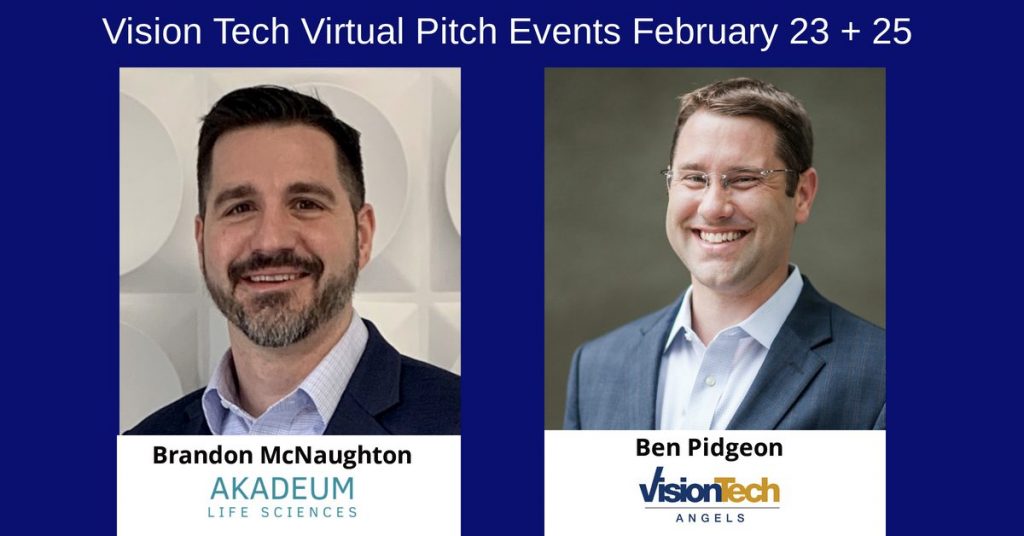
    Akadeum is a life science company from Ann Arbor, Michigan, founded with the intention of fundamentally changing the way that isolating cells and other biological targets is approached. Their secret sauce for cell separation? Microbubbles. I met Akadeum CEO Brandon McNaughton through Paul D’Amato, one of their investors and a board observer. Paul leads the Michigan Venture Capital Network and thought VisionTech should take a look. Here’s a preview of our second February Pitch Week presenting company, Akadeum.
    BP: Let’s start with your elevator pitch, Brandon.
    BM: Sure thing. Without the critical step of separation—removing and isolating things like DNA, proteins, or cells from biological samples—many diagnostics and therapies would not be possible. Existing separation technologies have shortcomings that are directly addressed with our proprietary flotation-based technology. Our next generation solution solves major long-standing problems in research and human health through improvement in diagnostics, industrial and biopharma processing, and cell therapy. You can see a demo here.

    BP: What unmet need in the market are you filling?
    BM: The unmet market need is better, faster, and technically superior separation. Akadeum was formed to address the limitations of currently available separation, which have remained relatively unchanged over the last 40 years. Limitations to current processes include:

    Volume limited – preventing efficient large scale production

    Low throughput – limiting the number of samples that can be processed

    Cumbersome workflow – involving sample transfer and loss

    Technician skill dependent – leading to unpredictable results

    Labor intensive – requiring significant hands on time

    Costly capital: requiring magnets, columns and more complex equipment 

    BP: What are the advantages of Akadeum’s BACS Microbubbles?
    Our major microbubble technology advantage is that we go where other competing technologies cannot go. Advantages include scalability to large volumes such as applications in cell therapy, bioprocessing, and food/water testing. Scalability to large numbers of samples which is applicable to high density testing, digital droplet PCR, single cell sequencing. Our technology is easy to use, with minimal or no equipment.

    Our technology also enables yet-to-be-accessed market segments that have matured beyond the reach of existing technologies. Industry needs have evolved and system designs are moving toward higher fluidic volumes, higher density microtiter plates, easier workflows, and more gentle handling of samples. Unlike any other technology on the market, Akadeum addresses all of these areas with an elegant and cost-effective solution.

    BP: Who are your ideal customers? Researchers or clinicians?
    BM: The short answer is both. Anyone using separation tools and equipment as part of their daily problem-solving and workflow. Our customers include researchers in pharma, biotech and academia; and industry partners where we are working to co-develop and launch new products.

    BP: How big is the market?
    BM: Simply enormous. Because biological separation is essential in order to perform research, diagnostics, bioprocessing, and cell therapy, the market opportunity is large and growing quickly. The addressable market is well over $5 billion. Each application area alone would support a standalone business.

    BP: Who are your competitors?
    BM: Our competition is other companies using old technologies that allow for separation of nucleic acids, proteins and cells. There are a few ways of doing this, including use of magnetic particles, acoustics and microfluidics. A few companies using these technologies include Thermo, Miltenyi Biotec and Roche. The Akadeum technology provides for sustained competitive advantage due to the key enabling aspects and our patents of flotation-based separation. 

    BP: What kind of traction/interest are you seeing?
    BM: Several high impact applications have emerged from the use of our research kits. Examples include fast removal of red blood cells to shorten user protocols by hours, dead cell removal for single-cell sequencing and many other applications. We are building on this by deploying additional kits and applications for areas like nucleic acid extraction, single-cell sequencing and liquid biopsies. This has led to multiple industry collaborations with a robust pipeline of additional opportunities.

    BP: What will this investment round be used for?
    BM: We are focused on commercialization, device development and growth, which will include releasing about 10-20 new research use only kits, enabling additional application areas. In addition to building Akadeum-branded proprietary devices, we will also be securing more partnerships and moving them to commercial agreements. This approach drives the value of Akadeum’s unique flotation-based platform by achieving broad integration and adoption.

    BP: Why should VisionTech investors back you?
    BM: Several important reasons: we have an industry experienced management team that leads aggressively, a board with operating experience (three in life sciences including the executive chairman), a well-developed strategy, a capital efficient model, unique priority U.S.-developed technology, and the potential for multiple exit partners.

    To learn more about Akadeum, visit their website. VisionTech Angels’ February Pitch Events will be virtual on Tuesday, February 23 and Thursday, February 25 at 6 p.m. Pitch events are open to our members and accredited investors interested in joining our group. To register, check your email for an invitation, go to our Events page or email Ben Pidgeon at bpidgeon@visiontech-partners.com.

  • Meet October Pitch Company Rebus that Can Help Sports Teams Monetize Legions of Fans

    The global pandemic has caused incredible social and economic disruption—that includes pulling the plug on the sports world. I know I was disappointed when the NCAA cancelled March Madness last spring. It’s only now that sporting events are getting back on track, but at very limited capacity. How can leagues and teams reactivate their fan bases and revenue streams? Rebus, a sports tech startup and 2020 participant in the Techstars Sports Accelerator Powered by Indy, has the answer: an artificial intelligence-driven system that suggests unique and tailor-made experiences for every single sports event attendee or online viewer. I was introduced to Rebus CEO Juliana Villalbal by VisionTech Angels member Kerry Perry, who is also a Rebus mentor. The VisionTech Angels screening committee was impressed and invited Rebus to participate in our October Pitch Week. Here’s a preview!

    BP: Tell us about Rebus – why did you and your co-founders start the company?
    JV: The idea of Rebus started back in 1993. When Jose H. Berrio (co-founder and CPO) was nine years old, his father gave him the surprise of a lifetime. He took him to a soccer match, but instead of walking to the stands, they went to the locker room to meet one of the greatest soccer players of all time. That moment changed Jose’s life forever.

    As an adult, Jose realized most of his friends never experienced unforgettable moments like his, and he became obsessed with the idea of creating memorable experiences for other fans.

    I met Jose at an innovation event where we were both speakers about event experiences (me) and event technology (Jose). At the end of the event, we shared a 40-minute ride to the airport and realized we both shared a passion for events, sports and living experiences worth remembering. A few months later, we decided to join forces to create the first company that was 100% focused on helping teams and leagues offer experiences worth remembering and unlock the 80% of their fan bases that could be engaged and monetized.

    Rebus co-founders Jose H. Berrio and Juliana Villalba

    BP: How does your technology help amateur and professional sports?
    JV: We help sports properties find new ways to engage with their fan base while driving incremental revenue. Here’s a simple example: the Pacers’ arena can hold around 20,000 spectators, but the Pacers have 5 million fans on social media. Right now, they’re only monetizing the avid ticket buyer fan. We help monetize the rest via our add-on engine that helps sports teams and their sponsors generate revenue and fan engagement by powering unique product offerings and meaningful ancillary experiences. Our widget and messaging engine takes just a few hours to set up and works seamlessly across any sports properties’ digital assets such as websites and social platforms.

    This makes every sporting event an awe-inspiring fan experience. Some of our experiences include engaging in a private VIP hangout with players of the team of choice, bedtime storytelling by a team mascot for your children, participating in an unforgettable sweepstakes contest for a one-on-one workout session with former or star players, and having the opportunity to bid on exclusive, once-in-lifetime memorabilia such as game-worn jerseys, signed game balls, and VIP access to the biggest games! Today, thanks to Rebus, teams are able to reach their entire fanbase, sell experiences worth remembering and allow fans to seamlessly purchase unique products and services.

    BP: Is your technology patentable?
    JV:No, but it is proprietary developed inhouse with a team of full stack engineers and AI experts.

    BP: How big is the market?
    JV: The Latin American market is big, about $7 billion U.S., but the North American sports market is 10 times bigger at $70 billion U.S. There are more than 150 million sports fans in the United States alone.

    BP: What is your competitive advantage and what makes your solutions a must-have for sports teams and leagues?
    JV: Think of Rebus as a retail end-cap display of the digital world. We expose and target fans to ai-enabled special promotions and “limited edition” experiences from their favorite teams and sports franchises on fans’ live screens. We guarantee clients a minimum 15% conversion rate, which is three times more than traditional e-commerce platforms. That’s pretty hard to pass up!

    BP: Who are your competitors?
    JV:The competitive landscape for fan engagement technologies is crowded; however, most companies are heavily focused on avid fans like Experience, Fanatics and Fevo. We help teams monetize casual or fair-weather fans, something our competitors aren’t doing.

    BP: Is it a tough sell or do sports properties immediately understand your value proposition?
    JV:Teams and leagues understand our value proposition immediately as they face challenges producing and selling experiences to their fan base. The vast majority of teams monetize only about 20% of their fan base.

    Rebus uses AI to create individualized experiences for the 80% of fans not at the game, creating new sources of revenue for teams and leagues.

    BP: What kind of traction do you have to date?
    JV:We currently service about 100 clients in sports, entertainment and corporate events, and deliver conversion rates of more than 15%, which is three times higher than traditional e-commerce solutions like Amazon or Shopify. Since starting the Techstars Sports Accelerator Powered by Indianapolis in July, we have closed deals with teams from the WNBA and USL, the World Boxing Council, esports teams, and soccer teams from Latin America and Europe. Additionally, we have more than 20 teams and organizations reviewing our pilot proposal as we speak. Our September revenue was $80,000 and average monthly revenue growth is 40%.

    BP: How has the COVID pandemic affected Rebus?
    JV:Regardless of the global pandemic, people still love their sports teams. This year we’ve had an impressive ramp up in clients and users—20% month-over-month growth in clients and 30% in users.

    BP: I hear you’re moving your company headquarters from Bogotá, Colombia to Indianapolis—congratulations!  Why is Indiana the ideal place for you to grow your business?

    JV: Indianapolis is a top sports market with several professional teams and the headquarters of the NCAA. The city provides access to industry specific talent, strong networking opportunities and a great entrepreneurial environment.

    BP: What will Rebus use this fundraising round for?
    JV: The majority will go to finance our U.S. expansion and building out our sales and business development teams. We also plan to continue product development including getting to an omnichannel status and increasing our AI conversion rate.

    BP: Why should VisionTech Angels members invest in you?
    JV: Indianapolis is well known for being America’s sports capital and a thriving startup and tech ecosystem. Rebus is a perfect match for VisionTech Angels’ investment thesis focusing on early growth startups. We have a top-notch and growing customer base, a great product and the right team to execute our vision.

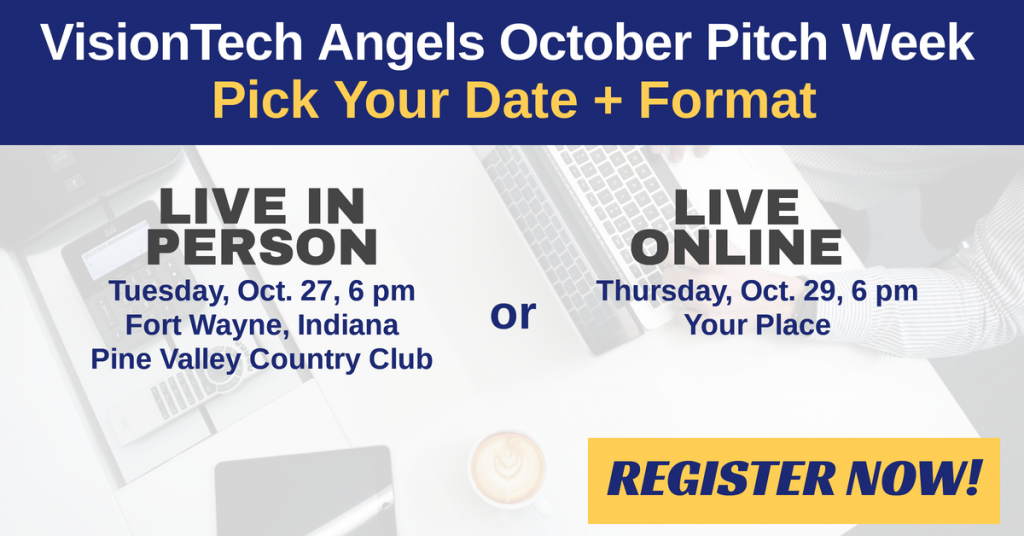
    To learn more about Rebus visit their website. VisionTech Angels’ October Pitch Events include a live event on Tuesday, October 27 in Fort Wayne at the Pine Valley Country Club at 6 p.m. and a virtual pitch event on Thursday, October 29 at 6 p.m. Pitch events are open to our members and accredited investors interested in joining our group. To register, check your email for an invitation or email Ben Pidgeon at bpidgeon@visiontech-partners.com.

  • Meet October Pitch Company Global Neighbor Whose Green Weed-Beating Agtech May Transform Farming

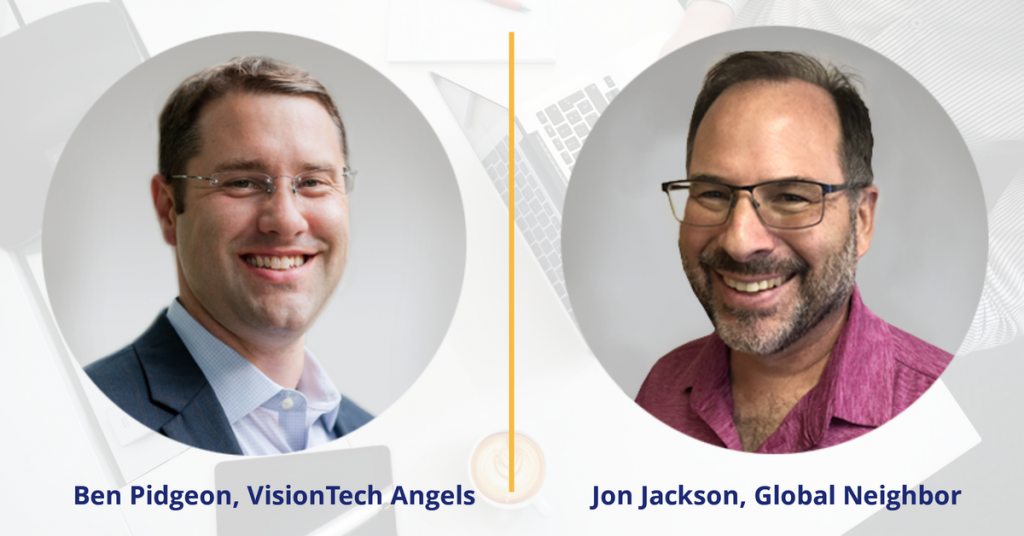
    Michael Bloomberg once explained farming in this tongue-in-cheek way: “You dig a hole, you put a seed in, you put dirt on top, add water, up comes the corn.” Even I, a city guy, know that farming is a lot more complicated than that. In fact, agtech is among the hottest and arguably sophisticated tech sectors today. That’s why I’m excited to introduce our first October Pitch Week presenter, Jon Jackson, president of Global Neighbor Inc. (GNI). His company may be on the verge of transforming how farmers around the world control a growing problem, herbicide-resistant weeds, using a green technology called Directed Energy to kill weeds and their seeds rather than chemical-based herbicides. GNI has secured $3 million in support from the U.S. Department of Defense and the USDA and captured the attention of farmers. Here’s a preview of the investment opportunity Jon will share in detail at  VisionTech Angels’ Pitch Events later this month. Enjoy!

    Ben Pidgeon, executive Director, VisionTech Angels

    BP: How did you get interested in agtech?
    JJ: I have to credit my parents. At 14, they let me farm five acres on the family farm and keep the money from the crop sales. I planted soybeans, sold my harvest, made some money—and wrestled with weeds. Later, I saw my brother’s epic struggle with weed control as he was raising organic soybeans for export to Japan. This “tribal knowledge” coupled with being an engineer, ultimately led to Global Neighbor Inc. (GNI) and helps tremendously when I talk with the farm community about our technology.

    BP: You also have a connection with VisionTech Angels.
    JJ: I do. GNI is headquartered in the Dayton area and we’ve worked with TEC Dayton, which hosts a VisionTech Angels chapter, on multiple projects such as filing our international patents. TEC has also supported us with mentors, who suggested VisionTech Angels should be at the top of our list.

    BP: Explain GNI and the problem you’re solving.
    JJ: Agricultural around the world is at a crossroads in terms of feeding the world and doing so in a sustainable manner. One answer is regenerative agriculture which is a conservation and rehabilitation approach to food and farming systems. Currently, the industry relies heavily on chemical herbicides and insecticides, which can have devastating consequences for the  environment and public health. At the same time, weeds are becoming increasingly resistant to chemical herbicides. This increases weeding costs, reduces farmer yields and profits, and exacerbates the excessive use of herbicides that contributes to soil degradation and also the incidence of non-Hodgkin’s lymphoma. Farmers using combines to harvest crops make the problem worse as combines collect and distribute weed seeds back into the field, increasing weeds in following years.

    Weed-related crop losses are a huge issue. Without weed control measures, U.S. and Canadian corn and soybean farmers would see estimated yield losses near 50 percent, losing $43 billion annually. That’s why farmers spend billions annually on weed control measures.

    Jon Jackson, President, Global Neighbor

    Our vision is to solve the world’s food sustainability problem with technology. We use high-intensity, multi-wavelength light sources called directed energy to control weeds. This technology has the potential to be deployed at scale economically. When combined with regenerative agriculture techniques, we can provide a novel farming system that will allow wide adoption of sustainable ag practices and reduce dependence on chemical herbicides.

    BP: What products do you have in the pipeline?
    JJ: Though our consumer-directed Weederase is already selling and our SmartSprayer will be out shortly, our first agtech product is the Weed Seed Destroyer (WDSD) that kills weeds at the seed stage. The WDSD addresses the challenge of herbicide-resistant weeds in grain crops, a clear and urgent pain point in terms of lower yields and loss of income. The WDSD mounts to the back of a combine and applies directed energy to basically kill the weed seeds which are in the chaff. We’ve tested the WDSD concept with many farmers, and they immediately grasp the concept and the value. We produced a video with farmers expressing their excitement about directed energy weed control. They are pretty excited! View video here.

    BP: How easy will it be to commercially scale your solution?
    JJ: From a manufacturing perspective, scaling is straightforward. It is not a highly capital-intensive business, and the gross margins are high. Our primary market will be aftermarket sales, which involves retrofitting combines with our WDSD system, a process that takes about an hour. Our sales channel will be through the independent ag dealer network across the country. These dealers already offer similar retrofit and aftermarket technical support to farmers.

    BP: What’s the status of your intellectual property?
    JJ: We are an early pioneer in the use of directed energy for weed control and our approach is unique. This has allowed us to craft our intellectual property to provide broad protection. We have seven issued U.S. patents and four U.S. and international patents pending.

    BP: Why hasn’t anyone tried this before?
    JJ: Until now, sustainable ag practices like non-chemical herbicides have not been widely adopted because of how impractical they are to scale. Others are exploring the use of lasers for weed control but lasers for use in ag are technically complex and cost prohibitive. The most direct competition for weed seed control are chaff mills, which use high-speed mills to grind weed seeds. Chaff mills, although highly effective, are high price—up to $100,000. There are other issues, but chaff mills are gaining market acceptance. Our WDSD system will sell for about half the price, use approximately half the power, and will not suffer from excessive maintenance or result in system downtime.

    BP: Who is your ideal customer?
    JJ:
    Our target market is small grain owner-operator family or smaller corporate farmers that own combines. These farmers care about their land, and herbicide resistant weeds reduce the value of their farmland and a farm’s profitability. There are approximately 120,000 operating combines in the United States, with approximately 100,000 of them owned by family or small corporate farmers that farm more than 500 acres of grain crops.

    BP: You have the USDA’s support via an SBIR Phase I grant. What captured their interest?
    JJ: We are thrilled to have won an SBIR from USDA to support our WDSD development! Their interest is driven by the acceleration of global trends. First is the tremendous growth in the number of herbicide-resistant weeds in the United States and worldwide. Research out of Australia confirm that a major tool in the fight against herbicide-resistant weeds is harvest weed seed control; that is, making the weed seeds non-viable at the time of harvest. Finally, our approach of using non-chemical directed energy to control weed seeds is novel and consistent with consumer preferences and government policy trends, reflecting a tidal shift toward sustainable ag. 

    BP: What will this fundraising round be used for?
    JJ: We are raising a $375,000 seed round to leverage our USDA SBIR funding. This will be used to bring on a key engineering hire, support product development efforts including prototype and demonstration expenditures, and support initial marketing outreach and initial product sales. Our goal is to achieve a significant value inflection milestone prior to raising our next round.

    BP: Why should VisionTech Angels members invest in GNI?
    JJ: Two reasons. First, it takes the chemical industry $300 million and 10-plus years to develop a new herbicide with a new mode of action to destroy weeds. We’ve received $3 million in non-dilutive grants and with this substantial R&D investment, we’re developing alternative weed control modes of action for substantially less money and in far less time than the chemical industry.

    Second, there are many companies applying software, the internet of things, machine learning, robotics, and genomic tech to agriculture, all in attempt to disrupt the industry. Many of these attempts will fail as they are a technology searching for a market, a me-too strategy not substantially differentiated, or are burdened by substantial costs of development and deployment. We are not falling into these traps. Instead, we are integrating a proven technology, directed energy weed control, into a farmer’s normal operating practices, and leveraging existing equipment to solve real problems. We believe we have the potential to disrupt the industry and change the world.

    To learn more about Global Neighbor Inc., visit their website. VisionTech Angels’ October Pitch Events include a live event on Tuesday, October 27 in Fort Wayne at the Pine Valley Country Club at 6 p.m. and a virtual pitch event on Thursday, October 29 at 6 p.m. Pitch events are open to our members and accredited investors interested in joining our group. To register, check your email for an invitation or email Ben Pidgeon at bpidgeon@visiontech-partners.com.

  • VisionTech Angels Helps Propel MITO Materials to a Successful $1 Million Plus Seed Round

    INDIANAPOLIS, Indiana (August 31, 2020) – In the height of a global pandemic that eliminated in-person pitches to potential investors, MITO Materials CEO and Co-founder Haley Marie Keith has achieved the impossible, oversubscribing the $500,000 seed investment round in her advanced materials technology startup by a multiplier of two. With six investors including VisionTech Angels joining force, MITO Materials closed the round with more than $1 million raised. Fifteen VisionTech Angels members invested a total of $157,500.

    Joining VisionTech Angels in the round are HG Ventures and Elevate Ventures, Indianapolis; round leaders Dipalo Ventures and Clean Energy Trust, Chicago; and CavAngels of Virginia. When the round closes, the National Science Foundation offers a two-to-one match, potentially bringing the raise up to $1.5 million.

    Keith wasn’t sure what to expect when COVID-19 sparked a global economic lockdown on March 13. “We were scheduled to do in-person pitches, including VisionTech Angels’ five-city pitch week in late April, when everything was literally shut down. Fortunately, the investor groups quickly moved their pitch events online. It was hard presenting virtually and fielding questions from 60-plus investors. We had no idea if investors would have a stomach to put money in a startup in the middle of an economic shutdown, but VisionTech’s members surprised us by investing far more than anticipated.”

    MITO Materials develops and produces chemical additives for manufacturers seeking superior performance, flexibility, and durability in polymer composite products. The company’s flagship graphene product enhances toughness up to 60 percent and increases glass transition temperatures in coatings, sealants, fiber-reinforced thermoplastics, and other materials. These attributes are important to industries like aerospace, automotive, freight trailers, recreational vehicles, and wind turbines that want to lightweight products without sacrificing performance. Light-weighting reduces fuel consumption, which in turn reduces carbon emissions.

    VisionTech Angels Executive Director Ben Pidgeon has two reasons to celebrate his group’s investment in MITO Materials. “This was our first virtual pitch event and I had no idea what to expect from our group, which is spread across five cities in two states. Nearly 70 VisionTech Angels participated in Haley’s pitch and 25 liked what they heard, advancing the deal to due diligence. Ultimately, 15 of our angels invested.”.”

    Keith says investors were swayed by the uniqueness of MITO Materials’ technology and the company’s ability to scale and bring customers on board. Currently, MITO Materials is completing a pilot program with a major Indiana-based freight-related manufacturer that wants to transition from metal framing to composite materials. Other customers are in the pipeline.

    Funds from the seed investment round will be used to scale MITO Materials’ manufacturing operations with Monument Chemical as well as ramp up sales and marketing efforts. Funds will also help prepare for its Series A round, which is anticipated in the next 18 months.

    MITO Materials was founded in Stillwater, Oklahoma, using technology developed at Oklahoma State University. The company relocated its headquarters to Indianapolis to be closer to potential customers and the Midwest’s growing capital market.

  • VisionTech Angels Pumps $210,000 into Resonado Whose Flat Core Speaker Technology Is Changing the Shape of Sound

    The investment is part of a bridge round raise intended to accelerate Resonado’s entry into the home audio, wearables, automotive and leisure vehicles industries.

    INDIANAPOLIS, Indiana (August 25, 2020) – – VisionTech Angels, one of the premier angel investing networks in the Midwest, has successfully completed a $210,000 investment in Resonado, a startup out of the University of Notre Dame whose Flat Core Speaker™ (FCS™) technology is changing the shape of sound and disrupting multiple industries that use audio in their products.

    Resonado is currently closing a $500,000 bridge round that began in early 2020. The round is oversubscribed at just under $1 million. Other investment groups participating in the round are Queen City Angels, Connetic Ventures, Lofty Ventures, and a number of private investors.

    Commenting on the announcement, VisionTech Angels Executive Director Ben Pidgeon said, “We’re extremely pleased to add Resonado to our investment portfolio. More than half of our 125 members participated in Resonado’s virtual pitch in March and of these, one-third made investments. That speaks volumes about the opportunity.”

    Pidgeon added, “The investment is also meaningful because our members, many of whom have founded and run successful companies themselves, are committed to supporting startups that launch from Indiana universities, whether through investment or business expertise. Indiana, and the Midwest at large, continue to strengthen its position as an innovation-rich ecosystem, launching startups and fueling investment.”

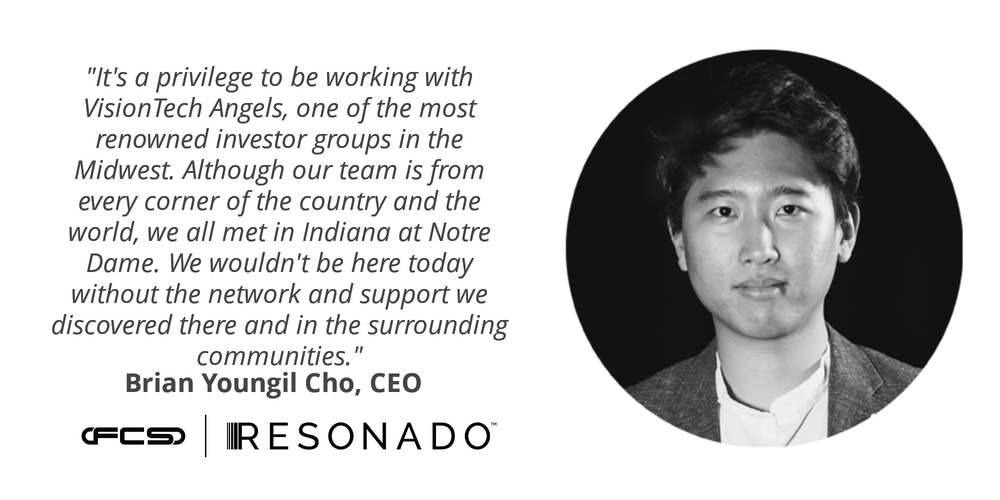
    Resonado CEO and Co-founder Brian Youngil Cho welcomes VisionTech Angels to the team. “It’s a privilege to be working with VisionTech Angels, one of the most renowned investor groups in the Midwest. Although our team is from every corner of the country and even the world, we all met in Indiana at Notre Dame and Resonado wouldn’t be here today without the network and support we discovered there and in the surrounding communities. Part of the support when we were first starting out was from investors at VisionTech Angels, and so this investment is particularly meaningful for us. We’re determined to keep working hard to take our company to the next level and hope to represent Indiana and the Midwest well along the way.”

    Resonado was founded in 2017 by Notre Dame students Cho, Christian Femrite, Erikc Perez-Perez, and Peter Moeckel, who were focused on developing audio technology more in-line with today’s devices. The result is a thinner, lighter, and more versatile speaker architecture that replaces the century-old speaker “cone” and gives manufacturers and brands greater flexibility to create and integrate into their products. This is welcome news for the wireless audio device industry, estimated to reach $134.2 billion by 2025 the automotive sound system market, and others that rely on innovative design and sound quality to drive consumer demand.

    Resonado plans to apply the proceeds of the round to strengthening its intellectual property protection, support ongoing research and development, and finetune market readiness and manufacturing. The company signed a licensing agreement with leading audio manufacturer Zylux in late June and has three products set to hit store shelves before the end of the year.

    About VisionTech Partners I VisionTech Angels
    Founded in 2008, VisionTech Partners I VisionTech Angels is a privately held company that links investors to high-potential, early-growth companies. Based in Indianapolis, capital of one of the nation’s most vibrant innovation regions, VisionTech Angels has chapters in Bloomington, Fort Wayne, Indianapolis, Lafayette, Dayton, Ohio. Our investment portfolio includes 35 companies, and more than 130 members across Indiana and Ohio. Membership is open to accredited investors. Those interested in joining are encouraged to contact VisionTech Angels.

    About Resonado
    Resonado is an American technology company that designs and provides proprietary speaker transducer technologies to brands and manufacturers. The company’s flagship product, Flat Core SpeakerTM (FCS™) technology, is redefining the shape of sound with a fully scalable, thin-profile, lightweight, premium electrodynamic speaker transducer type. FCS technology’s thin structure and high aspect ratio enables unprecedented design innovations to products in industries including aerospace, automotive, consumer electronics, home theater, and marine. Resonado launched the brand nationwide as the Official Sound Partner of Notre Dame Athletics in late 2019 with plans to enter the marketplace in 2020. The company was founded by four undergraduate students at the University of Notre Dame in 2017 and is based in South Bend, Indiana. Learn more at resonado.com.

  • Meet June Pitch Company #2, Zive, Creator of Kiwi for G Suite

    When I first spoke with Eric Shashoua, CEO and founder of Zive, he shared a mind-blowing number: there are 1.5 billion Gmail accounts. When Google launched the free email service in 2004, it was a simple application. But as Gmail’s popularity grew and Google continued to embellish it, it became increasingly frustrating for users in the browser. Where there’s a problem, there’s a solution. And where there’s a large market, there’s a motivated entrepreneur. Thus Eric and the Zive team set out to make Gmail user friendly again. The result is the hugely successful Kiwi for Gmail and now Kiwi for G Suite, applications that have grown rapidly across Google’s client base. What the company’s doing next will be even stronger. It’s a great story that Eric will share when he presents at next week’s VisionTech Angels Virtual Pitch Events, Tuesday and Thursday, June 23 and 25. Here’s a preview.

    BP: Zive is not your first startup rodeo.
    ES: No, I actually started my first company while a senior at Brown University. I got an idea from the technology used for sleep studies, thinking it had a consumer application. I raised $14 million in angel and VC funding and launched the Zeo Personal Sleep Coach in the U.S. and Europe. The experience taught me two important lessons. First, it cost us $5 million to create and bring the Zeo device to market, so I became very jealous of software companies that need a fraction of that amount to commercialize. Second, in terms of attractiveness to potential acquirers, Zeo was something of a square peg in a round hole. We weren’t entirely healthcare nor were we entirely a consumer electronic product, which made an acquisition difficult. I left Zeo to start an enterprise software company, Zive, which created Kiwi.

    BP: Where did the name Kiwi come from?
    ES: Another lesson learned from my previous company. We’re focused on enterprise software, but I believe that enterprise users like to be treated like consumers. Consumers like brands that are non-threatening, even cute, and easy to remember. Email is stressful for people. The name Kiwi, coupled with our colors and the brand illustrations we use in our applications, is childlike, small, and harmless, and subtly conveys the idea that we make Gmail and G Suite easier.

    BP: Microsoft Office has been the 800-pound gorilla for years. Why are people and enterprises moving to Gmail and G Suite – and on to Kiwi?
    ES: A couple of reasons. Google is cheaper than Microsoft Office, and millennials who grew up on Gmail are now entering management and prefer Google. However, Google’s biggest strength lies in it being very good at enabling people to collaborate. Microsoft’s taken years to catch up to Google, creating better collaboration features, Microsoft Teams, and even a SaaS email model for enterprise. Microsoft under Nadella is quite a different beast than under Ballmer, but Google’s pressing their advantages hard.

    BP: Explain Kiwi and the problem you’re solving.
    ES: First let me say as a millennial, I’ve always loved Gmail. But over the years, it went from a simple application to a much more complex tool that’s harder to use. In 2013, my co-founder Ryan Shetley and I began experimenting with ways to take Gmail out of the web browser and onto desktops to make it easier to use and enhance it with productivity features. We launched our first, basic version of Kiwi for Gmail on the Mac in 2015, followed by the Windows version. We gradually expanded our offering to Kiwi for G Suite, which is the enterprise version, which makes all of the Google apps like Docs, Sheets, Slides, and Calendar work together seamlessly in a full-featured desktop office productivity suite. We’ve also integrated plugins like Zoom, Webex, BlueJeans for video conferencing plus others—things people can’t live without these days.

    Ben Pidgeon, Executive Director, VisionTech

    BP: Speaking of that, how has the pandemic affected Kiwi?
    ES: It’s the direct opposite of what many companies are facing. Kiwi is built around remote work just like Zoom, Citrix and Slack. Throughout the economic lockdown and people working at home, we’ve experienced accelerated growth. Companies are moving to G Suite and we make it easier for their users. We are very well positioned in this space.

    BP: What’s the response been to Kiwi?
    ES: Users love it, and we’ve grown to have users across the map in large companies like Salesforce, Netflix, RedHat, and Priceline. Kiwi for Gmail is one of the highest rated apps on the Mac App Store with five stars based on thousands of ratings. It’s our Trojan horse for getting into enterprise. Users who buy Kiwi do so because it saves them a lot of time doing their work – it’s outside the browser, it works well, it’s easier to manage multiple Gmail accounts, and has a number of features like Cloud Search and Focus Filters that make it much easier to find the emails and documents users are trying to work on. We’ve also gotten great press from Forbes, Inc., The Wall Street Journal, eWeek, TechRadar, and others. People say, “This is something Google should have thought of.” That’s an exciting thing to hear, because we admire Google’s product managers for really sticking it to the status quo and forcing this industry to evolve.

     BP: Tell me about your leadership team.
    ES: We have a great team: my co-founder Ryan Shetley is our CTO with extensive experience in Chromium and browser frameworks; Eric Wanta, our CMO, has deep experience in B2B marketing; and Marc Elia, who’s taken other startups from launch to exit, heads up our business development. A massive development is that Christopher Fong just joined us as an advisor to Kiwi as well. Chris spent 8.5 years with Google, much of it in business development and strategic partnerships. He is also the founder of Xoogler.co, a community of 8,500 former Google employees who are focused on startups.

    BP: What are you using this raise for?
    ES: We’re growing, and we have a number of immediate opportunities for new Kiwi for G Suite functionality that will accelerate our growth. Unrelated to Google, we also have an entirely new product that we’re building which will be much larger than our Google business. We plan to expand our team to pursue both of these things in parallel, as well as invest in sales and marketing efforts. The coronavirus-driven shift to remote work has left Zive in a very strong financial position. Our round is nearly full, and VisionTech Angels is likely the last angel investment group we’ll meet with.

    BP: Last question: Why should VisionTech Angels invest in Kiwi?
    ES: There are two reasons, neither of which I can say much about publicly. Our successes over the past nine months have led to us building a strong relationship with Google. What’s coming beyond Kiwi for G Suite will multiply our potential acquirers, and be a lot of fun for us and our investors. We’re growing rapidly, we have good relationships within the industry, the market timing is with us, we’ve validated our exit thesis, and are well positioned to exit. We can elaborate more on this when we meet.

    BP: Sounds great! We’re looking forward to the pitch events.
    ES: I’ll be there—on Kiwi for G Suite of course.

    To learn more about Kiwi for G Suite, visit their website. VisionTech Angels’ June Virtual Pitch Events are open to our members and accredited investors interested in joining our group. To reserve your spot, email Ben Pidgeon at bpidgeon@visiontech-partners.com.
  • VisionTech Portfolio Company React Mobile Receives $6M Investment via Strategic Partner Brady Corp.

    VisionTech Angels is pleased to share the following news on our portfolio company, React Mobile.

    SEATTLE (May 26, 2020) —React Mobile, a robust, open, cost effective and flexible panic button safety platform, today announces it has raised $6 million through a new strategic partnership with publicly traded Brady Corporation (NYSE:BRC). Headquartered in Milwaukee, Wisc., and founded in 1914, Brady is one of the oldest and most successful privately controlled family businesses in the U.S. The company manufactures solutions that identify and protect people, products and places. Together, React Mobile and Brady will jointly develop new solutions that help customers increase safety, security, productivity and performance to further their shared mission of promoting employee safety everywhere.

    Robb Monkman, CEO, React Mobile

    “This strategic partnership with Brady is a force multiplier that will enable React Mobile products to reach new verticals where our safety solutions can make a massive impact towards making the world a safer place,” said Robb Monkman, React Mobile CEO. “As we leverage Brady’s infrastructure, our installation capabilities will grow exponentially, from installing 30 sites per month to more than 100. This investment solidifies our financial stability and enables us to support hundreds of enterprise customers worldwide.”

    React Mobile’s best-in-class safety platform helps businesses keep their employees safe. Their system enables management to deploy resources to the exact location of an emergency within seconds of an alert, getting help to where it is needed fast. The React Mobile platform utilizes GPS geolocation and Bluetooth® beacon technology to provide unparalleled accuracy to locate an employee in distress. The company has the largest hotel customer base of any panic button technology.

    Brady Corp. offers a unique combination of software, services, and integrated solutions designed to help businesses build, manage and maintain world-class safety and asset management programs. Brady’s products include high-performance labels, signs, safety devices, printing systems and software. The company has a diverse customer base in electronics, telecommunications, manufacturing, electrical, construction, medical, aerospace and a variety of other industries.

    “Brady and React Mobile are synergistic companies that build solutions for a smarter, connected world,” said Michael Nauman, Brady President and CEO. “Like Brady, React Mobile’s panic button solutions outperform their competition, and both companies are dedicated to solving customers’ problems and making their operations more efficient and effective. Our financial support combined with React Mobile’s hospitality domain expertise will enable each to execute their visions and exceed growth projections more rapidly and broadly. This strategic partnership is truly a win-win.”

    About Brady Corporation

    Brady Corp. is an international manufacturer and marketer of complete solutions that identify and protect people, products and places. Brady’s products help customers increase safety, security, productivity and performance and include high-performance labels, signs, safety devices, printing systems and software. Founded in 1914, the Company has a diverse customer base in electronics, telecommunications, manufacturing, electrical, construction, medical, aerospace and a variety of other industries. Brady is headquartered in Milwaukee, Wisconsin and as of July 31, 2019, employed approximately 6,100 people in its worldwide businesses. Brady’s fiscal 2019 sales were approximately $1.16 billion. Brady stock trades on the New York Stock Exchange under the symbol BRC. More information is available on the Internet at www.bradycorp.com.

    About React Mobile

    Founded in 2013, React Mobile is a global leader in providing panic button solutions for hotels. Our best in class hospitality safety platform helps hotels keep their employees safe. The React Mobile system is an open and flexible platform that allows management to deploy response resources to the exact location of an emergency within seconds of an alert, getting help to where it’s needed anywhere on or off property. In an emergency quick response times are essential and React Mobile gives you the tools to react fast. For more information, visit www.reactmobile.com.

  • VisionTech Angels Kick Off the 2020 Investment Season with Materials Handling AI and Robotics Disrupter, SIERA.AI

    I’ve come to believe that with startups, timing is everything. It’s particularly true in the case of SIERA.AI, an Austin-based company that has created and is now commercializing autonomy software solutions for materials handling in the manufacturing and logistics industries. Though SIERA.AI is a young company, they’re building an impressive book of business with Fortune 500 companies. I recently sat down with SIERA.AI CEO Saurav Agarwal who will be presenting during our February Road Show, on just how well his company’s positioned for the market and the opportunities this affords. Here’s our conversation.

    Ben Pidgeon, Executive Director, VisionTech

    BP: What are the trends within the materials handling space that made you believe you could solve the industry’s challenges?
    SA: In short, it’s explosive growth and the growing pains that have come with it. Over the last five years, there’s been a boom in the logistics industry, due in part to the transformation that’s taken place in the retail industry. These numbers are a bit dated, but from 2014 to 2016, 833 million square feet of warehouse space came online in the U.S. alone. You can look at Indiana’s I-65 corridor and see expansion is still occurring.

    In response, manufacturing and logistics companies are adding about a million forklifts to their operations each year. At the same time, there’s a shortage of 43,000 certified operators. It’s not an easy job. Drivers  operate 10,000-pound machines in tight spaces. There’s no room for error. Sometimes drivers get careless. According to OSHA, there are 96,000 forklift-related accidents a year, with losses of upwards of $9.5 billion a year and lost wages of $3o billion. And that’s just the U.S. The opportunity for disruption was obvious.

    Saurav Agarwal, CEO, SIERA.AI

    BP: Explain your solutions.
    SA: SIERA.AI builds autonomy software for forklifts. We have two primary offerings: a basic version, for accident prevention, and a pro version, for full automation. The SIERA Safety System (S3) is added to existing driver-operated forklifts to sense and prevent accidents before they happen. The system constantly tracks driver behavior and streams real-time data to the cloud for deep analytics. The monitoring has a distinct impact on driver behavior and that coupled with S3’s ability to prevent accidents has a profound impact on safety, productivity and loss due to accidents. Driven by SIERA.AI is our autonomous mobile robot technology; forklift robots if you will. The robots map and navigate in the customer’s facility on their own, interface using Wi-Fi with the MES/ERP systems and industrial controls, and get the job done safely and reliably. Both options can be added to existing forklift fleets or can be licensed by OEMs.

    BP: What’s your revenue model? Is it an initial purchase and then monthly licensing?
    SA: Yes, there are unit sales and annual recurring revenue from licensing our software.

    BP: What market traction do you have to date?
    SA: We have five active pilots, two flagship clients converting to full adoption, and over $6 million in deals we’re currently negotiating. One of our clients is Tyson Foods; our SIERA.AI Safety Solution is in their beef processing plant in Dakota City, South Dakota. One of their biggest problems is forklift manufacturers don’t include safety technology, and they wanted to eliminate accidents. In their pilot, which took place over three months, more than 5,000 miles were driven with no accidents or near misses. Management also noted a significant change – for the better – in driver behavior. Tyson Foods has 8,000 forklifts in its fleet and could potentially license 3,000 of them with SIERA-AI, a nice amount of recurring revenue.

    BP: What are the barriers to adoption?
    SA: With the labor shortage and high cost of accidents and lost wages, the SIERA Safety System and our autonomous robots are both very attractive to companies that need to move goods safely and avoid costs. The beauty of SIERA.AI’s solutions is companies can use both the enhanced safety solution and robotics side-by-side for human-robot collaboration.

    BP: What’s your competitive advantage?
    SA: First, we have a great product market fit; SIERA.AI has the only available forklift brand agnostic safety and automation product on the market. Second is our speed to market and accelerating traction. Finally, our solutions will be well protected. We’ve filed four utility patents and four provisional patents and hope to finalize those by Q1 2021.

    BP: How much money are you raising and what will the funds be used for?
    SA: We’re currently raising a bridge round of $500,000-600,000 and have $175,000 in soft commitments. The capital will be used to fulfill current orders – we’ve signed orders (recurring revenue, 5-year contracts) worth $400,000 in mid-January. We also need to hire an additional engineer, deployment manager, and sales and marketing team members so we continue to grow.

    BP: Why should VisionTech Angels invest in SIERA.AI?
    SA: The most compelling reason to invest is the market wants our solution; we’re solving huge industry problems. We’ve booked significant sales and our pipeline includes Fortune 500 companies that recognize our value. We’ve come extremely far in two years with very little capital and with VisionTech Angels’ investment, we can move that much faster.

    To learn more about SIERA.AI visit their website. To RSVP for the VisionTech Angels’ February Road Show, visit our events calendar. Accredited investors interested in learning more about joining our group should contact Ben Pidgeon, bpidgeon@visiontech-partners.com.