Tag: Midwest angel investing

  • Meet October Pitch Presenter Dom Raban of Xploro: Replacing Young Patients’ Fear with Empowerment

    Meet October Pitch Presenter Dom Raban of Xploro: Replacing Young Patients’ Fear with Empowerment

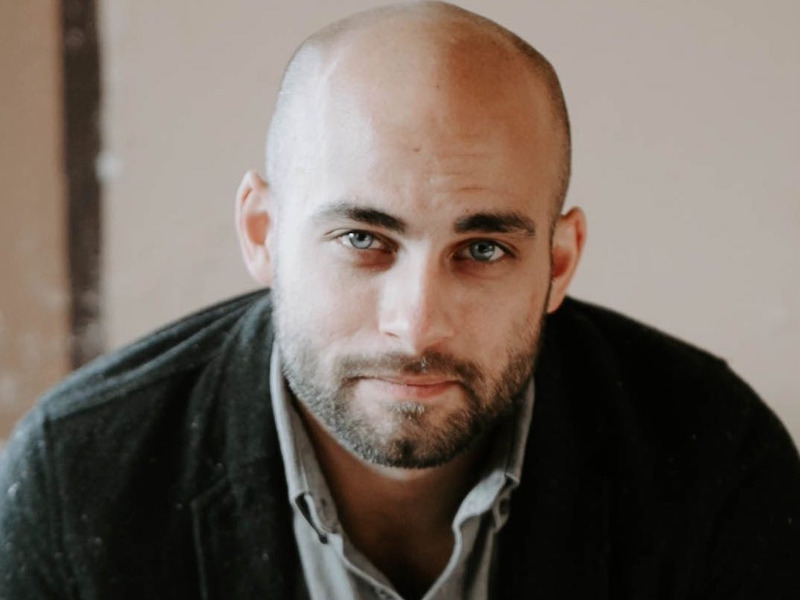
    You’re probably wondering who the funny avatar startup founder is and why he doesn’t have a “real” head shot. That guy is Dom Raban, the founder and CEO of Xploro, an international award-winning startup that removes the fear and anxiety kids feel when facing serious illnesses and treatment. And Xploro does it in a way that meets kids on their level, through interactive digital content that looks like their favorite games. One the Dom’s claims is that this “gamification” approach not only informs kids, but it also eases their anxiety so once they get to the hospital, they know what to expect. As a father of three whose kids have been known to freak out at a regular doctor’s appointment, I immediately saw the value. I invited Dom to a VisionTech Angels Screening Committee meeting earlier this month. The group immediately saw Xploro’s potential and invited him to present at our October 26 pitch events. Here’s a preview.

    BP: How does a startup from Manchester, England, land in Cleveland, Ohio?
    DR: That’s a long story so I’ll try to make it short. In 2021, I was introduced to the venture arm of University Hospital Cleveland Medical Center by Plug and Play, an accelerator. We co-developed a project together and it went so well, they wanted to invest in us. We also worked with Jumpstart Cleveland. The state is home to top children’s hospitals, one of which recently became a customer. So in the end, Ohio chose us for our U.S. office. The Midwest location makes it easy to reach out to the rest of the country and is more affordable than the West and East Coasts.

    BP: How did you find out about VisionTech Angels?
    DR: JumpStart Cleveland has been a great connector for us. They introduced us to Boomerang Ventures, which led to an introduction to VisionTech Angels. I’m also a friend and colleague of Lindsay Watson, whose company Augment Therapy is a VisionTech Angels portfolio company. She put in a good word for you.

    BP: Tell me a little about yourself and your background as an entrepreneur.
    DR: Except for a time in college where I delivered pizzas, I have always been an entrepreneur. For the last 30 years, I’ve been founding and running digital and creative agencies that specialize in the design and development of games, mobile and emerging tech. As a designer, I’ve always been drawn to interactive design and software that prioritizes human-centered design. I enjoy looking at things from the end user’s perspective and designing for their needs and goals.

    BP: Where did the idea for Xploro originate?
    DR: When my daughter Issy was 13 years old, she started taking horseback riding lessons. When she started learning how to post with the horse’s trot, she had extreme pain in the tumor in her sacrum. She was given morphine for two weeks before being diagnosed with Ewings Sarcoma, a bone cancer. When meeting with doctors, they talked to us, her parents, not recognizing Issy and her need to know. So like any other person, Issy went to Dr. Google to do her own research. The first thing she sees is her type of cancer has a 20% survival rate. The lack of information made her incredibly anxious and although she is now cancer-free, she is still reluctant to engage with healthcare providers.

    I discovered from other parents that Issy’s experience is common. Anxious patients are expensive patients due to the lack of age-appropriate information. It causes anxiety, repeat testing, more sedation, higher medical costs, poorer clinical outcomes, problems at home, longer appointments—the list goes on.

    I knew there had to be a better way so starting in 2016, when my agency had downtime, we started working on the Xploro platform. In 2019, it was officially spun out as a standalone company and here we are, changing how kids approach health challenges.

    BP: Explain what Xploro is and how it works.
    DR: Xploro is a disease-agnostic, patient-engagement platform that uses augmented reality, AI, and game play to deliver health information to young patients ages six to 14 to reduce anxiety and improve procedural efficiency. Xploro’s purpose is to prepare kids for the unfamiliar and “scary” environments and processes they experience during diagnosis and treatment of a serious disease. It educates them in a way that’s accessible and familiar: in an interactive game-like format they use on a phone or tablet.

    Here’s how it works. The child creates their own avatar “friend” who guides them through the information. Their Xploro avatar can look just like them in terms of race or gender or totally different; it’s up to the child. This builds trust. Here are some examples of what a child learns. How an IV works. They see an arm, how the needle goes in and how to breathe to relax. They can experience an MRI in Xploro so when they see the actual machine, it’s familiar. And rather than giving a kid access to Xploro the day they come to the hospital, they get it days in advance, so they learn what to expect in a way that calms anxiety before it starts.

    Reducing a child’s anxiety with Xploro, reduces repeat procedures, reduces the need for procedural sedation, encourages adherence, encourages patient-reported outcomes, better supports caregiver staff, and ultimately leads to better outcomes. 

    BP: Where are you in terms of commercialization?
    DR: Xploro is live. Our first customer was Boston Children’s Hospital, the second ranked pediatric hospital in the U.S., which was great validation. The top ranked pediatric hospital, Cincinnati Children’s is now a customer as is Chicago Comer Children’s, Corewell Health Helen DeVos Children’s Hospital, University Hospitals, plus a number of children’s hospitals in the United Kingdom. Our annual recurring revenue has grown by 54% since the fundraising round was originally priced in January. We’ve had so much success with pediatric cancer, we’re now building the Xploro platform out for any patient, any age, any condition, anywhere.

    BP: Do you have intellectual property protection?
    DR: We’ve protected our name and URL and applied for patents. No patents to date.

    BP: How big is your market?
    DR: The pediatric healthcare market that includes primary, secondary, and tertiary care is $70 million and is based on children’s healthcare providers purchasing information solutions. Our objective is to expand the Xploro platform to adults in 2025, which will dramatically increase our market size.

    BP: You seem to have a number of competitors. What’s your advantage over them?

    DR: You’re right, Ben. It’s an emerging market and there are a number of competitors trying to solve the information gap for the pediatric market. We’ve done three things to differentiate Xploro from all the others. First, we’ve positioned our platform for kids, somewhere between Pokémon Go and The Sims. Our production value is really high, definitely on the level of these games, so kids feel comfortable from the start. Our competitors position their solutions as hospital-provided information, which turns kids off. Second, we don’t require special hardware such as a VR headset. All of our content is accessible on a phone or tablet. Again, kids feel right at home engaging with Xploro. Third, we have published academic research that shows using Xploro reduces anxiety in kids, caregivers are more efficient and satisfaction rates are high.

    BP: What round is this?
    DR: This is a seed round with the goal of raising $1.7 million. We’ve already closed on $1.45 million and want to close on remaining amount by mid-December. We don’t plan to oversubscribe the round so those who want to invest should act quickly.

    BP: What is your planned use of funds?
    DR:The funds we’re raising will go to develop content for new treatment and disease areas, build out the sales and customer success function and extend our runway through 2025.

    BP: Give me three reasons why VisionTech Angels members should invest in Xploro.
    DR: That’s easy: Team, Traction and Trust. Our whole team is fantastic, but I’d like to call out Stefan Agamanolis and Joe Kemp, Stefan is our chief strategy officer and has spent more than a decade at Akron Children’s Hospital in Ohio as director of patient experience and chief innovation officer. He really understands the customer side. Joe is our technical wizard and strategist. He has 20 years of experience building immersive technologies for companies like Sony and is the perfect fit to lead our tech team.  We have traction, which is validated by having the top two children’s hospitals in the United States as customers. Trust comes in from Boomerang Ventures, which was very thorough in their due diligence of Xploro and has closed their investment.

    BP: What does your daughter Issy think about all of this?
    DR: Issy’s now grown up and started her own career. She’s very proud of what we’re doing. She’d just rather not be the “face” of Xploro. (Laughs)

    VisionTech Angels’ Virtual Pitch Events will be held Thursday, October  26 at 12 noon ET and 6 pm ET. Pitch events are open to our members and accredited investors interested in joining our group. To register, check your email for an invitation or visit our Events page where you’ll find the RSVP links. You can also email Ben Pidgeon at bpidgeon@visiontech-partners.com.

    The two Dom Rabans
  • Meet October Pitch Presenter Alli Truttmann of Wicked-Smart Pad: Real-Time Relief for Vulnerable Seniors

    Meet October Pitch Presenter Alli Truttmann of Wicked-Smart Pad: Real-Time Relief for Vulnerable Seniors

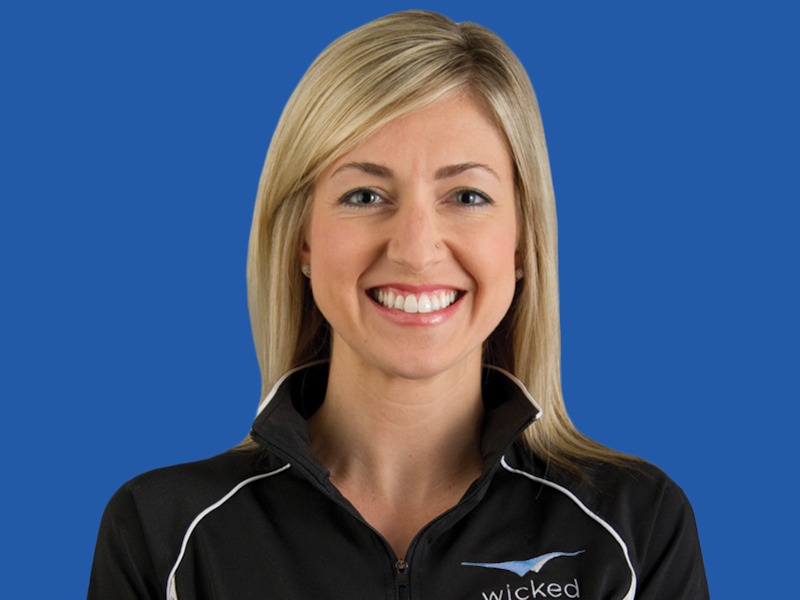
    Alli Truttmann, CEO of Wicked Technologies, is on a mission to solve an extremely painful and costly problem among the elderly and their caregivers: bed sores. Perhaps better known as pressure ulcers, these sores are made much worse by a person’s incontinence and lack of a timely response from caregivers. When I met Alli, she shared the story of her grandma, Shirley, and how it inspired her to create the Wicked-Smart Pad™, a solution that has the potential to bring dignity and dryness back to the elderly and enable for responsive care. I invited Alli to a VisionTech Angels Screening Committee. The group immediately saw the potential and invited her to present at our October 26 pitch events. Here’s a preview.

    BP: How did you find out about VisionTech Angels?
    AT: I was working with Elevate Ventures and participating in one of their life sciences pitch competitions. Knowing how strong Indiana’s life sciences ecosystem is, particularly medical device and drug discovery, I asked Elevate if there were angel groups in the state that might be interested in investing in my company. The first group out of their mouth was VisionTech Angels. Meeting Ben and learning more about the group’s members and expertise, I knew it was the perfect group to engage with.

    BP: Tell me a little about yourself and your background as an entrepreneur.
    AT: I went to college to become a child psychologist working with kids on the spectrum. After tearing my ACL playing indoor soccer, I realized I would not be able to do active physical therapy with kids—I’m a get down on the floor kind of therapist. So I had to find something else. I pivoted to health care when I began having night sweats. Realizing there had to be a better option than regular sheets, I developed moisture wicking sheets and founded Wicked Sheets, LLC, in 2008.

    I’ve always been close to my grandma, Shirley Truttman. In her 90s, she suffered from dementia, mild incontinence and bedsores. She also had very sensitive skin, which was aggravated by the moisture of incontinence. So I got her on Wicked Sheets to help keep her dry. Unfortunately, she died from incontinence-related bedsores at age 94 in 2017. See grandma and grandpa suffer through this inspired me find a better solution for elderly people, their families and caregivers.

    BP: Where did the idea for Wicked Technologies come from?
    AT: I have to give COVID some credit here. Because of supply chain issues caused by COVID, I had sheets sitting on ships off the coast of California. Wanting to keep my team busy, we started working on an incontinence pad. I even filed a patent on the idea without the technology. I had a friend who was an entrepreneur in residence at the University of Louisville. There was a professor who had a wearable sensor to detect sweat. Sweat’s a lot like urine. I thought, ‘Why can’t we use this sensor to detect urine and help stop moisture-related bed sores?’ So I applied for an SBIR grant from the National Institutes of Health (NIH) and was awarded $500,000. I put Wicked Sheets on pause, and it was off to the races with Wicked Technologies and the Wicked-Smart Pad.

    BP: How big is the problem?
    AT: Huge! Incontinence in older adults is very common. It’s estimated 13 million live with incontinence. One in ten will develop incontinence-related bedsores from urine, which is very acidic and painful on thinning skin. From a financial perspective, the cost of bed sore treatment is estimated to  be $39 billion. And that doesn’t include the 17,000 annual lawsuits over bedsores.

    BP: Explain your solution.
    AT: The Wicked-Smart Pad is designed for senior care facilities, with future versions for aging in place and hospice It is a washable, dryable pad with sensors that detect in real time a moisture event and sends an alert to the caregiver. This alert goes to a dashboard of choice: nurses’ station desktop, smart phone or tablet. A second alert is sent to ensure a timely response of cleaning the person up, changing undergarments or diaper, and replacing the pad. The soiled pad is laundered for reuse. What’s impressive is the sensors detect can detect as little as one ounce of urine in less than 15 seconds.

    There are a number of benefits. First, quicker response to incontinence events that helps avoid a person lying or sitting in urine-soaked garments or beds. Second, it is so much easier to replace a pad than it is to strip, sanitize, and remake a bed after an incontinence event. It’s also safer for the patient. Third, the data from monitoring patients and the frequency and volume of their events is invaluable to understanding their conditions and care needs. Also, communications are encrypted and wirelessly transmitted. Watch a demo here.

    BP: Do you have intellectual property protection?
    AT: We have one non-provisional patent, two provisional patents, an exclusive option with the University of Louisville Research Foundation and another that we are considering.

    BP: Where are you in terms of commercialization?
    AT: We’ve got a lot going on. We’re working with regulatory and quality management consultants on our FDA clearance and manufacturing controls. We’re pursuing an FDA approval as a Class 1 medical device, which is 510(k) exempt. We think that will take five to six months to clear. We’ve hired a quality consultant in Indianapolis who came highly recommended. We’re also working on our reimbursement code.

    What’s very exciting is we have an active NIH pilot in Louisville with an Atria Senior Living and have two-paid pilots with Atria Senior Living scheduled to begin in the next several months.

    BP: What’s your go to market strategy?
    AT: We are learning a lot with our current pilot. A key validation is a 300% improvement in staff response time to incontinence events. Once the three scheduled pilots are completed and we have our FDA clearance, reimbursement code and manufacturing processes locked in, we will be ready to scale. In 2024, that includes implementing across Atria Senior Living’s portfolio of 370 communities. Followed in 2025 with implementations at Glennis Solutions properties. They currently have more than 1,000 communities in their portfolio. We’ll also start looking at a new category, assisted living communities, for additional expansion.

    BP: Any competitors? How are you different?

    AT: There are a  lot of incontinence management products on the market, the most recognizable being adult diapers. Most, however, are single use, do not have sensor capabilities or monitoring, and are more about capturing urine rather than detecting when a person urinates. The Wicked-Smart Pad is truly tech-enabled with real-time detection and monitoring, caregiver alerts, being wireless, and finally reusable through simple laundering. Finally, it takes five minutes to change our pad versus the 45 minutes it takes to clean up a person, change their clothes, and sanitize and remake a bed.

    BP: What round is this?
    AT: This is a Series A round with the goal of raising $1.58 million This gives us 16 months of runway, and potentially more based on sales.

    BP: What is your planned use of funds?
    AT: Half of what’s raised will go to building our inventory. Another 25% will go to continuing product development and the rest to salaries and selling, general and administrative expenses.

    BP: Why should  VisionTech Angels members invest in Wicked Technologies.
    AT: First, when you look at the comfort, health and dignity of the elderly coupled with labor shortages in the senior care space, the need for a high-impact, technology-enabled solution is great. Second, I’ve spent the last 14 years developing high performance wicking fabrics that I’m now enhancing with sensor technology. Third, we have a clear path ahead with our pilots and roll-out strategy in 2024-2025. Lastly, our approach to developing the Wicked-Smart Pad has been to go to senior living stakeholders and ask patient care directors what they need and build to those needs.

    VisionTech Angels’ Virtual Pitch Events will be held Thursday, October  26 at  Noon and 6 p.m. ET. Pitch events are open to our members and accredited investors interested in joining our group. To register, check your email for an invitation, go to our Events page where you’ll find event information and the RSVP links. You can also email Ben Pidgeon at bpidgeon@visiontech-partners.com.

  • Instacart IPO Boom or Bust: Hot Takes from Ben Pidgeon

    Instacart IPO Boom or Bust: Hot Takes from Ben Pidgeon

    I have to admit to being fascinated by the machinations around last week’s Instacart IPO.

    Given the dearth of IPOs in 2023, Instacart’s IPO is a big deal. Prior to the deal, Instacart had raised more than $2.9 billion in funding over 10 years and 20 rounds. It’s a testament to the grit and determination of the Instacart team and to the staying power of its investors.

    There is a caveat. According to Axios, many investors would have been better off just putting money in an S&P 500 index fund. Instacart’s valuation just prior to the IPO was priced $9.3 billion. That’s down sharply from a $39 billion valuation in March 2021. Ouch!

    Here are my hot takes on Instacart’s IPO, which is off to a bumpy start.

    Observation 1: Building value takes time.

    Instacart was founded in 2013 and completed its IPO in 2023. That’s a decade of hard work. As of September 22, 2023, the company had a market cap of $8.31 billion (more on this later). It’s important to remember that for every Instacart, there are many other companies that fail, many fail sooner and some later.

    Kudos to the Instacart team for sticking with it and building a successful company. It’s not easy, but it’s definitely worth it if and when you achieve your goals.

    Observation 2: Annual revenue and growth rate.

    Instacart’s revenue increased nearly 40% to $2.55 billion between 2021 and 2022. That’s impressive growth, especially for a company of Instacart’s size. The company has a large and growing addressable market, and there’s a belief that it’s well-positioned to capitalize on the shift to online grocery shopping.

    Revenue growth solves a lot of questions around product market fit and is rewarded in the market AND founders, investors and boards should be conscious about capital efficiency.

    Observation 3: Bumps in the road.

    Of course, no company’s journey is smooth. Instacart has had its share of bumps along the way. For example, the company was sued by the California attorney general in 2019 for allegedly misclassifying its workers as independent contractors. Instacart overcame this challenge and others and emerged stronger. It’s now one of the leading players in the online grocery shopping market.

    Observation 4: Who made a winning bet?

    Earlier investors in Instacart are definitely the winners in this IPO. Investors (likely before 2015) are now pretty happy with the outcome.  Sequoia led the Series A in 2013 at $0.24 per share. Later investors (after 2015) paid $125.00 per share in the infamous March 2021 funding round, which valued the company at $38.5 billion.

    Brick-and-mortar grocers in the United States accounted for 85.3% of total grocery sales as of January 2023, so 14.7% came from on-line, which includes categories like click-and-collect and delivery. You need to believe that convenience will drive adoption in this market for it to expand.

    Observation 5: Signal the IPO market may be returning.

    The Instacart IPO is a sign that the IPO market may be thawing. After a slow start to the year, we’ve seen several high-profile IPOs in recent months. This is good news for investors, as it means the path for generating liquidity via M&A or IPO activity may be opening up. 

    Observation 6: Smart or lucky.

    Instacart clearly benefited from the COVID pandemic. No matter how much diligence an investor could have completed, COVID was a six-sigma event in the way it benefited Instacart. Instacart went from losing $300 million the year before COVID to turning a profit in April of 2020. COVID made Instacart an essential app. This team was in the right spot, at the right time, with the right offering.

    What was the perspective of an investor in 2013 who made an early bet in Instacart?

    An investor who bet on Instacart in 2013 was taking a big risk. The company was new, the online grocery shopping market was unproven, and there was no guarantee that Instacart would be successful. But the investor saw potential in the CEO’s vision. They believed that Instacart could revolutionize the way people shop for groceries.

    Eventually, the investor was right. Can you imagine the outlook for this company in December 2021? Instacart has become one of the leading players in the online grocery shopping market. The company is now worth billions.

    Even if you’re not an Instacart user, you should still be excited about the company’s IPO. Instacart is a leading player in the online grocery shopping market. The growth of online grocery shopping is a trend that investors need to continue paying attention to.

    If you’re an Instacart user, I salute you. If you’re lazy like me, you can use technology to make your life easier. I just signed up for Instacart. So in that regard, I may be a laggard in technology adoption, but I do see the appeal of Instacart. It’s a convenient way to get your groceries delivered to your door. And it’s especially helpful for busy people or those who have difficulty getting to the grocery store.

    Some advice:

    If you are an entrepreneur or innovator, listen to your customers, keep building and have conviction around the problem you solve.

    If you are an investor, keep your expectations realistic, keep taking risks and find conviction.

    Would you like to learn more about VisionTech Angels? Reach out to Executive Director Ben Pidgeon here.

  • Meet September Pitch Presenter Justin Wiseman of MS Pen, Diagnosing Tumors in Real Time During Surgery

    Meet September Pitch Presenter Justin Wiseman of MS Pen, Diagnosing Tumors in Real Time During Surgery

    Justin Wiseman, CEO of MS Pen, has a long history with VisionTech Angels. While CEO and president of Prosolia, a Purdue startup that developed molecular imaging tools, he pitched the company to StepStone Partners, our group’s previous brand. Though we didn’t invest, he led Prosolia to a successful exit to Waters Corporation in 2018. Elevate Ventures suggested VisionTech take a look at his new venture, MS Pen, which seeks to diagnose tumors intraoperatively—in real time, during surgery. If successful, this technology has the potential to improve cancer survival rates and reduce healthcare costs. I liked MS Pen’s vision and pedigree, so I invited Justin to a VisionTech Angels Screening Committee. The group was impressed with the company’s vision to radically transform tissue diagnostics starting with lung cancer and invited him to present at our September 6 pitch events. Here’s a preview.

    BP: Tell me a little about yourself.
    JW: I was born and raised in Indianapolis, went to Southport High School, worked at Lilly, before earning a PhD in Analytical Chemistry at Purdue University. During graduate school, I developed some technology that was spun out as a startup company, Prosolia. After seven years as president and CEO, the company had a positive exit to Waters, a tech company and leading provider of lab equipment, supplies, and software for scientists across the world.

     In 2022, I was approached by the founders of MS Pen to help them scale the company. What’s interesting is the inventor of the mass spectrometry pen technology, which is the basis of MS Pen, is Dr. Livia Eberlin, who was a graduate student at Purdue. We had the same academic advisor and worked with some of the same people while in graduate school at Purdue. After meeting the team and reviewing the technology and vision to make molecular data on tissue samples available in real time during surgery to optimize treatment options for patients and improve survival rates, I was in.

    BP: Explain the problem you are solving.
    JW:  This will sound crazy, but modern cancer surgery still relies on a legacy, 117-year-old method to assess tumor margins during surgery. Here’s how it works. Surgeons remove suspected tissue from the patient, with the goal of complete removal of the tumor while preserving the surrounding margin of healthy tissue. A sample of the margin is sent to the laboratory where it’s frozen, cut, stained, and looked at under a microscope by a pathologist. At a minimum, it takes 30 to 45 minutes for the lab to process the sample while the patient is still in surgery. After that long wait, the results are still somewhat inconclusive. The extra time that the patient is in the operating room is unnecessary and increases the risk of post-operative complications. The biggest reason we need a precision medicine approach is locoregional cancer recurrence can be as high as 40%. This is not comforting for patients.

    BP: Explain your offering and how it works.
    JW: MS Pen is developing a platform for tissue detection and diagnosis that combines the simplicity of our proprietary MasSpec Pen technology, the performance of mass spectrometry, and the power of AI/ML software. Our solution exploits the fundamentals of tumor biology to detect cancer on a molecular level in vivo to guide surgical decision making in real-time. Our initial focus is lung cancer, a deadly disease that claims more lives in the US and TX than breast, colon and prostate cancer combined, and where curative resection is highly dependent on intraoperative decision making. Using a hand-held device called the MasSpec Pen, a droplet of biocompatible solution is delivered to the tissue site. Diagnostic molecules are extracted from the tissue into the droplet. The droplet with the diagnostic molecules is delivered to the mass spectrometer for real-time analysis. The surgeon gets the results in seconds rather than hours or days. This allows the surgeon to make decisions based on the molecular patterns driving the disease rather than relying on what they see or feel in a patient and without waiting on the lab to get results back.

    There are three main components of our solution: the MasSpec™ Pen, which can be handheld or robotic;  the transportable medical mass spectrometry system console we call Ultiss™ that the pen is connected to; and the software powered by artificial intelligence and machine learning algorithms interpreting the data from the sample. The platform is easy to use, and is a faster, less intrusive and more accurate process.

    BP: Why did you choose lung cancer as your first indication?
    JW: The platform is tissue agnostic, so we could have chosen any number of cancers including breast or pancreatic but decided on lung cancer as our first indication. Looking at the numbers, more Americans die of lung cancer each year—127,070—which is three times that of the second deadliest cancer, colorectal. Another factor is surgery is the number one treatment for lung cancer and there’s a more than 50% recurrence rate. We believe there’s lots of room for improvement in the first surgery if using the MS Pen platform when margins can be checked and validated with a high degree of accuracy.

    Globally,  the intraoperative lung cancer detection serviceable market is $2.1 billion, total addressable market is $6 billion.

    BP: What are your competitive advantages?
    JW: Our fundamental competitive advantages are these. First, traditional methods involve taking a tissue sample and sending it to the lab during or post-surgery and don’t permit in vivo analysis of tissue prior to or during resection—taking a tissue sample while the patient is still undergoing surgery. MS Pen does not require a tissue sample and results are available at the point of care immediately.

    The analysis done by MS pen is non-destructive to the tissue of interest or any surrounding tissue. No injectable products are required for our test. Finally, using the MS Pen platform during surgery does not disrupt traditional surgical workflows. The device is wheeled in and out of the operating room. The pen is handed to the surgeon just like any other instrument. It’s disposable so once used, you’re done. 

    BP: What is your path to commercialization?
    JW: The good news is that the MS Pen and platform are already being used in research by the Baylor College of Medicine, MD Anderson Cancer Center at the University of Texas and Johns Hopkins School of Medicine. To date, more than 20 surgeons have used the system with more than 200 patients.  We’ve had more than 250 inquiries from around the world over the last 15 months. This includes Stanford Medical, the Mayo Clinic, Yale School of Medicine, Kings College London, and University of Bern in Switzerland to name a few.

    To leverage this early traction, we’re launching a plug-and-play interface platform called Uniss™ for direct molecular analysis targeting clinical research in early 2024. The follow up is under development, an advanced data analytic and machine learning software to convert the complex metabolic data into actionable results. By 2006, we plan to launch the Ultiss™, an integrated platform that combines our MasSpec pen, a compact mass spectrometer and machine learning decision support software.

    BP: Do you have IP protection?
    JW: Our IP protection is very broad on the device and how it works. We currently have six patents with more than 50 patents pending. Six or seven of those should be issued by the end of August.

    BP: Any competitors?
    JW: Obviously, we aren’t the only ones who realize traditional pathology isn’t cutting it for surgeons and patients. We have at least four competitors trying to solve this issue, but none have the breadth of feature sets than MS Pen does. With our growing presence in clinical research with top medical and cancer centers, we believe we are ahead of the competition.

    BP: What round is this?
    JW: This is a seed round. Our goal is to raise up to $5 million in non-dilutive capital over the next 12 to 18 months.

    BP: What is your planned use of funds?
    JW: We’ve proven the tech in research, and now it’s time to develop the platform that will scale. We’ve allocated 50% of the raise to platform development. This also includes supporting our channel partners. Then, 20% will go to talent and operations; 15% to quality and regulatory, which includes finalizing our regulatory plans for our first indication and reimbursement strategy; and another 15% to marketing and other expenses.

    BP: This is a platform technology. What other applications do you foresee?
    JW: There are a number of uses beyond cancer for our MasSpec pen system: agriculture, food authentication, forensics, clinical toxicology, and manufacturing QA/QC are just a few. The platform applies to industries needing rapid identification of a substance at the molecular level to inform real-time decision making.

    BP: Give me three reasons why VisionTech Angels members should invest.
    JW: First, this is a disruptive technology change for surgical oncology that will solve a large problem in healthcare: reducing cancer recurrence with in vivo tissue diagnostic and thus improve patient outcomes. Second, we have a path to market that is non-regulatory, selling the technology for research purposes. Finally, MS Pen has an outstanding leadership team and board that knows how to bring technology to market. This includes known innovation and commercialization-minded physicians and PhDs. I point to my co-founder, creator of our platform and now CTO of MS Pen, Livia Eberlin, a MacArthur fellow, Genius grant recipient and Forbes 30 under 30 in Medicine; and to board member Thomas Milner, a prolific innovator who has founded two medtech companies and licensed technology to six others.

    BP: Looking forward to your pitch on Wednesday, September 6!

    VisionTech Angels’ Pitch Events will be held Wednesday, September 6. The Noon Session is virtual. The Evening Session at 5:30 pm ET is your choice of in-person with dinner at KSM at 800 E 96th St #500, Indianapolis, or virtual, which starts at 6 pm ET. Pitch events are open to our members and accredited investors interested in joining our group. To register, check your email for an invitation, go to our Events page where you’ll find the RSVP links. You can also email Ben Pidgeon at bpidgeon@visiontech-partners.com.

  • Meet September Pitch Presenter Nick Wangler of Details, Building a B2B Marketplace for Orthodontics

    Meet September Pitch Presenter Nick Wangler of Details, Building a B2B Marketplace for Orthodontics

    One of my kids has had braces so when I met Nick Wangler, president and co-founder of Details, I immediately appreciated the value proposition of his startup. What he and co-founder Dr. Jeff Biggs have created is an online marketplace that connects orthodontic practices with all the suppliers they rely on to run their practices. What’s cool is they can continue to buy from the same suppliers they always have. The only difference is they’re all in one place. Huge time and money saver. I liked Details’ product-market fit and their early traction, so I invited Nick to a VisionTech Angels Screening Committee. The group was impressed with the company’s vision to build B2B marketplaces in healthcare verticals and invited him to present at our September 6 pitch events. Here’s a preview.

    BP: How did you find out about VisionTech Angels?
    NW: I worked at DeveloperTown for four years coaching and consulting with startups so naturally had heard of VisionTech Angels. When we started fundraising, there was one day in particular when four different investors told me, “This would be perfect for VisionTech,” so here we are!

    BP: How did you get involved  with Orthodontic Details?
    NW: It’s kind of a funny story. DeveloperTown’s bread and butter is software consulting and development, in addition to supporting startups. One day Dr. Jeff Biggs, an Indianapolis orthodontist who’s probably put braces on some of your kids, showed up and said he wanted us to “Build the Amazon of Orthodontics.” Now that’s a complicated request, but he was serious about it. So we gave him some homework to do, and he did the same with us. As we got to know Jeff, we saw his brilliance, willingness to learn and his humility, and agreed to build something together.

    The deeper I got into Jeff’s project, the more interested I became interested in co-founding the company with him. His expertise is orthodontics and mine is business and helping people launch companies. Startups aren’t easy, but it was very clear Jeff was someone I wanted to climb the mountain with. I got permission from my partners at DeveloperTown, who also invested in Details, to leave and co-found the company.

    BP: Explain the market need.
    NW: The pain point for orthodontic practices is clear: clinical staff are pulled away from revenue-generating activities such as starting new patients to order supplies. Keeping the practice stocked with all of the supplies they need to treat patients and run a business is complicated and time consuming. A practice is typically dealing with 15-plus different companies for products they use on a daily basis. Some of these companies have ecommerce sites, but many do not, requiring practices to call a salesperson to place orders. There is a tremendous amount of time spent ordering, following up and managing the financial side. Old school all the way.

    BP: What’s the market size?
    NW: We’re tackling a series of healthcare verticals, starting with orthodontics, where $1.2 billion is spent on supplies each year.

    BP: What’s your solution?
    NW: We have literally done what Jeff set out to do: create an Amazon-like platform for orthodontics practices. With Details, they can order all of their supplies in one place, without changing suppliers. Details also gives them access to their shopping list, order status, practice order history, and ways to find savings. All of the headaches and massive amount of time associated with managing multiple suppliers is gone simply by paying a monthly SaaS membership fee to Details, while unlocking a clinical staff member to spend time on revenue generating activities, like starting new patients

    BP: Where are you in terms of scaling the company?
    NW: We’ve grown from three practices piloting a spreadsheet version of our product to more than 100 practices paying to use our custom-built platform within 18 months. As you can imagine, this has brought attention from the supply side of the business, where we recently announced partnerships with key suppliers like 3M, G&H, Dynaflex, and more. Customer usage is off the charts, with more orders come through in June 2023 than all of Q4 of 2022 combined.

    BP: What kind of response have you gotten from customers? Is this influencing other practices to jump on board?
    NW: Oh my gosh! The response we’re getting from practices is what fuels my excitement for Details. Soon after we launched our MVP platform, something we never imagined started to happen. Practices were sending us hand-written notes and texting us, thanking us for saving them time, money, and the stress of ordering from and managing multiple vendors. Many said we’d given them their lives back. One orthodontist wrote and said his practice manager would probably quit if he took Details away from her.

    Testimonials are key in health care. Like other industries, few want to be first. But when they see what’s working for others in their peer group or industry, they want in. Referrals are also important, and our investors, many of whom are orthodontists, help with that.

    BP: Do you have intellectual property protection?
    NW: What we’re doing behind the scenes is patentable, which is a process we’ve started and anticipate wrapping up this year.

    BP: What is your revenue model?
    NW: We’re primarily SaaS, with practices paying a monthly fee to use the platform. The time and supply spend savings practices are seeing allows our service to literally pay for itself. We add additional value by onboarding the practices, so they know how to use the platform and by identifying savings on the supplies they order. We’ve identified additional revenue streams we’ll be revealing soon as well.

    BP: Is this platform transferable to other industries?
    NW: Absolutely. That said, we are focusing our energy on the orthodontics vertical to truly delight our customers, secure market share, and do any fine tuning to our platform and business model we think is beneficial. An example of this is our use of AI to reduce time to value. With a solid beachhead in orthodontics, there are multiple overlooked healthcare verticals that we can enter and scale pretty easily. These are endodontics which has a $1.4 billion annual supply spent, veterinary medicine with a $2 billion annual supply spend, and the big one, dermatology, with a $5.5 billion supply spend.

    BP: What round is this?
    NW: This is a seed round, and our goal is to raise $1 million.

    BP: What is your planned use of funds?
    NW:  We currently have more than 1o0 practices on our platform. Now that we’ve proven our platform for customers as well as suppliers, and proven our sales approach, it’s time to scale. This is primarily growth capital and we’re looking forward to pouring gas on the fire.

    BP: Give me three reasons why VisionTech Angels members should invest.
    NW: I’ve got four. First, we’ve learned how to convert leads to sales and are now closing more than 60% of those leads. Second, our customer retention rate is greater than 96%—we’re very sticky. Third, many of our early investors are orthodontists, consultants , and industry partners, who are a main source of lead generation. Finally, we’ve built a team hungry for success.

    BP: Sounds good! Looking forward to your pitch on Wednesday, September 6.

    VisionTech Angels’ Pitch Events will be held Wednesday, September 6. The Noon Session is virtual. The Evening Session at 5:30 pm ET is your choice of in-person with dinner at KSM at 800 E 96th St #500, Indianapolis, or virtual. Pitch events are open to our members and accredited investors interested in joining our group. To register, check your email for an invitation, go to our Events page where you’ll find the RSVP links. You can also email Ben Pidgeon at bpidgeon@visiontech-partners.com.

  • As Money for Female-Led Startups Tightens, VisionTech Angels Invests Big in Two: Pelvital and Amplified Sciences

    As Money for Female-Led Startups Tightens, VisionTech Angels Invests Big in Two: Pelvital and Amplified Sciences

    Female founders reading a TechCrunch report in mid-July found little to smile about. The media outlet reported that startups with all female-led founders are struggling to raise capital in 2023, having picked up just $1.4 billion – 1.6% of allocated capital – in the first half of 2023. During the same period of 2022, all female-founded startups raised $3.1 billion, a drop of $1.7 billion in a year’s time.

    What gives? Part of it can be attributed to an overall slow-down in the venture market due to jitters in the economy. According to Pitchbook during bear markets, investments in women-led companies drops as fund managers seek “safe” investments, preferring male-led to female led startups.

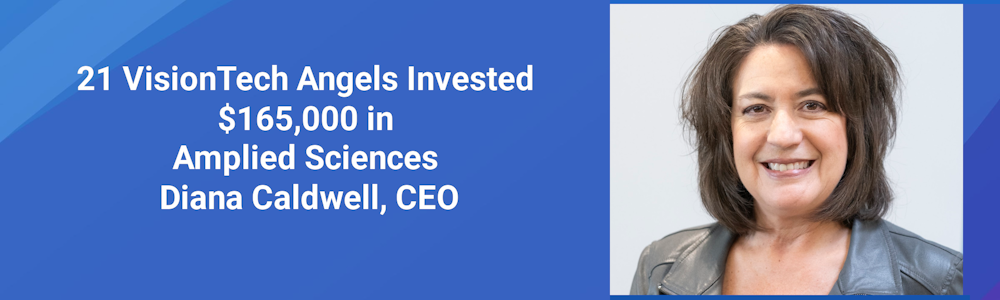
    Apparently, VisionTech Angels investors didn’t read the TechCrunch report as 45 wrote checks totaling $338,000 in two female-led startups, Pelvital led by CEO Lydia Zeller, and Amplified Sciences led by CEO Diana Caldwell. Pelvital raised $173,000 and Amplified Sciences $165,000 with VisionTech in seed rounds.

    VisionTech Angels has invested in four startups this year, three of which are led by women (Karen Wurster, CEO of Adipo Therapeutics, is the third). Executive Direct Ben Pidgeon is not surprised by his group bucking the trend and betting on female founders in 2023.

    “In each case, we have strong, proven, trailblazing female leaders in Lydia, Diana, and Karen with potentially transformative solutions in the life sciences market. They may be breaking barriers, but our members saw solid opportunities that are rewriting the code of innovation and invested in these companies and their leadership.”

    Zeller, whose company Pelvital is commercializing a clinically proven medical device called Flyte that helps solve the embarrassing problem of female urinary incontinence, admits that female-led startups face unique challenges, some of it self-inflicted. Women tend to undervalue the perspective and expertise they bring to the table and struggle with pre-conceptions of what an entrepreneur looks like. She believes women need to flip the table on this thinking.

    “Our varied responsibilities across work and non-work domains help women leaders by necessity become adept at synthesizing nuanced information from multiple inputs and distilling it into key actionable insights. I rarely encounter a woman CEO who is hampered by overly linear thinking. They are open minded, curious, skilled at evaluating and mitigating risk, and unafraid to seek the diversity of perspectives that strengthens any decision-making process. A woman who has founded a company or risen to leadership has already overcome odds and is likely to have the passion, curiosity, drive, outside-of-the-box thinking, tenacity and grit that are key to startup success,” she says.

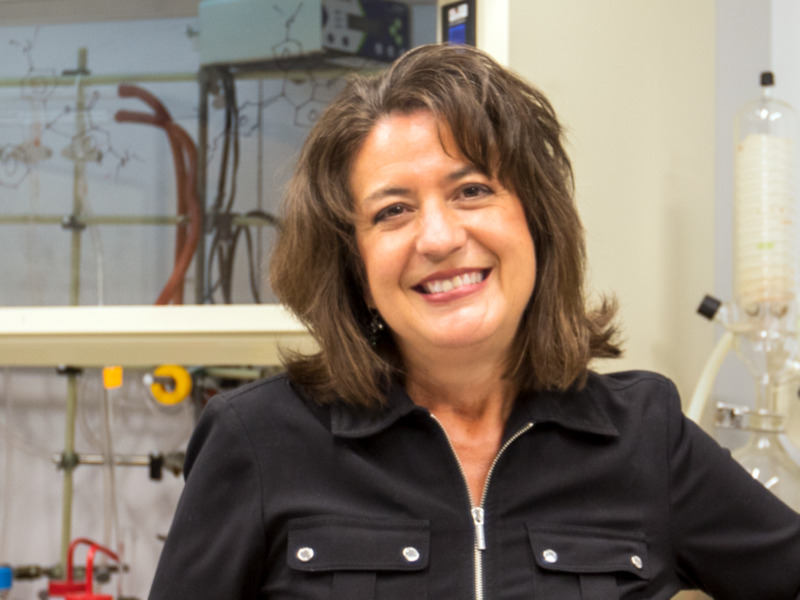
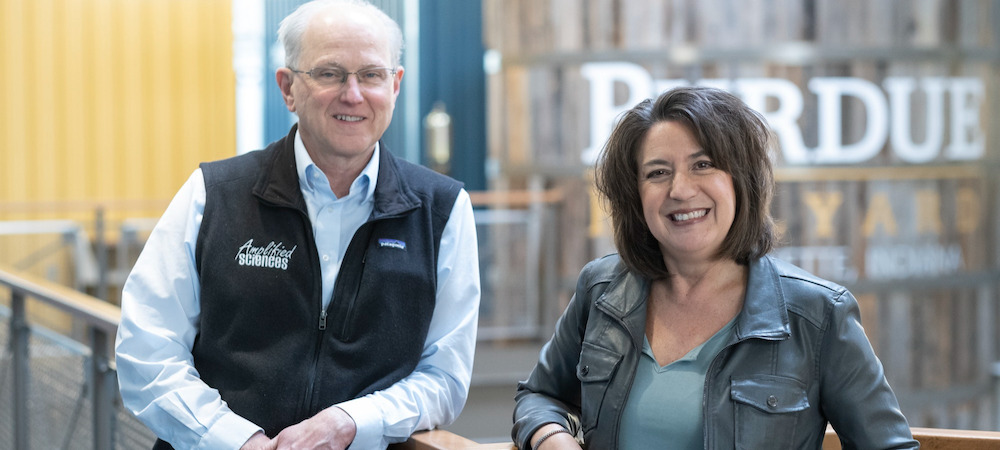
    Caldwell is no stranger to startups. She is the founder of Pearl Pathways, a life sciences consulting firm she led as CEO for nine years. Caldwell also has served as an entrepreneur in residence at the Purdue Research Foundation and on the boards of startups. Having advised hundreds of life sciences entrepreneurs, it comes as no surprise that she would join a well-respected Purdue researcher, V. Jo Davison, PhD, in co-founding Amplified Sciences. Based in West Lafayette, Amplified Sciences is a clinical stage diagnostics company focused on accurately detecting and preempting the risks of debilitating diseases.

    Having a male co-founder is proven to increase the odds of a female founder attracting capital. In 2022, startups with male and female co-founders secured 16.5% of venture capital compared to 1.9% women-only founders pulled in. Says Caldwell, “Clearly, there are more challenges in fundraising for female startups. There have even been well documented studies demonstrating that investors ask different kinds of questions of females when pitching. Specifically, men get asked questions about the potential for gains while women get asked about the potential for losses. “

    Caldwell, like Zeller, has not let these biases stop her or other female founders who are her colleagues. “I know many life sciences female founders who are rockstar builders of teams, incredibly creative when solving problems, know how to surround themselves with diverse teams AND listen to them, and are always planning ahead for plan b and c.  And when it comes to capital raises, perhaps we are more familiar with how much one can raise with ‘bake sales’ and therefore get really creative when fundraising,” she says. 

    Case in point, in early July, Amplified Sciences pursued and was awarded a SBIR grant worth approximately $400,000 to develop a test to determine if pancreatic cysts are benign or potentially malignant. Says Caldwell, “I’m extremely proud of our team for earning the SBIR award. This grant provides important non-dilutive funding that will help us achieve a number of milestones and help fund partnership with clinicians to access critical clinical samples.” 

    As for Zeller, Pelvital closed its seed round in July having raised $2.68 million. Boomerang Ventures led the round with participation from VisionTech Angels, Wisconsin Investment Partners, and Edward Bergmark, founder and former CEO of Optum. The infusion of capital was well timed. The company is preparing for the release of its next generation Flyte device in October that delivers an enhanced user experience and adds significant capabilities for clinical partners.

    “With our recent funding round, we expanded our commercial team, bringing in three leaders with outstanding experience across the clinical and payor ecosystem and are dedicated to improving women’s health. Our team is energized and keenly focused on expanding access to Flyte’s novel technology through contracts with health systems, payors, and virtual healthcare providers. It’s going to be an exciting and pivotal year for Flyte,” Zeller says.

    Pidgeon loves the energy VisionTech Angels’ women-led startups bring to the group’s investment portfolio. “We recognize that traditionally angel investing has been the realm of men. VisionTech Angels, however, has a history of investing in highly capable and high-performing female founders and CEOs—Shaily Baranwall of Elevate K12, Lindsay Watson of Augment Therapy and Haley Marie Keith of MITO Materials—to name a few.”

    He adds, “We’re excited to add Lydia, Diana, and Karen Wurster to our portfolio in 2023. It may be a down year elsewhere for investing in female-led startups, but that’s definitely not the case with VisionTech Angels.”

    If you are the founder or CEO of an early growth startup company, we invite you to learn more about VisionTech Angels and our investing process here. We welcome all comers! If you are an accredited investor who’d like to join a collegial, inclusive and active angel investing network, invest with us! Learn more about VisionTech Angels here.

  • Meet June Pitch Presenters Wade Lange + Dave Skibinski of FiberX, a New Spin on a Hoosier Staple

    Meet June Pitch Presenters Wade Lange + Dave Skibinski of FiberX, a New Spin on a Hoosier Staple

    I’ve known Wade Lange for many years, mainly through his past role as vice president and chief entrepreneurial officer at the Purdue Research Foundation. Like me, Wade grew up in West Lafayette and went to Purdue. He went off to a career at Lilly and later with a series of biotech startups before landing at Purdue. He is now the co-founder of FiberX with Dave Skibinski, an Indiana University grad and former team manager for famed IU coach Bobby Knight. I’m sure Dave’s got some stories! The two serial entrepreneurs have teamed up with FiberX, which is converting the familiar ag waste product, corn stover, into bio-based industrial products that are sustainable alternatives to petroleum-based products. I invited Dave and Wade to meet with the VisionTech Angels Screening Committee in May. The group was impressed with FiberX, its novel approach to the need for sustainable biopolymers and invited them to present at our June 22nd virtual pitch events. Here’s a preview.

    (L to R) Wade Lange, Dave Skibinski, Ben Pidgeon

    BP: How do you know VisionTech Angels?
    WL: I go way back with VisionTech, maybe even before you were Stepstone Partners because of my relationship with Oscar Moralez. We were both involved in biotech companies and with Purdue, so our paths crossed often. When you joined VisionTech, I leaned on you to come speak to faculty and student entrepreneurs at the Purdue Research Foundation

     BP: How do you two guys, graduates of huge rivals, IU and Purdue, know each other?
    DS: I wish I could say we met at a basketball game in Bloomington, but that’s not the case! The real story is Wade tried to recruit me to Purdue in 2021 when he was the chief entrepreneur officer at the Purdue Research Foundation. He thought I would make a great entrepreneur-in-residence based on my background in medical technology and with a startup I’d co-founded called SnapMD, which was at the forefront of telemedicine. We exited in early 2021 and I needed a new challenge. While I turned Wade down on the residency, we ended up launching a new venture together, FiberX.

    BP: How’d you pull that off, Wade?
    WL: Working at Purdue I was exposed to some incredible faculty and their technologies. One of them was Jim Caruthers, a chemical engineering professor who has dedicated his career to polymer science. He’d developed technology to convert biomass such as corn stover into “green” adhesives for engineered wood products. When Dave mentioned he wanted to start another company, I introduced him to Jim. Dave saw the potential immediately. After much discussion, we decided to co-found FiberX. Dave is the CEO focused on building the business and our core capabilities angle, while I’m chief commercial officer and boots on the ground here in Indiana.

    BP: What exactly is corn stover?
    DS: I can’t believe you’re from Indiana and don’t know what corn stover is, Ben! Corn stover is the stalks, husks, leaves, and cobs that remain after field corn is harvested. While some is used to feed livestock and as bedding, the bulk of it is not commercially used. In many cases, farmers leave it in the field to degrade to help control soil erosion and to return nutrients such as nitrogen, potassium and phosphorus to the soil when they plow the stover back into the soil. Corn stover is the world’s and Indiana’s largest agricultural waste product.

    BP: What unmet need are you solving?
    WL:  We’re solving problems on both sides of the coin. Farmers have taken a beating these last few years. Their input costs are up, commodity pricing for corn is down, and they’re always battling Mother Nature for a good crop. Corn stover is FiberX’s raw material. By purchasing this byproduct following the corn harvest, we’re creating a new revenue stream for farmers. Talking with many Indiana farmers, we know that they are open to selling stover if the economics work out because their high corn yields are producing tremendous amounts of stover.

    The other side of the coin are the industrial markets that are interested in replacing petroleum-based adhesives and plastics with environmentally friendly biomaterials that have the same if not better performance characteristics. We’re  bioindustrial resins and biocomposite plastics with sustainable corn stover as a feedstock rather than petroleum. With our resins, we’re also eliminating the use of formaldehyde as a curing agent. Although widely used in the production of plywood, other manufactured board and resins as well as cosmetics and medicines, formaldehyde is highly toxic, flammable at room temperature, and can be a cause of lung disease and cancer. So for manufacturers, eliminating the need for formaldehyde removes a potential safety and health hazard.

    BP: The push to replace petrochemical-based adhesives and plastics is a global movement. What is your initial target?
    DS: It absolutely is. Global companies that use plastics in their products or packaging have clear, and in many cases, aggressive sustainability goals regarding plastics. This includes recycling, reusing, reducing the amount of plastic used, reducing the amount of petroleum used to manufacture those products, and ultimately replacing plastics with renewable biomaterials. The demand for alternatives is there. However, the biomaterials market is in its infancy. There are products on the market and in aggressive testing with corporate partners.

    We have three different product categories we’re focused on, with increasing product value. First up and the fastest route to market entry is processed corn stover, which is added to synthetic or natural plastics to create biocomposite plastics. Next are intermediate products, lignin and cellulose, which are used as sustainable ingredients if you will for many products, including packaging. Finally, we have our proprietary formulations, the adhesive resins for composite wood products that include flooring, furniture, sheathing, and cabinets that are made from composite and engineered wood products rather than solid wood. For example, La-Z-Boy upholstered furniture is made with composite woods as is much of the furniture from IKEA and Target for example.

    BP: How is your material different from other biopolymers already on the market?
    WL: The big difference is our raw material, corn stover. It’s plentiful and an agricultural waste product versus corn, soybeans, and wood pulp that are also used in biopolymers, but are all primary market products. Currently, there’s only one marketed non-petroleum adhesive resin. It does not meet customer requirements and it’s really expensive. We want to step up quickly with a sustainable resin that works.

    BP: What is your total addressable market?
    DS:  The total addressable market for green chemicals and materials globally is projected to reach $229 billion by 2030. The global market for our initial products, adhesive resins, is $8 billion.

    BP: What kind of intellectual property protection do you have?
    WL: We have an exclusive option from Purdue to license five pieces of intellectual property that cover the manufacturing processes for the adhesive resin. Our plan is to exercise the options in the second  half of this year. We will also have numerous trade secrets as every product formulation we create will be unique to its target use case.

    BO: Where are you in terms of commercialization?
    WL: From the supply side, we’re building relationships with farmers and agronomists and also working with farmer-owned cooperatives in the Midwest to build the raw material supply chain. Some are ready to start right away, and others want to wait and see, which is common regardless of the industry.

    DS: We’ve achieved our proof of concepts on our stover processing and have produced product prototypes. We are in discussions with several of the largest lumber and engineered wood companies in North America that are looking for sustainable resins and materials that won’t compromise performance but will help meet sustainability objectives. We have a terrific project with Purdue this summer with our resin, and the early results are very exciting. We have also completed our proof-of-concepts for our biocomposite plastic product line. We are now conducting iterative product development to refine these product formulations. Our goal with  these biocomposite plastics is to replace 40% of petrochemical-based plastics. This is a win for global companies as it reduces their reliance on traditional plastics and helps them reach their sustainability goals.

    BP: What round is this?
    DS: This is a $500,000 pre-seed round.

    BP: What is your planned use of funds?
    DS: The primary uses are to build and refine our stover processing and supply chain, produce sample resin and boards to take to the engineered wood industry, and finally, produce samples of biocomposite plastics to take out to a variety of industries committed to reducing their use of traditional plastics.

    BP: Give me three reasons why VisionTech Angels members should invest.
    WL: FiberX is creating an entirely new industry for Indiana and has a huge market opportunity with a short-term path to revenue. Second, we’re leveraging Indiana’s strengths in agriculture and manufacturing. Finally, we have an exceptionally strong team including two serial entrepreneurs with experience and multiple exits in hard tech, our CTO Tom Santelli who has led technology and product development at the largest board manufacturers, a multi-generational Indiana farming family, and a tremendous team at the Purdue School of Chemical Engineering

    DS: Plus, we’re leveraging the industrial manufacturing and rural farming assets of Indiana. And there’s the whole IU-Purdue thing.  Something for everyone who likes to support Indiana companies.

    BP: Thanks guys! This sounds like a great pitch and opportunity.

    VisionTech Angels’ Pitch Events will be virtual on Thursday, June 22 at Noon and live at 6 p.m. ET at KSM at 800 E 96th St #500, Indianapolis. Pitch events are open to our members and accredited investors interested in joining our group. To register, check your email for an invitation, go to our Events page where you’ll find the RSVP links, or email Ben Pidgeon at bpidgeon@visiontech-partners.com.

  • VisionTech Angels Invest $196,500 in NuvOx Therapeutics

    VisionTech Angels Invest $196,500 in NuvOx Therapeutics

    Tucson, Arizona-based clinical stage biotechnology company developing a first-in-class
    therapeutic that uses oxygen to amplify treatment of life-threatening diseases.

    VisionTech Angels, among the Midwest’s most active angel investing networks, has invested $196,500 in NuvOx Therapeutics Inc. (NuvOx), with 27 individual members participating in a bridge round following a $10.4 million Series A. NuvOx has also succeeded in attracting $14 million in non-dilutive funding from the National Institutes of Health, Department of Defense and other government funders. NuvOx is VisionTech Angels’ 65th portfolio company.

    Headquartered in Tucson, Arizona, NuvOx is a clinical stage biotechnology company developing a first-in-class oxygen therapeutic to treat life-threatening diseases where hypoxia, a condition in which there is a decrease in the oxygen supply to a tissue, plays a role. The company’s lead drug candidate, NanO2TM , represents a disruptive platform technology addressing multiple high unmet needs, and demonstrates great progress in improving the flow of oxygen from lungs to blood and from blood to tissue, which can amplify the effectiveness of treatment. Over 30 animal studies have shown therapeutic effect in seven different indications. Positive clinical efficacy is demonstrated in two completed Phase Ib/IIa studies: glioblastoma multiforme (brain cancer) as a radiosensitizer and stroke as a neuroprotectant. NuvOx has commenced its Phase IIb glioblastoma multiforme trial in United States and is preparing for two additional clinical trials in late 2023.

    VisionTech Angels’ Executive Director Ben Pidgeon says the groups investors are impressed by NuvOx’s potential as well as the track record of company co-founder and CEO, Evan Unger, MD. “Investing in biotech companies is a long game for investors because of time needed for development and clearing regulatory hurdles. NuvOx is well-positioned. They are addressing a massive market with an unmet need with a drug that has been substantially de-risked, has strong patent protection and a clear pathway to commercialization.”

    Adds Pidgeon, “We also have great confidence in Dr. Unger, his leadership team and advisory board. He has an impressive background in the startup world and in medicine. He’s founded four biotech companies, successfully exiting two. His first company, ImaRx Pharmaceutical, developed three FDA-approved drugs and was acquired by DuPont, yielding a 20X return on investment. His second company, ImaRx Therapeutics, went public, and NuvOx, shows great promise. Dr. Unger is an inventor on more than 120 U.S. patents, a board-certified radiologist and Professor Emeritus of Medical Imaging at the University of Arizona.”

    About VisionTech
    Founded in 2009, VisionTech is a privately held company that links investors to high-potential, early-growth companies. Based in Indianapolis, VisionTech’s angel investing network includes more than 130 active members across Indiana and Ohio. As of November 2022, 175 VisionTech member investors have deployed more than $24.8 million in capital, investing in 65 portfolio companies from across the United States. Membership is open to accredited investors. Those interested in joining are encouraged to contact VisionTech.

    About NuvOx Pharma, Inc.
    NuvOx is a privately held Phase IIb company developing a novel oxygen therapeutic where hypoxia plays a role. Hypoxia, or low oxygen, is responsible for resistance to cancer treatment, brain damage in stroke, and the death of COVID-19 patients with acute respiratory distress syndrome (ARDS). The Company’s lead drug, NanO2TM, represents a disruptive platform technology addressing multiple highly unmet needs, with positive clinical efficacy demonstrated in two completed Phase Ib/IIa studies: glioblastoma multiforme as a radiosensitizer and stroke as a neuroprotectant. It was shown to be the most effective oxygen therapeutic among 74 clinical-stage compounds. It has safety and efficacy data in more than seven indications in various clinical stages, including Orphan Drug Designation for both glioblastoma multiforme and sickle cell disease. The product was derived from Dr. Evan Unger’s pioneering work in microbubbles, which was commercialized as the number one selling contract agent. As such, it has safety data in more than 2,000 subjects. The product is designed to be synergistic, rather than competitive with, standard of care. For additional information, visit website.

  • Meet Our April Pitch Presenter: Diana Caldwell of Amplified Sciences, Amplifying Trace Enzymes for Earlier Diagnosis

    Meet Our April Pitch Presenter: Diana Caldwell of Amplified Sciences, Amplifying Trace Enzymes for Earlier Diagnosis

    I first met Diana Caldwell when she was the co-founder and CEO of Pearl Pathways. Pearl was among VisionTech’s corporate sponsors and an invaluable commercialization resource for our life sciences portfolio companies. It didn’t take long for Diana to become a member of VisionTech Angels, giving us deep bench strength as a subject matter expert in drug development and FDA regulatory paths. When she co-founded a new diagnostics startup with pancreatic cancer as its first target, Amplified Science, I was eager to learn more. Pancreatic cancer is the third most deadly cancer, killing 74 of 100 patients within a year of diagnosis, largely because it is rarely discovered early enough to treat successfully. I invited Diana to meet with the VisionTech Angels Screening Committee earlier this month. The group was impressed with Amplified Sciences, its novel technology, progress to date, and invited her to present at our April 27 virtual pitch events. Here’s a preview.

    BP: Tell me a little about yourself. Is this your first startup?
    DC: This is actually my second startup. I was also a co-founder of Pearl Pathways. After earning an MBA at the IU Kelley School of Business, I joined Lilly where I held commercial and cross functional roles for the next 16 years. Lilly really gave me a broad foundation of experience in leadership and developing teams in the biotech space. Eventually, a desire to be an entrepreneur and get back into product development for unmet clinical needs brought me to the startup space.

    BP: What’s the backstory on Amplified Sciences? How did you connect with your co-founder, Dr. V. Jo Davisson?
    DC: I was working at the Purdue Foundry as an entrepreneur-in-resident, helping a half a dozen startups and shopping for IP for my next startup. While I was there, I met Jo,  a Purdue faculty member and biochemist with 30 years of experience in drug and diagnostic discovery and development. He had invented a chemistry reagent platform for the early detection of debilitating diseases, had founded the company, and was looking for a CEO with deep business experience. For the next nine months we had the opportunity to work alongside each other—Purdue has this great knack of pairing entrepreneurs with scientists! In the summer of 2019, I became a co-founder and CEO with Jo as our CSO, and we got to work. 

    BP: What is your product and how is it different?

    DC: Our lead product is a diagnostic reagent for accurately detecting a biomarker that is an indicator of potential malignancy for pancreatic cancer.  Amplified Sciences’ chemistry reagent platform is a suite of patented reporter dyes that amplify biomarker signals. What’s novel about our technology is the ability to detect indicators of disease at a much lower concentration – up to 10,000 times improved limits of detection – than comparable technologies.  Our ultrasensitive dye probes work particularly well when there is a low abundance of the target biomarker and when there is a low volume sample involved. These features are important when you’re working with low volume samples such as with a cyst or when a disease is in its very early stages.

    BP: Let’s discuss your lead assay, PanCystProTM. Why pancreatic cancer? Where are you in its development?
    DC: We chose pancreatic cancer for our lead assay for several reasons. First, because of the deadly nature of the disease—roughly three out of four patients are dead within a year of diagnosis—and the unmet medical need for early-stage diagnostics to help increase survival rates. Pancreatic cancer is a “silent cancer” in that symptoms don’t show up until late stage if they show up at all. By then it’s too late to treat effectively. Early detection is the only way to significantly change outcomes.

    Here’s an example for you. Supreme Court Justice Ruth Bader Ginsburg had colon cancer. It was caught early, and she survived. Later, when she was undergoing a full body scan, an early-stage cyst was found on her pancreas. She was treated with a surgical removal of that cyst, and survived for years. It was only by chance that her pancreatic cancer was found when still treatable.

    Why is it so hard to find? For one thing, the pancreas is deep within the body, behind the stomach, so it’s hard to see in imaging. Most of these cysts are found by imaging incidentally meaning they are found in a cat scan or MRI when doctors are looking for something else .

    Our PanCystPro™ assays test the fluid from these cysts, which are very small so fluid sample sizes are small. This works in our favor because of the ability of our technology to operate with very small sample volumes. Our initial PanCystPro assay is a minimal sample assay for protease biomarkers and is a “rule out” test to determine if the cyst is benign. At +90% sensitivity and specificity, it is more accurate than competing tests.

    We have additional assays in this disease state in development.  I’d also like to mention that we were just awarded a Phase 1 SBIR grant of $400,000 from the National Cancer Institute. This will help accelerate development of our second assay for pancreatic cancer. The award validates the huge clinical need for this test.

    BP: Where are you in development?

    DC: We are making steady progress. The PanCystPro test has been used in clinical samples and is ready for translation to a clinical lab and to enter the regulatory process. Our team, which includes three Ph.D. scientists, is set to expand soon. Research and development on additional assays are underway and this includes active institutional review board (IRBs) studies with three premier research universities.

    BP: What is your total addressable market?
    DC: The in-vitro diagnostics market is huge, about $88 billion. For initial market entry, we are focusing on the pancreatic cancer diagnostic market, which is $2.2 billion including imaging. Drilling down to our real value proposition, more accurate diagnosis of patients with pancreatic cysts, the market is $300 million with a potential market share of $80 million. Pancreatic cancer in-vitro diagnostics is just the start so keep in mind, this is a platform technology that will be leveraged to other disease states.

    BP: What kind of intellectual property protection do you have?
    DC: We have a suite of global composition of matter patents exclusively licensed from Purdue. We are adding patents on our individual products.

    BP: What round is this?

    DC: This is our Series Seed Preferred Round. We completed a previous Series Seed convertible note round in early 2021, raising $1.78 million. In this round, our goal is to raise $3-3.5 million. We have two co-leads, Elevate Ventures and OCA Ventures, that have done their due diligence. They, alongside two other venture firms, closed $1.5 million in Wave 1 of the open round on March 3, 2023. We’d like to raise another $1.5 to $2 million so there’s still plenty of room for VisionTech Angels.

    BP: What is your planned use of funds?
    DC:  The largest portion will be directed to research and development on two additional assays, followed by CLIA regulatory approval, targeted launch with key opinion leaders, clinical utility and trials, sales and marketing, and capital equipment.

    BP: Give me three reasons why VisionTech Angels members should invest.
    DC: First, this is an opportunity to help us build a great diagnostics company focused on earlier, mor accurate detection starting with pancreatic cancer. Second, others believe we are up to the challenge. We already have two respected investors leading the round, Elevate Ventures and OCA Ventures, both of which have invested in diagnostics companies in the past and are familiar with the space. Third, we are a clinical stage company making measurable progress and are planning our commercial launch by end of year. I’m going to sneak in a fourth: we have identified multiple paths to exit and are working hard on the milestones needed for a near term exit.

    VisionTech Angels’ April Pitch Events will be virtual on Thursday, April 27 at Noon and at 6 p.m. ET. Pitch events are open to our members and accredited investors interested in joining our group. To register, check your email for an invitation, go to our Events page where you’ll find the RSVP links, or email Ben Pidgeon at bpidgeon@visiontech-partners.com
  • VisionTech Angels Invest $242,000 in Indiana-Based Adipo Therapeutics

    VisionTech Angels Invest $242,000 in Indiana-Based Adipo Therapeutics

    INDIANAPOLIS, Indiana (April 11, 2023) – – VisionTech Angels, among the Midwest’s most active angel investing networks, has invested $242,000 in Adipo Therapeutics, with 29 individual members participating in the round. With the investment, Adipo has closed its seed round, raising $2.8 million with participation from VisionTech Angels, Purdue Ventures, Elevate Ventures, IU Ventures, Racine Medical Angels, and other angel investors.

    Adipo, a pre-clinical stage company seeking to transform treatment of type 2 diabetes and obesity, was founded in 2016 by Meng Deng, Ph.D., an associate professor of Agricultural and Biological Engineering, Biomedical Engineering, and Materials Engineering at Purdue University. Adipo’s breakthrough technology stems from Deng’s strong commitment and interdisciplinary collaboration in the development of biomaterials-based translational technologies for cellular and regenerative engineering. The company is led by CEO Karen Wurster, who spent 25 years with Eli Lilly developing, launching and commercializing blockbuster diabetes treatments prior to joining Adipo in 2020.

    Adipo’s novel method of action seeks to fundamentally transform how type 2 diabetes and obesity are managed by changing energy-storing white fat cells into energy-burning brown fat cells. The metamorphosis of adipose tissue through browning has the potential to use the body’s own physiology to increase energy expenditure, reduce adiposity and improve insulin resistance.

    Commenting on the announcement, VisionTech Executive Director Ben Pidgeon said the group’s investors were impressed by the enormity of the technology’s human impact and market potential in reversing serious conditions that have reached epidemic proportions in the United States and globally. “By 2025, 37 million American will be diagnosed with type 2 diabetes while 64 percent of the U.S. population will be either overweight or obese. Both conditions often lead to complications that include heart disease, stroke, blindness, and death. Adipo’s goal to use the body’s fat to reverse course and help people live healthier lives would be a tremendous breakthrough.”

    He added, “Adipo is initially targeting a segment of the U.S. type 2 diabetes treatment market that involves injections and is estimated at $1.7 billion. The platform technology can potentially be leveraged to treat obesity and other metabolic disorders, significantly increasing market value.”

    Adipo is VisionTech Angels’ 63rd portfolio company and the first of 2023. Wurster is pleased with the strong support her company has received from VisionTech and other Indiana-based venture groups, which helps advance a much-needed solution for people living with type 2 diabetes. “I am thrilled to be leading a team to realize the potential of this groundbreaking science to improve the treatment of millions of people suffering with type 2 diabetes and obesity. We are appreciative of the support we have received as an Indiana startup from VisionTech, Elevate Ventures, IU Ventures, and Purdue Foundry and look forward to moving our product to the next phase of development.”

    Adipo is using the funds to continue to de-risk their technology, while preparing for a Series A fundraising round that is anticipated to begin later this year.

    About VisionTech
    Founded in 2009, VisionTech is a privately held company that links investors to high-potential, early-growth companies. Based in Indianapolis, VisionTech’s angel investing network includes more than 130 active members across Indiana and Ohio. As of November 2022, 175 VisionTech member investors have deployed more than $24.8 million in capital, investing in 63 portfolio companies from across the United States. Membership is open to accredited investors. Those interested in joining are encouraged to contact VisionTech.

    About Adipo Therapeutics
    Founded in 2016, Adipo Therapeutics LLC, is a privately held biotech company focused on localized conversion of energy-storing white fat to energy-burning brown fat for the treatment of obesity and type 2 diabetes. Adipo’s lead product, ADPO-002-NP, is in pre-clinical development.  For additional information, visit our website.