Tag: Ben Pidgeon

  • Atlas Energy Systems: Heat to Electricity, No Moving Parts


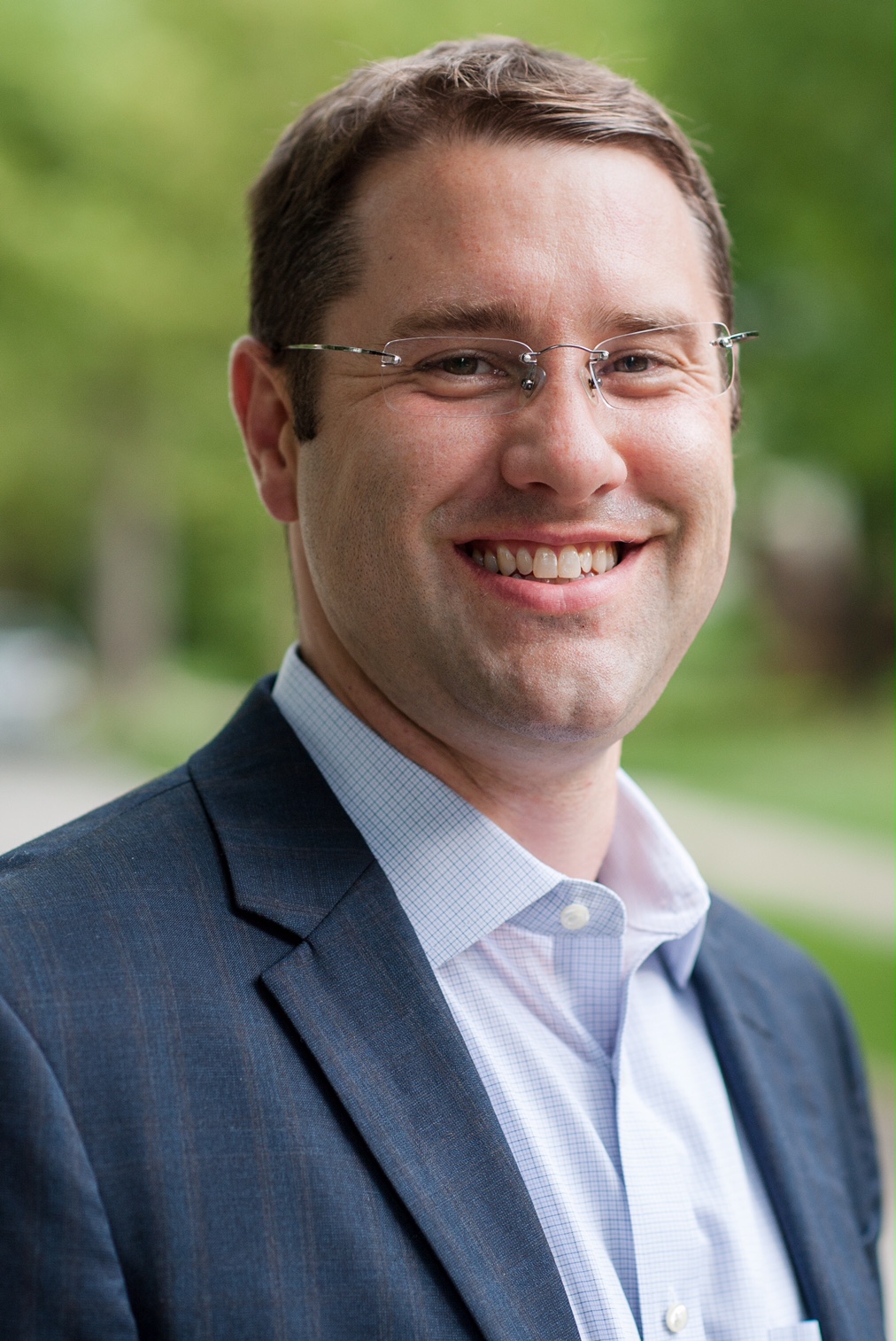
    Ben Pidgeon, VisionTech

    VisionTech Angels’ Executive Director Ben Pidgeon recently sat down with Ian Hamilton, founder and CEO of Atlas Energy Systems, to learn more about the company that’s repurposing technology originally developed in the 1960s by NASA for space applications into an exciting new solution for the oil and gas, nuclear and solar energy industries. Ian, a Purdue graduate with a Masters in Nuclear Engineering, will be presenting Atlas Energy during VisionTech’s upcoming Pitch Week, April 15-18. Read on!

    BP: The story behind Atlas Energy Systems’ technology is unique. Tell me about it.
    IH: Our thermionic energy converter (TEC) was inspired by technology previously developed in the 1960’s by NASA for space nuclear power. When the Soviet Union fell in the 1980s, NASA cancelled its space nuclear power programs. Russia was our competitor and with the end of the Cold Way, there was no reason to pursue it further despite the fact the technology was proven to work in space. So patents expired. I learned about it while an undergrad at Purdue, got interested, founded Atlas Energy Systems, and now we’re using NASA technology to develop plasma thermionic energy converters for waste heat power generation, concentrated solar and advanced nuclear reactors.

    BP: How does your technology work – in layman’s terms?
    IH: It’s all in our tagline: Heat to Electricity, No Moving Parts. What we’re doing is directly converting heat from any source you can think of, whether it’s sunlight, nuclear or the waste gas from oil wells, into electricity. If you have a source of high intensity heat, we can generate electricity with a convertor that has no moving parts. Digging deeper, Atlas Energy Systems is leveraging modern materials science, new plasma physics simulations, and advanced manufacturing techniques to develop a thermionic energy converter for the 21st century. Our novel device designs incorporate proprietary electrode materials and coatings as well as an electrode form factor to increase converter performance and reduce operating temperatures. Bringing this new capability to the technology is the necessary step in taking thermionic energy converters from a lab technology to a commercialized product.

    BP: What’s the driver behind the technology?
    IH: The short answer is that it’s a simple way to generate electricity. Also, the technology is proven; we’re not breaking new ground, we’re finding new applications. What makes it attractive is the simplicity of the process and the converter itself. The device has no moving parts so there’s nothing to break. It’s compact and saves space. We were originally thinking of compact power source for nuclear subs, but there are many other applications.

    BP: You were targeting the nuclear industry with batteries made from nuclear waste, but now you’re focused on the oil and gas industry. How did that come about?

    IH: We initially were working on nuclear batteries for NASA and the U.S. Navy and its nuclear subs. We got a call from far left field—a company in the oil and gas industry. They were interested in replacing current three-decades old technology used in oil and gas sensors combustion fuel systems with our thermal electric converters. So it seems oil and gas chose us.

    BP: What benefits do your thermionic energy converters offer the oil and gas industry?
    IH: Oil and gas production sites such as wells and offshore rigs use flare stacks, a gas combustion device, to burn off unusable, waste gas.  The main application of our thermionic energy converters would be to replace the old combustion device with ours and convert the flair gas into electricity. The advantages are significant. Current systems are inefficient and expensive. Our converters turn the waste gas into electricity that can be used at the well site or on offshore rigs. Our converters have no moving parts and are proven to survive in the harshest environment possible, space, so maintenance is minimal; always a good thing in remote locations. Repurposing the waste reduces CO2 emissions and methane, which is good for the environment. Overall, it’s a smart solution for the industry.

    BP: What type of patent protection do you have?
    IH: Original technology designs were either top secret or patent protected. What’s interesting is most of the original patents were for space and nuclear applications and expired in the 1980s when the government lost interest. Now anyone can access the old patents and use the information, which we have done. Atlas Energy Systems now has a patent pending on our plasma thermionic energy converter and will file additional patents on uses and applications.

    Ian Hamilton, CEO, Atlas Energy Systems

    BP: You have the unique honor of being included on Forbes’ 2018 “30 Under 30” list in 2018  that recognizes the brashest entrepreneurs across the United States. You were all of 25 years old when you won. That’s impressive.
    IH: It was exciting and also an honor as I was nominated by two different people. I’ve always been interested in entrepreneurship and, in fact, founded Atlas Energy Systems during my sophomore year at Purdue with three classmates. After earning my masters in Nuclear Engineering, I did a fellowship at Argonne National Labs Chain Reaction Lab in part because of their emphasis on entrepreneurship and how to translate energy tech into the marketplace. I’ve always thought it’s one thing to do research and scientific discovery, but if you can’t turn commercialize your technology and deliver a product the market cares about, it goes to waste.


    BP: Why should VisionTech Angels invest in Atlas Energy Systems?
    IH: Although we’re an early stage energy startup, we’re positioned as a hard tech scalable manufacturing company capable of providing thousands of units to companies. And the oil and gas industry is a great launch pad for us with interest from customers and a potential acquirer that I will discuss in my pitch. We currently have a demonstration unit and money from VisionTech Angels would fund our initial units for immediate sales and support our go to market strategy for oil and gas.

    To learn more about Atlas Energy Systems, visit their website. For details on VisionTech Angels’ April Pitch Week, visit our events calendar.
  • Don’t Panic: React Mobile Is Keeping Hospitality Industry Workers Safe

    Ben Pidgeon, VisionTech

    VisionTech Angels’ Executive Director Ben Pidgeon recently sat down with Robb Monkman, co-founder and CEO of React Mobile, to learn more about the company that’s dedicated to protecting people working in the hospitality industry from on-the-job assault, harassment and other dangers, Robb will be presenting React Mobile, a SaaS platform, during VisionTech’s upcoming Pitch Week, April 15-18. Read on!

    BP: What motivated you to found React Mobile?
    RM: When I was in college, I lived off campus with roommates. One night, two guys with guns broke into our apartment, held guns to our heads and robbed us. I was literally frozen; there was no way to call for help. That led me to create an app college students could use for emergencies. Since then, the app has grown into a powerful enterprise platform that gives people from all walks of life – at universities, in business environments and now the hospitality industry – a way to call for help. Ultimately, my partners and I are motivated to make the world a safer place.

    Robb Monkman, CEO, React Mobile

    BP: You started at universities and then moved to hotels and resorts. What attracted you to the hospitality industry?
    RM: It’s simple: the obvious need for personal safety and  increasing acknowledgement and action by lawmakers and leaders in the hospitality industry that the issue of employee safety has to be addressed. Here’s a quick fact for you: more than half of hotel workers, primarily housekeeping staff, face harassment and assault on the job. And it happens every day! Laws are now being passed to implement panic buttons for hospitality employees. React Mobile’s hometown, Seattle, was among the first in the country to pass a law. New York, Chicago, Miami, and other major destination cities have passed similar laws. They’re serious, too. Failure to comply could result in a hotel having their license revoked, fines and/or increased liability insurance costs.

    The hospitality industry has also addressed the problem, creating the 5 Star Promise to provide panic buttons to all employees by 2020 to keep people safe should they encounter any threat on the job. This initiative is backed by the top 19 brands, including Hilton, Marriott and Disney Resorts, for a total of more than 18,000 properties.

    BP: Explain how React Mobile works.
    RM: The React Mobile platform utilizes both GPS geolocation and blue tooth beacon technology that allows hotel security to pinpoint the whereabouts of employees in real time down to a specific room when a distress call is received. It works equally well in a high-rise property as is does in a sprawling casino property. Should a distress call be off-property on a golf course or in a pool area for example, we provide exact GPS coordinates for Google map tracking. React Mobile is cloud-based and integrates with the leading hotel platforms, making it easy to install. Finally, React Mobile is not a one-size-fits-all solution. Hotels can choose from several solutions.

    BP: I know this is intended for employee safety, but it could protect guests as well.
    RM: Absolutely! The sniper at the Mandalay Bay in Las Vegas in 2017 was an eye-opener for the industry. After that incident, employees were afraid to go to work. They never know what they’re going to find behind a hotel door. The unions began to pressure hotels to provide employees with panic buttons. I am proud to say that React Mobile was the first solution to be deployed on the Vegas strip.

    BP: Tell me about the market. Is there an ideal customer?
    RM: The market for React Mobile is huge; any hotel would benefit from our panic button solution. Our technology is particularly well suited for multi-story buildings, multi-building properties and golf, ski and other themed resorts. Currently, our focus is the major brands due in part to their commitment to implementing employee panic buttons by 2020.

    BP: What’s your traction look like?
    RM: It’s an exciting time for React Mobile. We have nearly 150 properties under contract and are a preferred vendor with a number of top brands, including Choice Hotels, Best Western Caesar’s Entertainment, Accor Hotels, and the Sands, owner of the Venetian in Las Vegas. We recently won an RFP with a major theme park company. We have a huge opportunity with hotel management groups and aggregators.

    BP: What’s your revenue model?
    RM: React Mobile is sold as a software-as-a-service, but we have three revenue streams: hardware that includes the Bluetooth beacons and panic buttons; recurring service fees based on room counts; and lastly, installation and onsite training.

    BP: What’s your exit strategy?
    RM: It’s fairly clear-cut. An acquisition partner would likely come from one of our integration partners or someone in the security industry.

    BP: Why should VisionTech Angels invest in React Mobile?
    RM: We have serious traction—almost 20,000 hotels are committed to implementing panic button technology. As one of the firsts in the space, we’ve built a strong foundation and our platform is easy to implement as it integrates with current security platforms. We’re trusted by large hotels, casinos and resorts. The 2020 implementation deadline is almost here. All we need is rocket fuel for our growth to take off.

    To learn more about React Mobile, visit their website. For details on VisionTech Angels’ April Pitch Week, visit our events calendar.
     

  • February Pitch Week Preview: Glutenostics Redefines Celiac Disease Diagnostics and Monitoring

    Ben Pidgeon, VisionTech

    VisionTech Angels’ Executive Director Ben Pidgeon recently sat down with David Winternheimer, co-founder and CEO of Glutenostics, to learn more about how his company is redefining how those with celiac are diagnosed and manage their disease. David will be presenting Glutenostics during our first Pitch Week of 2019, February 25-28.

    BP: What is the current state of celiac disease in the U.S. and how is it diagnosed?
    DW: Celiac disease is a serious autoimmune disease triggered by ingesting gluten that damages the villi of the small intestine and interferes with absorption of nutrients from food. More than 1% of the U.S. population—about 3.5 million people—have celiac disease. Of those individuals, 85% have yet to be diagnosed. As many as 10% of the population are gluten intolerant and have painful symptoms after eating products containing wheat, barley or rye. The standard test for diagnosing celiac disease involves an endoscopy and biopsy and requires eating gluten daily for four to six weeks before the procedure. Many patients seeking diagnosis are already gluten-free, so this ‘gluten challenge’ is a major barrier to diagnosis. Our new blood test circumvents the need to eat gluten in order to get a diagnosis, and is much easier than a biopsy. Additionally, there has been no way to monitor compliance with a gluten-free diet.

    David Winternheimer, Glutenostics

    It’s also worth noting that access to diagnostics and ongoing care for this condition is highly lacking. Family doctors and internists don’t do biopsies to diagnose celiac disease and gastroenterologists don’t have a way to diagnose patients who are gluten free and refuse to reintroduce gluten into their diet. There are; however, about 1,200 celiac physicians in the United States and about 200 celiac clinics nationwide. Glutenostics’ technologies were developed over the past decade in response to thought leaders’ explicit call for better tools to diagnose and manage the disease.

    BP: What solutions does Glutenostics offer?
    DW: Glutenostics was founded in 2016 with the mission of bringing new technologies to market that improve the diagnosis, monitoring, and quality of life of those with celiac disease and gluten intolerance. In 2017, we launched our first product line, Gluten Detective, a rapid at-home urine and stool monitoring test, that’s much like a pregnancy test, to measure compliance with a gluten-free diet.

    We’re now preparing to launch our lab tests, including a blood flow cytometry test for diagnosing celiac disease that involves a proprietary HLA gluten tetramer reagent and doesn’t require the eating gluten prior to the test. We also plan to launch a lab version of the urine/stool test for diet monitoring as well for physicians to order We’re working with multiple collaborators nationwide at major institutions to drive the adoption of both of these technologies into the official celiac clinical guidelines. The Harvard celiac program continues to be our biggest advocates.

    BP: Is this technology you developed or licensed? Is it patent protected?
    DW: Glutenostics has exclusive licensing rights for both the blood diagnostic and urine/stool monitoring tests in the U.S. and Canada. The blood test comes from Ludvig Sollid’s lab at the University of Oslo, Norway, a world-renowned immunology lab that is well respected among the celiac community. The urine and stool tests comes from Biomedal of Seville, Spain, whose CEO is also a co-founding member of Glutenostics and credited with developing the world’s second most commonly used test for assessing gluten content in foodstuffs.

    BP: What are the regulatory and reimbursement requirements?
    DW: As lab developed tests, the FDA does not regulate tests such as our flow cytometry and at-home rapid tests. CMS currently reimburses similar blood tests at a rate of about $400 and private payers reimburse at around $1,000, which is a third of the cost of a biopsy, hence the appeal to payers. We don’t yet have reimbursement rates yet for the at-home rapid test, but we’re working on that.

    BP: Does Glutenostics have an Indiana connection?
    DW: I’m a native of Evansville and our CLIA lab partner, Xeno Diagnostics, is located in Indianapolis, where we’re in the process of establishing our blood diagnostic test as a CLIA Lab Developed Test. Immediately after closing this round of financing, we will move our distribution center for the at-home kits to Indy as well as establish our physical headquarters office here, too.

    BP: What kind of patient advocacy support do you have?
    DW: The celiac community is extremely enthusiastic and supportive about what we’re doing. We have partnerships with Beyond Celiac and the Celiac Disease Foundation, which are both trusted U.S. non-profit groups for celiac disease. By partnering with these organizations, we will work to educate the celiac community about our diagnostic test and at-home testing product, Gluten Detective. We also have the support of all major celiac centers and key opinion leaders nationwide.

    BP: Do you have customers and are you generating revenue?
    DW: We are currently generating revenue from our direct-to-consumer at-home monitoring test, Gluten Detective. We have a clear plan to drive future sales and clinical adoption of our new tests.

    BP: Looking forward to your pitch!
    DW: We’re looking forward to the road show!

    To learn more about Glutenostics, visit their website. For details on VisionTech Angels’ February Pitch Week, visit our events calendar.

  • February Pitch Week Preview: Roomored Brings TV Magic to New Home Construction

    Ben Pidgeon

    VisionTech Angels’ Executive Director Ben Pidgeon recently sat down with Farrukh Malik, founder and CEO of Roomored, to learnmore about the company that’s disrupting the residential construction industry by taking the pain out of buying and selling new homes and eliminating the need for expensive spec homes. Farrukh will be presenting Roomored during our first Pitch Week of 2019, February 25-28. Read on!

    BP: You have an interesting story behind Roomored.
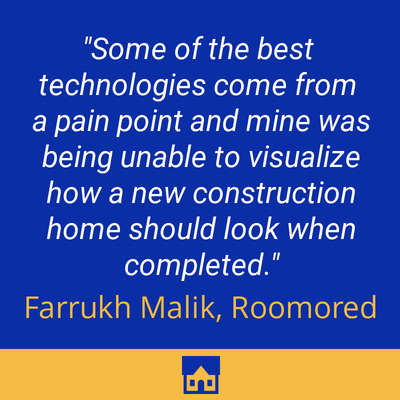
    FM: I’m somewhat of a citizen of the world. I was born in India, but my family moved to Australia when I was 15. After university, I was an investment banker for Macquarie Infrastructure Partners for nine years, moving from Sydney to Abu Dhabi and ultimately to New York City. Great companies and technologies are often born of pain points. Early in my career I bought a new construction condo. When it was completed, I was disappointed; it looked nothing like what I expected. With each move, the pain continued. Will my furniture work here? How will this two-inch flooring swatch look throughout my home? I have a numbers brain so visualizing what a condo or home would look like was extremely difficult for me.

    I wanted to start my own company and partly because of my pain point, I believed the residential construction industry was ripe for change. At the time, virtual reality technology was new and I saw an opportunity to create a tool for custom home builders that would replace the need to build model homes and support the sales process in a way that no one else was doing.

    BP: How have home builders traditionally marketed new developments?
    FM: Most will build and furnish one or more spec homes, which have to be staffed with sales people. They put together literature on floor plans and options. They have boards with swatches showing colors, tiles, flooring, shingles – you name it. Home buyers have to come out to development, which is usually just a dirt patch, tour the model home and then spend hours trying to visualize their dream home. It’s a tedious, frustrating process!

    BP: How does Roomored solve this problem?
    FM: Roomored provides a virtual reality (VR) experience not unlike what people see everyday on HGTV. Imagine Fixer Uppers’ Joanna Gaines and the VR designs she shows her clients. Roomored is just like that. We make TV magic real for builders and customers using actual photo-real floor plans, paint colors, finishes, and options offered by the home builder. Roomored creates the home buyer’s dream home in real time so no visualization skills are necessary.

    The benefits to home builders are significant. They can avoid the expense of building, furnishing and staffing model homes. Instead, they can have an onsite design center with design stations equipped with Roomored. They can also use the platform on their website, so home buyers can go to the site and design their home online when it’s convenient for them. Roomored cuts the consultation time—the average engagement time is 30 minutes—and shortens the sales cycle time. There’s also higher satisfaction at the end of the project because the home meets the buyers’ expectations.

    Farruhk Malik, Roomored

    BP: Did you have any unforeseen hurdles as your were creating Roomored?
    FM: We’re very proud of our photo-realism, but early in our product development, we determined that photos are often inaccurate, particularly when we used images supplied by other companies. Lighting and retouching remove the reality of an image pretty quickly. In building our finishes database, we use our own photography to ensure colors, scale, textures, and patterns are as accurate as possible.

    BP: What’s your business model?
    FM: Software as a Service based on the number of floor plans. Very simple and affordable.

    BP: What differentiates Roomored from competitors?
    FM: Roomored’s competitive advantage is our ability to provide photorealism that is customizable, while achieving scalability and volume. There are a number of companies (mainly rendering studios and agencies) that can provide really nice photorealism, but zero customization, and it is pretty easy to provide custom layouts, but no photorealism. Roomored is doing both in a way that it makes sense for homebuilders to license a software that helps their buyers visualize what they are buying pre-construction, and make design decisions.

    BP: Do you have customers and are you generating revenue?
    FM: Yes and yes. We are targeting high-volume builders of residential communities first, followed by mid- to small-sized builders. Our clients currently include Mattamy Homes in Canada, Hillwood Communities in Dallas that has 35 active communities on their books and M. Signature Homes in Austin. The M. Signature Home development, The Grove, is a perfect example of how Roomored supports the sales effort. They are building 1,500 homes and have 25 base floor plans and numerous options and finishes. They’ve chosen to skip the model homes the model homes in favor of a sales center with Roomored for support. With the homes priced from $500,000 up to $1.5 million, that’s a vote of confidence!

    BP: Looking forward to your pitch!
    FM: We’re looking forward to the road show!

    To learn more about Roomored, visit their website and watch this cool video. For details on VisionTech Angels’ February Pitch Week, visit our events calendar.
  • Don’t Whine About the FDA: How to Talk so Regulators Will Listen

    Don’t Whine About the FDA: How to Talk so Regulators Will Listen

    This Don’t Miss Event Is Co-Sponsored by
    VisionTech Angels + the Indiana Chapter of the Society of Physician Entrepreneurs (SOPE).

    Bob Seevers is a master storyteller. Before you ask him if he’ll tell stories to your kid’s first grade class, you have to understand one thing: the stories he shares are not about The Three Little Pigs, Curious George or Diary of a Wimpy Kid.

     No, Bob’s stories are about promising medical devices and drug candidates. And they’re intended for a very specialized audience, the U.S.

    Bob Seevers, PhD, Pearl Pathways

    Food and Drug Administration (FDA). Rather than entertain, the purpose is to streamline the FDA regulatory process, which is infamous for being confusing, time consuming and costly.

    As a senior advisor at Pearl Pathways, there’s nothing Bob likes better than grooming clients to become master storytellers so they can tell their story in a way FDA regulators understand and how they want to hear it. (With not even a peep of a whine!)

    Now he’s ready to share his insight with you.

    On Thursday, February 7, 5:45 pm at Leaf Software, Bob will share 25 years worth of experiences on the inside track of the FDA in a special VisionTech-SOPE event titled: Don’t Whine About the FDA: How to Talk so Regulators Will Listen. 

    The topic is important to a diverse audience that includes:

    • Life sciences startups with medical devices or drug candidates facing or in the process of securing FDA clearance
    • Physician entrepreneurs considering their own startup.
    • Angel investors looking for a greater understanding of investable companies that require an FDA approval to advance to commercialization.

    At the core of Bob’s discussion and generous question and answer segment is how best to present your story so your drug or device moves smoothly through the regulatory process. Here’s a taste of what you’ll learn:


    “FDA reviewers are solid scientists who have seen good work and bad, including cases where folks have tried to cheat. Reviewers know where to look for information. Best to build trust by giving them what they want.”

    “The entrepreneurs I’ve had the pleasure to work with have worked their butts off getting their device or drug to this point. They can’t help but tell a reviewer, ‘We’ve tested this and it’s good.’ Don’t give in to this temptation. There’s no shortcut; the FDA needs to see your data.”

    “It’s tempting to tell FDA reviewers everything, but I advise clients to cut 80 percent of what they want to say. At the first meeting, all you need is a high level summary that gets to core of your device or drug. The FDA will take it from there.”

    Intrigued? We sure are. Bob’s “inside baseball” perspective on how best to navigate the FDA regulatory processes was earned at the FDA itself and at Eli Lilly and Company. He spent eight years at the FDA as a team leader, managing a staff of PhD reviewers for the evaluation of CMC sections of INDs and NDAs. During his 16 years with Lilly, Bob was a principal regulatory scientist, leading the regulatory CMC submission strategy for drugs in preclinical development through their NDA/MAA submission and the approval process for both small and large molecules. He’s also served as a World Health Organization invited lecturer on drug development.

    Additionally, Bob’s knowledge spans all major therapeutic areas with specific expertise in CNS, endocrine, metabolism, autoimmune, oncology, pediatric drug formulation and clinical research, radiopharmaceuticals, and drug delivery systems.

    “Don’t Wine About the FDA: How to Talk so Regulators Will Listen” with Pearl Pathways’ Bob Seevers is set for Thursday, February 7, 5:45 pm, less than two weeks away. Space is limited. RSVP here> Find directions to Leaf Software here>


  • A Conversation with Kim Frazier of TEC Dayton, VisionTech’s Newest Angel Chapter

    VisionTech Partners Executive Director Ben Pidgeon recently sat down with Kim Frazier, Director of Growth Initiatives for The Entrepreneurs Center, also known as TEC Dayton. Formerly an international economic development executive in Washington D.C., Kim returned to her home state of Ohio to work on regional economic development, which ultimately led to creating new opportunities for entrepreneurs. She is leading the effort to establish a new VisionTech Angels chapter in Dayton that will further expand opportunities for the regions’ angel investors and entrepreneurs. Here’s their conversation.

    BP: Tell us about The Entrepreneurs Center.
    KF: We are a technology accelerator and business incubator in Dayton, Ohio, that’s focused on helping entrepreneurs achieve their business dreams. The organization was founded as Tec Dayton in 2000 and was strictly an incubator. When Scott Koorndyk came on as president in 2014, the organization became more of a commercialization center. Scott and I had worked together in economic development in the past and he recruited me to TEC in 2016 to help build out our pathways to commercialization programming.

    BP: You had a big win not long after you joined TEC.
    KF: Yes, we did! In 2017, the Ohio Third Frontier Commission selected TEC as the Dayton Region’s Entrepreneurial Services Provider (ESP). This two-year award gave TEC and our collaborative partners about $6.1 million to support the growth and development of regional technology start-ups, including those originating from the Air Force Research Laboratory (AFRL). Thanks to the award, we can provide more early stage services to entrepreneurs. It really helps us fill a critical gap in the Dayton area ecosystem.

    BP: Who are your partners in the ESP?
    KF: Our lead partner is Wright State University, which has strong programs in business, engineering and medicine. Other collaborators include The University of Dayton, Wright Brothers Institute, The Dayton Area Chamber of Commerce, CreativeFuse, and Nucleus CoShare. All of these organizations have a stake in growing Dayton’s commercialization and business startup efforts.

    BP: How did you learn about VisionTech Angels?
    KF: One of our local angel investors, Andy Cothrel, knew VisionTech Partners Co-founder Oscar Moralez and introduced us. Oscar was very generous in sharing his expertise and explaining VisionTech’s investing model. I’m a skeptic, but Oscar impressed me.

    Ben Pidgeon, VisionTech Executive Director

    BP: What makes VisionTech Angels attractive to TEC Dayton and its community of investors and entrepreneurs?
    KF: I really like VisionTech Angels’ overall investing process, from identifying and screening investable companies, to pitch week and the thoroughness of the due diligence. I also like the low barriers of engagement. Angels can invest as little as $5,000 per deal. For startups, they don’t have to pay to pitch. Instead, they are selected on their merits. The other side of it is Dayton’s industry mix, which is primarily aerospace and manufacturing, is much like Indiana’s. VisionTech “gets” us so with the support of many people associated with TEC, we decided to pursue becoming a VisionTech Angel chapter.

    BP: Dayton has a connection with VisionTech Angels. Explain.
    KF: (Laughs) Yes, Spintech LLC , a Dayton area company, is a VisionTech Angels portfolio company. They are a perfect example of the powerful technology being developed in our region— they produce shape memory polymer technologies for composite manufacturing and structural repairs in aerospace, automotive, defense, and other markets—and solid leadership. Spintech CEO Patrick Hood and its president, Craig Jennings, are both serial entrepreneurs. Dayton has a wealth of technology talent like this.

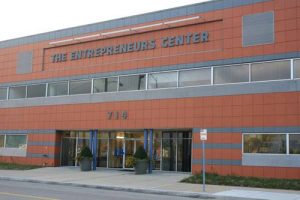
    BP: TEC’s first VisionTech Angel Pitch Week event is next Monday, April 23 at TEC Dayton at 714 E Monument Avenue from 11 am-1 pm What’s the response been?
    KF: We had a kick-off event in mid-February and more than 50 people came to learn about VisionTech Angels; it was great! So far, ten have RSVP’d for Pitch Week next week. Our local angels and entrepreneurs are very excited to have a VisionTech Angel chapter in Dayton. Our investors are excited to be part of a largely, very dynamic and informed angel investing group and entrepreneurs appreciate that they will have broader access to capital. I have gotten so many emails from people interested in what we’re doing. We’re really looking forward to next week!

    To learn more about The Entrepreneurs Center, please visit their website.