Tag: Angel investing Indiana

  • Meet February Pitch Presenter: Lydia Zeller of Flyte, Addressing Incontinence with Confidence

    Meet February Pitch Presenter: Lydia Zeller of Flyte, Addressing Incontinence with Confidence

    I first met Lydia Zeller, CEO and president of Pelvital (dba Flyte) a femtech solution for stress urinary incontinence in women. If you are unfamiliar with femtech, it is a category of software, diagnostics, products, and services that use technology to focus on women’s health. While VisionTech Angels has invested in a wide range of life sciences companies, this is our first femtech company, a sector that’s recently begun experiencing a lot of growth. I invited Lydia to meet with the VisionTech Angels Screening Committee earlier this month. The group was impressed with Flyte, how they are addressing a significant unmet need, the investment opportunity and Lydia, and we invited her to present at our February 23rd virtual pitch events. Here’s a preview.

    BP: Tell me a little about yourself. Is this your first startup?
    LZ: No, I’ve actually been an entrepreneur for 25 years and have a lengthy background in digital health. The last company I founded and where I served as CEO was Kiio, a digital health company in the musculoskeletal space, which exited in late 2021. I was brought onboard at Flyte in 2022 to take a fresh look at the go-to-market strategy. Outside of Flyte, I’m the board president of the Wisconsin Startup Coalition and a member of Women Business Leaders of the U.S. Health Care Industry Foundation.

    BP: What’s the backstory on Flyte?
    LZ:  First, 60% of women suffer from some form of urinary incontinence, so it’s a big problem. Flyte was originally developed by researchers, physicians, and physical therapists at the Arctic University of Norway. They were frustrated by the fact that nothing worked for patients who came in with stress urinary incontinence. Mechanotherapy was being used to treat astronauts who’d lost muscle strength in space. The question was asked, “Can we use this healing modality to revitalize the pelvic floor of women?” That started the effort at Arctic University to develop the technology that became Flyte.

    BP: I didn’t realize incontinence was such a big issue.
    LZ: Most people don’t. And one of the reasons is it’s embarrassing for women to talk about even though one in two have stress or mixed urinary incontinence. It happens when a woman laughs, coughs or bounces during exercise. It can develop after pregnancy. Athletes suffer from it. Incontinence is also part of the aging process. As common as incontinence is, more than 80% of women just put up with it without treatment. Some wear pads or absorbent undergarments, which are expensive. Some do Kegel exercises at home to strengthen muscles. A very small percentage, less than 3%, opt for surgery.  That’s expensive, there’s the risk of complications and it doesn’t always work. A lot of women are frustrated and end up living with leaks.

    BP: How is Flyte different?
    LZ: Flyte is a safe, non-surgical, bladder leak treatment for stress urinary incontinence in adult women. It is the only product to apply mechanotherapy to pelvic floor. It is a quick, easy treatment patients can do for just five minutes per day to strengthen their pelvic floor and realize dry or near-dry results in just six weeks.

    Now here’s how the “magic” of mechanotherapy works. The Flyte device is a wand made of soft, medical-grade silicone that is placed in the vagina. During treatment, it delivers a series of gentle pulses while the patient contracts her pelvic floor muscles. This amplifies the benefits of each squeeze—commonly called Kegels—by 39 times. This promotes the healing response in the pelvic floor muscles and restores strength and bladder control. Length of treatment is six weeks. Women can continue to use Flyte to maintain pelvic floor muscle tone if they like.

    BP: You’ve done clinical trials in Norway and the United States, and the results are impressive.
    LZ: Thank you! We have done the largest clinical trials of stress urinary incontinence in the world, with a total of 179 participants. The first trial was done in Norway at one center with 60 women. After six weeks, 83% of the women were continent. After two years, 77% will still continent. A second study was done in the United States with multiple centers and 119 women. After six weeks, 81% had improvements and at 12 weeks, 91% reported improvements. Overall, 71% achieved dry or near dry in two to 12 weeks.

    BP: What are the barriers to adoption and how are you addressing?
    LZ: Among consumers, there’s a lack of awareness that there’s something new available to them and that it works. We’ve also found that women are a little leery. Surprisingly, incontinence is a noisy space. A lot of people are selling snake oil. And even traditional treatments aren’t that effective. Many women who have tried something that didn’t work give up. Being new, we have to create awareness and educate women that our treatment works, and it’s quick. Some women achieve total dryness in two weeks, for others it’s six weeks of more. Increasing our presence on social media and through digital healthcare companies will help us increase awareness.

    B2B partners get it, particularly clinicians who see the problem day-in and day-out, know their patients struggle with current options and are not solving the problem. They are impressed with the results of our clinical trials. Our price point, $395 per device, would be more attractive if covered by insurance or Medicare/Medicaid. So we are working on getting a reimbursement code.

    Interestingly enough, we also have to overcome barriers with potential investors. Femtech is a new category of investing. Men often don’t realize what a debilitating issue incontinence is for women because women hide it so well. Unlike back surgery or a cancer drug, it’s not always easy to explain our return on investment. Incontinence ROI is more complicated. It’s been linked to depression, urinary tract infections, withdrawal from various activities in professional and personal settings, stopping exercise—the list goes on.

    BP: What is your go-to-market strategy and where are you seeing traction?
    LZ: To date, B2C has been our primary focus, and we are making a small profit here. Last year, we concentrated on reducing our customer acquisition cost and succeeded in cutting it in half. Once we close this round, we will be more involved in our B2C outreach through social and digital channels. Where we’re putting more effort is B2B. In the virtual healthcare arena, we are in advanced discussions with multiple partners and have signed a contract with a large Minnesota healthcare system. B2B deals take more time to develop and close but will allow us to scale more quickly.

    BP: What kind of intellectual property protection do you have?
    LZ: Our technology is very well protected, and we did that intentionally. We have 17 patents in all:  seven in North America, four in Europe, four in Asia, and two in Australia.

    BP: What round is this?
    LZ:  We are currently in our seed round and the goal is to raise $4.5 million. Boomerang Ventures is leading the round through their fund.

    BP: What is your planned use of funds?
    LZ:  Our priorities include securing a reimbursement code so we are accessible to more women through private insurance and Medicare/Medicaid; building out our next generation product, a connected device that will enable Cloud capture of data, a mobile apps for users, and features for virtual healthcare companies, health systems and clinicians; and making key hires in sales, marketing and business development that support commercialization. We will also be building our inventory in anticipation of increased demand.

    BP: Give me three reasons why VisionTech Angels members should invest.
    LZ: Do I have to limit it to three? I have five.

    BP: Sure! Go ahead.
    LZ: First off, women’s stress incontinence is a huge market with an unmet need. Second, Flyte is the right product at the right time. At long last, women’s health has become a priority, and this coincides women finally realizing it’s okay to talk to taboo topics like incontinence and demand for solutions for all women. Our timing coincides with the rise of digital health, which thanks to Covid, became mainstream.

    Third, we have a differentiated, patent-protected, novel approach that has been de-risked through clinical trials and has regulatory clearance for over the counter and prescription sales. Fourth, our business model aligns with direct-to-consumer retail and digital health, with women and partners looking for a real solution to stress incontinence. We are that solution. Fifth, we have a great team!

    VisionTech Angels’ February Pitch Events will be virtual on Thursday, February 23 at Noon and at 6 p.m. ET. Pitch events are open to our members and accredited investors interested in joining our group. To register, check your email for an invitation, go to our Events page where you’ll find the RSVP links, or email Ben Pidgeon at bpidgeon@visiontech-partners.com

  • Realplay Completes VisionTech Angels’ August Pitch Week and It’s a Homerun!

    VisionTech Angels’ Executive Director Ben Pidgeon recently sat down with Justin Real, CEO of Realplay and former collegiate baseball player, to discuss how the Massachusetts-based startup is transforming how youth baseball and softball are , shared and experienced. It’s a unique play with great market potential. Anyone with a child or grandchild who plays sports will be interested in this pitch. Justin will present Realplay during VisionTech’s upcoming Pitch Week, August 26-29. Read on!

    Ben Pidgeon, Executive Director, VisionTech

    BP: This is the first time VisionTech Angels has hosted a sports-focused startup for Pitch Week. How did you get into the game?
    JR: I originally got into baseball in Little League, worked my way through the high school recruiting process and ended my career playing catcher for four year at Union College. After college, I worked as consultant in the tech industry for four years and continued to work as a private hitting coach. While getting my MBA at Babson College, I found an opportunity to get back into the sport I love from a business perspective. It’s a lucrative market—as the most popular U.S. sport, amateur baseball and softball combined represents a $4 billion market. People play for fun, recreation, or dream of playing at the collegiate and professional levels. There are a lot of memories made on ball fields.

    I saw how the sport and the world at large were using video and saw an opportunity to change how video is captured, edited, shared, and used. In 2016, I founded Realplay and pulled together an all-star team that includes Andreas Randow (CTO), who has worked in the startup ecosystem for 15 years and is an expert in computer vision and systems infrastructure; Michael Salerno (VP of Product), who was with Oracle; and Brian Porter (Director of Operations), who spent 15 years working in Major League Baseball. His final project was consolidating and upgrading the video systems of all minor league teams. We’re now in the market and working hard!

    BP: What problem are you solving?
    JR: People love video, particularly in the sports world. Parents want video of their kids to capture the moment and share with friends and family. Coaches want video to analyze their players and improve skills. Scouts use video to check out prospects and reduce travel. And the players, they love seeing themselves on video. So what are the options? Use a smart phone and do it yourself? Hire a videographer for thousands of dollars or travel across the country showcasing your kid’s talent at expensive camps and showcases? Neither is ideal. And this doesn’t even include the time and labor involved with editing and sharing player videos with everyone who wants them.

    Realplay eliminates the need for parents, coaches, scouts, and whomever to be videographers, editors, producers, organizers, or publishers. We deliver video of every swing, pitch, and catch that any player on makes on a baseball or softball field. And we do it by automating the capture, editing, analysis, and distribution of player video. This allows everyone to focus on the game and have fun—which is what baseball and softball are about.

    BP: Sounds cool. How does it work?
    JR: There are three key components: the camera system, machine learning software and a multi-channel platform. Here’s how they work together to make Realplay cover all the bases. Each ball field is equipped with three cameras that operate through an app. The app also serves as an e-scorebook, capturing stats throughout the game. At the end of the game, the video is uploaded to the cloud where it’s processed by our machine learning software into single player clips and stats. This information is uploaded to player profiles. The final piece is the multi-channel platform with pages for players, parents and teams. There’s also a social media integration component to make sharing easy. We’ve taken a process that used to require nine man hours of work per game, and reduced it to seven minutes.

    BP: What’s Realplay’s revenue model?
    JR: First, there’s no charge to the field owner or sports complex; Realplay is a free service with a revenue share. Our revenue comes from player and team subscriptions. To get people started, we offer a freemium subscription that includes three free videos that can be viewed on a player’s page we create for them. The basic subscription includes all of a player’s videos uploaded to their page with stats, on-video annotation and a few other features. The premium subscription includes an end-of-season highlight reel, virtual coaching portal, college recruitment prep, and premium social sharing features.

    We partner with the existing organizers of the game to ensure high volume wherever we go. Subscriptions can be offered through teams as part of their annual fees or made available through specific tournaments or events by facilities and tournament organizers. Even if it’s just an online purchase, It’s a nice addition for players, families and coaches!

     BP: Who is the ideal customer for Realplay?
    JR: Any family with a kid playing baseball or softball. Our immediate focus and ideal target is multi-field sports complexes that can have anywhere from two to 50-plus fields for youth and adult leagues. For example, in Westfield, Indiana, there’s a privately owned complex with 57 fields. In 2018, it had 1.9 million visitors. Currently, there are 550 similar facilities with a total of 3,500 fields. Each facility can see upwards of 125,000 players a year.

     BP: What’s your pipeline look like now and what are you doing to fill it up?
    JR: In 2019, we’ve secured two contracts and one letter of intent for just under $1 million in annual recurring revenue. We have two other facility prospects in the pipeline. We’re aggressively targeting sports facilities, tournament organizers, and multi-team programs like Little League, AAU, Cal Ripkin Baseball, and others.

     BP: There are others doing this. What is Realplay’s competitive advantage?
    JR: Yes, there are several competitors with Hudl being the most entrenched. They’ve been on the market since 2006 and their technology is out of date. Realplay has four things going for us. First, we are free to the sports facility with the revenue sharing component; all of our competitors charge for their service.

    Second, our technology is superior; our automation moves the responsibility of creating videos from people to the machines. Third, we’re entirely focused on baseball/softball and aim to be the standard at premium facilities; everyone else is focusing on team-field sports like soccer and football. Finally, as the first mover in this space, our position gets more entrenched with each new facility we sign.

    BP: Why should VisionTech Angels invest in Realplay?
    JR: The market potential is huge. Baseball and softball have 36.5 million participants, many who’d love to have video. We’ve already raised the majority of our seed round and are looking to use the funding to secure more contracts for 2020, and start the process of raising our next round at a higher valuation. Realplay is a low technology risk, fast to production and results, with low cap intensity. We’re gaining traction and we love baseball.

    To learn more about Realplay, visit their website. To RSVP for VisionTech Angels’ August Pitch Week, visit our events calendar.


  • Insights from an Angel Investor: Patterns and Core Values

    I technically started angel investing in 2012, but I wasn’t serious about investing until I became a managing partner of VisionTech Angels in late 2014. With roughly 120 accredited investors who review up to 15 screened investment opportunities each year and about 30 portfolio companies we’ve invested in, we have a very active, very engaged group.

    Tony Petrucciani

    In my excitement to get in the game, my initial strategy was the shotgun approach. If the company made it through VisionTech’s fairly rigorous process, I figured it was good enough for me.

    Let me back up for a minute. I began my professional career writing code for small companies in the early 1980s while a student at Ball State University. (I tell my kids that I was a nerd before nerds were cool.) There are two things it takes to be a coder: the ability to learn a new language (C++, Java, Python) and the ability to create and debug an algorithm. By the time I graduated in 1985, I had my own startup company with half a dozen customers who paid me to customize their off-the-shelf software.

    Here’s what’s interesting. I realized at the ripe age of 20, I wasn’t creating one-off, custom solutions. What I was really doing while creating software products was pattern matching. Each company I worked with, while different, had similar needs that required similar solutions. Identifying the pattern helped me reach the right solution more efficiently without reinventing the wheel.

    The Power of Patterns

    It was a pivotal moment. Once I realized this, pattern matching showed up everywhere, from the gaps and shortcomings in standard software products to patterns in vertical and micro-vertical markets. I discovered common patterns in skill sets and how they could generate career options and salary increases. I found pattern matching in people who turned out to be my best friends. Like Malcolm Gladwell’s book Blink, our brains develop pattern matching algorithms way before we decide to do almost everything in life, and for me that included writing that first line of code.

    Still, I didn’t explicitly understand my propensity for pattern matching. When I founded Single Source Systems in 1985, I was pattern matching as I interviewed potential employees, explored potential vendors/partners, and even as I participated in sales cycles with potential customers. And it worked. Over the years, I built a team of talented individuals who allowed our company to grow rapidly. Twice we landed on Inc. Magazine’s list of the 500 Fastest Growing Privately Held Companies in the United States.

    It goes without saying, but nearly 100 percent of our best employees, partners, and customers shared our company’s core values. We didn’t set out to use our core values as a measuring stick, but consciously or unconsciously aligning core values worked.

    I was further reminded of the power of pattern when I was fortunate enough to go through a failed acquisition in 2007. I say fortunate because this was a first for me. The negotiations and ultimate breakdown offered no pattern upon which I could match. Our team learned from that experience, and when a similar opportunity arose in 2011, we were better prepared to take advantage of it. A global enterprise software provider acquired Single Source Systems for a much better number than we would have gotten just four years earlier.

    Isn’t it funny how a small amount of data points can give you so much information?

    I was reflecting on this recently as I look back on the 37 different companies in which I have invested since December 2014. How would I tell what kind of companies I would like/love/hate when I looked back over the years? You guessed it. It’s all about pattern matching. But unlike the time when I was six and warned not to touch the hot iron in my parent’s workroom only to go back to touch it when no one was watching (my dad may have left it hot on purpose as I blistered my finger really well!), you don’t get immediate feedback on what to pattern match when you are in angel/seed stage investing. (By the way, the phrase, “I bet you won’t do that again” sticks with me nearly 50 years later.)

    So what have I learned over the last five years?

    Five years is long enough for me to know there are certain types of companies and/or leadership teams that I don’t mix well with, but more on that in a minute.

    Early in my career, I was lucky enough to go through the Entrepreneurship Masters Program created by Inc. Magazine, MIT and EO. The facilitator was a guy named Verne Harnish, who had a book called Mastering the Rockefeller Habits. The program taught me a great process for managing companies, especially fast growth companies.

    One of the basic tenets is to identify your company’s core values, then honestly measure everyone in the company based on these core values. If they share your core values, you find the right seat on the bus for that person. If they don’t, they likely need to get off your bus and find a bus where they fit.

    I got into angel investing with the thought that in addition to providing startup capital, I’d have a seat on the bus of the companies I invested in as a coach/mentor. Fortunately, I’ve found that many companies want me to help based on my experience—after all, I have made many, many mistakes as well as achieved great success. I do it because I love product management, problem solving and providing stories of experiences to management teams. Not so they do what I say, but so they have more data points to do their own pattern matching. So far I have participated in more than 10 board of director positions.

    Not every startup has had a seat on the bus for me. Some don’t want my opinion, advice or involvement; they just want my money. And I appreciate that data point.

    What have pattern matching and core values taught me and how has it influenced my investments?

    The short answer is a lot.

    I’ve learned to recognize and appreciate pattern matching in the companies I’m considering for investment. If the patterns are positive, I’m much more likely to invest. If the patterns I value are not there, forget about it!

    I’ve also learned that if I don’t do a thorough job checking to see if the founders of my potential investment match (or don’t match) my core values, meaning their personal and company’s core values, I’m going to be frustrated at some level. This requires me to meet with founders and understand their core values. If they don’t know their core values, I need to talk them through it. If they don’t think it’s important, I probably need to wait for the next opportunity.

    A company’s patterns and core values influence my investment decisions. This type of investing isn’t the same as just buying stock in Apple, Amazon or Walmart (although it could be). My approach requires real person-to-person work with a lot of interaction. Each founder, no matter how much they think they know, will need help many times during their process. Even if they don’t think they need help, mine or someone else’s, they probably can’t argue that help would make things easier and/or faster. Founders need to understand that investors are not working against them, but with them. This should be clear in their core values. This is how they earn my support, financial and otherwise.

    Learn more about VisionTech Angels at our website. If you would like to speak with Tony personally, contact us and we’ll make an introduction.


  • February Pitch Week Preview: Glutenostics Redefines Celiac Disease Diagnostics and Monitoring

    Ben Pidgeon, VisionTech

    VisionTech Angels’ Executive Director Ben Pidgeon recently sat down with David Winternheimer, co-founder and CEO of Glutenostics, to learn more about how his company is redefining how those with celiac are diagnosed and manage their disease. David will be presenting Glutenostics during our first Pitch Week of 2019, February 25-28.

    BP: What is the current state of celiac disease in the U.S. and how is it diagnosed?
    DW: Celiac disease is a serious autoimmune disease triggered by ingesting gluten that damages the villi of the small intestine and interferes with absorption of nutrients from food. More than 1% of the U.S. population—about 3.5 million people—have celiac disease. Of those individuals, 85% have yet to be diagnosed. As many as 10% of the population are gluten intolerant and have painful symptoms after eating products containing wheat, barley or rye. The standard test for diagnosing celiac disease involves an endoscopy and biopsy and requires eating gluten daily for four to six weeks before the procedure. Many patients seeking diagnosis are already gluten-free, so this ‘gluten challenge’ is a major barrier to diagnosis. Our new blood test circumvents the need to eat gluten in order to get a diagnosis, and is much easier than a biopsy. Additionally, there has been no way to monitor compliance with a gluten-free diet.

    David Winternheimer, Glutenostics

    It’s also worth noting that access to diagnostics and ongoing care for this condition is highly lacking. Family doctors and internists don’t do biopsies to diagnose celiac disease and gastroenterologists don’t have a way to diagnose patients who are gluten free and refuse to reintroduce gluten into their diet. There are; however, about 1,200 celiac physicians in the United States and about 200 celiac clinics nationwide. Glutenostics’ technologies were developed over the past decade in response to thought leaders’ explicit call for better tools to diagnose and manage the disease.

    BP: What solutions does Glutenostics offer?
    DW: Glutenostics was founded in 2016 with the mission of bringing new technologies to market that improve the diagnosis, monitoring, and quality of life of those with celiac disease and gluten intolerance. In 2017, we launched our first product line, Gluten Detective, a rapid at-home urine and stool monitoring test, that’s much like a pregnancy test, to measure compliance with a gluten-free diet.

    We’re now preparing to launch our lab tests, including a blood flow cytometry test for diagnosing celiac disease that involves a proprietary HLA gluten tetramer reagent and doesn’t require the eating gluten prior to the test. We also plan to launch a lab version of the urine/stool test for diet monitoring as well for physicians to order We’re working with multiple collaborators nationwide at major institutions to drive the adoption of both of these technologies into the official celiac clinical guidelines. The Harvard celiac program continues to be our biggest advocates.

    BP: Is this technology you developed or licensed? Is it patent protected?
    DW: Glutenostics has exclusive licensing rights for both the blood diagnostic and urine/stool monitoring tests in the U.S. and Canada. The blood test comes from Ludvig Sollid’s lab at the University of Oslo, Norway, a world-renowned immunology lab that is well respected among the celiac community. The urine and stool tests comes from Biomedal of Seville, Spain, whose CEO is also a co-founding member of Glutenostics and credited with developing the world’s second most commonly used test for assessing gluten content in foodstuffs.

    BP: What are the regulatory and reimbursement requirements?
    DW: As lab developed tests, the FDA does not regulate tests such as our flow cytometry and at-home rapid tests. CMS currently reimburses similar blood tests at a rate of about $400 and private payers reimburse at around $1,000, which is a third of the cost of a biopsy, hence the appeal to payers. We don’t yet have reimbursement rates yet for the at-home rapid test, but we’re working on that.

    BP: Does Glutenostics have an Indiana connection?
    DW: I’m a native of Evansville and our CLIA lab partner, Xeno Diagnostics, is located in Indianapolis, where we’re in the process of establishing our blood diagnostic test as a CLIA Lab Developed Test. Immediately after closing this round of financing, we will move our distribution center for the at-home kits to Indy as well as establish our physical headquarters office here, too.

    BP: What kind of patient advocacy support do you have?
    DW: The celiac community is extremely enthusiastic and supportive about what we’re doing. We have partnerships with Beyond Celiac and the Celiac Disease Foundation, which are both trusted U.S. non-profit groups for celiac disease. By partnering with these organizations, we will work to educate the celiac community about our diagnostic test and at-home testing product, Gluten Detective. We also have the support of all major celiac centers and key opinion leaders nationwide.

    BP: Do you have customers and are you generating revenue?
    DW: We are currently generating revenue from our direct-to-consumer at-home monitoring test, Gluten Detective. We have a clear plan to drive future sales and clinical adoption of our new tests.

    BP: Looking forward to your pitch!
    DW: We’re looking forward to the road show!

    To learn more about Glutenostics, visit their website. For details on VisionTech Angels’ February Pitch Week, visit our events calendar.

  • A Conversation with Kim Frazier of TEC Dayton, VisionTech’s Newest Angel Chapter

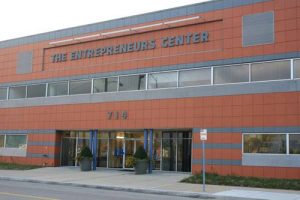
    VisionTech Partners Executive Director Ben Pidgeon recently sat down with Kim Frazier, Director of Growth Initiatives for The Entrepreneurs Center, also known as TEC Dayton. Formerly an international economic development executive in Washington D.C., Kim returned to her home state of Ohio to work on regional economic development, which ultimately led to creating new opportunities for entrepreneurs. She is leading the effort to establish a new VisionTech Angels chapter in Dayton that will further expand opportunities for the regions’ angel investors and entrepreneurs. Here’s their conversation.

    BP: Tell us about The Entrepreneurs Center.
    KF: We are a technology accelerator and business incubator in Dayton, Ohio, that’s focused on helping entrepreneurs achieve their business dreams. The organization was founded as Tec Dayton in 2000 and was strictly an incubator. When Scott Koorndyk came on as president in 2014, the organization became more of a commercialization center. Scott and I had worked together in economic development in the past and he recruited me to TEC in 2016 to help build out our pathways to commercialization programming.

    BP: You had a big win not long after you joined TEC.
    KF: Yes, we did! In 2017, the Ohio Third Frontier Commission selected TEC as the Dayton Region’s Entrepreneurial Services Provider (ESP). This two-year award gave TEC and our collaborative partners about $6.1 million to support the growth and development of regional technology start-ups, including those originating from the Air Force Research Laboratory (AFRL). Thanks to the award, we can provide more early stage services to entrepreneurs. It really helps us fill a critical gap in the Dayton area ecosystem.

    BP: Who are your partners in the ESP?
    KF: Our lead partner is Wright State University, which has strong programs in business, engineering and medicine. Other collaborators include The University of Dayton, Wright Brothers Institute, The Dayton Area Chamber of Commerce, CreativeFuse, and Nucleus CoShare. All of these organizations have a stake in growing Dayton’s commercialization and business startup efforts.

    BP: How did you learn about VisionTech Angels?
    KF: One of our local angel investors, Andy Cothrel, knew VisionTech Partners Co-founder Oscar Moralez and introduced us. Oscar was very generous in sharing his expertise and explaining VisionTech’s investing model. I’m a skeptic, but Oscar impressed me.

    Ben Pidgeon, VisionTech Executive Director

    BP: What makes VisionTech Angels attractive to TEC Dayton and its community of investors and entrepreneurs?
    KF: I really like VisionTech Angels’ overall investing process, from identifying and screening investable companies, to pitch week and the thoroughness of the due diligence. I also like the low barriers of engagement. Angels can invest as little as $5,000 per deal. For startups, they don’t have to pay to pitch. Instead, they are selected on their merits. The other side of it is Dayton’s industry mix, which is primarily aerospace and manufacturing, is much like Indiana’s. VisionTech “gets” us so with the support of many people associated with TEC, we decided to pursue becoming a VisionTech Angel chapter.

    BP: Dayton has a connection with VisionTech Angels. Explain.
    KF: (Laughs) Yes, Spintech LLC , a Dayton area company, is a VisionTech Angels portfolio company. They are a perfect example of the powerful technology being developed in our region— they produce shape memory polymer technologies for composite manufacturing and structural repairs in aerospace, automotive, defense, and other markets—and solid leadership. Spintech CEO Patrick Hood and its president, Craig Jennings, are both serial entrepreneurs. Dayton has a wealth of technology talent like this.

    BP: TEC’s first VisionTech Angel Pitch Week event is next Monday, April 23 at TEC Dayton at 714 E Monument Avenue from 11 am-1 pm What’s the response been?
    KF: We had a kick-off event in mid-February and more than 50 people came to learn about VisionTech Angels; it was great! So far, ten have RSVP’d for Pitch Week next week. Our local angels and entrepreneurs are very excited to have a VisionTech Angel chapter in Dayton. Our investors are excited to be part of a largely, very dynamic and informed angel investing group and entrepreneurs appreciate that they will have broader access to capital. I have gotten so many emails from people interested in what we’re doing. We’re really looking forward to next week!

    To learn more about The Entrepreneurs Center, please visit their website.


  • VisionTech Angels Injects $2.6 Million in Eight Promising Startups in 2017

    INDIANAPOLIS, Indiana (February 27, 2018) – – VisionTech Angels, Indiana’s largest and most active angel investing group with five chapters across the state, invested a total of $2.6 million in eight early growth startup companies in 2017. Even more impressive, $2.1 million was specifically directed to Indiana-based companies. The eight companies raised a total of $13.3 million in the investment rounds in which VisionTech Angels participated.

    The companies receiving first-time and follow-on capital from VisionTech Angels in 2017 include: Boardable, Boosterville, InScope Medical, PhotoniCare, SeikoWave Energy, SonarMed, Tenant Tracker, and WorkHere. PhotoniCare is based in Illinois and SeikoWave Energy in Kentucky. The remaining companies are headquartered in Indiana.

    Commenting on last year’s investments, VisionTech Executive Director Ben Pidgeon says the group’s growing investment portfolio is reflective of Indiana’s growing reputation as a hotbed of tech startups and a greater appetite for startup capital.

    “The volume of deals presented to VisionTech Angels has grown exponentially over the last year; it’s like someone turned on the faucet of entrepreneurs with great tech ideas and interesting business models. Last year, we were approached by more than 300 startups and after a rigorous screening process, 15 were invited to present to our members. The eight we invested in are truly cream of the crop.”

    Pidgeon says that VisionTech Angels’ sweet spot is early growth startup companies that have proved their business models and are near to or in the early stages of generating revenue, yet have limited sources of investment capital. Up to this point, they have typically relied on friends and family or are self funded and need additional capital. VisionTech Angels fills the gap between self-funding and venture capital with initial investments, follow-on rounds and strategic mentoring that helps startup companies to continue to advance.

  • Numbers Guy Steve Sehy Knows How to Position Companies for Capital Raises

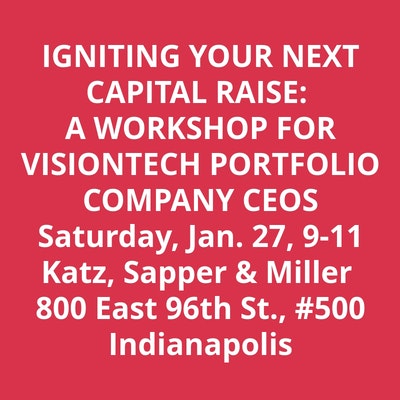
    In his first job out of college, Steve Sehy earned his CPA while at former Big Eight accounting firm Arthur Anderson. Instead of number crunching, Steve jumped into software development, creating accounting software for the firm that eventually became global consulting firm Accenture. Twenty years later, he applied his CPA as an auditor for one of the top U.S. accounting firms. Steve now provides fractional CFO services to SaaS companies. Later this month he’s leading a special VisionTech seminar for the group’s portfolio companies – specifically those without CFOs – preparing for their next capital raise. VisionTech is pleased to support the success of our portfolio companies. Here’s more of Steve’s story:

    VT: The name of the seminar is “Igniting Your Next Capital Raise.” This is obviously a hot topic for early growth companies.

    SS: Absolutely! This seminar is specifically for the CEOs of VisionTech portfolio companies and other invited startups that have successfully secured angel funds, have momentum and are planning another capital raise in the next 24 months. A professional money capital raise will be a totally different experience; a lot like making the leap from Double-A to the major league. This seminar gives CEOs the game plan they need to prepare for and successfully ignite future fundraising efforts.

    VT: What’s the difference between fundraising with angels and Series A rounds?

    SS: Angel investors get in on the ground floor of companies so our investment decisions are often based on a company’s leadership, business model and plan, and early successes. In later rounds, investors are laser focused on a company’s financials. Accounting systems must be in place and numbers have to be tight if professional investors are going to trust and ultimately invest.

    VT: What was your “ah-hah!” moment regarding the importance of sound accounting systems in capital fundraising?

    SS: I was working as a contract CFO for a SaaS company in the K-12 education market that had self-funded for 10 years. They needed an infusion of capital, but even with 20% annual growth, they couldn’t raise the money. One of the challenges was an accounting system that was not based on GAAP. So we attacked that first and by working through other issues to get their financial house in order, they became an attractive acquisition target. A private equity firm made an offer and the deal closed in 30 days. Having the right accounting infrastructure and presenting accurate numbers – in this case, GAAP numbers versus billed or cash – was critical for professional investors and led to a quick close.

    VT: Do startup companies overlook the importance of financials?

    SS: They don’t overlook financials; they just get busy. What happens is this: the CEO is running the company, marketing, selling, and looking ahead to the next market, the next version of the software, product or service, the next raise. Basic operations sometimes take a back seat. When it’s time to start the next raise, companies aren’t totally prepared. Often they don’t know what they don’t know in terms of what professional investors are looking for in accounting and financial reporting and forecasting.

    VT: What will CEOs walk away with from this seminar?

    SS: The big takeaway is they will learn what they need to do to meet the financial expectations of potential investors. Each participant will leave the seminar with a to-do list of financial/accounting projects that should be completed before they approach investors for professional money growth financing. If they complete their to do list, they will ignite their fundraising efforts.

    VT: Is their something extra for SaaS companies?

    SS: Yes, we’ll be taking a deep dive into SaaS accounting for 30 minutes after the main session. So if your company is SaaS, you’ll want to stick around.

    VT: There are only 15 spaces for this VisionTech event, Igniting Your Next Capital Raise, on Saturday, January 27, 9-11 am at Katz, Sapper & Miller, a VisionTech sponsor. Click here to RSVP. Event is open to VisionTech Portfolio Companies and guest startups.


  • Purdue Foundry’s Gibb Named President of VisionTech Angels’ Greater Lafayette Chapter

    Purdue Foundry’s Gibb Named President of VisionTech Angels’ Greater Lafayette Chapter

    LAFAYETTE, Ind. (June 27, 2017) – Riley Gibb, director of collaborations for the Purdue Foundry, has added a role to his resume. VisionTech Angels has tapped Gibb to serve as president of the Greater Lafayette chapter of the statewide angel investor network, a role that includes recruiting professionals interested in investing in early growth companies and entrepreneurs who need startup capital for a new technology or business.

    Gibb, who is also an instructor at Ivy Tech Community College, succeeds attorney Stuart Guttwein, who served as president of VisionTech Angels’ Greater Lafayette chapter for two years.

    Commenting on Gibb’s appointment, VisionTech Angels Executive Director Ben Pidgeon said, “Purdue University is a great source of new technologies and startup companies and advocate for entrepreneurship. Having Riley join VisionTech Angels as our Greater Lafayette chapter president will lead to greater synergy between the ‘makers’ at Purdue who create technologies and startups and angel investor who nurture them through capital investment and business consulting.

    Pidgeon, who is also a West Lafayette native and Purdue alum, added, “Stuart (Guttwein) laid a great foundation for VisionTech Angels in Greater Lafayette and we look forward to Riley growing our presence in the local innovation economy.”

    Gibb has strong ties in the Greater Lafayette community. In his role at the Purdue Foundry, he is responsible for optimizing the success of Foundry startup companies by cultivating meaningful connections throughout the entrepreneurial ecosystem. He earned his undergraduate degree from Purdue University and his MBA in Marketing from Xavier University Williams College of Business. Gibb has worked with other companies in the area, including North American Dental Group and Promotion Publishing & Marketing, where he served as president.

    “At the Foundry, we are always looking for additional opportunities to help our companies reach their next level of success. The Foundry’s relationship with VisionTech Angels has always been strong, and I am excited to build on that foundation moving forward. Together we are excited to grow the entrepreneurial ecosystems in the greater Lafayette area with the Foundry and VisionTech Angels as important pieces for many companies.”


    Save

    Save

  • VisionTech Portfolio Company FAST BioMedical Secures $8 Million in New Funding

    FAST BioMedical Logo

    CARMEL, IND. (May 3, 2017) FAST BioMedical, Inc., a VisionTech Partners portfolio company, announced it has secured $8 million of additional financing. $5 million comes from a Series A2 financing led by one new investor, F&M Investment Office. This financing augments $3 million of grant funding received as a competing renewal award from the National Institute of Diabetes and Digestive and Kidney Diseases at the National Institutes of Health. The proceeds will primarily be used to advance clinical trials of the company’s technology as well as to hire additional talent and advance the company’s global patent portfolio.

    FAST BioMedical is one of VisionTech Partners original investments, dating back to June 15, 2011 when the angel investing group operated as StepStone.VisionTech Partners has since made follow-on investments in FAST BioMedical through its angel investing group, VisionTech Angels.

    “This financing is an important and validating step to continue our progress,” said FAST BioMedical Chief Executive Officer Joe Muldoon. “We have already begun adding talent to the team, and are excited about their ability to immediately add value.”

    “FAST BioMedical has enormous potential to serve large unmet medical needs with its innovative technology,” said Mr. McClure, President of F&M Investment Office. “We are delighted to partner with them, and see great promise in the ability to favorably impact critical patient care.”

    FAST BioMedical is a private, clinical-stage medical technology company in Carmel, Indiana. The company’s globally patented first-in-class technologies directly measure blood volume and kidney function in a clinically viable way. This has the potential for profound impact on care of congestive heart failure, major surgery, sepsis, critical care, and kidney disease patients. The company has been financially supported by the NIH, Elevate Ventures, the Indiana 21st Century Fund, Rose-Hulman Ventures, BioCrossroads, Indiana University Medical Group, The Purdue Foundry Fund, Ellipsis Ventures, VisionTech Partners, and private family office investors. The FDA has determined the company’s technology meets the requirements for an Expedited Review.

    These products are investigational and not yet approved for human use.


    Save

  • Boosterville Receives $830K Investment to “Boost” Loyalty Platform Growth

    ZIONSVILLE, IN (February 7, 2017) — Boosterville, an award-winning, offers and loyalty platform that seamlessly connects merchants with cause-driven buyers, announces the completion of the company’s seed round of funding. The round, which will be used to accelerate the rollout of the platform to new markets, totaled $830,000 and was co-led by 316 Investments and VisionTech Angels with a matching investment from Elevate Ventures.

    Greg Willman, co-founder and CEO of 316 Investments who will be joining the Board of Directors, stated, “Our excitement for Boosterville stems from our long history in the retail space and understanding of the innovative marketing solution that Boosterville brings to merchants who want to support non-profit groups in their communities as well as grow their customer base.”

    Boosterville works with all existing payment card processing and POS systems with no new hardware, integrations or training required. An immediate text message at the time of purchase notifies the buyer of the merchant’s contribution to their selected non-profit, resulting in increased engagement and loyalty for platform merchants.

    Ben Pidgeon, executive director of VisionTech Angels, said, “Merchants have long been challenged by measuring return on investment of local marketing dollars spent. Boosterville has developed an elegant, yet powerful solution for businesses to engage with customers in supporting local causes, help local groups raise funds they need to be successful, and in the process, build a more loyal customer base. VisionTech Angels is pleased to have Boosterville as our first investment of 2017.”

    Boosterville CEO Pam Cooper stated, “We’ve seen great interest this last year and are thrilled to have these leading retail and technology experts join our team. We’re excited that they recognize the value of our technology and the tremendous opportunity to help the millions of merchants across the country increase their revenues while enhancing their relationship with their local community and non-profits.” Cooper added, “It’s wonderful to join the rising tide of Indiana’s tech startup community and prove that founders don’t need to leave the state to secure angel investment or talent for their growing companies.”

    During 2016, Boosterville established a technology partnership with one of the world’s largest credit card networks, secured agreements with national non-profit and faith-based organizations, was selected for Facebook’s FbStart program, and visited with now-Governor Eric Holcomb to introduce Boosterville and discuss fostering entrepreneurial growth in Indiana. Most importantly Boosterville received overwhelmingly positive response during a pilot program in Zionsville after months of testing by local development partner merchants: WB Pizza, Cobblestone Grill, and JiffyLube of Indiana.

    Prior to launching from Zionsville’s entrepreneurial and coworking center zWORKS, Boosterville graduated from two tech accelerators — the SeedHatchery in Memphis, TN and Prosper Women Entrepreneurs in St. Louis, MO. The company is currently operating in previously vacant commercial space owned by the Town of Zionsville.