Author: Ben Pidgeon

  • Meet February Pitch Presenter: Lydia Zeller of Flyte, Addressing Incontinence with Confidence

    Meet February Pitch Presenter: Lydia Zeller of Flyte, Addressing Incontinence with Confidence

    I first met Lydia Zeller, CEO and president of Pelvital (dba Flyte) a femtech solution for stress urinary incontinence in women. If you are unfamiliar with femtech, it is a category of software, diagnostics, products, and services that use technology to focus on women’s health. While VisionTech Angels has invested in a wide range of life sciences companies, this is our first femtech company, a sector that’s recently begun experiencing a lot of growth. I invited Lydia to meet with the VisionTech Angels Screening Committee earlier this month. The group was impressed with Flyte, how they are addressing a significant unmet need, the investment opportunity and Lydia, and we invited her to present at our February 23rd virtual pitch events. Here’s a preview.

    BP: Tell me a little about yourself. Is this your first startup?
    LZ: No, I’ve actually been an entrepreneur for 25 years and have a lengthy background in digital health. The last company I founded and where I served as CEO was Kiio, a digital health company in the musculoskeletal space, which exited in late 2021. I was brought onboard at Flyte in 2022 to take a fresh look at the go-to-market strategy. Outside of Flyte, I’m the board president of the Wisconsin Startup Coalition and a member of Women Business Leaders of the U.S. Health Care Industry Foundation.

    BP: What’s the backstory on Flyte?
    LZ:  First, 60% of women suffer from some form of urinary incontinence, so it’s a big problem. Flyte was originally developed by researchers, physicians, and physical therapists at the Arctic University of Norway. They were frustrated by the fact that nothing worked for patients who came in with stress urinary incontinence. Mechanotherapy was being used to treat astronauts who’d lost muscle strength in space. The question was asked, “Can we use this healing modality to revitalize the pelvic floor of women?” That started the effort at Arctic University to develop the technology that became Flyte.

    BP: I didn’t realize incontinence was such a big issue.
    LZ: Most people don’t. And one of the reasons is it’s embarrassing for women to talk about even though one in two have stress or mixed urinary incontinence. It happens when a woman laughs, coughs or bounces during exercise. It can develop after pregnancy. Athletes suffer from it. Incontinence is also part of the aging process. As common as incontinence is, more than 80% of women just put up with it without treatment. Some wear pads or absorbent undergarments, which are expensive. Some do Kegel exercises at home to strengthen muscles. A very small percentage, less than 3%, opt for surgery.  That’s expensive, there’s the risk of complications and it doesn’t always work. A lot of women are frustrated and end up living with leaks.

    BP: How is Flyte different?
    LZ: Flyte is a safe, non-surgical, bladder leak treatment for stress urinary incontinence in adult women. It is the only product to apply mechanotherapy to pelvic floor. It is a quick, easy treatment patients can do for just five minutes per day to strengthen their pelvic floor and realize dry or near-dry results in just six weeks.

    Now here’s how the “magic” of mechanotherapy works. The Flyte device is a wand made of soft, medical-grade silicone that is placed in the vagina. During treatment, it delivers a series of gentle pulses while the patient contracts her pelvic floor muscles. This amplifies the benefits of each squeeze—commonly called Kegels—by 39 times. This promotes the healing response in the pelvic floor muscles and restores strength and bladder control. Length of treatment is six weeks. Women can continue to use Flyte to maintain pelvic floor muscle tone if they like.

    BP: You’ve done clinical trials in Norway and the United States, and the results are impressive.
    LZ: Thank you! We have done the largest clinical trials of stress urinary incontinence in the world, with a total of 179 participants. The first trial was done in Norway at one center with 60 women. After six weeks, 83% of the women were continent. After two years, 77% will still continent. A second study was done in the United States with multiple centers and 119 women. After six weeks, 81% had improvements and at 12 weeks, 91% reported improvements. Overall, 71% achieved dry or near dry in two to 12 weeks.
    BP: What are the barriers to adoption and how are you addressing?
    LZ: Among consumers, there’s a lack of awareness that there’s something new available to them and that it works. We’ve also found that women are a little leery. Surprisingly, incontinence is a noisy space. A lot of people are selling snake oil. And even traditional treatments aren’t that effective. Many women who have tried something that didn’t work give up. Being new, we have to create awareness and educate women that our treatment works, and it’s quick. Some women achieve total dryness in two weeks, for others it’s six weeks of more. Increasing our presence on social media and through digital healthcare companies will help us increase awareness.

    B2B partners get it, particularly clinicians who see the problem day-in and day-out, know their patients struggle with current options and are not solving the problem. They are impressed with the results of our clinical trials. Our price point, $395 per device, would be more attractive if covered by insurance or Medicare/Medicaid. So we are working on getting a reimbursement code.

    Interestingly enough, we also have to overcome barriers with potential investors. Femtech is a new category of investing. Men often don’t realize what a debilitating issue incontinence is for women because women hide it so well. Unlike back surgery or a cancer drug, it’s not always easy to explain our return on investment. Incontinence ROI is more complicated. It’s been linked to depression, urinary tract infections, withdrawal from various activities in professional and personal settings, stopping exercise—the list goes on.

    BP: What is your go-to-market strategy and where are you seeing traction?
    LZ: To date, B2C has been our primary focus, and we are making a small profit here. Last year, we concentrated on reducing our customer acquisition cost and succeeded in cutting it in half. Once we close this round, we will be more involved in our B2C outreach through social and digital channels. Where we’re putting more effort is B2B. In the virtual healthcare arena, we are in advanced discussions with multiple partners and have signed a contract with a large Minnesota healthcare system. B2B deals take more time to develop and close but will allow us to scale more quickly.

    BP: What kind of intellectual property protection do you have?
    LZ: Our technology is very well protected, and we did that intentionally. We have 17 patents in all:  seven in North America, four in Europe, four in Asia, and two in Australia.

    BP: What round is this?
    LZ:  We are currently in our seed round and the goal is to raise $4.5 million. Boomerang Ventures is leading the round through their fund.

    BP: What is your planned use of funds?
    LZ:  Our priorities include securing a reimbursement code so we are accessible to more women through private insurance and Medicare/Medicaid; building out our next generation product, a connected device that will enable Cloud capture of data, a mobile apps for users, and features for virtual healthcare companies, health systems and clinicians; and making key hires in sales, marketing and business development that support commercialization. We will also be building our inventory in anticipation of increased demand.

    BP: Give me three reasons why VisionTech Angels members should invest.
    LZ: Do I have to limit it to three? I have five.

    BP: Sure! Go ahead.
    LZ: First off, women’s stress incontinence is a huge market with an unmet need. Second, Flyte is the right product at the right time. At long last, women’s health has become a priority, and this coincides women finally realizing it’s okay to talk to taboo topics like incontinence and demand for solutions for all women. Our timing coincides with the rise of digital health, which thanks to Covid, became mainstream.

    Third, we have a differentiated, patent-protected, novel approach that has been de-risked through clinical trials and has regulatory clearance for over the counter and prescription sales. Fourth, our business model aligns with direct-to-consumer retail and digital health, with women and partners looking for a real solution to stress incontinence. We are that solution. Fifth, we have a great team!

    VisionTech Angels’ February Pitch Events will be virtual on Thursday, February 23 at Noon and at 6 p.m. ET. Pitch events are open to our members and accredited investors interested in joining our group. To register, check your email for an invitation, go to our Events page where you’ll find the RSVP links, or email Ben Pidgeon at bpidgeon@visiontech-partners.com

  • VisionTech Portfolio Company GeoH Closes $2 Million Seed Investment Round

    VisionTech Portfolio Company GeoH Closes $2 Million Seed Investment Round

    INDIANAPOLIS, Indiana (November 17, 2022) – – GeoH, Inc., a medtech SaaS platform for home care agencies, has successfully closed on its $2 million seed investment round. VisionTech led the round with strong backing from its 140-plus member angel investing network. Boomerang Ventures, First Leaf Capital, Elevate Ventures, and other individual investors completed the round.

    GeoH was founded in 2018 by Indianapolis entrepreneurs Doug Rowe and Dylan Vester to disrupt the high growth and still largely paper-based home care industry with an end-to-end software solution to drive efficiency, digitalize home visit verification and improve reimbursement rates.

    Commenting on VisionTech Angels’ investment, Executive Director Ben Pidgeon said, “We invested in GeoH because it solves real pain points for home care operators facing a difficult operating environment and who want an ‘easy’ button that facilitates reimbursement. One of the biggest headaches for this industry is the fact that Medicaid denies payment on a significant number of all home care claims. Home care agencies submit claims only to find out that electronic visit verifications (EVV) or other forms weren’t completed properly, causing a series of denials, resubmissions and payment delays. GeoH’s platform addresses EVV and other issues, creating an opportunity to bring much-needed stability to cashflow and thus enable home care providers to effectively serve vulnerable senior populations.”

    Boomerang Ventures’ investment in GeoH was the first made through its new investment fund, Boomerang VC Fund, a fund dedicated entirely to early-stage connected health tech companies. Managing Director Oscar Moralez has mentored the company for almost two years and its rapid progress in building out its platform and scaling its customer base drove Boomerang’s investment.

    “Boomerang originally brought the deal to VisionTech a year ago but continued to work with the founders. We also played a role in recruiting GeoH’s current CEO, Tom Bumgardner, and CFO/COO David Gunn, who both bring decades of experience in medical device and medtech. With a proven solution and great talent around the table, GeoH has achieved outstanding growth in its user base and with this round of capital, their trajectory will continue,” Moralez said. “We are excited to be able to participate in this round.” Moralez will now serve as a member of GeoH’s board of directors.

    GeoH’s raise is well timed. According to the Centers for Medicare & Medicaid Services (CMS), demand for home care services continues to swell, with expenditures expected to reach $201 billion by 2028, a 73 percent increase from 2020. At the same time, the industry is stressed by the tight labor market and looking to tech for solutions.

    First Leaf Capital Managing Partner Mark Ardsma believes GeoH has the wind at its back. “The United States needs an army of home care providers to meet growing demand. These companies need tools to run their businesses efficiently, stay compliant and streamline billing. GeoH stands out from the field with seasoned leadership, strong connection to the ecosystem, impressive in-house software development, and a product that’s as simple to use as it claims to be. The GeoH team has leaned in with urgency to serve customers and build something impactful. At First Leaf Capital, we share those values, and we are delighted to be involved.”

    GeoH CEO Bumgardner expressed gratitude to the investors and is eager to now focus on expanding the company’s geographic footprint and the platform’s functionality. “We’re concentrating on the Midwest, Southeast, and Texas to launch and scale, leveraging our ability to bring dramatic improvements to Medicaid claims submissions and billing. We also are working on expanding the platform to include skilled home health services such as occupational, speech and physical therapy and nursing. As more Americans choose to age in place, we intend to empower the home care industry to be right there with them.”

    About GeoH, Inc.
    Indianapolis-based GeoH is the creator of an end-to-end home care software solution for use by agency providers, managed care organizations and state aggregators. This digital solution encompasses scheduling, payroll, billing, reporting and analytics, notifications, and user management. With 20+ years of experience working in home health care and technology, GeoH was built with the workflow of home healthcare in mind. From payer source to consumer, how the industry works is embedded in how the software functions. Visit GeoH.

    About VisionTech
    Founded in 2009, VisionTech is a privately held company that links investors to high-potential, early-growth companies. Based in Indianapolis, VisionTech’s angel investing network includes more than 130 active members across Indiana and Ohio. As of November 2022, 175 VisionTech member investors have deployed more than $24.8 million in capital, investing in 60 portfolio companies from across the United States. Membership is open to accredited investors. Those interested in joining are encouraged to contact VisionTech.

    About Boomerang Ventures
    Based in Indianapolis, Boomerang Ventures is comprised of Boomerang Studio and Boomerang VC Fund, and each plays an active role in the early-stage, connected health tech ecosystem by providing capital and other critical resources that help spur innovation across the Midwest. Visit Boomerang Ventures.

    About First Leaf Capital
    Headquartered in Champaign, Illinois, First Leaf Capital is a venture capital firm actively investing in early-stage Midwest startups across a range of industries. Visit First Leaf Capital.

  • Introducing Our 2nd October Pitch Company: PassiveBolt, Pioneering a Web3 Platform for Securing Places + Identities

    Introducing Our 2nd October Pitch Company: PassiveBolt, Pioneering a Web3 Platform for Securing Places + Identities

    I met Kabir Maiga, co-founder of PassiveBolt, through Joshua Tooker of Union Heritage Capital in Detroit and Endeavor. Both were high on Kabir and Passive Bolt and the pioneering use of blockchain, digital wallets, and hardware to transform how places and things are unlocked. Kabir, who “grew up” developing keyless entry systems for cars with Continental AG, a German multinational automotive parts manufacturer, is a visionary with the practicality of an engineer who knows how to get things done. Kabir pitched the VisionTech Angels Screening Committee in early October. The group was impressed with PassiveBolt’s platform and Kabir, and we invited him to present at our October 27th virtual pitch events. Here’s a preview.

    BP: What’s the back story on PassiveBolt?
    KM: In 2016, I was working with Continental on keyless entry systems. As I looked forward, I wondered what the world would be like if all entry systems were keyless. With the proliferation of app-driven smart devices, the world wasn’t getting smarter or easier for consumers. Instead, things were getting more complicated and also risky. Think about it. Nearly every app asks for your personal information, which is then stored on their server and therefore vulnerable to being hacked.

    I began looking into how we could make this feature, keyless entry, more widely available beyond automotive. At the same time, I wanted to do it in a way that protects people’s personal information. I pitched the idea internally at Continental and they liked it so much they sent me and my team to Munich, Germany, for six months to incubate the idea. Ultimately, Continental allowed us to spin out as a standalone company, PassiveBolt, and also led our seed investment round.  

    BP: What exactly is your solution?
    KM: What we’re doing is using Web3 and decentralized identity to unlock an entirely new class of access control and security solutions based on cryptographic credentialing. Our platform is a combination of hardware and software: blockchain, digital identity wallets, attestations for permission granting, and Web3 hardware. We are eliminating the need for passwords, PINs, key cards, brand-specific app, and other traditional means of entry. Consumer data is private, secure and portable. Companies work with consumers’ digital wallets and there is no need to collect and store personal information. Everything is done cryptographically and meets regulatory compliance by design.

    BP: My head’s spinning.
    KM: I know this is a lot to digest. Our website goes into a deeper explanation here.

    BP: PassiveBolt was won some impressive awards since the company was founded.
    KM: Yes, we have. We were recognized at the Consumer Electronic Show (CES) as an Innovation Award Honoree in 2020 and 2021. Forbes named us among their Top 7 Unmissable Tech in 2020 and then recognized us again in 2021 as a Forbes NEXT 1000 Honoree. Internet of Things World included PassiveBolt as a Best Consumer IoT nominee in 2020.

    BP: What industries can benefit from PassiveBolt? Why are you initially targeting the hospitality industry?
    KM: Literally any industry that relies on controlled access. Some examples are hotels, rental cars, storage units, office buildings, and other public spaces. In addition to working with the lock and access control industry, we’re selling directly to the hospitality industry because it’s such a natural fit. Hotels and resorts have a constant exchange of access as guests come and go. Even with technology, it’s a labor-intensive process and hotels are collecting a lot of personal information.

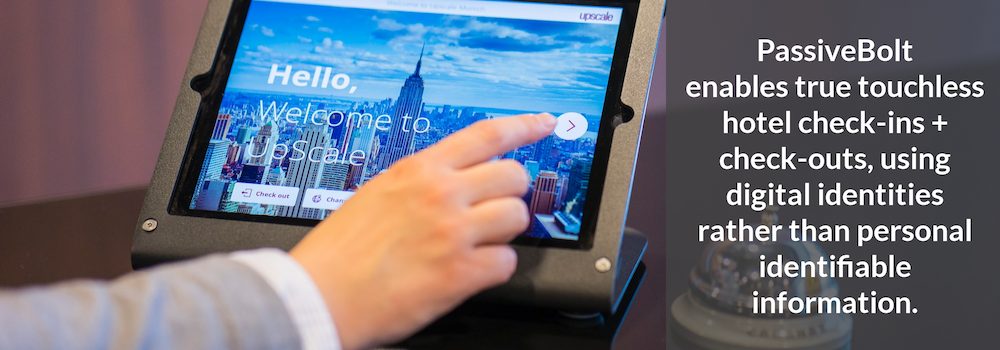
    For hotels, our web3 platform enable the manager or reservations department to grant access to rooms with guests’ digital identities rather than collecting all of their personal information such as drivers’ licenses and credit cards. The check-in process and delivery of mobile keys is automated, the guest experience is more seamless, guest identity is automatically authenticated and protected, and the risk to hotels is also minimized because they are no longer handling and storing the personal data of guests.

    BP: What’s been the response from hotels?
    KM: Very positive. We’re currently deploying to 2,000 hotel rooms.

    BP: Where are you in terms of commercialization?
    KM: We are growing rapidly through our partnerships with Tier-1 lock and access control  companies and hotels. In 2022, we have signed a number of agreement and anticipate the traction to continue in 2023.

    BP: What is the size of your addressable market?
    KM: Security services are definitely a growth market globally and technology solutions are a contributor. The overall lock and access control market is estimated at $25 billion. Our current focus, the Tier-1 technology partners and hotels, represents a $16 billion market.

    BP: What is your revenue model?
    KM: Our model is to license or sell our hardware and software as a Tier 1 technology partner to door lock and access control companies. It’s an attractive model for them as they get the best security solution, stay on top of innovation, deploy technology quicker, avoid costs associated with in-house development, and get the web3 technologies they need for security, privacy and regulatory compliance.

    BP: Do you have any IP protection?
    KM: We have three U.S. patents granted and two that are pending. We are evaluating what global patents to pursue.

    BP: What are your competitive advantages?
    KM: Traditional security and authentic solutions simply do not compare to the comprehensive security afforded by PassiveBolt. On the corporate side, businesses no longer have to handle and store people’s personal information, which puts them at risk of being hacked. On the consumer side, individuals own, control, and manage their personal data. There is no more worry or stress about one’s information being “out there” for others to use for nefarious reasons.

    BP: What fundraising round is this and what is your planned use of funds?
    KM: This is a seed plus round and the funds will be used to scale our presence in the hospitality industry.

    BP: Why should VisionTech Angels invest in PassiveBolt?
    KM: As the pioneer in web3 access control, we have a significant competitive advantage as the first mover. We have a solid team of domain experts in access control from the automotive industry and since spinning off from Continental, we have expanded our expertise to Web3 and other areas. Investors can be confident that we have the right team to execute. Lastly, we have traction and are generating revenue.

    VisionTech Angels’ October Pitch Events Featuring PassiveBolt and Adipo Therapeuthics will be virtual on Thursday, October 27 at Noon and at 6 p.m. ET. Pitch events are open to our members and accredited investors interested in joining our group. To register, check your email for an invitation, go to our Events page where you’ll find the RSVP links, or email Ben Pidgeon at bpidgeon@visiontech-partners.com

  • Meet October Pitch Presenter #1: Karen Wurster of Adipo Therapeutics, Using Fat to Fight Diabetes + Obesity

    Meet October Pitch Presenter #1: Karen Wurster of Adipo Therapeutics, Using Fat to Fight Diabetes + Obesity

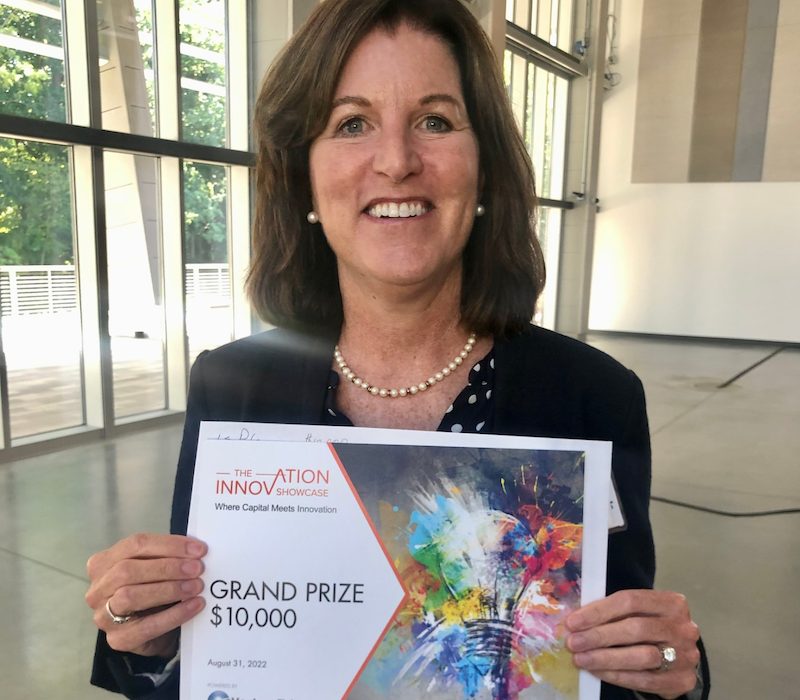
    I first met Karen Wurster, CEO of Adipo Therapeutics, a year ago when she first pitched the VisionTech Screening Committee. The update at the Innovation Showcase in August 2022 was impressive and it was evident that progress had been made. Adipo, a pre-clinical biotech startup out of Purdue, was one of 21 companies vying for the top prize of $10,000. The field was very competitive, but Karen’s pitch was compelling. Adipo won first place for its novel therapeutic approach of turning “bad” white fat cells to “good”  fat cells to treat people with type 2 diabetes and obesity. Intrigued, I invited Karen to meet with the VisionTech Angels Screening Committee for an update. The group was impressed with Adipo and Karen, and we invited her to present at our October 27th virtual pitch events. Here’s a preview.

    BP: You have dedicated a large part of your career to diabetes therapeutics. Tell me about it.
    KW: I have 25 years of experience in the pharmaceutical industry with Eli Lilly, most of it dedicated to the development and launch of diabetes treatments. In all, I was involved in launching more than 10 diabetes products. My roles included new product planning, market analytics, global brand management, and commercialization. This experience really prepared me for the CEO role at Adipo where I’m focused on developing a clear path to commercialization for the technology and cultivating potential collaborators and acquisition partners.

    BP: Tell me about Adipo and the issue you’re addressing
    KW: Type 2 diabetes (T2D) is an epidemic in the United States and other parts of the world. By 2025, 37 million Americans will be diagnosed with T2D. If not well managed, T2D can reduce life expectancy by eight years. This is due to the complications of diabetes and comorbidities like heart disease. While there are oral and injectable treatments available, Adipo’s unique approach of using the body’s own fat to increase energy expenditure has the potential to bring a new treatment that could be used alone or in combination with existing treatments.

    BP: Using fat to fight diabetes?
    KW: Absolutely. Our bodies have two types of fat cells, technically called adipose tissue. White fats cells make up the vast majority of fat and store excess calories in the fat. Brown fat cells act very differently, burning excess calories and lipids, increasing energy expenditure and reducing the risk of T2D and heart disease. Higher levels of brown fat are correlated with younger, leaner adults with good glucose control. So we asked the question: what if we could turn those white cells to brown as a way to get T2D under control? That led to the develop of a platform that harnesses the power of brown fat cells. This is done by injecting Notch-inhibiting nanoparticles into the fat just below the skin. In mouse studies, we have demonstrated weekly treatments result in reducing blood glucose levels and weight loss without changing caloric intake.

    BP: Is this different from other leading T2D treatments?
    KW: Very much so. Our therapeutic acts directly on fat cells, increasing energy expenditure and improving insulin resistance through the browning of these cells. The other important advantage is due to the localized injection there is limited bio-distribution within the body. The nanoparticles pretty much stay where they are injected, reducing the likelihood of side effects.

    BP: I know you’re pre-clinical, but have you talked to doctors about this?
    KW: Yes, and we’re already generating excitement. They like that it’s easy to administer, has low side effects, and works in a completely new way that is complementary to the treatments they are already using.

    BP: How big is the market you’re targeting?
    KW: The U.S. T2D treatment market is $88 billion. Our ideal patient is no longer in control of their diabetes with oral medications and is looking at starting injections. We estimate this market to be a $1.7 billion market.

    BP: What kind of IP protection do you have?
    KW: We currently have three patents that we have licensed from Purdue and provide protection in the United States, China and European Union. We have the option of licensing more.

    BP: What round is this and what’s your planned use of funds?
    KW: Our initial seed round raised a little over $2 million, which we used to establish our own lab, complete initial safety studies and our first meeting with the FDA. This additional raise of $800,000 will be used to de-risk our technology and position us for a much larger Series A round. Most importantly, we will demonstrate proof of concept in isolated human fat cells, conduct pre-clinical safety and seek additional FDA feedback prior to our IND. We have already been in discussions with a potential Series A investor who has confirmed completing these milestones would encourage an investment.

    BP: That’s a fairly small raise. Do you have other funding?
    KW: We have applied for grants with the U.S Department of Defense and a National Institutes of Health SBIR Phase 2. If these are approved, that would bring in $6 million in non-diluted funding. We have also received Indiana Innovation grants.

    BP: Why should VisionTech Angels invest in Adipo?
    KW: First, we have an experienced, high functioning leadership team. Our founder and president, Dr. Meng Deng, is an assistant professor of Biological Engineering, Biomedical Engineering, and Materials Engineering at Purdue and our technology stems from his 15 plus years of experience developing biomaterials-based translational technologies for cell engineering, tissue engineering and drug delivery. Like me, our vice president of operations, Roger Miller, has deep experience in pharma and biotech start-ups, including leadership roles in R&D, manufacturing and corporate business development. We are following a very realistic, capital preserving plan. Lastly, we are confident that our technology, which harnesses the intrinsic power of brown fat, will be of high interest to the leading diabetes companies and mean a world of difference for those living with T2D.

    VisionTech Angels’ October Pitch Events will be virtual on Thursday, October 27 at Noon and at 6 p.m. ET. Pitch events are open to our members and accredited investors interested in joining our group. To register, check your email for an invitation, go to our Events page where you’ll find the RSVP links, or email Ben Pidgeon at bpidgeon@visiontech-partners.com
  • Meet September Pitch Presenter #2: Zach Booker of ADHD Online, Accelerating Diagnosis + Treatment

    Meet September Pitch Presenter #2: Zach Booker of ADHD Online, Accelerating Diagnosis + Treatment

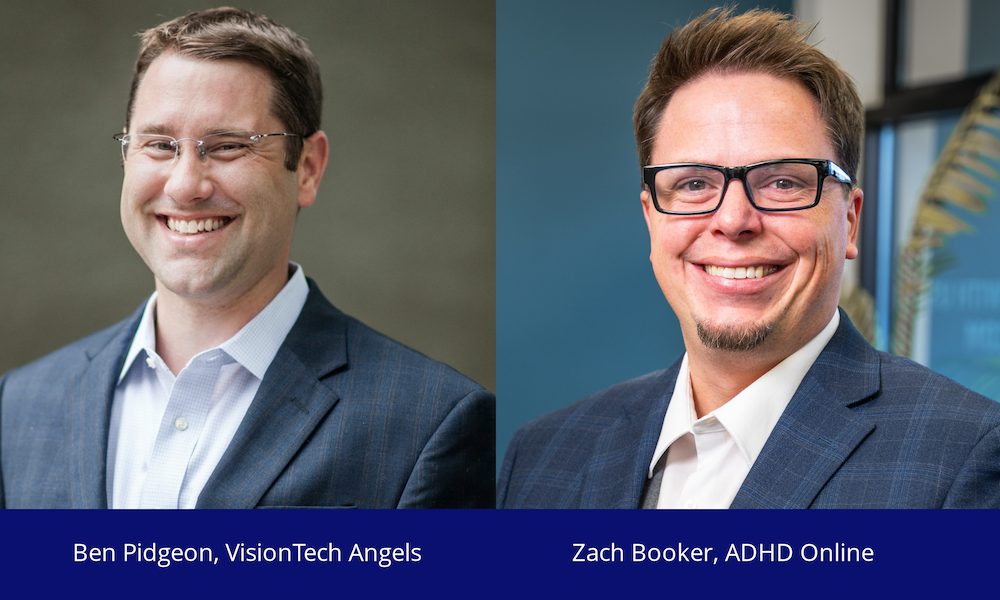
    Zach Booker, the co-founder and CEO of ADHD Online, was referred to VisionTech Angels by the Michigan Capital Network. The Grand Rapids, Michigan-based venture capital firm is the lead investor in ADHD Online. With $24 million in annual revenue rate, ADHD Online has far more traction than our typical investment opportunities. Obviously, this is very attractive, but their mission to help the mental health community is well timed. In 2020, the National Institutes of Health reported that one in five adult Americans live with a mental health condition. It’s easy to imagine those numbers have swelled since the global pandemic and resulting social isolation and economic struggles. As the VisionTech Screening Committee delved into ADHD Online, we were even more impressed with ADHD Online and invited Zach to present at our September virtual pitch events. Here’s a preview.

    BP: Some founders have a personal connection to their startup. What’s yours?
    ZB: I have ADHD as does my co-founder and chief innovations officer, Dr. Randall Duthler. Dr. Duthler is a family physician and on the faculty of Michigan State University and has a deep understanding of the challenges ADHD causes for parents, their children and adult patients. Our personal experiences drive our desire to make diagnosis and treatment of ADHD faster, easier and simpler.

    BP: How does someone know they have ADHD?
    ZB: They likely don’t know and that’s a big part of the problem. In adults, you may have a hard time focusing your attention and tasks. Kids with ADHD are more fidgety, impulsive, talk or move excessively. ADHD becomes more apparent once kids go to school because of the structured environment. It’s hard to sit still and be quiet! But these characteristics may not be ADHD. You really need a professional assessment to be sure.

    BP: How are you connecting with potential patients?
    ZB: Patients can be referred by schools, their doctors and health systems. More importantly, people can self-refer. We market across all of our social media platforms along with search engine optimization.

    BP: Tell me about ADHD Online and the problems you’re solving.
    ZB: If you think you or your child has ADHD, you face a bunch of hurdles. First, it will take you about seven months to start the process. That’s an incredibly long time to wait if you or your child are struggling. The system for diagnosis and treatment is very hard to navigate. The complexity of taking time off from work or school for multiple appointments can be challenging. Imagine how tough it was during COVID when in-person services were shut down and telemedicine alternatives were few and far between. It’s also expensive. Expect to spend about $2,000 out-of-pocket even with insurance.

    ADHD Online launched in 2018 as an online assessment tool. For the first two years, we bootstrapped and worked on our platform. During COVID, we expanded our services to assessments, consultations and ongoing treatment. Our clinical assessment tool requires patients answer some 250 questions, which can take 60-90 minutes to complete in one sitting. The patient has an unlimited amount of time to complete the assessment with the option to start and stop as they wish. That, coupled with the dynamic experience of the questions changing as answers are submitted ensures not everyone has the exact same test. The questions vary based on the patient’s answers. We use doctorate level psychologists for the diagnosis. Patients receive their diagnosis in an average of three days. Think about that. You think you might have ADHD. You get online, do our assessment, and in that same week later you have professional results. That’s huge.

    ADHD Online provides congoing consultations via synchronous visits with a board-certified physician or patients can choose to take their assessment to their physician. Either way, the complexity is gone.

    BP: What’s been the patient response to ADHD Online?
    ZB: Whether it’s parents of a child who is having issues at school or an adult, people simply want to know what’s wrong. Once they’ve used our service, the reviews are overwhelmingly positive about the process, the quick results, and the compassion of our psychologists. I would encourage people to visit our website and read some of the reviews.

    BP: What are your competitive advantages?
    ZB: From the patient perspective, it’s the ease and immediacy of access, how quickly they get their diagnosis, the ability to choose how they receive ongoing care, whether it’s through our physicians and telemedicine or through a local physician in a traditional face-to-face setting. Also important to patients, schools, employers, and health systems accept our assessments so people can get special accommodations at school or work.

    For obvious reasons, what we do is highly scrutinized. There used to be multiple competitors in this space. However, in 2022,the U.S. Department of Justice and the Drug Enforcement Administration shut several of them down. Today, there are no other practices that do what we do or use the model we use. We stand alone in the market.

    BP: What kind of intellectual property do you have?
    ZB: we are currently working to secure a process patent for our diagnosis model. Our dynamic assessment questions changes based on answer given, making it a unique product in the mental health system.

    BP: What is your total addressable market?
    ZB: For ADHD, we estimate the total addressable market to be $170 million. However, half of America has something going on with their mental health. We’re front line with our business model and as we expand the platform to include other mental health issues, the market becomes much, much bigger.

    BP: What is your revenue model?
    ZB: It’s pretty simple: fee for service and self-pay. We charge $149 for the assessment, $199 for a 30-minute medical treatment appointment with a physician, and $99 for the follow-up appointment 30 days later. ADHD is a chronic condition, meaning it does not “go away.” Patients can schedule 50-minute teletherapy sessions with a psychologist on a regular or as-needed basis for $99 per session. We use board certified MDs and DOs for our telemedicine services. This is the standard of care for ADHD. Many insurance companies reimburse patients for their care.

    BP: Where are you in terms of commercialization?
    ZB: These quick facts demonstrate where we are. ADHD Online currently serves as many as 650 patients a day. To date, we have assessed more than 90,000 people. More than 35,000 physicians have accepted our diagnosis and continue to treat our patients to this day. We have processed $27 million in credit card payments to date.

    BP: What is your planned use of funds?
    ZB: This is a $5 million bridge round, and we are looking at a fast close. We intend to use the funds to drive growth in three areas. First, we plan to add more dynamic questions in our assessment so that we can identify additional mental health disorders, including anxiety, bipolar, depression, and PTSD. Second, we’d like to establish more partnerships with health systems. There is a tremendous shortage of mental health services, including diagnostics. Partnerships with health systems would allow us to refer patients as well as co-manage with local health systems. Our technology is API first and can easily integrate with electronical medical record systems like EPIC, which is used widely in health care. Finally, we want to establish partnerships with payors, which will support patient access and reimbursement.

    BP: Why should VisionTech Angels invest in ADHD Online?
    ZB: Three words: opportunity, demand and growth. We have great traction, and we need to continue to keep the gas pedal down. We are beginning to dramatically change the mental healthcare delivery system by giving more people more access to care, rapid diagnostics, and more convenient ongoing care that is the standard of care. We have proven demand among patients, health systems and schools, and our assessments are profitable. The growth opportunity extends beyond the United States to Canada and the United Kingdom, where there is a two-year backlog for services. We can plug into their systems quickly.  

    VisionTech Angels’ September Pitch Events will be virtual on Thursday, September 29 at Noon and at 6 p.m. ET. Pitch events are open to our members and accredited investors interested in joining our group. To register, check your email for an invitation, go to our Events page where you’ll find the RSVP links, or email Ben Pidgeon at bpidgeon@visiontech-partners.com.

  • Meet September Pitch Presenter #1: Kilele Health’s Andrew Cothrel, Bending the Curve for Chronic Disease Management

    Meet September Pitch Presenter #1: Kilele Health’s Andrew Cothrel, Bending the Curve for Chronic Disease Management

    Here’s an interesting fact: Andrew Cothrel, CEO of Kilele Health, has been involved with VisionTech longer than I have. In fact, he goes back to the Stepstone days! In addition to being a VisionTech member/investor, Andrew serves on the board of portfolio company Scioto Biosciences and is the former CEO of SonarMed, another portfolio company that successfully exited in 2020. Having a deep background in the medtech industry bringing new products to market has made Andrew an excellent CEO of early-stage medical device and diagnostics companies. When he recently presented Kilele Health  to the VisionTech  Screening Committee, we were impressed and invited him to present at our September virtual pitch events. Here’s a preview.

    BP: Where did the name Kilele Health come from?
    AC: Kilele is Swahili for mountain peak. It reflects our vision of helping patients achieve peak health through improved management of their chronic diseases.

    BP: Tell me about Kilele Health and unmet need you’re addressing.
    AC: The science is complex, but our story is simple. The prevalence of chronic disease in America and around the world is bad and getting worse. By chronic diseases I am referring to conditions like diabetes, hypertension, heart disease, respiratory diseases, stroke, cancer, and obesity. Many of these conditions are intertwined. People with diabetes are also likely to suffer from heart disease. Chronic diseases are very difficult to manage. And from a healthcare payer perspective, the slope of the chronic disease cost curve has to bend, or it will bankrupt us.

    There is already one success story in this space – continuous glucose monitors (CGMs). Patients and physicians now have a way to continuously monitor blood glucose levels and ultimately, better manage diabetes. Today, there are 5.5 million users of CGMs, representing a $5 billion plus market.

    What Kilele Health is doing is following the proven path of continuous glucose monitors but enhancing them to measure other things via Aptamer biosensing. This allows us to leverage the hundreds of millions of dollars that have gone into establishing CGM systems, but the device is now set up to detect other biomarkers or drugs specific to a patient’s chronic diseases and provide real-time monitoring. For example, our CGM+ can monitor drugs or biomarkers related to blood coagulation or congestive heart failure. Having this information allows patients to monitor their condition, make better behavioral choices and better comply with medication regimens. If they notice something wrong, they can contact their doctor. This replaces or reduces the need for in-person appointments to monitor and manage their condition.

    Given how physicians and patients have embraced CGMs, we believe adoption of our CGM+ will have some tailwinds. We also know that the original equipment manufacturers of CGMs are all very interested in adding additional biosensing to their devices. That’s where Kilele Health’s Phase I commercialization plan comes in.

    BP: Explain aptamer chemistry. I had not heard that term before.
    AC: Aptamers have been around a long time. They are nucleic acid sequences like DNA or RNA. They are great for binding a specific target molecule. Historically, the problem has been they just don’t last. That is the “big deal” that Kilele has solved; our aptamer biosensors last a very long time.

    BP: What are your competitive advantages?
    AC: We have several competitive advantages over traditional chronic disease management. The need for  patients to physically go to their doctor’s office, which delays treatment, is costly and inconvenient, goes way down. Physicians get better data that is better managed, and probably get more compliant patients as well.  Payers win because long-term costs of disease management should go down.  And nobody drowns in data. Our algorithms will identify events that are noteworthy of physician attention.

    In terms of advantages over competitors, I mentioned the longevity of our biosensors. Nobody else that we are aware of is even coming close to doing what we have. The other significant advantage is that we’re not reinventing the wheel. We are leveraging the existing CGM platforms and hope to partner with these OEMs to accelerate time to market as well as speed of adoption based on the positive goodwill of physicians and patients toward CGMs.

    BP: What kind of intellectual property do you have?
    AC: The University of Cincinnati has a suite of more than 30 pending patents on the technology with more coming. Kilele Health has exclusive rights to license this patent protection. We want to build a tall fence around Kilele Health and plan to add our own patents going forward.

    BP: What is your total addressable market?
    AC: Any market over a billion is big, and the market for our technology is significant. We believe our Phase 1 market, which is our CGM+ for people with diabetic comorbidities, represents a $5 billion opportunity. Phase 2, which is using those same assays for non-diabetics, may represent $10 billion. Phase 3, which is new medical indications, is at least another $5 billion opportunity.

    BP: What is your revenue model?
    AC: Phase 1 is very likely to be licensing to one or more current CGM OEMs. After that, it’s hard to know exactly. However, by Phase 3, I would anticipate that we will have built our own wearable monitoring system hardware and software

    BP: Where are you in terms of commercialization?
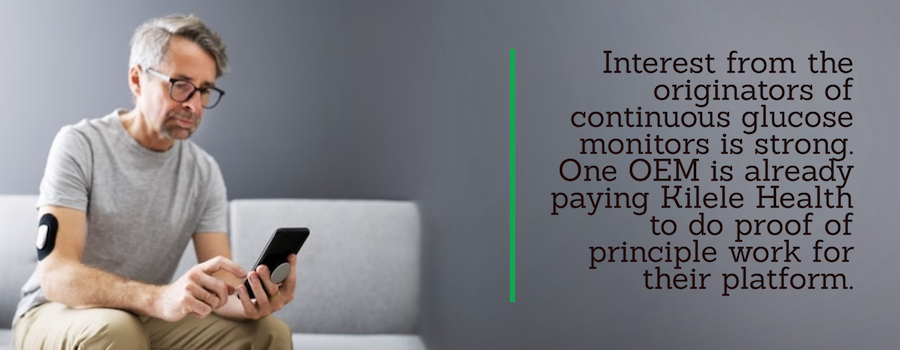
    AC: We are early stage, finalizing our tech and prepared for animal studies leading to human testing and FDA clearance. Our first product is aimed at cardiac comorbidities. Many diabetics have cardiovascular issues, so that’s a natural initial target. That said, we plan to develop multiple sensors in overlapping but staggered tracks. We will be partnering with CGM original equipment manufacturers on development. Already there is strong interest in what we’re doing with aptamers and our CGM+. One OEM is already paying us to do some proof of principle work for their platform.

    BP: This is a $2.25M Series Seed Round. What is your planned use of funds?
    AC: Our use of funds is straightforward. First, we plan to expand team and prove a biosensor life of one week in an animal model. We will be focused on developing aptamers for our top three to five targets. We will also work toward scheduling a pre-submission meeting with the FDA to nail down our clearance submission requirements

    BP: Three reasons why VisionTech Angels should invest in Kilele Health.
    AC: First, our team. Internally, we have global leaders in aptamer biosensors, experienced medtech entrepreneurs, and individuals who have worked directly with potential partners and acquirers. Our external clinical advisors are also excellent.

    I’m a known quantity to VisionTech Angels and will be transparent with our investors. Second, we have identified a hole in the portfolios of the three makers of continuous glucose monitors, Abbott, Dexcom and Medtronic. They are all interested in adding new capabilities to their platforms. We are positioned to provide that to them. Lastly, our commercialization pathway will be very capital efficient and hopefully take us to a quick/high IRR exit.

    VisionTech Angels’ September Pitch Events will be virtual on Thursday, September 29 at Noon ET and at 6 p.m. ET. Pitch events are open to our members and accredited investors interested in joining our group. To register, check your email for an invitation, go to our Events page where you’ll find the RSVP links, or email Ben Pidgeon at bpidgeon@visiontech-partners.com.

  • How to Create Cap Tables with an Investor’s Perspective in Mind

    How to Create Cap Tables with an Investor’s Perspective in Mind

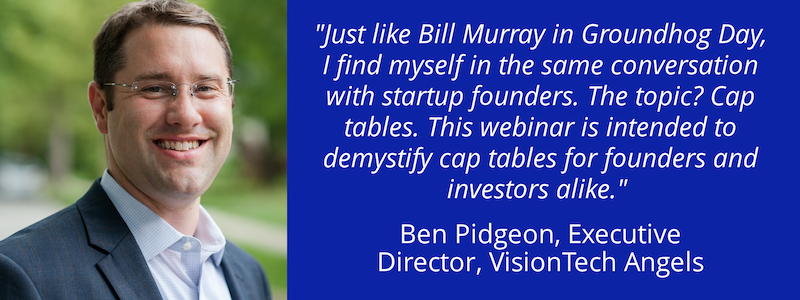
    Have you seen the 1990’s comedy with Bill Murray called Groundhog Day? In the movie, his character Phil is caught in a time loop. Everyday, he wakes up to the same day, in the same hotel bed, to the same song on the clock. The only things that change are who he meets and the trouble he gets himself into.

    I sometimes feel a little like Phil in Groundhog Day – I’m constantly having the same conversation with startup founders about cap tables. There’s a general lack of understanding about how to structure a cap table for investors. And our conversations typically center on dilutions, valuations, and the potential loss of control of company ownership. I always stress how critical it is to have a detailed understanding of who owns what at each stage of the business. Investors like VisionTech Angels look at that.

    Investors also have questions about cap tables and how it changes with each funding round and the addition of new investors. Angel investors are particularly sensitive to changing cap tables because as early investors, we shoulder much of the risk of a startup.

    In talking with Jason Schpok at Elevate Ventures, we agreed it would be a tremendous benefit to startup founders and investors to host a webinar on cap tables. So on Wednesday, July 20th, we did just that, presenting “Creating a Cap Table with an Investor’s Perspective in Mind.” Forty people joined the hour-long presentation and discussion and gave it high marks when surveyed after the event.

    The content in the webinar is timeless – plus I’m sure I’ll have a few more of those Groundhog Day conversations on cap tables – so we’re posting the webinar here so more founders and investors can listen and learn at their pleasure. If you have additional questions, please reach out to me here.

    Click this link to begin.

  • Meet July Pitch Presenter #2: Paul Dreier of Novilytic, the Canary in Pharma’s Coal Mine

    Meet July Pitch Presenter #2: Paul Dreier of Novilytic, the Canary in Pharma’s Coal Mine

    I first met Paul several years ago at an Innovation Showcase pitch event. We reconnected last year after he’d been named CEO of Novilytic, a biochemistry analytics company that is commercializing technology developed by distinguished Purdue University Professor of Chemistry, Dr. Fred Regnier. When I asked Paul for his elevator pitch, he explained their technology is the “canary in the coal mine” for the pharmaceutical industry as it detects, in near-real-time, potential quality issues during manufacturing. Since a batch of a specific drug costs millions in raw materials, this is a huge issue. I invited Paul to a VisionTech  Screening Committee meeting. We were impressed so we invited Paul to present at our July virtual pitch events. Here’s a preview.

    BP:  Your chief technology officer who developed Novilytic’s technology, Dr. Fred Regnier, is a legend in chemistry and at Purdue. How did you two connect?
    PD:  You are correct about Dr. Regnier! He started in Purdue’s Chemistry Department in 1968 and has filled many roles ever since. He’s had an incredibly prolific career. Dr. Regnier has been ranked among the Top 20 Analytic Scientists in the world, holds 48 U.S. patents, and his technology has launched multiple startups and successful exits in our target market, the global pharmaceutical industry.

    Fred and I were introduced by Dr. Chris Welch, executive director of the Indiana Center for Analytical Science and Engineering (ICASC). Chris and I go back almost 20 years when he was one of my customers at Merck.  Fred was looking for someone to take over Novilytic’s technology and grow the company. Chris recommended me for the role given my 30-plus years in building life sciences and medical instrument companies.

    BP: Tell me about Novilytic and the unmet need you’re addressing.
    PD: Let me start by explaining the market need. Pharmaceutical drugs are produced in batches. In the case of biopharmaceuticals, the batches are produced in bioreactors over a two-week period. These bioreactors “cook” the drug broth much like the fermentors used to make beer. Batch failure happens in all aspects of manufacturing, but it’s particularly devastating when manufacturing a lifesaving drug. Two percent of all batches of drugs end up too contaminated to save. A single lost batch represents a financial loss of up to $20 million in raw materials alone, while the loss to human beneficiaries of that drug is priceless.

    The FDA has strict guidelines on continuously monitoring quality during manufacturing; however, zero companies are truly able to adhere to these guidelines. The current method for testing the efficacy of biopharmaceuticals is to take a sample out of the reactor and run a four- to eight-hour test sequence. This happens daily over a minimum of 14 days. Because of inefficient and time-consuming processes, drug makers can’t catch contamination in time.

    Novilytic has developed the world’s first technology for at-line molecular structure analysis that alerts the pharmaceutical company in near-real-time if and when a batch of a drug they’re producing needs to be altered or scrapped. We believe that our Proteometer™ is the first true answer to the drug development quality mandates that were laid down by the FDA decades ago and helps avoid of significant financial losses of bad batches.

    Even better, our consumable testing kits are used with instruments the pharmaceutical companies already own. We give them the expanded capability of generating near-real-time data that allows them to course correct immediately, thus preventing the need to do exhaustive and very expensive purification and filtering, or in worst-case scenarios, trash the batch.

    BP:  You have a clever brand story. Tell me about it.
    PD:  Complex technologies can be difficult to explain, which is why we need clever marketers. Our brand story kind of wrote itself. We like to think our technology is much like the canary used in coal mines to keep people safe. In that case, the canary was exposed to poisonous gasses that can occur deep within mines and stopped singing, which alerted miners to the danger.  In our case, we detect the contamination in a pharmaceutical bioreactor, also known as a fermentor. Thus, Novilytic is “The Canary in the Fermentor.” The credit for our canary logo goes to my wife, who is an artist.

    BP:  I like it! Explain how your Proteometer works. Is it a device? A process?
    PD:  Actually, the Proteometer is a kit we supply to customers. It consists of a filter-like reactor in combination with a nanoparticle-based reagent. The customer plugs our Proteometer into their existing instrumentation. This enables their instrument to automatically monitor in near-real-time the batch being manufactured. When contamination or bad chemistry occurs, our kit triggers the instrument so the reactor operator can take action.

    Think of it like the filter sensor in your home’s HVAC unit. When your filter is dirty, your HVAC system lets you know it’s time to act. It’s the same with pharmaceutical manufacturing; we advise the customer when their drug is dirty.

    BP:  What are your competitive advantages?
    PD:  The short answer is near-real-time testing, geared to FDA requirements, and ease of implementation. To elaborate, drug makers have an analytical time window in which they can prevent their very expensive drugs from being contaminated. Novilytic’s patented technology is the only technology that alerts the customer within that analytical time window and prevents very costly quality issues. The customer gets results in minutes rather than six to eight hours required by competing products. This advancement in monitoring meets FDA guidelines. Lastly, our process is automated and does not require manual sample preparation.

    BP:  Do you have any patent protection?
    PD:  We have 10 patents protecting both the concept of matter and the methods of our technology. We expect an additional patent to be released next month as all 49 of its claims were accepted by the examiner.

    BP:  What’s your total addressable market? Are there any secondary markets you might pursue?
    PD:  We are focusing on one class of drugs first, the human monoclonal antibody (MAB) medicine market, before expanding into others. Here are two examples of monoclonal antibody drug: Humira®, a drug used to treat Crohn’s disease, and Eli Lilly’s  Bamlanivimab for COVID-19. The total addressable market for mAb drugs is $930 million a year. Breaking this down, there are more than 250,000 instruments that can use our kits. Drug manufacturers would buy one to ten of our kits annually at a target price of $3,680 per kit. So it adds up quickly.

    Within the monoclonal antibody space, there are veterinary medications. That market represents $160 million annually. We can convert our human mAb product to animal health within six months. The ELISA and Western Blot markets are much larger, $2.1 billion each annually that we can potentially address with small modifications to our technology.

    BP:  What’s your revenue model?
    PD:  It’s much like a shaving model with ongoing repeat purchases on consumables, the razors. The customers already have the equipment—the handle. Novilytic sells the kits—the razor blades. In this case, we’re supplying a much better razor blade. Customers buy kits that can run from 128 to 1056 tests. When they’re finished with that kit, they purchase another one. As mentioned earlier, some customers will consume up to ten kits a year.

    BP:  Where are you with commercialization?
    PD:  We will start pilots with our target customers in August. Based on a two-step pilot model, we will take what we learn from those customers to create our first two to four MVPs. Those products will be launched in February 2023.

    BP:  What funding round is this?
    PD:  Seed round. Our target is $1.5 million, and we’re oversubscribed at $1.86 million.

    BP: What is your planned use of funds?
    PD:  Our focus is on hiring people and growth. We plan to hire sales and marketing and support those efforts. We will also do some final product design and quality testing. Overhead represents just five percent of our projected expenses.

    BP:  Give three reasons why VisionTech Angels should invest?
    PD:  The Novilytic team is led by very experienced entrepreneurs with multiple successful exits between us. Our technology is well-protected, extremely disruptive, and solves a very real issue for the pharmaceutical industry. Like winning SaaS opportunities, this little canary eliminates the customer’s pain with a very profitable annuity-like business model.

    VisionTech Angels’ July Pitch Events will be virtual on Thursday, July 28 at Noon ET and at 6 p.m. ET. Pitch events are open to our members and accredited investors interested in joining our group. To register, check your email for an invitation, go to our Events page where you’ll find the RSVP links, or email Ben Pidgeon at bpidgeon@visiontech-partners.com.

  • Meet July Pitch Presenter #1: Nick Agahari of Australias Scientific, Restoring Calm to Overactive Bladders

    Meet July Pitch Presenter #1: Nick Agahari of Australias Scientific, Restoring Calm to Overactive Bladders

    Overactive bladder is a topic most people shy away from. We shouldn’t. Why? Because many of us will suffer from this inconvenient condition when we’re older. While there are treatment options and stop gaps like adult undergarments and continence hygiene products, they’re not perfect. Boston-based Australis Scientific led by CEO Nick Agahari in partnership with co-founder Martin Jensen are developing an at home treatment called the In-Confidence Smart Patch. This device reduces the symptoms of overactive bladder and is an alternative to other treatment options. Nick and Marty are Harvard Health Tech Fellows with backgrounds in Urology. Their understanding of the market and human issue is deep, and their technology is on target. The VisionTech Screening Committee was impressed so we invited Nick to present at our July virtual pitch events. Here’s a preview.

    BP: How did you learn about VisionTech Angels?
    NA: It’s kind of a funny story. One of your investors, Moa Feldenheimer, was participating in an MIT Bootcamp with a startup he’s working on. I was Moa’s coach and his team won the bootcamp! Moa rewarded me with an introduction to Vision Tech.

    BP: Can you explain overactive bladder and who it affects?
    NA: Sure! Overactive bladder, or OAB, is one of those conditions that becomes more prevalent as we age. OAB is predominantly idiopathic which means that there is an absence of pathologic or metabolic factors known to cause it. What happens is as we age, we become more prone to having inappropriate signaling to the brain that the bladder is full when it’s not. This causes “FUN” symptoms: frequency of urination, urgency to urinate, and nocturia or needing to urinate multiple times at night. Eighty percent of people aged 75 have OAB and I assure you the FUN symptoms are no fun for patients.

    BP: Tell me your quest to solve the issue.
    NA: My co-founder Martin Jensen and I met through the Harvard HealthTech Followship in 2021. Only four fellows are chosen each year from hundreds of applicants from around the world, so it’s a high honor. We were embedded for three months at Harvard’s Brigham and Women’s Hospital Department of Surgery to identify unmet clinical needs. What we identified was that the FUN symptoms were pervasive among the patients treated by urological surgeons. Over 90% of patients we observed received surgery, minimally invasive therapies, and medical management to manage their lower urinary tract symptoms which include overactive bladder. Current treatment options weren’t satisfactory for patients or physicians. Ultimately, this discovery set us on the path to create a solution.

    Martin Jensen, Australias Scientific

    We did a lot of patient and physician interviews and discovered most patients diagnosed with OAB are managed with prescription medicine. Those patients who are not responding to medication have more advanced invasive procedures like Botox injections in their bladders and surgery to implant a lead and pacemakers into their tail bone to control the urge to urinate. We heard a lot of frustration in our interviews. It’s a difficult decision for patients to either take medications which come with adverse side effects or commit to invasive interventions like surgery.

    Both Marty and I could personally relate to them. Marty cared for his elderly father-in-law who had Alzheimer’s. Having a better solution that would help him sleep through the night and reduce the number of diapers would have made his care easier and his last years more dignified. My own grandfather had OAB and was very traumatized by it. He tried to be stoic, but it drove him to tears because it robbed him of his independence and identity. This was a man who was a POW during World War II.

    BP: What was the unmet need that you identified?
    NA: People become very frustrated with the indignity of wearing adult diapers to manage their hygiene. They become noncompliant with the medications due to the adverse side effects and the increased risk of dementia. The advanced therapies such as surgery and injections are often not an option especially in the elderly patient cohort. The majority of OAB patients suffer in silence and undiagnosed due embarrassment and the misconception that their urinary symptoms are a normal part of aging.

    BP: What is the InConfidence Smart Patch and how does it work?
    NA: Our goal with the In-Confidence Smart Patch is to develop a novel solution to treat patients with overactive bladder that is discreet, effective, and easy to use without requiring any major lifestyle modifications.

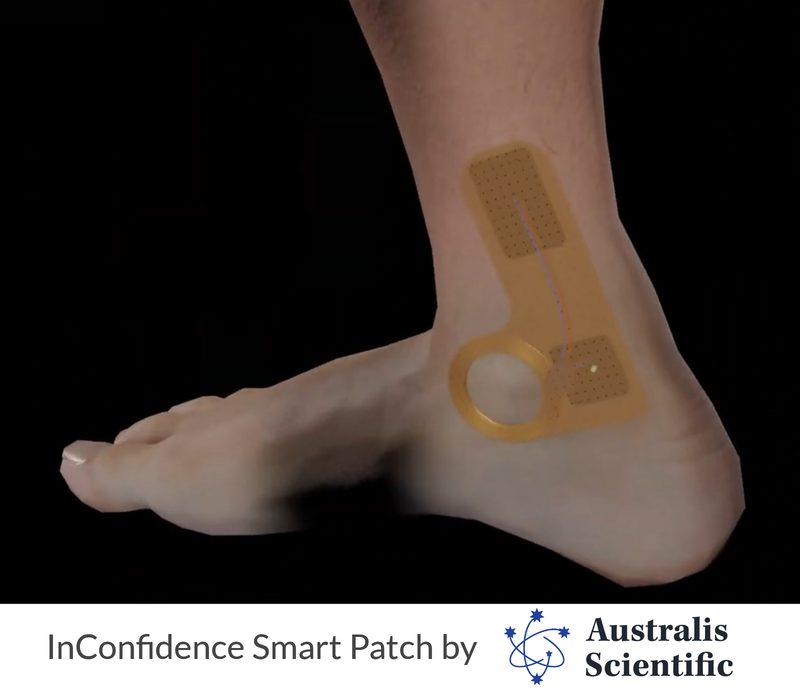
    In-Confidence Smart Patch is a minimally invasive and does not require anesthesia, surgical incision, cystoscopy, or deep needles to deliver treatment. Basically, it’s a “set and forget” smart patch worn on the ankle with microarray needle electrode technology. This technology stimulates the posterior tibial nerve in the ankle to relieve the symptoms of OAB. In-Confidence is also capable of delivering maintenance therapy to minimize overall FUN symptoms. Patients activate on-demand therapy to mitigate urgency symptoms and automated on-time therapy to minimize symptoms of nocturia. Patients require a new smart patch each week.

    BP: Why do you think people will find it more palatable than adult diapers, medications and surgical intervention?
    NA: One of the biggest advantages of our technology is ease of use. It’s almost like wearing a sticker. If the patient has ever worn a patch for smoking cessation or diabetes, they will be comfortable wearing our patch. It’s noninvasive and doesn’t require any behavior modifications. The patient literally puts on the patch once a week and forgets it.

    Compare this with adult diapers, which are bulky, embarrassing, and don’t fit with the active lifestyles many patients want to regain. Medications, while easy to use, have a lot of negatives. They can make patients feel mentally foggy and because these meds dry up a person’s orifices—the mouth for example—they feel the urge to drink more which stimulates urine. OAB medication have also been proven to increase the risk of dementia and that’s frightening for people and concerning to clinicians. Surgical intervention isn’t always the best option for seniors largely due to the risk of anesthesia and being invasive to the body.

    BP: How big is the addressable market in the United States?
    NA: OAB is an enormous problem, particularly among older adults. In the United States alone, 40 million people have FUN symptoms. Currently, only about 16 million seek clinical diagnosis and treatment. Of these, about 6.8 million are resistant to medication and would benefit from percutaneous tibial nerve stimulation. We are focusing first on the 65,000 patients per year who are receiving neuro-stimulation interventions through their urologist, a segment is $228 million annually in the U.S.

    BP: Your product requires a physician prescription. Will physician adoption be a challenge?
    NA: The In-Confidence Smart Patch is a prescription only device. It’s currently considered as a third-line therapy by the American Urological Association and prescribed after the patient can no longer tolerate prescription medications. As we build our clinical efficacy and health economic data, we hope to be reclassified as a second-line device so patients have an alternative to medication therapy.

    In terms of physician adoption, OAB patients are treated by urologists, a subspecialty that’s in high demand. These patients are time-consuming to treat and generate low revenue. During our physician interviews, the response was positive because of favorable outcomes and patients require less hands-on time to manage. A non-pharmaceutical, non-invasive treatment option is also very beneficial for this generally older patient population. Finally, we fit directly into established reimbursement codes, so physicians are compensated while freeing time to increase patient volumes.

    BP: Do you have any patents on your technology?
    NA: We have patents in the national phase and provision applications. We expect our foundational patent to be granted in the next 12 months. We have disclosed further patent applications through Harvard Office of Technology developed as part of our fellowship, which we intend to license. It’s worth noting that Harvard creates quite a moat; they do not hesitate in litigating any patent infringements.

    BP: Explain your revenue model.
    NA: The InConfidence Smart Patch has two components: an induction powering unit that is a one-time purchase and the consumable patches, which are sold as a weekly subscription. We are leveraging existing CPT and ICD codes for percutaneous tibial nerve stimulations, which covers physician fees and device reimbursement.

    BP: Where are you in terms of commercialization?
    NA: We have finished our preliminary development cycle and are finalizing our prototype. We have partnered with a development, design, and engineering firm with roots at MIT and experience in bringing medical devices to market. We have implemented a world class quality management system, and are working toward design lock and filing a 510(K) pathway for a class II medical device with the FDA.

    BP: What’s your go-to-market strategy?
    NA: We are looking to a market launch in Q4 2024. Our beach head will likely be The Villages in Florida, a retirement community with about 130,000 residents. The median age is 72 and about 95% are covered by Medicare. There are 20 urologists serving the community who will be our call points. Market development will be led by a sales team experienced in Urology.

    BP: What funding round is this?
    NA: This is our seed round.

    BP: What is your planned use of funds?
    NA: We are very focused on finalizing our prototype, expanding intellectual property, identifying manufacturing partners and securing FDA approval.

    BP: Give three reasons why VisionTech Angels should invest.
    NA: First, there is a significant unmet medical need around the world, which we have validated. We have identified a market of 33.2 million Americans looking for a discreet treatment that In-Confidence offers. Second, as Harvard Health Tech Fellows , we have been focused on our technology and strategy for the last 12 months with access to incredible resources at Harvard. Lastly, our founding team has deep experience and expertise in Urology, empathy for this patient population, and direct experience with medical devices and building sales teams for global companies such as Boston Scientific and Medtronic. We believe it’s a winning combination.

    VisionTech Angels’ July Pitch Events will be virtual on Thursday, July 28 at Noon ET and at 6 p.m. ET. Pitch events are open to our members and accredited investors interested in joining our group. To register, check your email for an invitation, go to our Events page where you’ll find the RSVP links, or email Ben Pidgeon at bpidgeon@visiontech-partners.com.

  • VisionTech Congratulates Shaily Baranwal + Elevate K12 on Their $40 Million Series C

    VisionTech Congratulates Shaily Baranwal + Elevate K12 on Their $40 Million Series C

    • Elevate K12 was founded in 2015
    • VisionTech made its first investment in 2018
    • VisionTech has invested in three follow-on rounds
    • Angel investors play a critical role in launching early stage companies

    VisionTech is delighted to share that our portfolio company Elevate K12 has completed its $40 million Series C in a round led by venture capital firm General Catalyst. This funding will allow the company to continue investing in their product and continue to scale beyond the 27 states currently using the livestream teaching platform. Former Google executive Lexi Reese has joined the board of directors, another huge positive.

    We are gratified that our investors recognized and believed in Shaily’s vision and focus in the company’s earliest days, investing in a total of four rounds. As early investors, we took a big risk in a small startup. To see how far Elevate K12 has come in their mission to bring quality teaching to all kids regardless of zipcode, is very gratifying as is seeing the company’s valuation increase exponentially.

    Congratulations again to Shaily and the Elevate K12 team and to all of the VisionTech Angels who invested. It will be exciting to see what comes next.

    READ ELEVATE K12’S PRESS RELEASE HERE.