Author: Ben Pidgeon

  • Meet November Pitch Presenter #1: Adam Steege, Trio Labs

    Meet November Pitch Presenter #1: Adam Steege, Trio Labs

    I was introduced to Adam Steege, founder, president and chief technology officer of Trio Labs, by another investor in the angel space, John Lilly. He is impressed with the company’s novel imaging technology and materials manipulation techniques that enable rapid, high-precision, additive manufacturing of micro parts needed in medical devices. Given our group’s interest in life sciences startups and expertise in the medical device industry, I invited Adam to present to VisionTech’s Screening Committee. We were also impressed by Trio Labs’ technology and traction and agreed he should present at our November Pitch Events. Here’s a sneak  preview.

    BP: Tell me about how Trio Labs came to be.
    AS: I’m a serial entrepreneur and inventor. One of my previous companies was Agile Endo-surgery that developed articulated surgical instruments to expand the scope of minimally invasive surgery. During my six years with Agile, I really took a deep dive into medtech and more importantly, surgical trends pointing to the need for better, more cost-effective options for micro manufacturing on a millimeter scale. I recognized an opportunity to leverage metal additive manufacturing processes at the desired resolution of five microns, but do it at a high-volume manufacturing scale, something no one else was doing. Trio Labs uses its own technology to produce these miniaturized parts using ultra high-resolution 3D printing of metals. The manufacturing process is different. What’s also different is that we’re selling parts, not 3D printers.
    BP: What pain points did you see in the medical device market that you are solving?
    AS: Medtech is demanding miniaturization for surgical instruments and hollow microneedles to meet clinical demands. Here’s an example: vascular surgeries where the surgeon needs to deploy a valve in a heart procedure and a lot of small components are required to enable this mechanism. Other technologies can’t address this size. Here’s another example: the surgeon has to pull a clot in a stroke patient in blood vessels smaller than 1mm. Small parts make this type of life-saving instrumentation possible. The reality of human anatomy versus existing technology causes a significant pain point. With our ability to create micro parts with precision and manufacture at high volume will solve a lot of industry—and patient—pain.

    BP: Additive manufacturing has been around for a while. Manufacturing at scale has been the challenge. What’s your value proposition?
    AS: Frankly, our ability to scale manufacturing beyond prototyping is a large part of our value proposition. Couple that with the fact that we’re making high throughput micro manufacturing possible for the first time is significant. Innovators within the medical device and micro needle spaces looks at that and their eyes get big as it opens up so many doors to future innovation. In that respect, Trio Labs’ ability to produce micro components with exacting precision and in desired volumes makes us unique and a powerful partner.

    BP: How large is the market? What are your priorities in terms of market segments?
    AS: Globally, it’s a multi-billion market. We’ve identified several segments. First, minimally invasive surgical devices which has a total addressable market of $50 billion. The next largest segment is microneedles used for pain-free drug delivery and diagnostics. This includes auto injectors, infusion systems and blood sampling devices. Globally, this represents a $20 billion market. Diabetes care is a sub-segment of the microneedle application space. It represents a $5 billion market in the U.S. alone. Diabetes is a global issue so this is the tip of the iceberg.

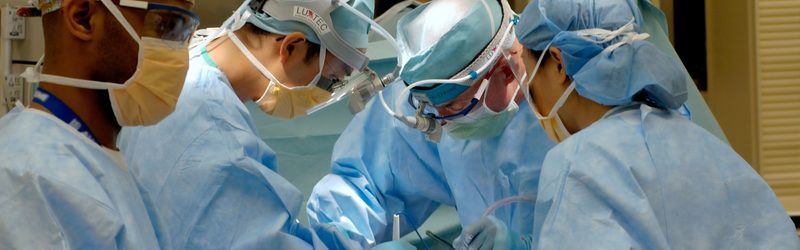
    Trio Labs surgery

    BP: What’s your traction like thus far?
    AS: We have nine customers, many of them household names, with strong interest. They have sent us design files to begin working on. Our model is to acquire customers are the R&D stage and support development. This way our micro parts are specified in the device and support volume production. With all of the innovation in minimally invasive surgical devices as well as in other areas, we believe this approach is sound. We expect to start generating revenue before the end of this year.

    BP: What kind of IP protection do you have?
    AS: Our goal is to have a massive IP portfolio all of which we will own. We are currently working on global patents in 10 jurisdictions. These include our core process and provisional patents. When we’re done, we will have a few hundred patents, which will support our exit strategy.

    BP: What does the competitive landscape look like?
    AS: Micro manufacturing is very difficult to do and do well and that limits competition. However, there are options to Trio Labs: metal injection molding, CNC machining and electrochemical manufacturing. Each has its own set of limitations like cost, speed or lack thereof, and inability to meet the very precise micro specifications at scale. Trio Labs has proven our technology and we can produce at scale at very attractive margins, giving us a competitive advantage over these traditional manufacturing methods.

    BP: This is a $6 million Series A and you’ve raised $5.5M. Who are the other investors? What will the proceeds be used for?
    AS: We’ve gotten excellent support for our Series A so far. Two of our board members have personally invested, and we’ve also gotten support from VentureSouth and the Harvard Business School Alumni Angels Association. We hope to add VisionTech to our cap table.

    In terms of use of funds, we intend to build out our manufacturing infrastructure in 2022. Also, our Series A gives us the runway to continue developing strategic partnerships and ramping up the development projects in our pipeline.

    BP: What’s your exit  potential?
    AS: We believe we will have a number of options, one of which is to be acquired by a larger medical device company that will seize the opportunity to control the micro manufacturing space. Another option is to go the IPO route.
    BP: Why should VisionTech Angels invest in Trio Labs?
    AS: Trio Labs is truly defining a new space in the medical device industry and as minimally invasive surgical procedures have become the norm, the demand for smaller devices and miniaturized parts has grown exponentially. We have the technology, processes, and ability to scale to meet this demand. Our leadership and advisory team are truly impressive. Among our advisors is Bill Hawkins, former CEO of Medtronic, and Stephen Nigro, former president of 3D Printing at HP. Bill, Stephen, and our other advisors are actively involved in our strategy and day-to-day operations. Finally, the impact we can make on patients’ lives and potential financial return for investors will be significant.

    To learn more about Trio Labs, visit their website. VisionTech Angels’ November Pitch Events will be virtual on Thursday, November 18 at Noon ET and at 6 p.m. ET. Pitch events are open to our members and accredited investors interested in joining our group. To register, check your email for an invitation, go to our Events page or email Ben Pidgeon at bpidgeon@visiontech-partners.com.

  • AgTech Meets Orchards: Meet Steve Booher of Smart Guided Systems, October Pitch Presenter #2

    AgTech Meets Orchards: Meet Steve Booher of Smart Guided Systems, October Pitch Presenter #2

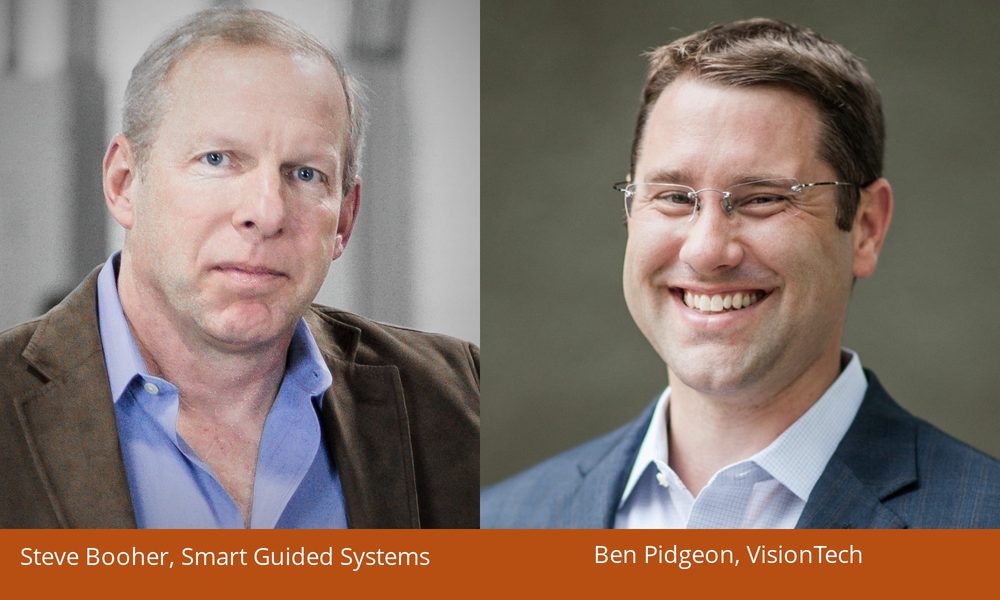
    I met Steve Booher at this year’s Innovation Showcase, where his company, Smart Guided Systems, took second place in a strong field of Hoosier startups. Smart Guided was one of the most mature of the presenting companies with nearly $2 million in sales projected for 2021 and an expanding global presence in a very clearly defined agriculture segment: tree nuts and fruits. I was really impressed with Smart Guide System’s traction and how they are honed in on the global demand for more sustainable farming practices. I invited Steve to meet with VisionTech’s Screening Committee, and we all agreed he and Smart Guided Systems should present at our October pitch events. Here’s a preview.

    BP: Smart Guided is not your first startup. Tell me a little about your career.
    SB: Even as a kid, I wanted to be an entrepreneur. I started my career with a Fortune 500 company and after four years, knew I didn’t want to work there forever so I left. My first company, CAD Design, grew to 25 employees and when it was acquired by a public company, I became a multi-millionaire at age 32. I founded and sold two more companies before getting back in the engineering services industry, eventually exiting with a 10x EBITDA, all-cash deal. I’ve been honored to receive the Growth 100 Award from the Johnson Center for Entrepreneurship and Innovation, part of Indiana University’s Kelly School of Business, an unprecedented 11 times for four different companies.

    BP: How did Smart Guided Systems come to be?
    SB: Smart Guided Systems was founded in 2014 here in Indianapolis. Prior to that I’d been working on a project with Kubota using GPS to develop a steering path for tractors. At the time, I didn’t know what agtech was. Kubota said, “If you can develop it, we’ll buy it.” The project took two years to complete, but we got it done. That put us on the map as an agtech company. We next developed a golf course sprayer technology that could be retrofitted onto existing sprayers. After that, we got involved with Ohio State University and the USDA. They had a CRADA grant to develop a spray system to reduce pesticide use. What was great is we didn’t have to pay licensing fees or royalties on any of the tech we developed as part of this project, and we had exclusive rights. The technology we developed during this time became the foundation of our Intelligent Spray Control System™ and the Permanent Crop Analyzer™ that are now on the market and ready to scale.

    BP: What pain points did you see in the agriculture market and how are you solving them?
    SB: The core problem is growers are spraying their orchards with the same equipment and processes they’ve used for 30 years. Pesticides are applied in a  shotgun approach so there’s a lot of drift of chemicals beyond the trees and into other fields and potentially into groundwater. Pesticides are closely regulated, and regulations will likely increase. These old methods of spraying just aren’t going to cut it. With our Intelligent Spray Control System™, we deliver the pesticides with laser accuracy based on actual density to the trees, or in the case of vineyards, to the vines. Not only does this dramatically decrease drift, but it can also reduce pesticide usage by 50% on average. We also reduce water usage by 50%, which is a significant benefit particularly in states like California that have limited water or drought situations.

    What’s interesting is our process also makes organic pesticides more attractive to growers. Organic pesticides are expensive. However, by reducing the amount of pesticides required to treat an orchard, the spend is cut, too, making organic pesticides more affordable to growers.

    Lastly – and this is a major point – Europe is requiring a 50% reduction in pesticide use by 2030. We think our solution will help European growers achieve this benchmark immediately. We’re currently working with a company in Switzerland to validate our technology.

    BP: What makes Smart Guided System’s solutions unique?
    SB: Both the Intelligent Spray Control System™ and the Permanent Crop Analyzer™ are on trend with the growing demand across the world for more sustainable farming practices. What’s truly transformative is the data collection, analytics, and insights we can provide that help growers track the growth and health of their trees and vines, base their spray cycles on this data, and even identify trees that aren’t producing as they should. Our solution, which will continue to be enhanced, really puts fingers on the pulse of orchards and fields using data, something growers have not had. You should check out our videos.

    BP: How has the market responded?
    SB: John Deere loves what we’re doing and has signed an Allied Distribution Agreement in December 2021, which opens up relationships with John Deere dealerships around the world. We’ve signed up most of their dealer locations in Australia and a number of dealerships in the U.S. and Canada are onboard. We’ve got traction with distributors in Australia, Chile, India, New Zealand, Peru, and just signed a 20-location dealer in South Africa. We’re also in discussions with a number of OEMs. The market definitely likes what we’re doing and wants to be involved.

    BP: How big is the market?
    SB: We worked with an agriculture research group and were able to get a deep understanding of the market in terms of major fruit producing countries, what they’re growing and volumes. The U.S. fruit and tree nut growers represent a $1 billion retail market for our Intelligent Spray Control System™. We’ll be concentrating our efforts in 15 key states in the U.S. that have the largest concentrations of growers and sprayers. California is half of the market so a lot of attention will be placed there. 

    BP: What’s your revenue model?
    SB: There are two parts to the equation, one-time equipment purchases and the recurring revenue from our data solution.

    BP: Any competitors?
    SB: Not at this time. We are the only company with a real-time LiDAR density-based spray system that adapts to new or existing sprayers to replace 30-year-old processes. We are first to market with major, major benefits, which is why we want to move as fast as we can and gain as much market share as possible.

    BP: What’s your exit  potential?
    SB: Our immediate focus is growing global market share, but think we’ll be positioned for an exit in two to five years. Potential acquirers include the major agriculture equipment companies or an agtech company.

    BP: How much are you planning to raise and what will the proceeds be used for?
    SB: We are looking to raise between $3 million to $10 million to rapidly scale the company and grow as much market share as we can in the U.S. as well as globally, starting with Europe. That’s going to take a lot of cash. First, we need working capital to support growth. We’ll be making key hires such as field sales, engineering and customer service. We plan to strengthen our international IP and secure the CE mark in Europe, which affirms our conformity with European health, safety, and environmental protection standards. This will expedite our expansion in Europe. Finally, we are upgrading our businesses systems and marketing efforts.

    BP: Why should VisionTech Angels invest in Smart Guided Systems?
    SB: Obviously, I believe in what we’re doing. Here are three reasons. Our early traction is strong; we’ve sold 140 systems in eight countries and having John Deere’s stamp of approval gives us global clout. People know who we are and are interested in what we can do for them. Second, I’m a big believer in people and we have an excellent team. We recently brought on Jerry Johnson as our president and CEO. Jerry has extensive experience in the ag industry, including ten years as president of Blount International’s Farm, Ranch and Agriculture division. Jerry had 11 plants domestic and international plants, 600 employees, plus startups in Brazil, Europe and Australia under his control. Our chief engineer, Gary Vandenbark, has been with me 25 years through a number of successful companies and exits. Our CTO Mike Hilligos is one of the best and brightest. Finally, we have a lot of OEM and strategic partnership opportunities, which is where I am directing my energy.

    To learn more about Smart Guided Systems, visit their website. VisionTech Angels’ October Pitch Events will be virtual on Thursday, October 28 at Noon ET and at 6 p.m. ET. Pitch events are open to our members and accredited investors interested in joining our group. To register, check your email for an invitation, go to our Events page or email Ben Pidgeon at bpidgeon@visiontech-partners.com.

  • Clean Ingredients for a Healthier World: Meet Joanne Zhang of Flourring, October Pitch Presenter #1

    Clean Ingredients for a Healthier World: Meet Joanne Zhang of Flourring, October Pitch Presenter #1

    I can’t exactly remember when I met Joanne Zhang, but I’ve always been impressed with her professionalism. We reconnected at this year’s Innovation Showcase. I’m on the board of the Showcase sponsor, The Venture Club of Indiana, and met all of the startups nominated for the pitch competition. One of the finalists was Joanne, who is the CEO and co-founder of Flourring. Flourring was definitely the “sleeper” of The Innovation Showcase. It wasn’t an app, its financial model wasn’t SaaS, and it’s unlikely to inspire tech geeks. What Flourring does have is a huge market and consumers clamoring for its products. Not by name, but for the benefit of making many of the foods and beverages we eat everyday more natural, clean and healthy. I invited Joanne to present to VisionTech’s Screening Committee, and we all agreed she and Flourring should present at our October Pitch Events. Here’s a sneak  preview.

    BP: Tell me about your professional career before becoming an entrepreneur.
    JZ: My career track is very different than many entrepreneurs. I spent 20 years in the corporate world, including 14 years at Praxair and a year with Danisco, an ingredients company. Over the course of my corporate career I worked in marketing, procurement and supply chain, and finance. At Praxair, I was in charge of finances for a $200 million business unit. I’m grateful for my time in corporate because it created a strong foundation for my own startup company. I know how and where to avoid mistakes and have been able to run the company professionally from the start.

    BP: How did Flourring come to be?
    JZ: Flourring started as a part of Phytoption LLC, a Purdue innovation startup company I co-founded. We had an SBIR award from the National Science Foundation to develop ingredients for drug, food, cosmetics, and agriculture. During that project, we have developed clean and functional ingredients applicable to the food and beverage industries. So we plan to use Flourring to focus on commercializing FLOURA™, a series of all natural, functional flours that could replace traditional emulsifiers and texturizers, many of which are artificial. Traditional emulsifiers, while present in many, many processed or restaurant foods, are usually not natural ingredients and are heavily processed themselves.

    BP: What pain points did you identify in the market and how are you solving them?
    JZ: There are two big pain points: Consumers’ demand for cleaner, more natural foods and food producers’ needs for a natural alternative to traditional emulsifiers that works for their products. Our proprietary natural flours solves both.

    Natural and organic foods have been around and very popular with a segment of the population for a long time, but it’s only been recent years that the general consumer population has begun looking for and requesting more natural ingredients. As a mother myself, I had trouble finding healthy snacks for my own child that didn’t contain artificial additives. So there is now a growing “clean label” movement among consumers who are questioning the additives in foods and basing their purchases on what’s on a product’s label.

    Consumer packaged goods (CPGs) companies see what consumers want but up until now there were hardly any feasible substitutes for traditional chemical surfactants, gums, or other types of unwanted emulsifiers and stabilizers. And they can’t just remove them as emulsifiers are needed to prevent separation of ingredients, create a smooth texture and extend shelf life. As an example, a liquid coffee creamer would have separate layers, if they took out the emulsifier. Can you imagine how unappealing it is? With FLOURA™, we’re providing a single ingredient option that’s non-GMO, gluten free, all natural, and doesn’t require chemicals to produce it, and works for a variety of food and beverage, supplements, and even some personal care products.

    BP: What’s the FLOURA™ product range look like?
    JZ: We currently have several types of flours under the FLOURA™ brand that address the specific requirements of plant milks, creamers, shakes, and smoothies; sauces, soups, and salad dressings; bakery items such as cakes and tortillas; nutraceuticals like hemp oils and essential oils; frozen desserts like ice creams and ice cream novelties; and finally, natural lotions and creams for personal care. In each of these categories, FLOURA™ helps ensure the stability and texture with desirable natural ingredient for a cleaner ingredients label.

    BP: What’s your traction like thus far?
    JZ: We are building our customer pipeline, and have signed letters of intent from two customers, one in the U.S. and the other in Europe. Both were looking for natural alternatives to current emulsifiers and found Flourring.

    BP: How big is the market?
    JZ: The ingredients market in the United States, Europe and Asia is huge. The overall global emulsifier market is estimated at $8.4 billion (USD), along with another $12 billion for stabilizers or texturizers. If that surprises you, consider this: emulsifiers and texturizers are used in a wide range of not just food and beverage products but also personal care, pharmaceuticals and even industrial applications. Flourring is targeting is clean label products, a market projected to reach $51.1 billion (USD) by 2024. Consumers are driving growth in this segment. More than 90% of U.S. consumers believe food and beverage options with recognizable ingredients are healthier. Beyond this, the market is attractive because of the spend of individual companies, which can range from a hundred thousand a year to a couple of million dollars.

    BP: What’s your exit  potential?
    JZ: Very straightforward. There are only a few large players in the ingredients market and they’re watching the trend of clean labels, which has accelerated with COVID-19. Some have already been in contact with us.

    BP: Are you required to have FDA approval on your products?
    JZ: No, our ingredients are natural—corn, rice—so FDA approval is not required. We have gone through a legal review by one of the largest legal firms for the food industry to determine the labeling, and the conclusion was that FLOURA™ is labeled as a flour such as rice flour or corn flour.

    BP: Do you have any IP protection?
    JZ: I’m very proud of our IP protection. We have a lot of experience with patents so securing a worldwide patent for our process was a priority. That patent was filed in 2018 and is pending in many countries or regions worldwide. Ultimately, we’ll have several patents broken down from the initial filing that will protect our products and technology from different angles, which include materials, processing, and applications.

    BP: Do you have competitors beyond traditional emulsifiers?
    JZ: Our natural functional flours are the first of their kind emulsifiers on the market so no, we don’t currently have competitors other than the additives such as modified starches, gums, and synthetic chemicals we want to replace.

    BP: How much are you planning to raise and how will the proceeds be used?
    JZ: We are raising a $1 million seed round, of which we already have $800,000 committed. Half of the funds will be used to scale our manufacturing and the other half will fund our 2022 runway. We have a vice president of sales and will build a production team after the round is closed.

    BP:  Why should VisionTech Angels invest in Flourring?
    JZ: There are three very compelling reasons to invest in Flourring. The clean ingredients market is predicted to enjoy high growth for the foreseeable future. Consumers are communicating their preference for natural ingredients and CPGs are responding where they can. Flourring provides new options that can enable CPGs to meet consumer demand. Second, this is a low-risk opportunity. We have established our products and processes. Now, it’s time to scale, which is what this raise is about. Finally, cost will not be a barrier to market entry. Our products are priced at or below competing products. Too, our gross margins are high, about 75% at scale, because the costs of our raw materials are low.

    To learn more about Flourring, visit their website. VisionTech Angels’ October Pitch Events will be virtual on Thursday, October 28 at Noon ET and at 6 p.m. ET. Pitch events are open to our members and accredited investors interested in joining our group. To register, check your email for an invitation, go to our Events page or email Ben Pidgeon at bpidgeon@visiontech-partners.com.

  • URGENT ACTION NEEDED ON PROPOSED FEDERAL LEGISLATION: Angel Investors, Startups Contact Your Elected Officials Now

    URGENT ACTION NEEDED ON PROPOSED FEDERAL LEGISLATION: Angel Investors, Startups Contact Your Elected Officials Now

    Urgent Action Is Needed Now to Ensure Continued Investments in Early Stage Companies by Angel Investors

    President Biden’s proposed “Build Back Better Act” is being hotly debated by the House of Representatives and a proposal is likely to go to the Senate today or early next week.

    One element of the tax legislation being proposed is of grave concern to angel investors, entrepreneurs, and startups because it would severely curtail the capital gains tax exemption for Qualified Small Business Stock (QSBS) that currently exists in Section 1202 of the tax code. 

    For a qualified small business, investment in their stock currently benefits from 100% exclusion of capital gains tax on gains of up to the greater of $10 million or 10x your cost basis if the stock is held for at least five years. This incentive is extremely valuable to entrepreneurs/founders, key employees and investors, and serves to stimulate support of early-stage ventures and small businesses that by many measures generate all net new jobs in this country. 

    The new legislation would reduce the exemption from 100% to 50% and apply the alternative minimum tax that also is currently excluded for tax filers with average gross income over $400,000. One particularly punitive aspect to the change is that this would apply to all transactions after September 13, 2021, even though the investments could have been made many years ago under the assumption that gains would be excluded.

    CALL TO ACTION

    Please send a letter/note to your elected leaders in both the House and Senate please do so ASAP! A sample letter from the Angel Capital Association you can use or adapt is posted below.

    Here’s how you can find your:

    Senator Search by State
    Representative Search by Zip Code

    Sample Letter to Legislators:

    September ____, 2021

    Dear Senator/Congressman/Congresswoman __________,

    I am writing to you as a constituent who supports entrepreneurship, job creation, and innovation in your district/state.   I am deeply concerned that there are provisions in the Build Back Better Act that will set our nation back decades by discouraging investment in and support for start-up companies and small businesses —the backbone of job creation and innovation.  Specifically, this bill contains a provision that curtails the capital gains exclusion for Qualified Small Business Stock (“QSBS”).

    For years, the QSBS rule has proven effective in promoting the support of startups and early-stage growth companies in regions and communities across the country.  QSBS limits capital gains taxes for founders, employees, and investors in qualified small businesses, thereby encouraging investment at the earliest stage in a company’s life cycle. It enables employee-owners who take huge risks to join and build an early-stage company to receive a commensurate return on their investment of time, expertise, and hard work.  For this very reason bipartisan policymakers have supported and expanded this provision over the past 28 years. Even more importantly, at a time when our country is trying to expand opportunity to more people, our country’s tax regime should advance that ambition, not make it more difficult.

    Developing and investing in startups and early-stage growth companies carries substantially more risk than in more mature companies.  These companies fail at higher rates and even those that succeed often remain completely illiquid for years. Most investment capital avoids that kind of illiquid situation, meaning that any investment of time, resources, or capital must be for the long-term. The QSBS framework incentivizes that long-term investment and employee retention that are so vital to startup and early-stage company success.

    The House Ways and Means Committee recently approved a provision curtailing the QSBS exclusion as part of the Build Back Better Act and applied the tax change to sales of existing stock, as opposed to new investments. This change diminishes the incentives that have successfully bolstered small businesses and their employees and punishes taxpayers who invested in or earned QSBS shares years ago by changing the treatment for existing shares and imposing a tax on them. Employee-owners, founders, and investors made economic decisions in the past based on the QSBS construct supported on a bipartisan basis. This proposed curtailment changes the rules on them after they followed the rules applicable at the time and held up their end of the bargain.

    Finally, it is important to measure the ramifications of such a change against the revenue Congress is seeking to raise with the provision. The Joint Committee on Taxation’s own estimate is that the tax revenue gained by this change to QSBS will only generate approximately $570 million in additional tax revenue per year. This estimate completely fails to consider the impact of losing investment in many early-stage companies and the potential tax revenue those businesses generate. Further, it tends to undermine efforts to attract investment to underserved entrepreneurs (founders of color and women-led companies). By many measures early-stage and small companies are the source of all net new jobs in the United States, but this change in QSBS runs counter to the goal of building back our economy in a constructive manner. Frankly, it strikes me that now is the perfect time to enhance the creation and support of early-stage and small companies! Additional measures might include the reduction of the 5-year holding period to three years and incorporate the holding period to include the time that a limited liability company may have existed before converting to a c-corporation.

    I recognize and appreciate the objectives of the Build Back Better Act and policymakers’ desire to expand economic opportunity and accelerate domestic innovation. However, supporting small businesses and startups is a vital economic engine in realizing that vision and I urge you and other House/Senate members to preserve the current QSBS treatment, and even consider enhancing it, all to help drive the related positive impacts on the startup ecosystem and the broader economy.

    Thank you in advance for giving this matter your urgent time and consideration.

    Sincerely,

  • ClusterTruck CEO Chris Baggott, Energy Systems Network CEO Paul Mitchell Set to Reveal Secrets to Launching Transformative Companies and Events at Innovation Showcase

    ClusterTruck CEO Chris Baggott, Energy Systems Network CEO Paul Mitchell Set to Reveal Secrets to Launching Transformative Companies and Events at Innovation Showcase

    Indiana’s largest pitch event is bringing big name speakers, top startups to the stage of the NCAA Hall of Champions Convention Center Wednesday, September 1

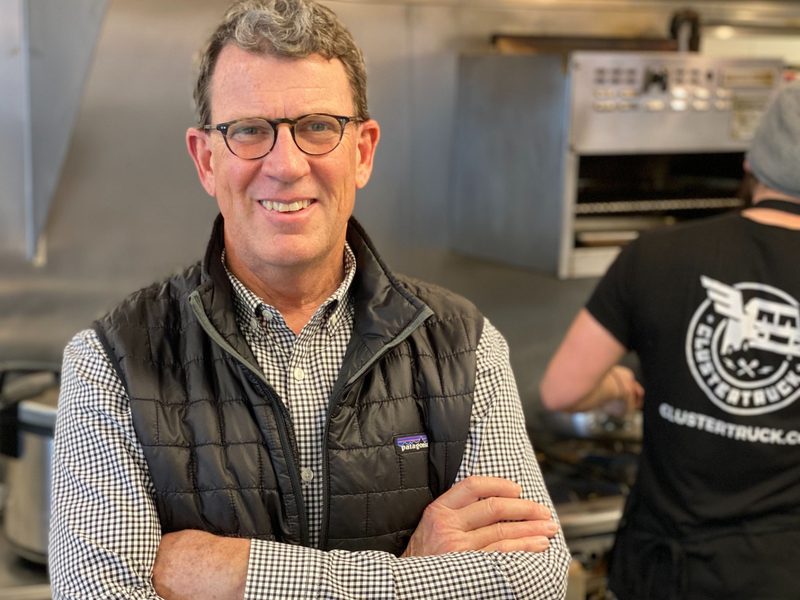
    INDIANAPOLIS, Indiana (August 19, 2021) —  When Chris Baggott launched and then successfully exited ExactTarget to Salesforce for $2.7 billion in 2012, little did he know he’d go on to co-found not just one, but two more industry-transforming companies, Compendium Software in 2006 and ClusterTruck in 2012. Baggott will share his entrepreneurial “secret sauce” for success in creating and scaling cutting edge software companies as one of the featured guest speakers at the 13th Annual Innovation Showcase sponsored by the Venture Club of Indiana.

    Baggott, who now serves as CEO of ClusterTruck, a tech company redefining the on-demand food delivery market, will be joined in a fireside chat format by Don Aquilano of Allos Ventures, is part of an all-star line-up of guest speakers sharing personal insights at The Innovation Showcase on September 1 at the NCAA Hall of Champions.  Doors open at 11:00 a.m. to the Entrepreneurs’ Expo and lunch with the formal program, which includes the signature pitch competition featuring the “best of the best” Indiana startup companies, starting at 1:00 p.m.

    Tapping into Indianapolis’ rich history in racing, Paul Mitchell, CEO of Energy Systems Network, will tell the story behind the state’s next big disruption, the “Indy Autonomous Challenge – Race to the Future.” Mitchell will be joined onstage by Dave Roberts, chief innovation officer, IEDC; and Stefano Deponti, CEO and general manager, Dallara Car Factory. Set for October 23 at the Indianapolis Motor Speedway, the Indy Autonomous Challenge is the world’s first self-driving racecar event in which teams of college students will go head-to-head in a 20-lap race of automated Dallara AV-21 race cars. The first team over the finish line in 25 minutes or less will capture the top prize of $1 million. Mitchell will discuss how the competition will catapult game-changing autonomous vehicle technology forward and inspire the next generation of automotive engineers and innovators.

    The Showcase also welcomes as keynote speaker, John Lilly, managing member of Lateral Capital, former senior executive at Proctor & Gamble and CEO of the Pillsbury Company, who over the course of his 27-year career in the consumer products industry built more than 50 branded businesses in 25 countries. Lilly is now a full-time investor in early-stage companies, and Lateral’s six funds have invested in more than 90 companies across 23 states. Lilly will share stories of successes and failures during his keynote, “Don’t Do This! What Early-Stage Companies Need NOT To Do When Raising Capital.”  

    Other featured speakers include two of Indy’s top female entrepreneurs, Christine McDonnell, CEO of Codelicious and Haley Marie Keith, CEO of MITO Materials and 2020 Innovation Showcase winner, who will be interviewed by Ben Pidgeon, executive director of VisionTech Angels.

    The public is invited to attend Indiana’s premier event for investors, capital sources and fundable game-changing companies. Details on The Innovation Showcase and ticket information are available here.

    For more information, contact Sandy Wilcox, sandy.wilcox144@gmail.com  317-508

  • Meet VisionTech Angels’ August Pitch Presenter #2: GeoH

    Meet VisionTech Angels’ August Pitch Presenter #2: GeoH

    I was introduced to Doug Rowe and Dylan Vester, co-founders of GeoH, by Oscar Moralez, VisionTech’s managing director. He had worked with Doug years ago when still at Biostorage. After learning more about GeoH’s solution for the home health industry, Oscar referred them to me and I was immediately impressed. Doug owns a home care company, and he understands the pain and inefficiency of an industry still reliant on paper for billing and payroll. Three years ago, he and Dylan set out to provide a cloud-based alternative. Fast forward, and their traction is impressive. Both are running hard and enjoying every minute, so the VisionTech Angels Screening Committee invited them to pitch. Here’s a sneak preview. I hope you’ll join us to hear Doug and Dylan during our August Pitch events on the 24th and 26th of this month. 

    BP: Many founders have a personal passion behind their company. What’s the back story on GeoH?
    DR: I started a home care company in Indiana four years ago, and the business grew fast. The only problem was that everything about the business was paper based, from how caregivers tracked their patient visits to billing and payroll. Total and complete nightmare. I wanted an app  to solve the problems I was facing in the business, so I called my now co-founder Dylan Vester. We worked to make something that not only solved the problems I was facing in the home care space, but was built on bleeding-edge cloud technology so iterations and features can be easily added. As of today, we provide online scheduling, billing, payroll, reporting and analytics, user management, and notifications. Because of changes in the industry brought on by regulations and laws like the Cures Act and market events like COVID, we are constantly evolving and enhancing our platform to meet current and new pain points.

    BP: What pain point are you solving with GeoH?
    DR: The home health industry is primarily owned by small independent agency owners/operators. Some of them have been in the business for decades, and many still use paper forms as a tracking mechanism. It’s an issue because they have to save paperwork for seven years. If you have a larger operation, you have a warehouse full of old documents. Outside of the obvious administrative burdens we relieve as a digital solution, we also satisfy the 2016 Cures Act for Electronic Visit Verification (EVV). We make running an agency more efficient while simultaneously keeping agencies compliant.

    BP: When did you launch and what kind of traction are you getting to date?
    DR: We launched the company in 2017, spent a year in development, and began selling in 2019. We’ve been adding users and caregivers ever since. We’re now in 11 states with aggregators, with 130 agencies, plus more than 3,000 users and counting. I give a lot of credit to Dylan for our traction. The product, our user interface, and user experience drive agencies to us from other software solutions.

    DV: (smiles) I spent a lot of time on the user experience. Before this, I worked with Salesforce and Microsoft, and I’ve applied much of the same sophisticated backend computing and automation you find in their products. We may be a small company, but our platform and app are very sophisticated and work well.

    BP: What benefit is most appreciated by customers?
    DV: Our customers are not typically computer savvy, so we’ve designed the platform and the app to be super simple and intuitive to use. We can have new clients live in five minutes. There is not a long, steep learning curve to work in the solution from a functional side. People understand the platform and workflows immediately. Caregivers only have to go to one screen to document their visits. Again, super easy, intuitive, and they don’t have to spend time writing paper notes and turning them in. Their work notes go straight into the agency’s system.

    DR: As a home care agency owner myself, I like that we’ve made paper obsolete for operations like payroll. Our software tracks a caregiver’s days, hours, and waiver code for each patient visit, making documenting patient visits so much easier for caregivers. GeoH has a  client with 14 locations and 1,000 caregivers. It would take him two days to do payroll because each caregiver’s hours, visits, and coding differed. So basically, it was like doing payroll 1,000 different ways. Because employees’ time and visits are captured digitally, go straight to the cloud, and because the process is automated, payroll takes under an hour. This owner has a $20 million business and by switching to GeoH, we’re saving him $1.2 million annually in reduced overhead. That would not have happened if he’d stayed with paper.

    BP: What’s your revenue model?
    DR: As a cloud-based, SaaS solution, it’s a user-based pricing model determined by the length of the contract. Two-year contracts are $10 per user; one-year contracts are $12 per user, and month-to-month is $15 per user. We have a 97% retention rate with clients and are very sticky regardless of their plan. Once we launch the skilled version (nursing, therapy), our monthly recurring revenue jumps 4x based on current clients and the additional cost of the new features while opening a new vertical.

    BP: Is GeoH unique in the market or do you have competitors?
    DR: There are many competitors out there with home health management software but nothing like GeoH. The short answer is our platform and app work. But here are some examples. We’re a standalone solution but we’ve completed critical integrations with state aggregators in 11 states, with more coming on shortly. We work with government agencies like the Indiana Department of Health, CMS, and ACHC to stay informed on regulations and upcoming changes to add those nuances to the software. This advantage garnered my agency’s perfect survey results with zero deficiencies and zero tags the past two times. We’re also integrated with managed care organizations. Our users love us and refer others to us weekly.

    DV: From a software perspective, our app is native unlike competitors’ apps so it opens up much like Facebook without requiring a webpage login. We work equally well on iOS, Android,  tablets, and PCs. The app is intuitive and the workflow mimics that of a home health agency. Additionally, our support for the software is second to none. Not only do we have a standard call in/email support system, but we also utilize newer technologies for faster response through SMS messages.

    We are now working on our next release that will include the initial patient assessment, 485 doctors’ orders and sending the transmission of data to Oasis in Texas, which is how Medicaid determines billing amounts by service. These are the feature sets required for the skilled side that do not already exist in our platform. This functionality is huge and as Doug mentioned, will significantly increase our monthly recurring revenue.

    BP: Is there any IP or patents that protect your market position?
    DV: We have trade secrets in the way the platform is built to manage large volumes of data, provide safety and security of information, and to massively scale as the business grows. Our algorithms also help streamline operations across multiple operating systems and allow us to integrate seamlessly with multiple external applications to provide robust business tools. Many competitors are attempting to do what we do; however, we’re using new, cloud-based technology that is synchronous, giving us a significant advantage over competitors.

    BP: How big is the market? How are you prioritizing your rollout?
    DR: With the aging population, the market is huge. There are three million caregivers In the United States and the industry is expected to add another 1.5 million by 2024. We’re targeting states with the highest amount of Medicaid dollars where we can grow the fastest.

    BP: How much are you planning to raise and what will the proceeds be used for?
    DR: This is a seed round and our goal is to raise $1.5 million. Funds will be used primarily on head count and adding more functionality. A big focus will be on the development team and  sales team as this is a one-on-one sales play.

    10) Why should VisionTech Angels invest in your company?
    DR: The home care industry faces a government mandate to be EVV compliant with charting, billing and payroll practices. No one wants to change but they have to, and ours is the only solution that’s easy to implements and ensures compliance. To put it in perspective, in Indiana alone there are 1,400 agencies that need to be compliant now. The opportunity is significant. We are well-positioned and believe VisionTech Angels will want to be a part of GeoH’s success.

    To learn more about GeoH, visit their website. VisionTech Angels’ August Pitch Events will be virtual on Tuesday, August 24 and Thursday, August  26 at 6 p.m. Pitch events are open to our members and accredited investors interested in joining our group. To register, check your email for an invitation, go to our Events page or email Ben Pidgeon at bpidgeon@visiontech-partners.com.

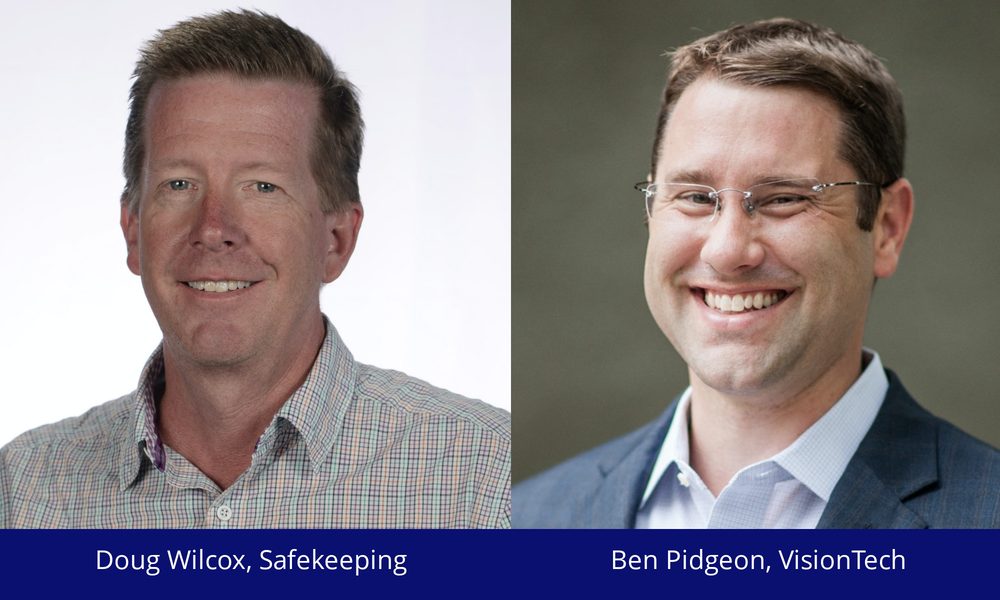
  • Meet August Pitch Presenter #1: Doug Wilcox, CEO of Safekeeping

    Meet August Pitch Presenter #1: Doug Wilcox, CEO of Safekeeping

    Many years ago when I was a Purdue student, I worked part-time at a local retirement and long-term care facility in West Lafayette. It was the “cream of the crop” in terms of quality of care and resident experience, but even then, I could see the constant demand by family members for information on loved ones and how this challenged staff. That said, staff also had information needs not always easy or immediate to satisfy. I first met Doug Wilcox, CEO of Safekeeping, at a VisionTech Angels Screening Committee meeting a few years back. Although we liked the business model, it was very early stage, so we passed. Time passed and when Doug pitched the committee a second time we said yes because of Safekeeping’s impressive traction and market trends that could accelerate adoption. We invited Safekeeping to present during our August Pitch Week. Here’s a sneak preview. I hope you’ll join us to hear Doug and participate in the discussion on this investment opportunity.

    BP:  There’s a good personal story behind the founding of Safekeeping. Do you mind sharing it?
    DW: Not at all. It’s kind of a two parter. My co-founder, Matt Prasek, started the company while a senior at Ball State University. His grandfather had a skiing accident that left him incapacitated and in nursing facilities for the rest of his life. Matt felt like he was constantly badgering his grandfather’s caregivers for updates so for his senior class project, he came up with a communications tool, which was named Best New Venture at Ball State. The second part is my own experience with my mother who spent the last 18 months of her life in a long-term care facility. I would have to drive two hours just to get questions answered about her care and condition. The facility gave me a flier on Safekeeping and intrigued, I reached out to Matt and joined him in 2017. At the time, Safekeeping had one customer, the facility where my mother lived.

    BP:  What pain points do you address with Safekeeping and the How’s Mom platform and app?
    DW: America is aging out. Seventy percent of the population age 65 and over will require long-term care at some point in their lives. Every day, 10,000 Americans turn 65. This is a huge population. And all of them have families who want to know how mom or dad is doing in long-term care. Complicating matters is the fact that many adult children do not live in the same city or town as mom and dad, which makes it harder to get information on their loved one.

    Another pain point is at the caregiver level. The workforce is under incredible stress. Turnover is huge. Workloads are heavy. There simply is no time to respond to all the requests they get for information, the need to share information, and also, to gather critical information such as consents. The long-term care industry, users and providers, needs a digital solution that improves communication, quality of care and relieves a huge burden from caregivers and administrators.

    BP: What is your value proposition?
    DW: Safekeeping’s How’s Mom platform is an automated, self-service family connection integrated with a long-term care or senior care center’s electronic health record (EHR) system. At the core of the solution is the How’s Mom Connections Hub that allows a facility to easily manage all family interactions such as share details on their clinical charts, document compliance with CMS communications rules within the EHR, communicate with families via text, email and the How’s Mom app, and automatically synch family contacts.Families have real-time, on-demand access to information they want and need about their loved one. They can schedule visits and receive notifications through the app. Patients also benefit from our platform.

    BP: Where are you in the commercialization process?
    DW: We are fully commercial and working on platform enhancements and functionality.

    BP: What’s your traction like thus far? Any barriers to sales?
    DW: We currently have 172 paying facilities in 32 states, with another 128 facilities actively participating or planning 30-day pilot programs. The biggest barrier to sales is the perception that IT implementations are difficult and time consuming. So there’s this cringe factor when people hear “software deployment.” The reality is our How’s Mom platform is nothing like that. Because we integrate with existing EHR systems – PointClickCare and MatrixCare as of today – implementation can be done in days with a minimum of effort. And truthfully, from our end, it takes less than an hour. The platform is very intuitive, so staff training is minimal. Families simply download the app and they’re live. That said, we offer 30-day free pilots to facilities so they can try it with no obligations.

    BP: COVID had a profound impact on nursing facilities and created fear and anxiety among families, patients and caregivers. How has it affected Safekeeping?
    DW: As you mentioned, COVID created anxiety among families especially in states that locked down long-term care facilities. The need for information on loved ones exploded when families could not visit in person. On the other side of the spectrum, facilities were under enormous pressure to stay staffed and create a safe environment for workers. Because of COVID, there has been tremendous turnover in staff such as nurses, social workers and particularly among CNAs. Add to that, new demands on staff time and no money to fund new protocols so we’ve seen long-term care facilities shut down as a result. So this is a stressed industry.

    Safekeeping has thrived under COVID because we remove communication and administrative burdens from staff and provide that critical, real-time connection point to information for families and loved ones.

    BP: The federal Cures Act is also working in your favor, correct?
    DW: Absolutely. This is an act passed in 2016 and is intended to give patients safe and secure access to health data so they can better manage their care and make more informed healthcare decisions. It was first implemented in hospitals and medical practices – you’ve likely used the portals hospitals now have on their websites – and now it is set to be implemented in long-term care facilities. Healthcare providers need to be ready to share certain electronic health records with patients and family members on request to be Cures Act compliant.

    Here’s the deal. While some of our clients are aware of the Cures Act and are specifically implementing our platform as their solution, many long-term care facilities are not aware they have to be compliant with the Act. Those not in compliance will face financial penalties in the form of lower reimbursements. As far as we know, Safekeeping, with our clinical focus and EHR integration, has the only platform that is Cures Act ready. Other apps will pop up, but this is not an easy integration. It will take at least 12 months, and probably longer, for a competitor to develop a solution.

    BP: Do you have any IP protection?
    DW: We are looking into patents and IP protection with our legal team. We do have it on our radar and likely will use a portion of funds from our next raise to begin the process.

    BP: Do you have competitors?
    DW: We do. Kind of. There are a number of companies focused on the social side of long-term care. They address social engagement, sharing photos and videos between mom and dad and their families. That’s the easy stuff. But it doesn’t solve anyone’s problems. Social apps make work for caregivers, add additional processes, and some require additional hardware and software—all of which are big turn-offs for senior care operators. 

    Safekeeping’s How’s Mom platform does the heavy lifting in terms of functionality and usability. Caregivers, families, and patients get a much richer, more complete experience in a self-serve format. Because we’re integrated with a facility’s EMR system, families can access information on their family member’s vitals, conditions, medications, and nutrition – the type of information people normally must call in to get.

    BP: How much are you planning to raise and what will the proceeds be used for?
    DW: This is a seed round and we’re hoping to raise $1 million to get us ready for a Series A raise. Half of this raise will go to continuing to add functionality to the platform that will drive adoption. The other half will go to sales and marketing. We just hired our first employee, a full-time salesperson, and customer support representatives will be added soon as well.

    BP: Why should VisionTech Angels invest in Safekeeping?
    DW: Four reasons. Founders who have personally lived the pain points of the industry and have a passion for delivering the right solution for caregivers, families and patients. Momentum in the industry; we’re integrated with the largest EHR company in the long-term care industry which provides instant credibility and ease of use. We’re market proven with nearly 200 users. And finally, timing is in our favor. Because of the Cures Act, long-term care facilities may soon be mandated to provide the type of information Safekeeping makes accessible now without adding any burdens to users.  I hope VisionTech investors go big.

    To learn more about Safekeeping, visit their website. VisionTech Angels’ August Pitch Events will be virtual on Tuesday, August 24 and Thursday, August  26 at 6 p.m. Pitch events are open to our members and accredited investors interested in joining our group. To register, check your email for an invitation, go to our Events page or email Ben Pidgeon at bpidgeon@visiontech-partners.com.

  • VisionTech Angels Invests $575,000 in Road Utility App OnStation, Leading Oversubscribed Seed Round of $1.4 Million

    VisionTech Angels Invests $575,000 in Road Utility App OnStation, Leading Oversubscribed Seed Round of $1.4 Million

    INDIANAPOLIS, Indiana (July 8, 2021) – – In the largest initial investment in the group’s 12-year history, VisionTech Angels have invested $575,000 in road construction productivity app OnStation, in a seed round that closed at $1.4 million. Cleveland, Ohio-based OnStation also has the distinction of being VisionTech Angels’ 50th portfolio company.

    VisionTech Angels led the round, with 53 of its investors participating. Joining VisionTech Angels in backing OnStation were HG Ventures, Indianapolis; Jumpstart, Cleveland; and Golden Angel Investors, Brookfield, Wisconsin. The round, which will be used to scale the company nationally, was oversubscribed by $400,000.

    VisionTech Executive Director Ben Pidgeon said the investment was significant on many levels. “Unlike a venture fund which writes one check, angel groups like VisionTech are composed of individual investors who decide whether or not to participate in a deal. Leading the investment round in OnStation with participation from this volume of members is a real achievement when the average check per VisionTech investor was just over $10,000. It came down to our investors having a lot of trust and confidence in OnStation’s Founder and Chief Technology Officer Jake Bailosky and CEO Patrick Russo.”

    Pidgeon adds, “We’re impressed with the current abilities of the product, the problems it solves for the road construction industry, customer feedback, market size, and growth potential.”

    The OnStation app, which enables better communications, productivity, and efficiency for road construction projects could not be better timed. On Thursday, July 1, the U.S. House of Representatives passed a $715 billion highway and water infrastructure bill that would direct $343 billion to highway and bridges infrastructure projects. The U.S. Senate is currently debating a $1.2 trillion infrastructure deal.

    While there’s no deal yet in Washington D.C., OnStation’s Russo says the company will primarily use the funding to scale the company, which is currently in use in 23 states. “We recently hired a growth marketer and civil technology engineer and have immediate plans to add sales professionals and additional developers so we can rapidly add more functionality to the app and automate the project onboarding process. Once a federal infrastructure bill is passed, we anticipate more states initiating roadway construction projects. Tools like OnStation will support better project management and greater productivity and efficiency to road construction teams. The volume of construction projects will make OnStation’s app essential to keep projects on track.” 

    OnStation is the brainchild of founder and CTO Bailosky who worked as a project engineer at the Ohio Department of Transportation (DOT) and who experienced first-hand the daily challenges of managing road construction projects. Bailosky also served on the Ohio DOT’s technology review board for four years and saw all of the tech solutions the agency was considering. He taught himself how to code and built the first generation of OnStation, the first jobsite productivity app that serves as a complementary plugin to larger road construction tech solutions.

    Today, OnStation is an industry leading application that brings better communication and efficiency to jobsites. Bailosky and Russo also credit JumpStart Cleveland, which mentored and supported the startup for four years, for much of their success to date. Over the last seven months, OnStation’s customer base is up seven-fold.

    Russo says it’s just a start. “We want to be on every jobsite and every road in the United States. And beyond!”

    About VisionTech
    Founded in 2009, VisionTech is a privately held company that links investors to high-potential, early-growth companies. Based in Indianapolis, VisionTech’s angel investing network includes more than 120 active members and chapters in Bloomington, Fort Wayne, Indianapolis, Lafayette, Indiana; and Dayton, Ohio. As of December 2020, 180 VisionTech members deployed more than $21.5 million in capital, investing in 50 portfolio companies from across the United States. Membership is open to accredited investors. Those interested in joining are encouraged to contact VisionTech.

    About OnStation
    OnStation is a highly collaborative mobile application created by PROJiTECH that empowers road construction workforces by supporting location-based documentation and communication across the entire project. This includes automatic location, access to project design files and contract documents, streamlined issue tracking, and group communication features. Through higher engagement and connectivity, OnStation enables more efficient jobsite workflow, keeping cones off the road, traffic flowing and work progressing. Learn more.

  • SonarMed’s Exit to Medtronic Is a Win for VisionTech Angels Investors and World’s Most Vulnerable Patients

    SonarMed’s Exit to Medtronic Is a Win for VisionTech Angels Investors and World’s Most Vulnerable Patients

    INDIANAPOLIS, Indiana (June 15, 2021) – –  Last month, when SonarMed announced it had been acquired by Medtronic, a global leader in medical technology, VisionTech Angels investors had much to celebrate. Ten years earlier, the group’s members were among the first to invest in the Carmel-based life sciences startup.

    Founded in 2005, SonarMed is the creator of the AirWave™ Airway Monitoring System that addresses critical airway management challenges, thereby addressing an enormous unmet need in premature infant, pediatric and adult patient populations in critical care, emergency departments and operating rooms. SonarMed’s technology was originally created as a graduate level project of Jeff Mansfield, M.D, SonarMed chief technology officer, and Eduardo Juan, M.D., at Purdue University. Medtronic has commercialized and is now marketing the technology.

    Angel investing is a high-risk game, particularly in the life sciences space where innovative technologies must meet stringent clinical and regulatory criteria before a commercial launch. VisionTech, like other angel investing groups, gets involved in early stage companies, providing capital and business advice and in the process, forming close relationships with company founders. SonarMed is one of the first investments made by VisionTech, which was founded in 2009.

    Managing Director Oscar Moralez explains what VisionTech Angels saw in the startup and their device. “As an Indiana-based angel network, we wanted to support regional innovation and particularly startups coming out of our research universities like Purdue. Our group also is attracted to life sciences startups.

    Moralez also had a personal interest. One of his children had been born three months prematurely, requiring a stay in a neonatal intensive care unit (NICU) to address breathing issues among other things. “I immediately connected to SonarMed and what their technology would mean for these high-risk babies and their families.”

    VisionTech Angels members made their first investment in SonarMed in 2010 and ultimately invested in multiple rounds over the next decade because of the belief the technology could help save lives.

    Tom Bumgardner, who served as CEO of SonarMed prior to the acquisition, explains the company’s AirWave Airway Monitoring System. “Our device is the only FDA-cleared airway monitoring system for patients like premature infants who can’t breathe on their own and truly challenges the status quo in critical care and anesthesia when used for detection of endotracheal tube movement, obstruction and placement. Clinicians using our device see better outcomes, which means fewer injuries, less time in the hospital, lower costs, and less heartache.”

    SonarMed also received early support from other high-profile Indiana investment groups, including Elevate Ventures, Indiana Economic Development Corporation and BioCrossroads. As the company and its technology progressed, other investors came on board at critical junctures: Hyde Park Angels, Baylor Angel Network, Central Texas Angel Network, Queen City Angels, and others. Nondilutive funding in the form of grants from the National Heart, Lung, and Blood Institute of the National Institutes of Health and the Indiana 21st Century Research and Technology Fund also contributed to the development of the AirWave device.

    Bumgardner acknowledges it “took a village” to elevate SonarWave and its technology. “We give a tremendous amount of credit to our early stage investors who took a leap of faith that our technology could change the course of airway management and that there was a market for it,” he said. “They stuck with us as mentors, advisors, and cheerleaders and never gave up.”

    Medtronic, with its extensive market presence, clinical leadership and market development expertise, was the ideal acquirer of SonarMed and the AirWave device, which is approved for use in the United States and the European Union. Medtronic is now actively rolling out the SonarWave device.

    VisionTech Angels has had three portfolio companies successfully exit over the last year. However, the SonarMed deal is particularly sweet for Moralez and VisionTech Executive Director Ben Pidgeon.

    “SonarMed is part of the VisionTech family; we literally grew up together, improving year by year,” Moralez says. “The financial reward of the exit is just part of it. Knowing we also played a role in supporting an innovative respiratory device that will help address a top patient safety issue for the most vulnerable patients,  premature infants through adults, around the world is the real ROI.”

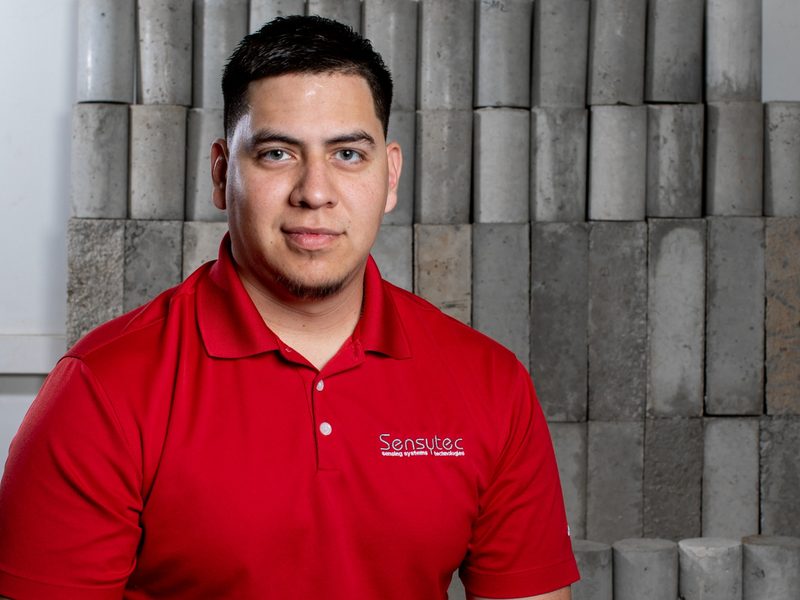
  • Meet June Pitch Presenter #2: Ody, De La Paz CEO, Sensytec, Inc.

    Meet June Pitch Presenter #2: Ody, De La Paz CEO, Sensytec, Inc.

    While we were reviewing companies for June Pitch Week, a colleague at Lateral Capital, a micro VC in Sarasota, Florida, suggested VisionTech Angels take a look at Sensytec, a tech company out of Houston with a solution for the concrete industry. When I connected with the company’s CEO and Co-founder Ody De La Paz, he explained just how old school the concrete industry is and as a result, what a bottleneck and budget buster it’s become for the construction industry. Their solution is two-pronged, wireless real-time monitoring of concrete and an app that keeps a contractor’s fingers on the pulse of a job’s concrete, potentially saving a tremendous amount of time and money. The VisionTech Screening Committee and I invited Ody to present during our June Pitch Week. Here’s a sneak preview. I hope you’ll join us to hear Ody and participate in the discussion on this investment opportunity.

    BP: How did you get involved in the concrete industry?
    OD: I worked in the construction industry in my late teens and early 20s and found out quickly that working with concrete, specifically pouring and breaking test cylinders, was back-breaking work. I literally waited for the concrete trucks to come to the job site, they’d fill my wheelbarrow, I’d shovel the wet concrete into cylinders, wait for it to dry, and then break the cylinders to see if it had set correctly. It was time consuming and  like I said, back breaking!

    Later, as a student in the University of Houston’s entrepreneurship program, I met Anudeep Reddy, a civil and structural engineering student. He was working on a “smart cement” technology for monitoring the structural health of concrete and cement. I was intrigued. We started working together and in 2016 we co-founded Sensytec.

    BP: What pain point did you see in the market?
    OD: Concrete is a paint point for the construction industry. (Laughs) As complicated as it can be, the process of pouring, curing, and monitoring concrete is pretty much a guessing game. It’s largely reliant on manual tests that involve casting test cylinders, waiting for them to cure, and sending them to a lab to perform a break test. This is extremely time consuming. There are also many variables that can go wrong with concrete such as weather, the wrong mixture of water and cement and human error. During this last year, we’ve seen a labor shortage, causing more issues. Finally, problems with concrete can set a project back weeks and when a project goes past a deadline that costs money and contractors lose bonuses for meeting deadlines.

    Our solution, called SensyRoc™, is a wireless sensor that is embedded into the concrete as it’s poured. The sensor collects real-time data as the concrete cures, sending it wirelessly to our free mobile app where users, contractors, and their teams can instantly see and share what is happening with the concrete. Monitoring in place with Sensytec means no more cylinder tests are needed, less manual labor is needed and no waiting days for results. It’s all there on their smart phones when they need it, which is usually now. Time is money, and if you can save even a day on pouring, that’s significant. On average, we save contractors two days per pour on their projects, which equates to about $7,000- $10,000 a day.

    BP: That’s impressive. What kind of data are you tracking?
    OD: We’re tracking and monitoring a number of things like the in-place temperature of the concrete as that impacts the quality of the cure. We’re also tracking the setting time and compressive strength. And finally, the thing that really sets Sensytec apart is that we’re monitoring the electrical resistivity. When concrete is poured there can be voids, air pockets if you will, that won’t be detected by monitoring temperature alone. Electrical resistivity identifies the nature of voids. If there’s a problem, it can be addressed immediately and not weeks, months, or years down the road when it could become a structural or even liability issue. Electrical Resistivity also provides data on Hydration of concrete, water & cement ratio, and slump of concrete allows contractors to fully understand their concrete mix and better optimize their mix designs for their projects.

    BP: What kind of IP do you have?
    OD: We currently hold a worldwide patent on Smart cement technology and have a patent pending on SensyRoc that is intended to also be a worldwide patent. These patents are protecting the electrical resistivity measurements using embedded sensors in concrete, asphalt and other materials.

    BP: What kind of traction do you have?
    OD: We are commercial with our sensors in Texas, Oklahoma, Florida, Minnesota, and Iowa. Some of our customer are Flatiron, Meyer Contracting, Harvey Builders, and Silverstar Construction.

    BP: What is the competitive landscape?

    OD: There are competitors in this space. Hilti, which is a large supplier to the concrete industry, has a sensor solution. There’s also Giatec and Kryton that offer monitoring solutions. These products are all the same tech and only use temperature measurements. What sets us apart though is the electrical resistivity measurements. When concrete is poured, there can be voids, air pockets if you will, that won’t be detected by monitoring temperature alone. Electrical resistivity identifies the nature of voids. If there’s a problem, it can be addressed immediately and not weeks, months, or years down the road when it could become a structural or even liability issue. Electrical resistivity also provides data on hydration of concrete, the water and cement ratio. This allows contractors to fully understand their concrete mix and better optimize mix designs for their projects.

    BP: What is the potential for exit?
    OD:  Potential acquirers include large tool companies like DeWalt and Bosch that are adding to their technology solutions. RediMix, which is the leading concrete company in the U.S., is another potential acquirer.

    BP: What will this round be used for?
    OD: We are raising a $1 million seed round which we will use to expand outside of Texas, scale our manufacturing, and make key hires in sales, manufacturing and electrical engineering.

    BP: Why should VisionTech investors back you?
    OD: The concrete sector of the construction industry has tremendous room for improvement as it is still reliant on time-intensive manual processes. We believe there is a significant opportunity as our sensors and app will save contractors a tremendous amount of time and money. We are specifically looking for investors who bring more than capital and will serve more as partners in our growth and can potentially make introductions in the construction industry.

    To learn more about Sensytec, visit their website. VisionTech Angels’ June Pitch Events will be virtual on Tuesday, June 22 and Thursday, June 294at 6 p.m. Pitch events are open to our members and accredited investors interested in joining our group. To register, check your email for an invitation, go to our Events page or email Ben Pidgeon at bpidgeon@visiontech-partners.com.