Author: Ben Pidgeon

  • Meet June Pitch Presenter #1: Jim Hussey, CEO, Seneca Therapeutics

    Meet June Pitch Presenter #1: Jim Hussey, CEO, Seneca Therapeutics

    Life sciences are a sweet spot for VisionTech Angels so when I met Jim Hussey, CEO of Seneca Therapeutics , at the ACA Life Sciences Syndicate meeting and learned about their virus that combats “cold” cancer tumors, I thought our group would be interested. Cancer therapeutics tend to be a long haul for investors, but Seneca is starting its Phase 2 trials of their lead asset, SVV-001, an oncolytic virus that shows significant clinical benefit in neuroendocrine tumors. Specifically, SVV-001 works to turn cold solid tumors hot and therefore treatable with immunotherapies. The VisionTech Screening Committee and I invited Jim to pitch during our June Pitch Week. Here’s a sneak preview. I hope you’ll join us to hear Jim and join in the discussion on this investment opportunity.

    BP: Seneca Therapeutics has a strong leadership and scientific team. Tell me about your founder, Paul Hallenback, and yourself.
    JH: We are really proud of the team we’ve assembled. Paul Hallenbeck is our founder, president and chief scientific officer. He’s spent the last 27 years in the biotechnology industry with tremendous expertise in all phases of cancer immuno-therapeutics R&D. Paul is also a serial entrepreneur and was the sole founder of Neotropix, where he raised $30 million in venture capital. Now with Seneca, Paul has led our lead asset, SVV-001, through IND approval and completed several Phase I/II clinical trials, establishing its safety and early evidence of efficacy. 

    I’ve spent my entire career in the pharmaceutical and biotech industries, the last 27 years in C-suite positions.  I left Morphosys—where I was president of the U.S. business—and joined Seneca because of the enormous upside of SVV-001. My focus is positioning Seneca for our Series B and ultimately an exit or partnership with big pharma with a highly favorable, near-term return for our investors.

    BP: I’m not an oncologist so please explain the issue here.
    JH: Certainly! Immunotherapy drugs are very effective on some types of cancers because they enable the body’s own T-cells to find and kill cancer cells. However, for these drugs to work, the tumor must be functional, hot and inflamed. The issue is many solid cancer tumors are cold and not inflamed so the immune system does not recognize them as foreign and does not attack the tumor. As a result, cold solid tumors do not respond to promising immunotherapies.

    There is a significant gap in the percentage of cancer patients who respond to immunotherapy. About 12.5% of tumors do respond and about 44% do not respond to the newer immunotherapies primarily because of cold tumors. So how do we enable the body’s immune system to get to work?  Oncolytic viruses like SVV-001 are unique in the ability to turn cold tumors hot and respond to immunotherapies like checkpoint inhibitors.

    Checkpoint inhibitors like Keytruda and Opdivo you’ve probably seen advertised are immunology drugs that work by blocking checkpoint proteins from binding with their partner proteins and sending an “all clear” message to the body. Using SVV-001, an oncolytic virus, the previously cold tumor is recognized as hot and the T cells do their job, which is attacking the cancer cells and allowing the checkpoint inhibitor to work.

    BP: What is novel about your lead asset, SVV-001?
    JH:  SVV-001 is small in size enabling rapid, potent, and efficient distribution and infection within tumors. This infection turns the tumor hot and leads to tumor cell death.  SVV-001 is a “best in class” oncolytic virus drug because of its “TEM8” advantage which makes it the most cancer-specific oncolytic virus. What TEM8 does is provide the opportunity to define the population where SVV-001 mediated therapy can make a major impact in terms of treatment response and outcomes. Due to the presence of TEM8 on more than 60% of solid tumors, we predict that more than 60% of patients may benefit. This would dramatically increase the number of patients with solid cancer tumors that respond to immunotherapy drugs.

    BP: What types of cancer is this best utilized for?
    JH: Ultimately, SVV-001 could be utilized in any type of solid tumors expressing TEM8 such as breast cancer, lung cancer and pancreatic cancer.  Seneca is currently focused on neuroendocrine tumors and neuroendocrine carcinoma.

    BP: What kind of IP do you have?
    JH: When the mechanism of action (binding to TEM8) for SVV-001 was discovered in 2017, it allowed new IP to be filed and issued through 2040.  There is other IP as well covering the gene delivery technology for SVV-001.

    BP: Where are you in the commercialization process?
    JH: We hope to file our BLA (biologics license application) with the FDA in the fourth quarter of 2023 and have this therapy on the market by second quarter 2024.

    BP: What does the market look like for an oncolytic virus like SVV-001?

    JH: The market for oncolytic virus platforms is robust with a tremendous amount of activity in the last three years and a lot of potential for additional exits. Some highlights include a $1 billion plus exit of BeneVir to Johnson & Johnson and a $900 million exit of Turnstone to Takeda. Both were pre-clinical, which says a lot about the level of interest. Here’s another—Replimune completed an IPO in July 2018 and now has a valuation of $1.6 billion and they’re currently in Phase II clinical trials. You also have Merck and Boehringer Ingelheim that have made acquisitions.

    BP: What will this round be used for?
    JH: We completed our Series A February 1 and are now raising a convertible bridge round leading into our Series B this fall. The bridge gives us additional time and flexibility as we plan the next round of Phase II and III clinical trials. The time and flexibility is for completing the animal data before we begin the clinical trial this fall and for negotiations with potential strategic pharma partners or VCs.  Our goal is to raise $5 million in our Series B and we have around $3 million left to raise.

    BP: Why should VisionTech investors back you?
    JH: The risk reward is very favorable. This is a later stage asset, with substantial human and animal data. We also have a ton of positive data from 76 humans who have received SVV-001 and that data supports the premise that SVV-001 solves the cold tumor issue. Turning cold tumors hot and therefore receptive to immunotherapies is a significant development for patients whose tumors were previously not responding to immunotherapies.

    To learn more about Seneca Therapeutics, visit their website. VisionTech Angels’ June Pitch Events will be virtual on Tuesday, June 22 and Thursday, June 294at 6 p.m. Pitch events are open to our members and accredited investors interested in joining our group. To register, check your email for an invitation, go to our Events page or email Ben Pidgeon at bpidgeon@visiontech-partners.com.

  • Leaf Software’s Ozan Selcuk on Why Startup CEOs Shouldn’t Overlook Culture

    Leaf Software’s Ozan Selcuk on Why Startup CEOs Shouldn’t Overlook Culture

    Ozan Selcuk knows a few things about the importance of organizational culture. Over his 23-year tenure at Leaf Software Solutions in Carmel, Indiana, the last four as CEO, his company has been recognized among the best places to work in Indiana. Not one time, but ten times. By achieving this feat, Leaf is one of only three small companies in the Indiana Chamber’s Hall of Fame.

    Selcuk explains the decade-long streak of being among the best workplaces in Indiana:

    “We are proud to be a principle-centered company. Our principles guide us throughout our corporate life, how we behave in the community, and how we treat our employees as well as our clients.”

    OZAN SELCUK, CEO, LEAF SOFTWARE SOLUTIONS

    Leaf’s principle-based culture is the foundation of the company’s longstanding success in the very competitive world of custom software development and enterprise resource planning, says Selcuk. “This is not only about doing the right thing, but also about creating a principled culture as a business decision with long-term implications. I encourage all startup CEOs to build a culture as they are building their companies as this will carry you through challenging times and good times.”

    Selcuk, a VisionTech sponsor and member of the screening committee, recently sat down with us to share specific advice for startup CEOs and culture building.

    Why startups must spend scarce time on creating a culture.
    If you’ve never started or run a company before, it’s easy to think culture is some kind of mumbo jumbo. Startups are fun, but they’re also volatile. Culture dictates how you treat people and how you communicate. Culture creates cohesive, inclusive companies. It’s what carries you through difficult times. I advise startup CEOs and founders to set their culture and exercise it during good times as well as challenging times. Don’t put a sign on the wall and call it done.

    You equate a company’s culture to love.
    Very much so. Like love, culture needs to be nurtured and invested in constantly otherwise it deteriorates.

    Culture is different than business strategy.
    Startups tend to focus on their product, processes, efficiency, and fundraising but without the right culture, none of these can be positive. As Peter Drucker said, “Culture eats strategy for breakfast.” No matter how effective your strategy may be, people and how they treat and work with each other, and respond in challenging times is what makes the difference.

    Where do company cultures come from?
    Culture comes from what’s important to the company founders. It starts with leadership and grows at the grassroots. My advice to startup founders is to sit down and discuss with your partners what’s important to you, what you value, what should be a driving force, and finally, how to build that into your company. It’s very personal; there is no recipe and it’s different for every company.

    You can’t fake culture.
    Culture is something you live day in and day out. If you’re faking it and there’s a crisis, culture goes out the window. At Leaf, we include our culture on our website, put it into action so there’s culture “momentum” among our team and constantly talk about it in our staff meetings. Here’s an example, when doing postmortems on recent projects, we evaluate how we did based on our culture. Could we have done things differently? If so, how? Such discussions make culture real.

    “Leaders must swim in an ocean of humility and constantly act as servants to clients, employees and community. Your job as a CEO or founder is to be a cheerleader to your culture. Be natural. Lead by example. Get out of people’s way. Make sure you do not de-motivate people. Leaders who yell or otherwise act badly are setting a bad example.
    If that’s your behavior, how do you expect employees to treat each other and clients?”

    OZAN SELCUK, CEO, LEAF SOFTWARE SOLUTIONS

    Discuss what is important with your team.
    Our people are analytical, so we’ve always done our best to communicate in a structured, organized fashion. People enjoy it and absorb more. What should you discuss? Business topics such as product design, strategy and fundraising, but also company values and how they apply to what you’re doing as a company. Don’t forget that discussions are two-way; actively engage people to see if they have anything to add or challenge. Create an environment where different points of view are valued. At Leaf, we realized the value of structured communication became even more important during the pandemic as we learned what resonated for the people in our company.

    Don’t make everyday business as usual.
    Prior to COVID, we hosted a catered breakfast on Fridays. It gave everyone an opportunity to relax and chat about family, what they were reading, the upcoming weekend. We also have a gym onsite and games people can play. Now, since we’re still working remotely, we do a half-hour Zoom on Fridays where we feature one employee a week. It’s harder to maintain culture remotely, but you can do it if you work at it.

    Not sure where to begin with your startup’s culture? Get a mentor.
    Startups CEOs often have lots of mentors who coach them on their business plan, product-market fit, funding strategy, marketing, and legal matters. Don’t overlook having a culture mentor. It can be the leader of a company you admire. Or, turn to a group like VisionTech Angels whose members are happy to share their knowledge and experiences.

    Last word?
    I’m looking forward to getting back in the office and having fun with the team.

    VisionTech is honored to have Leaf Software Solutions as a sponsor, investor and now culture mentor. You can learn more about Leaf Software Solutions here.

  • Opportunity Maker Larry Williams  Jr. Joined VisionTech Angels to Learn How to Support Entrepreneurs through Better Investing

    Opportunity Maker Larry Williams Jr. Joined VisionTech Angels to Learn How to Support Entrepreneurs through Better Investing

    Member Meet-Up is a new series from VisionTech to showcase our members and why they chose to become angel investors with our group.

    Larry Williams Jr. has an eye for opportunities. While earning a degree in physical therapy from Indiana University-Purdue University Indianapolis, he determined that working as a security guard was a great way to earn a living and attend classes full-time.

    In April 2013, Williams was horrified to learn that two young terrorists with homemade bombs had easily infiltrated crowds attending the Boston Marathon, killing three and wounding hundreds. Had there been better security, he reasoned, this tragedy could have been avoided.

    “At that point I decided to start my own security company, Rowley Security Firm, in Indianapolis with family members,” he explains. “We provide armed guards, typically off-duty cops, for sporting events, festivals, construction sites, manufacturing operations, office buildings, and churches throughout the state of Indiana. We also install security systems.”

    “As a small, family-owned Black business in Indianapolis, we’ve done well. My mother, uncle, sisters, and cousins are all with the company.”

    Larry Williams, Jr., Rowley Security Firm

    In 2015, a study revealed that only two percent of Indiana’s businesses were Black-owned. Seeing an opportunity to advocate for minority-owned businesses in his home state, Williams founded the Indy Black Chamber that same year with the goal of bringing economic empowerment and the independence that comes with it to Indianapolis’ Black community.

    Williams, who serves as president and chairman of the Indy Black Chamber, is committed to developing more entrepreneurs within the Black community. In addition to mentoring, educational seminars and networking events, he spearheaded the creation of a two-story co-working space downtown next to City Market in June 2020. The co-working space provides young companies with access to affordable conference rooms, high-speed internet, printing, and fax services—things that can make or break a new entrepreneur and their dreams.

    He also helped establish a Food Incubator in City Market to encourage and lift up all types of food entrepreneurs. “We provide kitchen space to help caterers and food trucks get out of their homes, we help restaurants with rent and equipment, and we help those who want to break into the retail food business. We also welcome carts to sell crafts like beads and tee shirts.”

    Williams’ hustle is catching. Within five years, he has successfully grown the Indy Black Chamber to nearly 400 members. Corporations, appreciating his enthusiasm and results, have enlisted his help with initiatives to promote and grow entrepreneurship within the Black community. For example, he worked with Comcast to award $2,500 grants to 18 Black-owned businesses. More recently, Cummins engaged Williams to promote and administer nearly $1 million in grants to minority businesses. Some 892 applied and 88 were awarded grants worth more than $600,000.

    This “seed capital” is critical to building a more vibrant and diverse business base in Indianapolis and across the state, Williams says. “The Black community hasn’t had angel investors to turn to start companies so the Indy Black Chamber has been serving in that role. We want to see people and businesses grow so we invest.”

    Working with large corporations have given Williams a deep appreciation for accountability and return on investment. Given the Indy Black Chamber encourages members to be lifelong learners, he saw an opportunity to learn more about investing by joining VisionTech Angels in early 2021.

    “VisionTech Angels invests on a much larger scale than we do at the Indy Black Chamber and I want to understand the screening process, how to evaluate pitches and due diligence. As a new member, I plan to get involved but first I’m here to observe. I want to see how it goes and how it flows,” he says.

    LARRY WILLIAMS, JR., PRESIDENT, INDY BLACK CHAMBER

    “VisionTech Angels invests on a much larger scale than we do at the Indy Black Chamber and I want to understand the screening process, evaluating pitches and due diligence. As a new member, I plan to get involved but first I’m here to observe. I want to see how it goes and how it flows,” he says.

    At the Indy Black Chamber, Williams invests in all kinds of small businesses, but mainly in the service sector. Now, as a Vision Angel, he admits he’s not looking at specific industries; he prefers to consider the individual entrepreneur. “I listen to the person. If he or she knows their industry, they can make money. I’m sold based on that.”

    Among the many assets he brings to VisionTech is a growing statewide network of Black-owned business connections. He has helped establish Black chambers in Evansville, Marion and Muncie, and is working on another in South Bend. He also has his eye on launching a statewide Indiana Black Chamber of Commerce.

    Ultimately, Williams would like to put more Black entrepreneurs in front of VisionTech Angels and other Indiana-based investing groups. “We need to recruit more people with deeper pockets to the Black community. Together, we can create bigger opportunities if we invest as a group.”

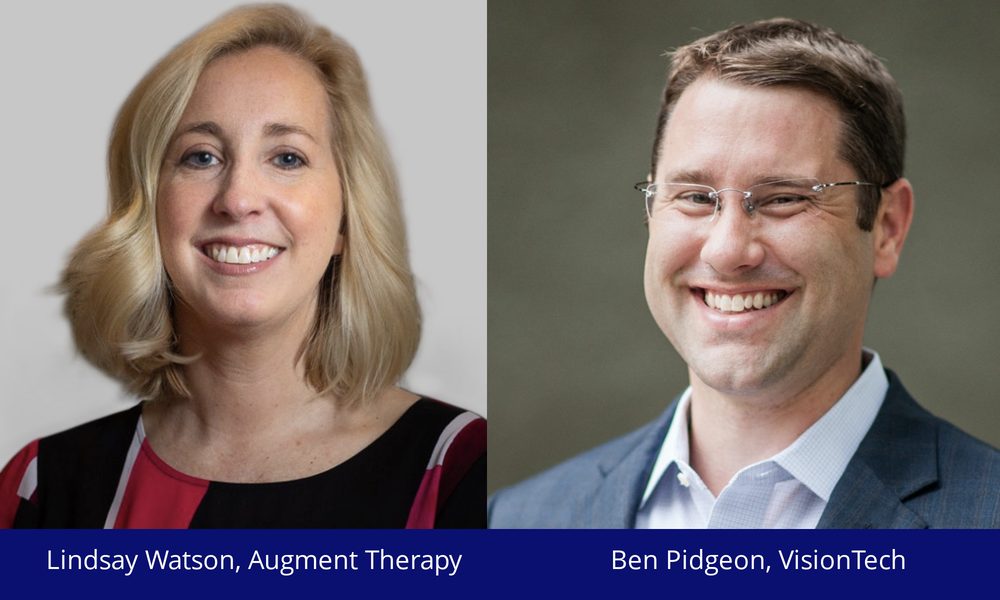
  • Meet April Pitch Week Presenter #2: Lindsay Watson, CEO of Augment Therapy

    Meet April Pitch Week Presenter #2: Lindsay Watson, CEO of Augment Therapy

    If you’re a parent or grandparent, you know how much kids love computer games. When Pittsburgh’s BlueTree Venture Fund suggested VisionTech look at Augment Therapy, a startup that has “gamified” the children’s physical therapy sector, I was immediately interested. How do you gamify something like physical therapy? The company’s CEO, Lindsay Watson, explained that her software platform is designed to engage kids in therapy they often don’t want to do in a way that’s fun. Even kids with the most challenging medical conditions enjoy it. The VisionTech Screening Committee and I were impressed, so we invited Lindsay to present during April Pitch Week. Here’s a sneak preview. I hope you’ll join us for our virtual pitch events on Tuesday, April 27 at 6 p.m. and Thursday, April 29 at 6 p.m. Registration information is at the end of this post.

    BP: Tell me a little about yourself and how you went from physical therapist to entrepreneur.
    LW: Early in my life, I knew I wanted to go into medicine. I chose physical therapy because I thought it would allow more balance for a career and family. I was obsessed with helping kids so for the next 17 years, I was a pediatric physical therapist working in hospitals, clinics and schools. About five years ago, I realized there had to be a better way to provide services. With adults, you can hand them a piece of paper with ten exercises they need to do and they’ll do it (most of the time). Kids are very different. They are motivated by technology. I became fixated on how I could use digital tools to entice them to do their physical therapy. For example, what if I could use Pokémon Go, an augmented reality game, to get them to walk. Ultimately, I came up with a software platform that combined augmented reality, telemedicine, and remote patient care with gamification and launched my company, Augment Therapy, four years ago.

    BP: What inspired you to found Augment Therapy?
    LW: The traditional way of delivering physical therapy to kids creates pretty profound pain points. Let me give you an example. A child with Down’s syndrome develops their gross motor skills development much more slowly. Pediatricians order physical therapy starting around age two. This requires parents to bring their child to a clinic every week for years. This is incredibly hard for families. They expend all of their energy getting their child to therapy, working on it at home, and coming back for the next round. Seeing this repeated with each family, I felt it was so wrong.

    The other side of the coin is the pain kids feel. They can be scared of their therapist, scared that the exercises will hurt, or in the case of Down’s syndrome kids, be stubborn and just not participate. There had to be a better way.

    BP: How did you know you were on the right track?
    LW: I don’t often share this story but I was about a year into the company when my four-year-old daughter developed septic arthritis and had to have emergency surgery on her hip. We were in the hospital with her for a week. She had to have intense physical therapy. It was so painful she’d scream when the therapist came into her room. My software was still rudimentary but when we got home, my daughter became my first test patient. She loved it! She wasn’t afraid because it was like playing. That was when Augment Therapy went from obsession to my life’s purpose. I realized I’d been doing physical therapy wrong for 20 years.

    BP: Fast forward a couple of years. What does Augment Therapy look like today?
    LW: First, the company has really benefitted from participating in a number of accelerators, including the Plug and Play Accelerator in Cleveland, KidsX (the first pediatric-focused digital health accelerator in the world) and the MassChallenge HealthTech. The exposure to mentors, other startups, and investors has been fantastic and helped fine-tune our offering.

    Today, Augment Therapy is truly an all-in-one solution to engage, motivate, and monitor kids needing therapeutic exercise. It’s designed for therapists to use in-clinic, via telehealth, or as a new tool for home exercise program monitoring. We’ve built and continue to build a library of evidence-based exercises and interactive games using augmented reality. Another valuable feature is data collection; behind the scenes we capture step counts, repetitions, hand movements, duration, and other metrics are collected with no wearable sensors required. We also provide usage logs, including session start and end time plus time on task to support billing and reimbursement—and that’s a big one particularly for telemedicine. Augment Therapy is also HIPAA and COPPA compliant.

    BP: What’s your revenue model?
    LW: Monthly subscriptions that includes unlimited patients and sessions and for use in-clinic, telehealth, and home exercise program prescription and monitoring. We currently charge hospital enterprise customers $60,000 per year for two departments with up to 25 providers; private practice outpatient clinics pay $350/month for up to five providers; and individual therapists pay $50 a month. 

    BP: Has COVID impacted your business?
    LW: I hate to say it, but when the pandemic hit—BOOM! In a matter of weeks, all of the barriers we had were wiped away. Clinics and therapists needed a new way to deliver services that was socially distance, reimbursable and effective. We checked all boxes. It was great knowing our product kept kids on track with their therapy.

    BP: How big is the market?
    LW: In 2018, the U.S. outpatient physical, occupational, and speech therapy centers sector was estimated at $34.5 billion. The pediatric therapy sector is much smaller, and represents 8% of that or roughly $2.8 billion.  Despite this smaller size, there are many reasons why this market is an attractive entry point. First, this niche has a profound unmet need and true pain point for parents and kids who typically receive therapy care for years on end versus the average adult who is in therapy for three to six months.  The pediatric market has few solutions directed at solving their problems despite the fact that they are some of its long-term consumers.  Our niche offering makes Augment Therapy an attractive acquisition for a larger company focused on the adult sector. 

     BP: Who are your competitors?
    LW: Although we do have competitors, there is no one doing the exact same thing in our space. Most are focused on the adult market. Some offer telemedicine only, others engagement options. We are the only company that is engagement, telemedicine, augmented reality, and gamification for all settings, inpatient, outpatient and home.

    BP: What kind of traction are you seeing?

    LW: We have a lot on our plate!  We have a pilot program with University Hospitals’ Rainbow Babies & Children’s Hospital in Cleveland and are signing a three-year contract. We are finalizing two deals with educational services companies in Ohio that provide physical therapy services in schools. We are also scoping five pilots, three in the U.S. and two overseas, with hospitals through the KidsX Accelerator and two more through Mass Challenge Health Tec in a Midwest hospital system that spans two states. We’ll also be announcing a major collaboration on April 22 that I’m really excited about.

    BP: What will this investment round be used for?

    LW: We’re raising $1.25 million and of this, we’ve already closed on $902,500. The funds will be used to add to our team to help execute our pilot programs. This includes hiring another developer and operations team members.

    BP: Why should VisionTech investors back you?
    LW: The main reason is that we’re going to change a lot of lives for the better. From a business perspective, we are strategically well positioned for the seismic shift in healthcare due to COVID-19 that accelerated, literally overnight, adoption of telemedicine and digital health solutions. Because of our pilot programs and collaboration opportunities, our valuation is going to go up quickly. There is a lot of interest in who’s going to close the round and we’re really looking for investors who bring more to the table than checks.

    To learn more about Augment Therapy, visit their website. VisionTech Angels’ April Pitch Events will be virtual on Tuesday, April 27 and Thursday, April 29 at 6 p.m. Pitch events are open to our members and accredited investors interested in joining our group. To register, check your email for an invitation, go to our Events page or email Ben Pidgeon at bpidgeon@visiontech-partners.com.
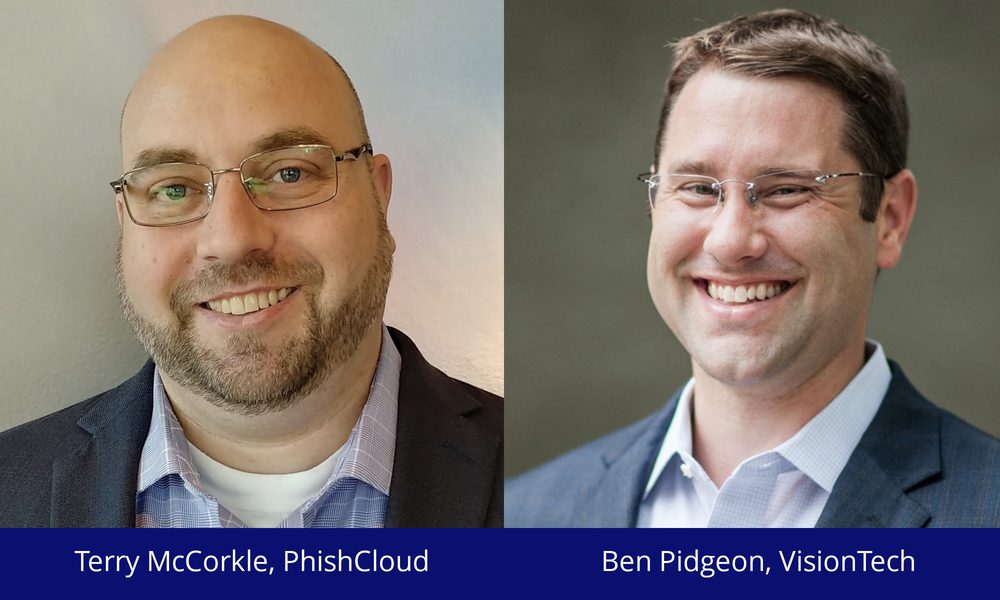
  • Meet April Pitch Week Presenter #1: Terry McCorkle, CEO of PhishCloud

    Meet April Pitch Week Presenter #1: Terry McCorkle, CEO of PhishCloud

    I had never met a professional computer hacker before Terry McCorkle, CEO and co-founder of PhishCloud, and a master hacker having done it for literally his entire career. We were introduced by Pat LaPointe of Frontier Angels, who thought we should take a look at Terry’s company as a possible investment opportunity for our angel network. During my initial conversation with Terry I learned that phishing was the top cybercrime in 2020 and 65% of American companies had been victims of phishing attacks last year. He says it’s only going to get worse as cyber criminals increase the sophistication of their phishing expeditions. The VisionTech Screening Committee and I were so intrigued, we invited Terry to pitch during our April Pitch Week. Here’s a sneak preview. I hope you’ll join us for Terry’s pitch.

    BP: How does one gets to be a certified hacker?
    TM: I’ve been in cybersecurity for 22 years now and when I started there was no school for hacking. The Internet was new so I started from scratch, learning on the job, which has been a big advantage for me. I got my start while in the Army and later with the Air National Guard, working first in radio and telephone systems, then computer networking, and finally into cyber security. While with the Air National Guard, I was part of the Information Warfare Squadron and traveled the globe doing penetration testing and red teaming, both elements of hacking. My role was to act as an attacker using phishing. I served for 15 years in the military in this role.

    BP: The first company you founded and exited was Spearpoint Security Service. What’s the story?
    TM: My partner Billy Rios and I founded Spearpoint in late 2010 with a research project that set out to determine just how vulnerable the industrial control systems (ICS) of major companies like Siemens, Rockwell and Honeywell were to cyber attacks. Our goal was to find 100 bugs in 100 days. We did it the right way, working through the U.S. Department of Homeland Security, By the end of the 100 days, we’d uncovered 665 bugs simply by accessing their systems on the Internet. We were amazed at just how easy it was. Many corporations had never conducted threat assessments and had no idea of the risks. We went on to work with these and other companies to fix their vulnerabilities.

    This was Billy’s and my first startup and we revolutionized the cybersecurity industry. Two years later, in early 2012, we sold Spear point to Cylance. Blackberry recently acquired Cylance for $1.6 billion.

    BP: What’s your PhishCloud elevator pitch?
    TM: I’m going to borrow from Wikipedia on what exactly phishing is: the fraudulent attempt to obtain sensitive information or data such as usernames, passwords, credit card numbers, or other sensitive details by impersonating oneself as a trustworthy entity in a digital communication. In the past, phishing was somewhat obvious if one was paying attention. However, the threat is growing as cybercriminals have gotten increasingly sophisticated, using artificial intelligence and analytics to drive their schemes in emails, social media sites, and literally everywhere people go on the web.

    PhishCloud is real-time phishing detection; a user-focused endpoint solution that can stop the threat in real time by showing users which links are safe, unsafe, or potentially risky before they click. PhishCloud runs on Windows and Apple OS X; supports Chrome, Firefox, Microsoft Edge and Outlook Desktop; social sites like Facebook, Twitter, LinkedIn, and Reddit; and instant messaging platforms. When companies deploy PhishCloud across their enterprise to employee users, not only can they reduce phishing attacks, but they can also respond quicker to attacks and reduce false reports.

    BP: What unmet need in the market are you filling?
    TM: The biggest gap is the lack of adequate IT security protection. Seventy-five percent of all organizations are targeted every year. Many are compromised and don’t even know it because the network protection is either not there or cybercriminals know their way around it.

    The other thing is every employee who works online is a point of risk. Traditionally, employers have used training to try to thwart phishing attacks that start with employees. But training just isn’t enough. Cybercriminals are attacking from everywhere and using encryption to fly under the radar. During the pandemic, with more employees working remotely, the threat has only gotten worse as people use their work laptops for shopping, socializing, and likely let their kids use them, too. A colleague at Aon Insurance told me the click rate on phishing sites is up 20% with employees working remotely. So the threat level to employees is at an all-time high. And, it’s not their fault. That TurboTax or Microsoft link looks safe so they click. If it’s a phishing attack and they click, you’re toast.

    The final gap in the market is most cybersecurity solutions are reactive, addressing issues after the damage is done. PhishCloud’s approach is entirely different. We live in the browser, below the encryption level, to proactively assess threats and alert users: a red message means stop, it’s malicious; a yellow message means to pause; and green means go. Employees are empowered to spot phishing attacks and avoid them.

    BP: Who are your competitors?

    TM: There are similar looking companies but their focus is the top 100 brands like Amazon. The big difference is they are reacting to threats and PhishCloud is proactively stopping them.

    BP: How big is the market?
    TM: The global cybersecurity market as a whole is predicted to reach just under $200 billion (US) by 2025. The market PhishCloud is focused on, the endpoint market, is currently $9.2 billion and predicted to grow to $15.4 billion by 2024.

    BP:  What kind of traction are you seeing?
    TM: We currently have 13 direct customers and eight managed service providers in the United States, Canada, and Japan that offer our solution to their customers. What’s really exciting for us is our relationship with a Japanese telecom company. They have used PhishCloud for a year and have recently decided to be a reseller. This is a significant opportunity as their country is not as advanced as the U.S. in their anti-phishing efforts.

    BP: What will this investment round be used for?
    TM: We’re raising $750,000 and the majority of this is for API (application programming interface) development with our partners. This includes API for Microsoft Team and Slack, communications platforms many medium to large companies have come to depend on over the last year. We will also direct some of the funds to marketing.

    BP: You’ve had one exit. What’s your strategy for Phish Cloud?

    TM: Our goal is definitely to be acquired. There are three potential categories of acquirers: a complementary IT security company, a phishing training company that wants a more robust offering, and finally, an integrator like the Japanese company we’re currently working with. But first, I want to have a million users.

    BP: Why should VisionTech investors back you?
    TM: Looking at VisionTech’s current investment portfolio, I think PhishCloud is a good fit. The second reason is a bit more altruistic. Phishing is a huge threat to governments, energy grids, companies of all sizes, and individuals. We need to enable and empower users to protect themselves from an increasingly sophisticated enemy that is relentless. This is not a scenario of lone hackers going after individuals. This is an all-out war against attacks by foreign governments and the dedicated “skim shops” that exist to takeover bank accounts. We need to subvert them. PhishCloud is a powerful solution. If you believe what we’re doing is important, invest in us.

    To learn more about PhishCloud, visit
    their website. VisionTech Angels’ April Pitch Events will be virtual on Tuesday, April 27 and Thursday, April 29 at 6 p.m. Pitch events are open to our members and accredited investors interested in joining our group. To register, check your email for an invitation, go to our Events page or email Ben Pidgeon at bpidgeon@visiontech-partners.com.

  • VisionTech Is 16 Tech’s Newest Resident

    VisionTech Is 16 Tech’s Newest Resident

    There’s no doubt that 16 Tech is THE address for those in the Indianapolis innovation ecosystem. 16 Tech is an urban innovation district being developed in the historic Riverside neighborhood and within the Indiana Avenue Cultural District on the northwestern edge of downtown Indianapolis. It’s where innovators and entrepreneurs in the fields of life sciences, technology, advanced manufacturing, and engineering are coming together to leverage their skill sets, draw inspiration from the region’s top-ranking research universities and global corporations, and channel their combined creative energy to plant the seeds for Central Indiana’s future economic growth.

    Given the energy at 16 Tech, it makes sense that VisionTech, which has one of the most active angel investing networks in the Midwest and an investment portfolio pushing 50 companies, should be in the center of things.

    As of March 31, VisionTech has a new home and address in 16 Tech at 1220 Waterway Boulevard, Suite H108, Indianapolis, IN 46202.

    While much of the last year has been virtual, we look forward to enjoying our new physical location in 16 Tech and collaborating with others with a passion for innovation, developing new tech, supporting entrepreneurs, and growing companies.

  • So You Want to Be a VisionTech Portfolio Company. Check These Insights from One of Our Own

    So You Want to Be a VisionTech Portfolio Company. Check These Insights from One of Our Own

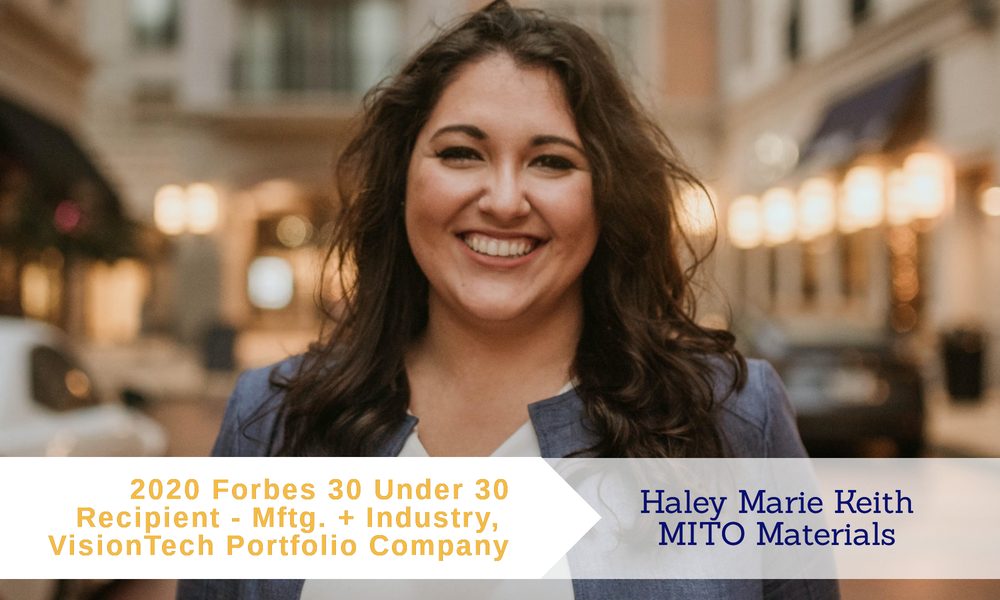
    Haley Marie Keith, CEO and co-founder of MITO Material Solutions, knew she and her co-founder Kevin Keith were on to something with their advanced hybrid polymer modifiers. But startups in manufacturing and materials science often face an uphill climb when looking for funding. You see, there are plenty of investors who understand apps and SaaS, but few who really understand more traditional hard tech.

    As with everything else in her life, Haley employed her own due diligence when looking for potential investors. When the the company relocated to Indianapolis in 2019, she started putting feelers out in the Indiana venture community. One name kept coming up in her conversations: VisionTech.

    I had heard good things about VisionTech as being one of the more active groups Indiana. I was impressed that Indiana had such a connected and well-organized angel group. I was also impressed with the fact that VisionTech had invested in hard science before and they weren’t afraid of it. That made me eager to pitch to the group.”

    Haley Marie Keith, CEO + Co-founder MITO Materials

    When she reached out to VisionTech Executive Director Ben Pidgeon, the two realized they’d already met at the Angel Capital Association meeting in 2017. After the re-introduction, Ben invited Haley Marie to present to VisionTech’s Screening Committee for a chance to present to the group’s 120-member strong angel investor network.

    A highly competitive selection process

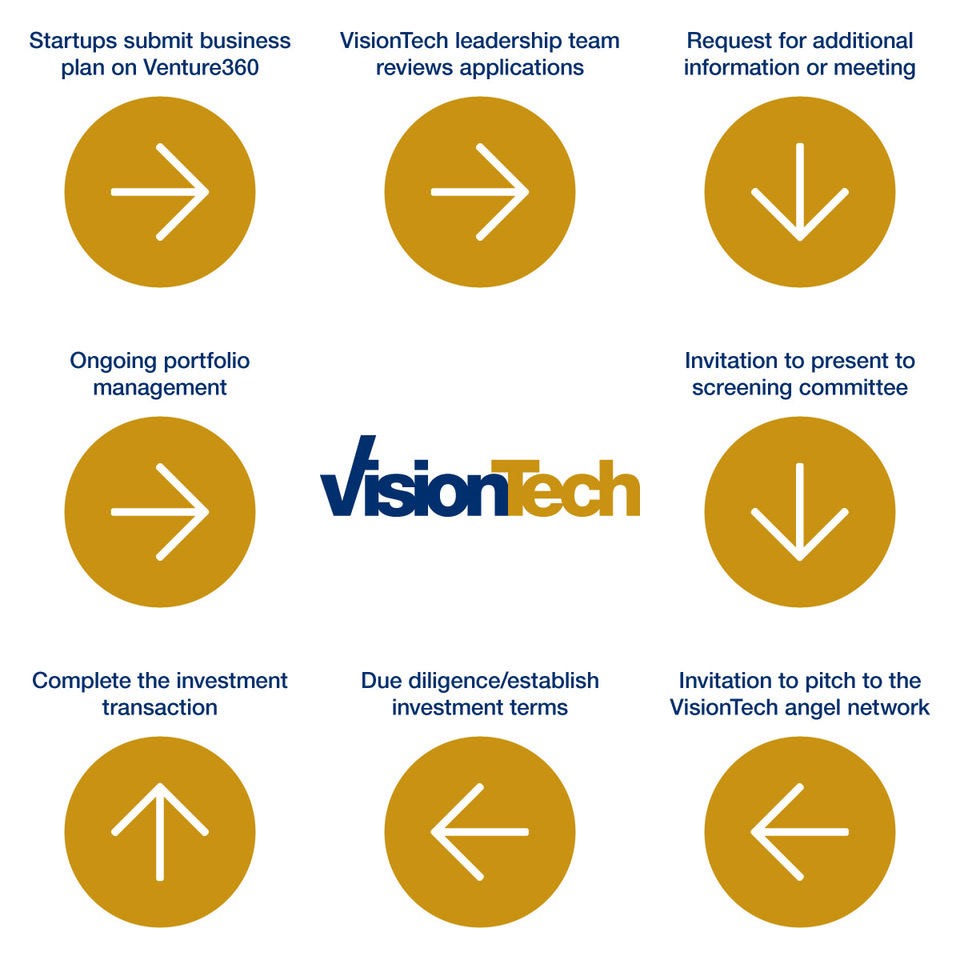
    And so began MITO Material’s journey through VisionTech’s rigorous road to becoming a portfolio company with one of the Midwest’s most active, hands-on angel investing groups. Each year, the VisionTech leadership team receives some 400 inquiries from startups looking for funding. Of these, 80 are invited to meet virtually with the Screening Committee composed of experienced businesspeople-members, which does a preliminary but thorough assessment of a company’s investment potential. Only 12 to 16 startups a year make it to the final round and an invitation to pitch to VisionTech Angels during the group’s bi-monthly investor events.

    Haley and MITO Materials made the cut; she was invited to pitch in April 2020. But instead of the group’s typical five-city, two-state barnstorm of live pitch events, Haley was one of the original “virtual” pitch presenters when VisionTech moved its investor events online when the global pandemic broke. That created a new level of pressure, but Haley received additional one-on-one coaching from Ben as a result.

    VisionTech Managing Director Tony Petrucciani says the group has honed its screening process over the last decade to emphasize quality over quantity. “We balance a rigorous process to meet two objectives. First, provide the best opportunities for our investors and second, provide feedback to founders seeking capital so they can put their best foot forward with our group and others that may follow. It’s mutually beneficial.”

    Fair, organized and thorough

    Haley describes her experience with VisionTech’s screening process as “incredibly fair and organized.”

    “It felt like a conversation with members of the group who A) had experience and interest in my technology and end markets and B) asked logical, thoughtful, and thought-provoking questions in a way that didn’t seem like they were seeking for their version of the ‘right’ answer,” Haley recalls. “This happened to me in other angel groups and it was exhausting. I also appreciated that VisionTech Angels were more apt to hop on a call if they had a question rather than ask me to make more materials to illustrate a point.”

    With VisionTech Angels, each investor makes their own decision on which deals to participate in and how much to invest. For this reason, members are encouraged to question startup CEOs during the pitch events and take part in due diligence of the companies that advance in the process.

    “The investment process is exciting because our investors really get to know founders after a level of investment interest has been determined. We have weekly meetings with the founders with the theme of ‘trust but verify’ which helps our investors identify the key risks—what needs to be believed—and the opportunities. It’s insightful for investors, but also for the entrepreneurs as they get to know our investors and their expertise.”

    Ben Pidgeon, Executive Director, VisionTech

    A mutually beneficial process

    Haley experienced this firsthand when the screening committee wanted a deeper dive into MITO Material’s customer pipeline. A VisionTech investor offered to speak with MITO Material’s head of business development. “They’re both from Brazil and had a great conversation in Portuguese about our pipeline, strategy, and how our team functioned under married founder leadership, which was an appropriate thing to investigate as an investor. I think in many ways that sealed the deal for me because it made my team feel like they were a part of the funding success and that our investors are invested in helping them succeed as well.”

    MITO Materials came through due diligence and negotiation of investment terms with flying colors; VisionTech Angels joined other investment groups in an oversubscribed $1 million seed round.

    It’s important to note that VisionTech’s process does not end with a check to the now portfolio company. The group and its collective experience across industries remains actively involved with its portfolio companies, providing as needed:

    • Referrals to other investor groups
    • Follow-on investments
    • Technology and business plan evaluation
    • Strategic planning
    • Marketing support
    • Financial controls and reporting
    • Interim executive management
    • Key management interviews
    • Critical vendor selection
    • Business continuity planning

    Haley is grateful for the relationship and access it affords to people who can help advance MITO Materials. “If there is ever something I think Ben can help me with, I don’t hesitate to ask. Ben is very supportive and approachable. I also pulled on some other VisionTech investors when I need connections  or help and they have always come through.”

    She adds, “It was definitely worth the effort to become a VisionTech portfolio company.”

    VisionTech invites startups in need of capital to visit our website for details on our screening and due diligence process. If you believe you are a good fit, we encourage you to submit your business plan for review. Also, take a look at our portfolio companies and our calendar of events for this year’s pitch events. We hope to hear from you.

  • Despite the Pandemic, VisionTech Angels Invest Over $3 Million, Return $4.3 Million in 2020

    Despite the Pandemic, VisionTech Angels Invest Over $3 Million, Return $4.3 Million in 2020

    INDIANAPOLIS, Indiana (February 17, 2021) – When the COVID-19 pandemic first struck in early 2020, VisionTech Executive Director Ben Pidgeon faced a tough choice: cancel VisionTech Angels’ bi-monthly pitch week events or replace them with a socially distant alternative. With less than three weeks until the next event, during which startup CEOs travel to five cities across Indiana and Ohio to present to VisionTech investors, Pidgeon moved the group’s pitch week events online for the remainder of the year.

    VisionTech’s first Zoom-enabled pitch week in April featured two startups, Indianapolis-based MITO Materials and Lexington, Kentucky-based Hippo Manager. Nearly 70 members of VisionTech’s angel investing network, the number normally attracted to its five live events, were in attendance. Ultimately, VisionTech Angel members invested $178,000 in Hippo Manager, a cloud-based SaaS solution for veterinary practices, and $157,500 in MITO Materials, maker of high-performance, advanced-material additives.

    Moving to virtual, livestreamed pitch events proved judicious and surprisingly fruitful. By the end of 2020, VisionTech Angels had chalked up more than $3 million in seed investments to 15 companies. Perhaps even more impressive, VisionTech Angels returned $4.3 million in capital to members who had invested in three portfolio companies that exited in 2020. Terms of these exits have not been disclosed.

    Since 2014, VisionTech Angels has had 10 portfolio companies exit and has delivered return on investment above the industry average. Eighty percent of the returns have earned greater than 1x MOIC (multiple on invested capital) versus the industry average of 50 percent returning 1x or less. VisionTech Angels members who invested the same dollar amount in all ten of the exited portfolio companies since 2014 would have enjoyed 21.9 percent IRR (internal rate of return).

    “Last year ended on a high note,” Pidgeon says. “We had no idea what would happen to our deal flow, if our investors would stay engaged, let alone write checks in the face of uncertainty. Our deal flow remained strong, our investors liked what they saw, continued to invest, and were rewarded with three positive exits in 2020 with returns that ranged from 1.8–5x MOIC.”

    He adds, “Angel investing takes a lot of patience on the part of investors. The initial investments on two of the exited companies were made in 2010 and 2016 respectively. Only one delivered a quick return; our initial investment in the third company was made in 2019. Regardless, we are quite happy to return capital to investors. Angel investing is filled with peaks and valleys and requires investors to build a diversified portfolio of privately held companies over many years to be successful.”

    Since its founding in 2009, VisionTech Angels has deployed $21 million in capital, investing in 46 companies from across the United States, making it one of the most active early stage investing groups in the Midwest. The group’s next pitch events are scheduled for February 23 and 25. Details here.

  • Meet February Pitch Week Presenting Company Akadeum

    Meet February Pitch Week Presenting Company Akadeum

    Akadeum is a life science company from Ann Arbor, Michigan, founded with the intention of fundamentally changing the way that isolating cells and other biological targets is approached. Their secret sauce for cell separation? Microbubbles. I met Akadeum CEO Brandon McNaughton through Paul D’Amato, one of their investors and a board observer. Paul leads the Michigan Venture Capital Network and thought VisionTech should take a look. Here’s a preview of our second February Pitch Week presenting company, Akadeum.

    BP: Let’s start with your elevator pitch, Brandon.
    BM: Sure thing. Without the critical step of separation—removing and isolating things like DNA, proteins, or cells from biological samples—many diagnostics and therapies would not be possible. Existing separation technologies have shortcomings that are directly addressed with our proprietary flotation-based technology. Our next generation solution solves major long-standing problems in research and human health through improvement in diagnostics, industrial and biopharma processing, and cell therapy. You can see a demo here.

    BP: What unmet need in the market are you filling?
    BM: The unmet market need is better, faster, and technically superior separation. Akadeum was formed to address the limitations of currently available separation, which have remained relatively unchanged over the last 40 years. Limitations to current processes include:

    Volume limited – preventing efficient large scale production

    Low throughput – limiting the number of samples that can be processed

    Cumbersome workflow – involving sample transfer and loss

    Technician skill dependent – leading to unpredictable results

    Labor intensive – requiring significant hands on time

    Costly capital: requiring magnets, columns and more complex equipment 

    BP: What are the advantages of Akadeum’s BACS Microbubbles?
    Our major microbubble technology advantage is that we go where other competing technologies cannot go. Advantages include scalability to large volumes such as applications in cell therapy, bioprocessing, and food/water testing. Scalability to large numbers of samples which is applicable to high density testing, digital droplet PCR, single cell sequencing. Our technology is easy to use, with minimal or no equipment.

    Our technology also enables yet-to-be-accessed market segments that have matured beyond the reach of existing technologies. Industry needs have evolved and system designs are moving toward higher fluidic volumes, higher density microtiter plates, easier workflows, and more gentle handling of samples. Unlike any other technology on the market, Akadeum addresses all of these areas with an elegant and cost-effective solution.

    BP: Who are your ideal customers? Researchers or clinicians?
    BM: The short answer is both. Anyone using separation tools and equipment as part of their daily problem-solving and workflow. Our customers include researchers in pharma, biotech and academia; and industry partners where we are working to co-develop and launch new products.

    BP: How big is the market?
    BM: Simply enormous. Because biological separation is essential in order to perform research, diagnostics, bioprocessing, and cell therapy, the market opportunity is large and growing quickly. The addressable market is well over $5 billion. Each application area alone would support a standalone business.

    BP: Who are your competitors?
    BM: Our competition is other companies using old technologies that allow for separation of nucleic acids, proteins and cells. There are a few ways of doing this, including use of magnetic particles, acoustics and microfluidics. A few companies using these technologies include Thermo, Miltenyi Biotec and Roche. The Akadeum technology provides for sustained competitive advantage due to the key enabling aspects and our patents of flotation-based separation. 

    BP: What kind of traction/interest are you seeing?
    BM: Several high impact applications have emerged from the use of our research kits. Examples include fast removal of red blood cells to shorten user protocols by hours, dead cell removal for single-cell sequencing and many other applications. We are building on this by deploying additional kits and applications for areas like nucleic acid extraction, single-cell sequencing and liquid biopsies. This has led to multiple industry collaborations with a robust pipeline of additional opportunities.

    BP: What will this investment round be used for?
    BM: We are focused on commercialization, device development and growth, which will include releasing about 10-20 new research use only kits, enabling additional application areas. In addition to building Akadeum-branded proprietary devices, we will also be securing more partnerships and moving them to commercial agreements. This approach drives the value of Akadeum’s unique flotation-based platform by achieving broad integration and adoption.

    BP: Why should VisionTech investors back you?
    BM: Several important reasons: we have an industry experienced management team that leads aggressively, a board with operating experience (three in life sciences including the executive chairman), a well-developed strategy, a capital efficient model, unique priority U.S.-developed technology, and the potential for multiple exit partners.

    To learn more about Akadeum, visit their website. VisionTech Angels’ February Pitch Events will be virtual on Tuesday, February 23 and Thursday, February 25 at 6 p.m. Pitch events are open to our members and accredited investors interested in joining our group. To register, check your email for an invitation, go to our Events page or email Ben Pidgeon at bpidgeon@visiontech-partners.com.

  • VisionTech Good News Community: Resonado Labs’ Flat Core Speaker Technology Debuts in RV Industry

    VisionTech Good News Community: Resonado Labs’ Flat Core Speaker Technology Debuts in RV Industry

    CHICAGO, Illinoise (February 2, 2021)Resonado Labs, a VisionTech portfolio company and audio technology startup out of the University of Notre Dame, today announced its proprietary Flat Core Speaker™ (FCS™) technology will first be available to consumers in the recreational vehicle (RV) industry. This novel technology will first be implemented in iconic travel brand Airstream Inc.’s 2022 Touring Coach model line. The launch will represent the first implementation of FCS technology into an established consumer product line.

    FCS technology is hitting the market at a time when everything is becoming sleeker, more efficient, and increasingly immersive. It’s challenging the ubiquity of the century-old conventional conical speaker type, whose form is recognized globally as the volume icon. FCS technology was engineered as a fully scalable sustainable alternative that packs a larger sound into a smaller space enabling unprecedented design innovation. The slim profile and flat diaphragm of the speaker’s architecture caters directly to the growing demand across industries for slim and space-efficient, yet high performance and immersive audio products.

    “Having started our company in South Bend, the first industry we really engaged with was the RV industry because of the physical proximity to Elkhart, which is known as the RV capital of the world” said Resonado Labs Co-Founder and CEO Brian Youngil Cho. “With RV as our beachhead market, we were able to gather unique insights that we’ve been able to apply to now active projects in both the automotive and home audio industries. And it’s a privilege to debut our technology in Airstream, one of the most iconic American brands in existence today”

    Resonado Labs designed custom speakers built with the company’s patented technology to seamlessly integrate into RVs. FCS technology’s slim yet powerful characteristics enabled a sound system with a beautiful, unobtrusive design that occupies minimal real estate, a key value proposition for an RV, a vehicle that doubles as a home with every essential amenity for travelers. The technology’s form factor also enables the speakers to be placed in previously impossible locations, ideal for a more immersive sound experience. Resonado Labs partnered with RiverPark, the leader in supplying consumer electronics to the RV, commercial vehicle, and adjacent OEM industries, for design assembly and distribution. Details of the Resonado Labs’ speaker system are slated to be unveiled later this year.

    “We’re excited to work with Resonado Labs on this launch, and sincerely believe that this will mark a significant milestone by signaling a change of design expectations at the intersection of the audio and RV industries” said Steve Bollero, President of RiverPark.

    About Resonado Labs
    Resonado Labs is an American technology company that designs and licenses proprietary speaker driver technologies to brands and manufacturers. The company’s core pursuit is to develop speaker driver architecture that achieves optimal form and function, without compromise. Resonado Labs’ flagship product, Flat Core Speaker™ (FCS™) technology, is the first manifestation of that pursuit. FCS technology is a novel electrodynamic speaker driver type engineered with a low depth structural profile and high diaphragm aspect ratio as an alternative to the conventional conical driver type to allow for innovative, space-efficient product designs without experiencing tradeoffs in sound performance. Developed to be completely scalable, FCS technology is an audio component solution that can be implemented in products ranging from consumer electronics, to vehicles, to architectural spaces. Resonado Labs was founded at the University of Notre Dame and is now headquartered in Chicago, Illinois. Visit www.resonado.com.

    About Riverpark
    RiverPark was founded in 1981 as a national distributor of mobile audio products to the U.S. Recreational Vehicle Industry. Through the years RiverPark has increased its offerings to include a full line of electronics while expanding into other diverse OEM markets. RiverPark has developed alliances with leading consumer electronics companies to develop OEM products designed for their specific markets. This focus has allowed us to understand the ever-changing needs of our customers. RiverPark distributes major brands including Bose, Connexx, Harman, JBL, Mobileye, Pioneer, Samsung, Sony and Xite Solutions. As a leading national electronics distributor our success is measured by our clients choosing RiverPark and our ability to exceed their expectations. Visit www.riverparkinc.com