Author: Ben Pidgeon

  • Meet August 29th Pitch Presenter GeniPhys CEO Andy Eibling: Empowering Tissue Generation

    Meet August 29th Pitch Presenter GeniPhys CEO Andy Eibling: Empowering Tissue Generation

    Have you seen Botched? It’s a reality show about two plastic surgeons who struggle to repair tissue after surgeries—fighting voids, failed grafts and poor blood flow. It’s TV drama but the problems are real. Every day, surgeons face chronic wounds, tissue loss from biopsies and Mohs procedures, and complex reconstructions after trauma or cancer. Current collagen products often fail—they trigger inflammation, break down too fast and don’t restore function. GeniPhys solves this with Collymer SAS, a polymerizable collagen scaffold that mimics natural tissue, revascularizes quickly and integrates without immune rejection. In June 2025, GeniPhys earned FDA 510(k) clearance for wound care, removing a key regulatory risk. A commercial distribution partnership is now in development for a mid-2026 launch.

    The market is huge, the technology is validated, and the timing is right. CEO Andy Eibling will present to the VisionTech Screening Committee Friday, August 29 at 12 noon. Enjoy the preview!
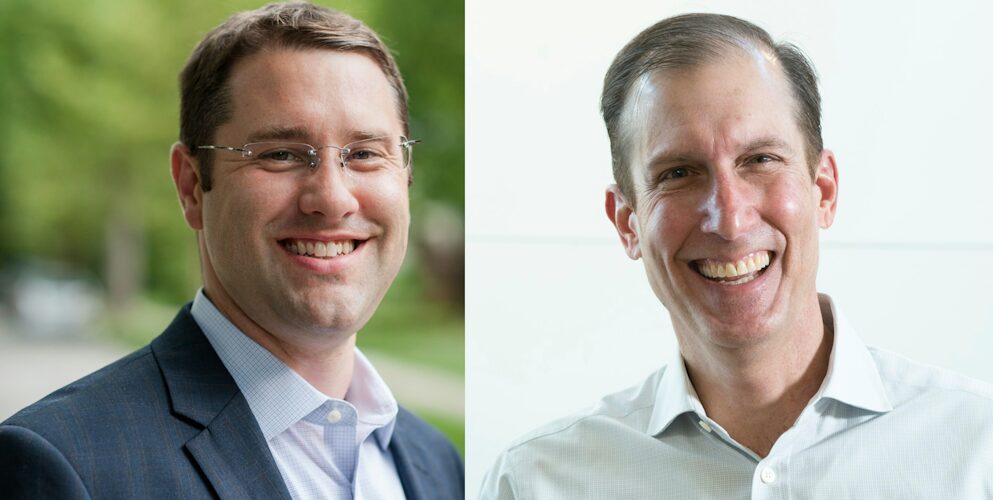
    L-R: Ben Pidgeon, VisionTech; Andy Eibling, GeniPhys

    BP: GeniPhys has a Purdue connection with founder Sherry Harbin. How did she get started with GeniPhys? What pain point did she see?
    AE:  Our founder and chief scientific officer, Sherry Harbin, is a professor of Biomedical Engineering and Basic Medical Sciences, at Purdue University. She has more than 30 years of experience in developing regenerative biomaterials. In fact, during her time at Purdue, Dr. Harbin helped develop a collagen-based product for wound healing that was eventually licensed to Cook Medical and others. 

    Early on, Dr. Harbin saw opportunities in human tissue regeneration. When human tissue is damaged due to injury, disease or surgical procedure like a biopsy, the healing response is initiated. Unfortunately, our bodies have limited capacity for tissue regeneration in part because of our cells’ inability to efficiently produce sufficient collagen. Without the key structural scaffold, scarring and fibrosis are common. She believed there had to be a better approach than the current decellularized tissue matrices technologies. So she set out to see if she could replicate the body’s ability to generate a functional collagen matrix. That work led to the founding of GeniPhys in 2004 and to our flagship product, Collymer SAS.

    BP: Let’s talk about Collymer SAS. What makes it a “first of its kind” polymerizable (scaffold-forming) collagen?
    AE:  Collymer SAS represents a polymerizable collagen protein that is free from cellular and other immunogenic components.  It capitalizes on the unique self-assembly and structural signaling properties of natural collagen produced in our bodies, recreating the structural and biological signaling features of human collagen. Our studies show that surrounding tissue cells recognize scaffolds and materials formed from Collymer, which allows the natural processes of cellularization, vascularization and innervation—the things needed for healthy, fully functioning tissue—to begin. The scaffold enables the restoration of soft tissue defects and voids in fat, muscle, skin, and breast tissue.

    BP: Why doesn’t the body reject it?
    AE: Collagen is the most abundant protein in mammals. It is also highly conserved, which means that across species, it is very similar.  Porcine collagen is over 95% similar to human collagen from an amino acid sequence standpoint.  So as long as the material doesn’t contain any other “contaminants” or immunologic components, the body recognizes it as collagen.  

    BP: What are the advantages of Collymer SAS?
    AE: There are three major advantages of  our patented Collymer-based materials.  Collymer molecules will aggregate into a collagen scaffold that is identical to the scaffold in the human body. Due to Collymer’s purity, it does not evoke a foreign body response and the associated inflammation that other materials will. As a biopolymer, we can engineer Collymer materials into products with different mechanical properties.  

    BP: Your pre-clinical results are impressive.
    AE:  We don’t make claims without verified performance.  To that end, Dr. Harbin has run more than 50 preclinical studies assessing different types of Collymer materials in different species and tissue types.  Her work has confirmed that Collymer provides the critical  “building block” for new tissue, and has evidence of soft tissue growth, skeletal muscle growth and bone growth. I often cite the lumpectomy study, as it not only meets a key need and is a focus for GeniPhys, but represents how effectively the material supports the regrowth of site-appropriate tissue.

    BP: What verticals are you targeting and how large are the markets?
    AE: Our beachhead market is wound care. There are more than eight million patients in the United States with hard-to-heal wounds. CMS alone spends $32 billion on wound care annually. The impact on patients is terrible because they endure repeat procedures because most wound care products don’t work. Our Collymer SAS promotes faster tissue healing and new tissue formation in a single application. We are shooting for a July 2026 launch. What’s exciting is this initial launch will generate revenue, but perhaps more important, drive a significant value inflection point.

    Looking ahead, we’re targeting submitting FDA submissions on two follow-on markets in 2027. The first is a soft tissue filler for restoration after tumor removal, traumatic injury and reconstructive surgery. Collymer SAS fills the void and promotes tissue growth and revascularization. This is a large market opportunity—more than $1 billion—and we’re a first-in-class product. The second is a dermal filler for the aesthetics. market, which is a massive self-pay market.

    GeniPhys has 3 key markets for Collygen SAS: wound care, soft tissue filler + dermal filler for aesthetics.

    BP: Where are you in terms of regulatory approval and commercialization?
    AE: We reached a major milestone is achieving 510(k) clearance for our initial product and indication, wound care, earlier this summer.  The wound care space is very challenging from a reimbursement and commercialization standpoint, so our strategy from the beginning is to partner with a firm that is already present in the space to leverage their capabilities and expertise. We have a draft term sheet from one potential partner, and a second potential partner has reached out to us.  Having a partner that can handle all the commercialization activities allows us to focus on the development of our next indications for Collymer SAS.

    BP: What kind of IP protection do you have?
    AE:  We have 18 approved and pending patents that protect composition of matter, methods of use, and process patents.  Our IP protects the various formats of our material, as well as many applications of Collymer.  We have solid protection through 2041 and continue to work to develop and prosecute new IP.

    BP: What response have you gotten from medical professionals?
    AE: Physicians across a variety of specializations are clamoring for the material.  Our current investor group includes a plastic surgeon, a general surgeon, and a podiatrist who specializes in reconstructive work. Our breast cancer surgeon collaborator is anxious to get into the clinic for the lumpectomy indication.  There’s been so little innovation in this space, and much over hyping, that when physicians see something truly novel that will give them a new tool to use with patients, they get very excited.

    BP: What kind of competition are you facing?
    AE:  Honestly, the strength of collagen in general is part of our greatest challenge. What I mean by that is that we constantly have to re-educate people and show them the data, so they understand that Collymer SAS is not just another collagen product. This is why getting to human data will be so beneficial for us.

    BP: What round is this and what is your planned use of funds?
    AE: This is our second priced funding rounds and we’re targeting $7.5 million. This will support all remaining launch-related activities for wound care. The largest part of this is the process validation work that our fill/finish CMO has to execute. We’ve run the company very leanly to this point, with only five full-time employees. We’ll have to expand that to be a successful commercial stage company, so our headcount will grow.  

    BP: Give me three reasons why VisionTech investors should write checks to GeniPhys?
    AE:  Sure! First, given the derisking on the regulatory and commercial side, our path to revenue and exit is very enticing to investors.  And we’ve got the right team of employees, consultants, and partners to do it.  Second, this technology has such great versatility and breadth that the company’s valuation will grow quickly and significantly once we get to our first market.  Finally, this is an impact investment.  These patients have huge needs, and our Collymer technology has the ability to improve millions of lives.  As my wife is fond of saying, we will be long gone before the full impact of Collymer is achieved.  

    Don’t miss the first ever VisionTech’s Virtual Pitch Event on Friday, August 29 starting at 12 noon. You will be treated to pitches by GeniPhys CEO Andy Eibling and a second presenter TBD. Expect great investment opportunities and lively, open discussion post pitch. Advance registration is required, Here’s the link.

    VisionTech pitch events are open to member-investors. Guest participants are welcome with advance approval from VisionTech Executive Director Ben Pidgeon. Email him here.

  • Meet VisionTech Member-Guest Pitch Event Presenter #2: Nexosome Oncology

    Meet VisionTech Member-Guest Pitch Event Presenter #2: Nexosome Oncology

    Join VisionTech at a very special event: our first ever Member-Guest Live Pitch Event on Tuesday, August 5. Co-hosted by longtime sponsor KSM CPAs + Advisors, the event includes networking and drinks, catered dinner from City Barbecue, and pitches by two portfolio companies, Ateios Systems and Nexosome Oncology, looking for funding to fuel their commercial breakthroughs. 

    This event is about more than just deal flow. It’s about engaging with bold founders, exchanging ideas, and having fun along the way. VisionTech members are encouraged to bring a guest who’s curious about angel investing and VisionTech—a friend, colleague, or future co-investor. We’ll cover their dinner and drinks. 

    Meet Pitch Presenter #2: Nexosome Oncology:

    Todd Hembrough, CEO
    LinkedIn Bio

    Headquarters
    Durham, NC

    Industry
    Life Sciences/Cancer Diagnostics

    Website
    Link

    Joined VisionTech Portfolio 
    2021

    Fueling Hope with Greatly Improved Early-Stage Cancer Diagnostics
    The earlier a person’s cancer is diagnosed, the better the chances are for long-term survival. For example, if breast cancer is diagnosed during stage 1 or 2, the survival rate is 100%. If breast cancer is diagnosed in stage 3 or 4, the five-year survival rate drops to 30% . Likewise, when colon cancer is diagnosed in stage 1 or 2, the survival rate is 91%. That drops to 18% when diagnosed in stage 3 or 4. 

    Nexosome Oncology is transforming early-stage cancer diagnostics with novel plasma proteomics. Current diagnostic tools have sensitivity rates that range from 3% to 57% for stage 1 cancer. Nexosome Oncology’s sensitivity and specificity rates for stage 1 cancer is greater than 95%.

    Technology
    Nexosome Oncology’s EV-based proteomics platform enables a complete system-wide view of a cancer’s patient’s biomarkers. The platform looks at three things: 

    • Tumor-cell specific biomarkers that have a small signal.
    • Tumor microenvironment specific biomarkers that have a modest signal.
    • Immune response and metabolic changes that have a large signal.

    When all of this data is analyzed together, early-stage cancer is nearly 100% detectable, increasing the possibility of successful treatment.

    Nexosome Oncology’s technology encompasses a proprietary EV isolation and liquid biopsy, accelerated proteomic biomarker discovery enabled by machine learning, and fast clinical translation into assays attractive to strategic partners for income-generating pilot studies, clinical studies, licensing and sales.

    Here Are the Benefits
    Ultimately, the most important benefit is creating the opportunity for people to have an earlier diagnosis of life-threatening cancer and greater chances of an extended life.

    Commercially, numerous pharmaceutical and diagnostics companies can benefit from using Nexosome Oncology’s platform that looks at all biomarkers rather than just cancer cells to detect the presence of cancer. This has the potential to make current and future cancer detection tools more effective at diagnosing cancer in its earliest, most treatable stages.

    About this Round
    This is Nexosome Oncology’s Seed Plus Round. The company seeks to raise $2 million on a pre-money valuation of $24 million. They are open to oversubscribing up to $3 million. All VisionTech investors are welcome to participate in this round.

    Use of Funds
    Nexosome Oncology will use funds from the raise to continue R&D, increasing its IP protection with plans to file for up to six new patents, hire additional staff, and general operations. Additionally, the company has set these goals for 2025-2026:

    • Add four new strategic partners
    • Achieve strategic sponsored clinical program of $1-3 million 
    • Secure four to six licensures with royalties over two years
    • Generate $2.6 million in profit from these collaborations
    • Exit by licensure/acquisition

    What Makes this an Attractive Opportunity
    The need for earlier diagnostics of cancer is significant. Nexosome Oncology’s technology is a game-changer that can be licensed or acquired by multiple pharmaceutical and diagnostics companies to improve current solutions or develop new approaches. Through paid strategic partnerships, Nexosome Oncology is de-risking the technology, generating come, opening the door to a potential exit, and creating the opportunity for far better cancer diagnostics.

    (Close)

    Don’t miss the first ever VisionTech Member-Guest Pitch Event on Tuesday, August 5 starting at 5:30 pm at KSM headquarters at 800 East 96th Street, Suite 500 in Indianapolis. The event is all about networking, great food and drinks, and two incredible investment opportunities. FREE to members and guests. Please RSVP no later than Friday, August 1 so we have plenty of ribs, brisket, and sides for everyone. Here’s the link.

  • Meet VisionTech Member-Guest Pitch Event Presenter #1: Ateios Systems

    Meet VisionTech Member-Guest Pitch Event Presenter #1: Ateios Systems

    Join VisionTech at a very special live event: Our first ever Member-Guest Live Pitch Event on Tuesday, August 5. Co-hosted by longtime sponsor KSM CPAs + Advisors, the event includes networking and drinks, catered dinner from City Barbecue, and pitches by two portfolio companies, Ateios Systems and Nexosome Oncology, looking for funding to fuel their commercial breakthroughs. 

    This event is about more than just deal flow. It’s about engaging with bold founders, exchanging ideas, and having fun along the way. VisionTech members are encouraged to bring a guest who’s curious about angel investing and VisionTech—a friend, colleague, or future co-investor. We’ll cover their dinner and drinks. 

    Meet Pitch Presenter #1: Ateios Systems

    CEO + Founder: Rajan Kumar
    LinkedIn Bio

    Headquarters: Indianapolis

    Industry: Next Gen Battery Manufacturing + Electrodes

    Website: Link

    Joined VisionTech Portfolio: 2020

    VisionTech Funding to Date
    $320,000 over 2 rounds, involving 23 investors

    What’s Special About Ateios
    Traditional battery manufacturing methods are energy intensive and require toxic solvents and polymers classified as PFAS (forever chemicals). Regulations on PFAS levels and outright bans are growing in the European Union and across the United States. With its groundbreaking Raicure™ technology, Ateios solves the limitations of traditional thermal curing, unlocking a new era of efficiency, sustainability, and performance in battery manufacturing. It is the first company to offer PFAS-free battery electrodes.

    Technologies
    RaiCure™ – platform manufacturing technology that tackles the limitations of traditional thermal curing
    RaiCore™ – solvent-free, PFAS-free, battery electrodes 

    Competitive Advantages
    The company’s high throughput production of power dense, high energy, chemistry-agnostic batteries results in:

    • 82% reduction in energy consumption 
    • 20% cost reduction by eliminating solvents 
    • 50% increased energy density
    • 2X yield quality
    • PFAS free with zero environmental impact

    Commercial Applications
    Batteries have unlimited applications: consumer electronics, computers, lighting, tools, tools, vehicles and wearables. Ateios is currently supplying electrodes for battery packs, laptops and wearables. And this is just the beginning.

    About this Round
    This is Ateios’ Series A Round. The company seeks to raise $7.5 million in new capital plus $1.45 million in note conversions. The pre-money valuation is $20.5 million. Titletown Tech, a venture capital firm formed out of a partnership between the Green Bay Packers and Microsoft, is leading the round with a $2 million commitment. VisionTech is targeting a $250,000 investment from our investors. Those who have participated in past rounds with Ateios and new investors are welcome.  

    Of note, last April Ateios was one of two winners of Titletown Tech’s inaugural Startup Draft Pitch Competition. The win included a $1 million investment from Titletown Tech and $350,000 in credits from Microsoft Azure for cloud computing.

    Use of Funds
    With significant orders secured and more in the pipeline, Ateios needs to ramp up manufacturing to scale their breakthrough RaiCore™ battery manufacturing platform to meet growing demand.

    What Makes this an Attractive Opportunity
    Life is dependent on battery power. However, traditional battery manufacturing is slow, costly, and generates PFAS, “forever chemicals” that are harmful to the environment. Ateios’ patented manufacturing process offers fast, more affordable electrode production for any application and zero environmental impact. Both Microsoft and the U.S. Department of Defense have written POs for Ateios’ electrodes. Need we say more?

    Timing of Round Closing
    Ateios’ commercial traction is picking up steam having just signed  deals with Microsoft and the U.S. Department of Defense plus others in the works. Kumar would like to close the round in September. With interest high, VisionTech needs to move quickly or risk being shut out of the round.

    (Close)

    Don’t miss the first ever VisionTech Member-Guest Pitch Event on Tuesday, August 5 starting at 5:30 pm at KSM headquarters at 800 East 96th Street, Suite 500 in Indianapolis. The event is all about networking, great food and drinks, and two incredible investment opportunities. FREE to members and guests. Please RSVP no later than Friday, August 1 so we have plenty of ribs, brisket and sides for everyone. Here’s the link.

  • VisionTech Invests $1 Million-plus in Early-Growth Startups in First Four Months of 2025 

    VisionTech Invests $1 Million-plus in Early-Growth Startups in First Four Months of 2025 

    INDIANAPOLIS, Indiana (May 28, 2025) – – Despite recent gyrations in the U.S. economy, VisionTech and its network of 120-plus angel investors continue to back entrepreneurs whose technology has the potential to disrupt and transform entire market categories. In the first four months of 2025 alone, VisionTech has invested $1,003,600 million in eight deals, with participation from 65 investors.

    Three of VisionTech’s early 2025 deals are new investments made in companies with deep Indiana connections:

    • HAPPE Spine is commercializing the INTEGRATE-C interbody fusion cage that supports faster bone growth thanks to proprietary materials and manufacturing processes. Founder, CEO, and inventor Ryan Roeder earned his undergraduate, graduate and PhD degrees from Purdue University; completed a fellowship at the Indiana University School of Medicine; and is now a Notre Dame University research professor. HAPPE’s platform technology can be applied to a range of other implanted medical devices. VisionTech investors wrote checks totaling $274,850 to HAPPE.
    • Oro Muscles is revolutionizing rehabilitation with AI-powered real-time, actionable insights into muscle activity with live biofeedback and instant analysis. Already, more than 50 percent of Major League Baseball teams, Major League Soccer, and other elite professional and collegiate teams are using Oro Muscles’ technology. The company was co-founded by Rose Hulman Institute alumni Tanya Colonna and Hobey Tam. VisionTech investors chipped in $191,250 to Oro Muscles.
    • SinuSauna has developed a respiratory wellness product that employs dry heat rather than messy liquids to keep nasal passages clear. Two of SinuSauna’s co-founders, Drs. Jack Townsend and Matthew Zielenski, are graduates of the Indiana University School of Medicine. The company was launched out of Indianapolis’ Boomerang Ventures. VisionTech investors contributed  $146,500 to SinuSauna.

    VisionTech’s five remaining investments were follow-on rounds in current VisionTech portfolio companies totaling $391,000. They include:

    VisionTech Executive Director Ben Pidgeon says he’s not surprised by the level of his group’s investments so early in 2025. “Our deal flow continues to offer high potential opportunities to invest in promising early growth companies. Our investors have a passion for startups and appreciate being involved in early-stage companies that are on the cutting edge of innovation. They are not just writing checks; they interact with the founders and CEOs, drive our due diligence process, provide mentoring, and participate on our portfolio companies’ boards. Our investors enjoy making an impact with our portfolio companies.”

    Angel investing is a class investing where accredited individual investors and groups provide capital to startup companies, typically in early stages of commercialization, in exchange for convertible debt or ownership equity. The VisionTech model of angel investing provides structure and autonomy. 

    “We have proven processes for screening, due diligence and portfolio management; the best practices of the Angel Capital Association; and national and state connections critical for quality deal flow. Along with that, each member drives their own destiny. They decide what deals to invest in and how much as well as how involved they want to be with our portfolio companies,” Pidgeon says.

    “Our members have their fingers on the pulse of some of the hottest, most innovative technology around. It’s fun!” he adds.

    VisionTech is not resting on this early success. Two exciting companies in the life sciences and pharmaceutical space pitch the group in May, with another pitch set for June 2 with another disruptive pharmaceutical investment opportunity.

    About VisionTech 
    Founded in 2009, VisionTech is a privately held company that links investors to high-potential, early-growth companies. Based in Indianapolis, VisionTech’s angel investing network includes more than 120 active members across Indiana and Ohio. As of April 30, 2025, the group has deployed more than $32.6 million in capital, investing in 72 portfolio companies from Indiana and across the United States. VisionTech is a member of the Angel Capital Association. Membership is open to accredited investors. Those interested in joining are encouraged to contact VisionTech. For media relations, contact Melanie Lux.

  • No Pain, Tremendous Gain: Meet June 2nd Pitch Presenter Hernan Bazan, South Rampart Pharma

    No Pain, Tremendous Gain: Meet June 2nd Pitch Presenter Hernan Bazan, South Rampart Pharma

    I was introduced to Dr. Hernan Bazan, CEO and Co-founder of South Rampart Pharma, by Mike Eckert of Gulf South Angels. His group is participating in South Rampart’s Series A round, and suggested VisionTech take a look at it. South Rampart is developing non-addictive, non-opioid pain killers and has a lead drug candidate set to begin a Phase 2 randomized clinical trial for acute pain. The company is novel in that it pays no full-time salaries, relying on hourly wages instead. Even the  Wall Street Journal was intrigued by South Rampart’s no-frills approach to funding its drug development. Read the story here. The market is huge and South Rampart is well positioned. So the VisionTech Screening Committee invited Dr. Bazan to pitch Monday, June 2nd at 12 noon. Here’s my preview:

    L to R: Ben Pidgeon, VisionTech and Dr. Hernan Bazan, South Rampart Pharma

    BP: How did you go from Vascular Surgeon to Entrepreneur?
    HB: As a vascular surgeon, I consistently encounter the adverse impacts of inadequate pain medicine options and opioid dependency in my clinical practice. I spent two years during medical school at the NIH as a Howard Hughes fellow and saw a lot of innovation and how it can quickly impact patients.  I transitioned into entrepreneurship to address this significant healthcare challenge directly. Using my clinical expertise and research background, I co-founded South Rampart Pharma to develop novel non-opioids, including our lead clinical candidate SRP-001. I secured substantial NIH support and was humbled to receive the 2024 NIH Director’s Helping to End Addiction Long-Term (HEAL) Trailblazer Award.

    My involvement in South Rampart Pharma extends leading our strong team alongside our CFO Josh Blacher. In addition, I’ve led the pivotal research, authoring peer-reviewed publications in prominent journals such as the European Journal of Medicinal Chemistry (2020) and Nature Portfolio’s Scientific Reports (2024), and guiding SRP-001’s clinical and business strategy towards addressing critical unmet needs in pain, a market that will grow to more than $80B by 2030 with a CAGR 4.2%.

    BP: Do you have a personal motivation for addressing this issue and market need?
    HB: My motivation to address this market opportunity is driven by the substantial societal and economic impacts of the opioid crisis and large unmet need in the pain space. Witnessing the profound challenges that opioid dependency presents to healthcare systems and communities reinforced my commitment to develop SRP-001 as an innovative, market-disruptive solution. By advancing SRP-001, we aim to deliver a clinically superior and economically viable alternative to opioids and currently available pain medicines, thereby addressing both critical healthcare needs and significant market demand.

    BP: Let’s touch on the pain points of addiction and also gastrointestinal issues caused by other pain relief medicines.
    HB: Existing pain medications present significant limitations. Opioids carry substantial risks of abuse and addiction, imposing considerable healthcare and economic burdens. NSAIDs, such as ibuprofen (Advil®), frequently lead to gastrointestinal bleeding and kidney injury, while acetaminophen (Tylenol®) can cause liver toxicity with prolonged or excessive use. SRP-001, operating centrally in the brain with rapid pharmacokinetic uptake, differentiates itself clearly from peripheral-acting drugs like Vertex Pharmaceuticals’ recently approved sodium channel inhibitor. By effectively addressing these issues without the risks of addiction, gastrointestinal complications, kidney or liver toxicity, SRP-001 emerges as a compelling therapeutic candidate in the pain market.

    BP: Do you have the FDA’s Fast Track designation?
    HB: Yes, SRP-001 received the FDA’s Fast Track designation for acute pain, granted based on our successful Phase 1 clinical trial results and its distinct mechanism of action within the central nervous system. This designation highlights the FDA’s recognition of the significant unmet medical need in pain management and underscores SRP-001’s substantial therapeutic potential.

    BP: How is your drug’s formulation different from opioids and over-the-counter pain medications?
    HB: SRP-001 differs significantly from opioids and traditional over-the-counter (OTC) pain medications through its distinct molecular mechanisms. Unlike opioids, which bind opioid receptors and carry a significant risk of addiction and respiratory depression, SRP-001 modulates pain via both central and peripheral pathways without engaging opioid pathways. Additionally, common OTC analgesics such as NSAIDs and acetaminophen often cause gastrointestinal irritation, liver toxicity, and other adverse effects. In contrast, SRP-001 has demonstrated analgesic efficacy without these gastrointestinal or hepatic risks, attributed to its innovative mechanism targeting the AM404 production in the pain sensing area of the midbrain, the periaqueductal grey region, and ultimately the TRPA1 receptor, which mediates nociceptive (pain) signaling, thereby offering an effective and safer therapeutic profile

    BP: What are your competitive advantages?
    HB: These are our key competitive advantages:

    • Proven Leadership: A clinical and management team with deep and proven expertise in efficiently navigating clinical development and successful commercialization of novel therapies.
    • Distinct Mechanism of Action: SRP-001 has a differentiated, non-opioid, non-NSAID therapeutic mechanism that addresses substantial unmet medical needs without the typical risks associated with existing pain treatments.
    • Strong Intellectual Property: Global intellectual property protection, featuring strong composition-of-matter patents secured in all major markets including the U.S., EU, Asia-Pacific, and additional key international regions, extending exclusivity through 2038. IP protection through to 2044 is under review.
    • Accelerated Regulatory Pathway: U.S. FDA Fast Track designation, providing an accelerated regulatory pathway that enhances speed-to-market potential.

    BP: Do you have competitors developing similar solutions?
    HB: Several companies are actively developing non-opioid pain therapeutics, creating a robust competitive environment that continues to attract substantial pharmaceutical and strategic investor interest. Vertex Pharmaceuticals’ approval of its peripheral sodium channel inhibitor notably drove significant market value appreciation, including an immediate market cap increase of approximately $6.5 billion  the day after approval, and a subsequent $14.4 billion increase within a week. This strong market response underscores investor confidence  in the substantial commercial potential and strategic value of innovative non-opioid pain therapies.

    For SRP-001, Vertex’s market performance clearly validates the attractive business opportunity for differentiated pain therapeutics and strongly indicates that a drug candidate like SRP-001—distinguished by its unique central mechanism, superior safety and efficacy profiles, and robust intellectual property—holds substantial commercial promise and strategic appeal within the expansive pain management market.

    BP: Where are you in your clinical trials?
    HB: We have successfully completed Phase 1 clinical trials, demonstrating SRP-001’s strong safety, tolerability, and robust pharmacokinetic profile. The detailed Phase 2 trial protocol is finalized, clinical trial material manufacturing is nearing completion, and we anticipate initiating the Phase 2 randomized clinical trial for acute pain by the end of the second quarter 2025, marking a critical milestone in our path toward commercialization.

    BP: What is your path to commercialization?
    HB: Our commercialization strategy is structured to maximize investor value and accelerate market entry. Following the completion of our Phase 2 randomized clinical trial, we are actively engaging with the market in collaboration with Outcome Capital, a leading investment banking firm based in Boston, to secure strategic pharmaceutical partnerships or licensing agreements. These alliances will leverage established commercial capabilities and extensive market reach. With a strategic partner, we will then advance SRP-001 through pivotal Phase 3 clinical trials toward FDA approval, out-license certain pipelines for SRP-001—acute and chronic pain, neuropathic pain, intravenous formulation acute post-operative pain—or consider M&A. This approach ensures efficient capital utilization, rapid progression toward key milestones, and strong market penetration upon commercialization.

    BP: What IP protection do you have?
    HB: Our intellectual property estate features extensive and robust global protection for SRP-001. We hold issued composition-of-matter patents in key commercial regions, including the U.S., Canada, European Union, Japan, China, India, Australia, South Korea, Brazil, Mexico, and Russia. Our core composition-of-matter patent extends protection through at least 2038, with an additional pending patent application covering our novel nanoparticle formulation that, upon issuance, will further extend exclusivity through 2044. This comprehensive IP strategy ensures market exclusivity and maximizes commercial value for SRP-001 globally.

    BP: What round is this? What is your planned use of funds?
    HB: This is our Series A round seeking $8M to fund the Phase 2 randomized clinical trial for acute pain, including manufacturing, regulatory submissions, clinical operations, and preparation for continued commercialization of SRP-001. The round is being led by Ochsner Ventures. Thus far we have raised more than $3.05M. Proceeds from this funding will primarily support our Phase 2 randomized clinical trial for acute pain and enables us to accelerate SRP-001’s progression toward commercialization, addressing the critical unmet need for safer, non-addictive pain treatments.

    BP: Why should VisionTech investors invest in South Rampart?
    HB: First, there is a significant market opportunity SRP-001 uniquely addresses the large, growing, and underserved market need for safe, non-opioid pain relief, a market valued at over $80B globally. Second, SRP-001 benefits from FDA Fast Track designation, accelerating regulatory pathways, and comprehensive global IP protection, ensuring robust market exclusivity and strategic advantage. Finally, the company’s proven leadership team possesses deep expertise in clinical development, commercialization, and strategic partnering, significantly reducing execution risk and enhancing potential returns.

    VisionTech’s Virtual Pitch Event featuring South Rampart Pharma CEO Hernan Bazan, MD, on Monday, June 2nd begins promptly at 12 noon ET. We will have a full hour for Dr. Bazan’s pitch and questions from participants. VisionTech virtual pitch events are open to our member-investors. Guests interested in joining our group are welcome to attend our June 2nd  virtual pitch with advance approval. Please register here.

  • Skin in the Game: Meet May 19th Pitch Presenter Neal Koller of Alphyn Biologics

    Skin in the Game: Meet May 19th Pitch Presenter Neal Koller of Alphyn Biologics

    I met Neal, CEO of Alphyn Biologics, about four years ago when the company was very young. A few months ago, I got a call from Scott Jacobs at Queen City Angels suggesting we get in on a hot Series B round. The company? Alphyn Biologics. Intrigued, I reconnected with Neal, who brought me up to speed on their lead product, Zabalafin, plant-based topical treatment for atopic dermatitis, also known as eczema, that is challenging to treat and common in both children and adults. A former executive at Wyeth, Neal has multiple exits under his belt; he’s not a shy person and shared Alphyn’s plans for a quick exit. The VisionTech Screening Committee agreed the opportunity was compelling and extended an invitation to Neal to pitch on Monday, May 19 at 12 noon. I’m pleased Neal agreed. Here’s my preview.

    Ben Pidgeon, VisionTech + Neal Koller, Alphyn Biologics

    BP: We’re excited to bring the opportunity with Alphyn Biologics to VisionTech investors. It’s not often angel groups are involved in Series B rounds.
    NK: We are moving quickly in our efforts to complete our Phase 2b clinical trial of Zabalafin and prepare for a liquidity event at the same time. We’ve made it a point to prioritize angel investing groups and high-net-worth investors. This deal is a great fit for angels. We’re thrilled to have Queen City Angels as our lead investor at $7 million and hope VisionTech will join us. We’re hitting key milestones and believe we can deliver a highly favorable exit outcome to our angels.

    BP: Is there a story behind the wolf dragon logo? It reminds me of a medieval coat of arms.
    NK: The main ingredient in our product is a defense liquid from trees which is colloquially called “dragon’s blood.” Our Chief Scientific Officer Gary Pekoe loves Germanic folklore and imagery. The wolf dragon logo combines two unique storylines into a memorable brand.

    BP: You have four co-founders with a number of blockbuster drugs under your belts as well as extremely high multiple exits. 
    NK: There’s great value in relationships and experience. During my career at Wyeth, I was involved in acquisitions, divestitures, and product launches before serving as CEO for multiple life science businesses with exits as high as 50x. In 2000, I met Gary Pekoe whose successful background is in R&D, clinical trials and regulatory affairs. His successes include drugs like Bactroban® and Keytruda® as well as spearheading FDA fast-approval programs. Alphyn is the fourth company in which we’ve worked together. Gary found the raw material that becomes Alphyn’s drug years ago when he ran his own contract research organization where he was engaged by early-stage life science companies as their contract VP Regulatory, VP Clinical Trials and or VP R&D. 

    Our president, Steven Pentelnik, spent 35 years with P&G where one of his responsibilities was for its $1 billion early-stage tech portfolio. He now has three startups under his belt. Jasmine Mink, manager of regulatory affairs, has worked with Gary for ten years developing Zabalafin. In 2019, we all came together and formed Alphyn Biologics. 

    BP: Why did you choose Atopic Dermatitis as your beachhead?
    NK: This is an interesting story. When we first started Alphyn, we realized we had an unbelievable good antibiotic. So we talked with the FDA about going this route. They steered us to a skin disease called impetigo. We found an expert at the University of Miami and invited him to come on as a scientific advisor. He looked at what we had and said it was the perfect solution for atopic dermatitis. It was a much bigger market opportunity, which would make it easier to raise money. Focusing on atopic dermatitis, we are able to use our excellent data for bacteria plus our drug’s mechanisms of action for the other two key problems of atopic dermatitis, itch and inflammation, and here we are.

    BP: What pain points are you solving? Why are current treatments falling short? 
    NK: Atopic dermatitis is the world’s biggest dermatology problem. It has traditionally been thought to be caused by inflammation.  More recently bacteria have been shown to drive the disease and make it worse. In a few recently published papers, bacteria have been suggested as one of the causes of the disease. The most debilitating patient problem of atopic dermatitis is  itching like a sonofagun. Current treatments, namely the old standard steroids and calcineurin inhibitors and the new injectables and orals, are not effective for every patient. Only 30-60% may see improvement. They also largely target inflammation only, while we treat the itch, inflammation and bacterial components including the difficult to treat atopic dermatitis disease stage of infection. Also, many current treatments come with serious side effects that require an FDA box warning. This is the strongest warning required by the FSA because of a significant risk of preventable, serious or even life-threatening adverse effects.

    Zabalafin is a natural plant-based topical therapeutic, with a strong safety profile, great patient tolerability, and thus far demonstrated in our clinical trials. It’s a great option for children who have a high incidence of atopic dermatitis. Our product is a topical so it’s much less stressful and agreeable to kids than injections. Present these positives to physicians—safe, effective, natural drug, topical— and they are open to prescribing and tell us many of their patients will prefer it.

    BP: Your API (active pharmaceutical ingredient) is unique. Can we touch on that?
    NK: Sure! It is one of the defense mechanisms of a tree, a liquid, which the locals call dDragon’s blood . It’s loaded with bioactive compounds. This is our unique key advantage. This liquid becomes our API,  the key ingredient in our drug products.

    BP: Where are you in commercialization?
    NK: We completed our Phase 2a clinical trials in 2023, with good results. We’re now in the middle of Phase 2b trials and expect to complete them by first quarter 2026. The next step would be Phase 3 trials, after which we’d submit results to the FDA in an NDA in 2028 requesting FDA approval to market. However, we’ve built global pharmaceutical companies in the past and don’t want to do that anymore. Our focus is developing effective drugs for placement with corporate partners. Our plan is to pursue a liquidity event at the completion of our Phase 2b trials. We have several pharma companies watching closely.

    BP: You’re very bullish on having a liquidity event within 18-24 months and at a multiple of 20-25x. What are you basing this on?
    NK: Pharma is actively seeking and acquiring atopic dermatitis drug candidates. Examples in the last four years, Amgen, Sanofi, and J&J, have done billion-dollar deals on companies that were either Phase 2 complete or earlier in development.

    BP: Wow!
    NK: Exactly. Which is why we’re focused on successfully completing our Phase 2b clinical trial in early 2026. This will provide us with our  first opportunity for an  industry standard liquidity event 18-24 months from now.

    BP: What protection do you have from competitors? 
    NK: We expect we are well protected. We have a U.S. issued patent for compositions of matter and methods of use of our drug product providing protection to 2042 and an extensive patent applications portfolio submitted in key worldwide markets. Our drug raw material supply asset is expected to provide 15 years’ head start protection. We anticipate we will have regulatory exclusivity from date of approval for up to 10 years from the FDA and up to eight years in the EU and Japan. Finally, we expect to have protection in the U.S. from generics.

    BP: What round is this and what are your planned use of funds?
    NK: This is an $18M Series B, with $11.3M in the bank and 1.2M circled. The $11.3M already in the bank pays for two key milestones, one being the standard size Phase 2 clinical trial and the other being a significant  addition to our drug raw material asset now sufficient for $2.7 billion in sales. This can drive a liquidity event.

    BP: Give me three reasons VisionTech investors should write checks to Alphyn?
    NK: This investment opportunity is largely de-risked. We have a unique drug platform that can help many people with safer, effective solutions. This is an opportunity to return a terrific multiple in the near term. And here’s a fourth: we’re a group of experienced people who have done this before.  What’s not to love?

    VisionTech’s Virtual Pitch Event featuring Alphyn Biologics CEO Neal Koller on Monday, May 19 begins promptly at 12 noon ET. We will have a full hour for Neal’s pitch and questions from participants. VisionTech virtual pitch events are open to our member-investors. Guests interested in joining our group are welcome to attend our May 19th virtual pitch with advance approval. Please register here.

  • May 13th Pitch Company Tympanogen Has a Patch for Problematic Eardrum Perforations

    May 13th Pitch Company Tympanogen Has a Patch for Problematic Eardrum Perforations

    If you or one of your kids have ever experienced a perforated eardrum, you know it’s nothing to sneeze at. You can’t hear, you might be dizzy or have ringing in your ears. Left untreated, hearing loss can be permanent. Here’s the kicker: there are 5.3 million cases of perforated eardrums each year in the United States alone. 

    VisionTech’s May 13th virtual pitch presenter, Elaine Horn-Ranney, CEO and Co-founder of Tympanogen, will introduce a solution, a literal patch that replaces traditional treatments. Tympanogen is moving quickly to commercialization. You don’t want to miss this pitch! This deal came to VisionTech through another angel network.

    Here’s the problem: traditional treatments for eardrum perforations are outdated.
    Some physicians treat eardrum perforations, tears in the membrane separating the ear canal and the middle ear, with antibiotics and, well, waiting. Healing can take as long as six months.

    The primary standard of care since the 1960s is hospital-based surgery. The procedure takes two to four hours, healing can take up to eight weeks, and the typical cost for surgery is $18,000. It’s not a simple procedure either. It involves anesthesia, incisions and grafts. This can be very stressful, particularly for kids.

    Tympanogen is poised to change this with the patented Perf-Fix™ Otologic Gel Patch.
    This pioneering technology is a solution for eardrum tears that can be applied in a doctor’s office in a ten-minute visit. There’s no trip to the hospital. No anesthesia. No incisions. And it’s so much less stressful. Success rates are as high as surgery. Healing typically takes just three weeks. The good news for parents is that is as tolerable by kids as young as five.

    Tympanogen’s Perf-Fix is also appealing to payers.
    The procedure costs under $3,000, a significant savings over surgery. An existing CPT billing code streamlines reimbursement.

    Tympanogen’s IP is well protected. 
    The company has six global patents issued on its methods of use. It has nine patent applications in process on its Perf-Fix formulations and another three on parts.

    When will Perf-Fix be commercialized?
    Horn-Ranney anticipates their solution will be on the market in less than 12 months. Details on this timeline and go-to-market strategy will be shared during the May 13th pitch.

    What do ENTs think about Perf-Fix?
    They definitely see the value. More than 200 ENT—Ear, Nose and Throat experts—are on Tympanogen’s wait list for Perf-Fix.

    What round is this?
    Tympanogen is raising a $5 million Series A Round of which $1.4 million has been raised as of May 1. Keiretsu Mid-Atlantic, an angel investing group based in Philadelphia, is leading the round. Funds raised will be used to support commercialization, including hiring a sales lead and scaling production capacity. Notably, no additional fundraising rounds are planned after this round closes. Additionally, Tympanogen has secured $6.8 million in nondilutive grant funding, including $3.23 million from the National Institutes of Health.

    Why invest in Tympanogen?
    Horn-Ranney offered three reasons: Tympanogen has a unique solution in an established, large market that relies on traditional, inefficient and costly solutions. Perf-Fix is de-risked and has a short timeline to success. Acquirers are interested.

    VisionTech’s Virtual Pitch Event featuring Tympanogen CEO Elaine Horn-Ranney on Tuesday, May 13 begins promptly at 12 noon ET. We will have a full hour for  the pitch and questions from participants. VisionTech virtual pitch events are open to our member-investors. Guest interested in joining our group are welcome with advance approval. Please register here.

  • Start Your Engines with VisionTech + EO Advisors on May 2!

    Start Your Engines with VisionTech + EO Advisors on May 2!

    VisionTech and EO Advisors are teaming up on a special event to kick-off the month of May in signature Indianapolis race month style.

    Set for Friday, May 2 from 4-6 p.m. at EO Advisors’ office, the “Start Your Engines” May Mingle is a casual networking event. It is designed to bring together angel investors, startup CEOS, and others with a passion for tech innovation and the economic activity it generates. EO Advisors is located at 91 South Main Street, Suite 200, Zionsville, IN.

    The Indy 500 race themed Start Your Engines is the brainchild of VisionTech Executive Director Ben Pidgeon and EO Advisors Partner Alex Shortle who recognize the synergy between the two organizations. VisionTech provides capital investment and mentoring to early growth startups to scale their businesses and ultimately position for exit. EO Advisors is an integrated strategic advisory and investment banking firm that serves business owners and entrepreneurs. This includes M&As advisory, strategic advisory and capital formation services.

    Ben Pidgeon, VisionTech

    “There’s a great deal of interest in angel investing because of the robustness of Indiana’s success in tech innovation and startups, much of it out of the state’s outstanding universities and from serial entrepreneurs,” Pidgeon explains. “The questions I get from people are how do I get involved, what kind of deals do you do, and what’s the advantage of being part of a group like VisionTech.”

    He adds, “On the flipside are startup founders who need strategic advisors when they launch, as they fundraise and scale their companies, and the last piece of the puzzle, positioning for exit. Hosting this event is a great way for people to learn more about angel investing, deal flow, the importance of due diligence, and to meet VisionTech member-investors.”

    L-R: Alex Shortle, Brian Mihelic, Doug Conner

    Start Your Engines also showcases the EO Advisors’ portion of investor-entrepreneur equation. In addition to Alex Shortle, EO Advisors Partners Brian Mihelic and Doug Conner will also be in attendance and available for casual conversation.

    Says Shortle, “Our firm is uniquely positioned in that not only do we provide strategic advice to startups and first-time founders, we also advise established, closely held companies, corporations and high net worth individuals. Our diverse backgrounds in finance and entrepreneurship is invaluable in identifying opportunities for clients and positioning them to achieve an optimal outcome for themselves and their stakeholder.”

    He adds, “Our group is looking forward to hosting this event with Ben and VisionTech. This is a great opportunity to kick-off Indiana’s most exciting month—thanks to the Indy 500—and for all of us to make connections.”

    The Start Your Engines May Mingle on Friday, May 2 at EO Advisors is open to VisionTech member-investors, sponsors and portfolio company CEOs. Advanced registration is required. Register here. If you are not affiliated with VisionTech but are interested in potentially joining our group, please reach out to Executive Director Ben Pidgeon for an invitation.

    EO Advisors is located at 91 South Main Street, Suite 200, Zionsville, IN.

  • The Purpose of Due Diligence: Is This the Fantasy You Want to Believe?

    The Purpose of Due Diligence: Is This the Fantasy You Want to Believe?

    Due diligence, the step between pitches and investor commitment, is often framed as a fact-finding mission, a methodical process where investors verify claims, evaluate financials and gauge market potential. Due diligence also involves speculation. Speculation can provide investors with a forward-looking perspective such as identifying emerging trends and potential opportunities. While speculation can be valuable, it also adds uncertainty. Over-reliance on speculation without solid fundamentals can lead to miscalculations and flawed investment decisions.

    At its core, the first and most critical responsibility of due diligence is not just confirming what work, it’s identifying what can’t work. To borrow a line from the late John Huston, “Due diligence determines whether this is a fantasy we want to believe.”

    I believe there are at least two stages in a due diligence process, if not more. The first stage of due diligence is identifying fatal flaws, the type one errors that no amount of capital, operational execution, or market fit can overcome. Insurmountable obstacles, like unachievable technical milestones, must be spotted early to avoid doomed investments. Identifying these deal-breakers saves investors from sinking resources into fundamentally flawed ventures. This stage is also a gauge for investment thesis fit. Simply, agricultural tech Investors aren’t going to consider a life science Investment and vice versa. 

    After clearing fatal flaws, due diligence moves into risk assessment, a dynamic process influenced by leadership. Investors must separate known risks from unknown risks. Risk isn’t binary like a fatal flaw. It’s a dynamic spectrum of outcomes that can be determined by the leadership team and its response to known and unknown risks. Investors must recognize and separate the two, weighing the likelihood and impact of each. Some risks are quantifiable—regulatory hurdles, market dynamics, business models, and competitive pressures. Others are more nebulous—team execution, team synergy or lack thereof, shifts in consumer behavior, and technological disruptions. 

    This phase evaluates whether the team can navigate risks successfully. Like skilled drivers adjusting for road hazards, strong teams identify risks early, adapt, and execute strategically to keep the venture on track rather than derailed. In due diligence, we the investors must understand where we think this risk is and whether or not leaders and their teams can navigate these potholes successfully without doing permanent damage. (Yes, Indianapolis, potholes need to be fixed ASAP!)

    Ultimately, due diligence isn’t about eliminating risk. It’s about deciding which risks are acceptable and which could lead to failure. Every early-stage investment carries uncertainty, and the best investors distinguish between risks that can be mitigated and those that spell inevitable failure.

    So, when conducting due diligence, ask yourself: Are you assessing the business in a static sense, or are you recognizing its potential to evolve? Equally important, are you betting on the opportunity as it is today—or on the team’s ability to transform risk into opportunity?

    In the end, we all want to invest in a successful reality and not an unachievable fantasy.

    If you have questions of comments about this post or the due diligence process, please reach out to Ben Pidgeon, Executive Director of VisionTech, among the Midwest’s most active angel investing groups with more than $32 million in deployed capital.

  • March Pitch Company #2: Oro Muscles Sets New Gold Standard for Rehab  

    March Pitch Company #2: Oro Muscles Sets New Gold Standard for Rehab  

    I was introduced to Tanya Colonna, CEO and Co-founder of Oro Muscles by Mike Cremeans, who has deep experience working with life sciences companies through Project Medtech. Mike met Tanya at a Project Medtech conference and thought Oro Muscles was a good fit for VisionTech. After meeting with Tanya and learning how Oro Muscles is tapping into muscle intelligence to transform physical rehab of elite athletes and others, I agreed. Oro Muscles has a waitlist for its AI-supported technology and is raising funds to accelerate traction within professional sports while preparing to launch in healthcare settings. Oro Muscles is a unique investment opportunity and I’m pleased Tanya agreed to pitch on March 19. I will also have a due diligence report to share by then. Here’s my preview.

    BP: Tell me a little about you and how you got started with Oro Muscles.
    TC: My co-founder Hobey Tam and I are both graduates of Rose-Hulman Institute of Technology. We had a hypothesis around using sensors to gather muscle intelligence to improve physical therapy processes – current standards focus on what is performed. We didn’t find anything on the market to monitor how exercises are performed. We hypothesized this was the root of inefficiencies. 

    We needed data for the software to prove this. After struggling for over a year in the U.S. to gather this data, we determined it would be much easier to test our idea and gather data in the Netherlands than the U.S., which is more heavily regulated. We were right; we quickly found pilot sites for on an ACL study with top physical therapists and for performance testing with the Dutch Olympic speed skating team starting in 2019, after which we began to gain market traction with diverse pilot sites. 

    For a total of eight years, Hobey and I put sweat equity into our startup idea, both of us teaching at universities in the U.S. and Netherlands to fund our research and development. Ultimately, we worked with more 100 experts in rehab and analyzed data on 2,700-plus sessions. In 2023, we formally launched Oro Muscles, Inc.

    BP: What pain points did you see in the market that you believed you could solve?
    TC: Our goal with Oro Muscles is to revolutionize rehabilitation with real-time, actionable muscle insights with live biofeedback and instant analysis. Among the pain points we identified was that a whole lot of data is thrown at rehab clinicians, but there was no insight into what was going on within the muscles themselves. The external metrics might say an athlete was healed and cleared to play or a person was OK to return to work, but significant re-injury rates indicated a missing piece in the performance puzzle. Once we were able to measure the muscles with our device, the amount of inefficiencies identified were alarming. The traditional rehab process is time consuming, costly, inefficient, not entirely effective, and disappointing to athletes and patients. We transform this wasted time and effort into results with real-time, actionable muscle insights. It’s making a huge impact. 

    BP: In a nutshell, describe your offering. 
    TC: What Oro Muscles does is put a modern twist on 60-year-old technology. Oro Muscles uses AI technology to instantly provide a reliable, repeatable, valid, and actionable display of muscle data. This instant display allows practitioners to minimize guesswork and decrease the margin of error in physiotherapy. It gives them the missing piece in the performance puzzle that had been out of reach. With our muscle sensors and clinically validated AI-powered software, we give athletic trainers and clinicians the ability in each live session to optimize each movement, make programming adjustments, develop a true mind-muscle connection, and understand patient limits. Doing this we have saved time on therapy, decreased time to treat, returned athletes and people to work and normal activities more quickly, and reduced costs while increasing revenue. It’s a win for patients, teams, clinicians, insurance companies, and employers.

    BP: How are you using AI?
    TC: We’re currently using AI and machine learning to eliminate the need for monotonous manual analysis and to display easily actionable data. Manually analyzing 15 minutes of data captured during a physiotherapy session takes about three weeks. This first use of AI opens the market for muscle data by more than 100x. We take technology that was confined to research use and turn it into an impactful clinical tool. Our AI performs the analysis in real time, displaying data on a screen that’s interpretable and can be applied immediately. Our next step is to incorporate generative AI.

    BP: What is your revenue model?
    TC: SaaS hardware and software integration. We offer a paid trial of the sensor hardware and software. At the end, the customer can opt-in and the full subscription. As of today, our conversion rate is 100% from trial to full subscription. We have a 40% plus upsell rate after that. 

    BP: Your beach head is elite professional sports in US and EU. Explain why.
    TC: Pro sports are a funny business. They are less regulated than clinical settings, which makes them more open to trying things. However, they are budget conscious; the big spending is on fan engagement and not physiotherapy of athletes. However, if your tech works, the word spreads and more teams want to use your product. If you can say a big athlete was back on the field in two weeks rather than six, that news is going to spread. If you see Inter Milan using Oro Muscles and getting great results, you want it, too. Oro Muscles is now used by Major League Baseball (MLB), the Major League Soccer (MLS), European soccer teams, Division 1 colleges, elite cycling teams, and rehabilitation clinics- NBA and NFL teams are in our pipeline. 


    BP: What next?
    TC: We have multiple market opportunities. This year we’ll continue to scale our elite sports sales and begin to trial our clinical solution with the goal of closing one major healthcare deal in 2025. There’s a lot of interest in Oro Muscles on the clinical side for orthopedic injuries and joint replacements, movement disorders, chronic pain, and workers comp injuries. We have some milestones to meet such as FDA filing for our software’s threshold lines, clinical trials, and integration with electronic medical systems, but our current MVP is scalable in elite sport and clinic early adopters to ensure continued revenue momentum and decreased risk for future trials. We do have existing CPT codes – and a pipeline of potential healthcare customers.

    BP: There seems to be a number of competitors in this space. How are you different?
    TC: We do have competitors, but Oro is the only one delivering muscle intelligence based on deep, medical grade muscle data. Our outputs are safe, actionable, and in real time so trainers and physiotherapists can react and adjust while in a session with an athlete or patient. Oro Muscles has a short learning curve, so our technology is easy to put into practice. On top of that, we’re the only company on the market with results and speed into the market. Our pilot clinic added $36,000 to its annual revenue  and doubled his patient volume due to the time saved using Oro. 

    BP: Do you have IP protection?
    TC: We have two patents pending. One is for our customer-centric data display that simplifies complex EMG data into real-time, actionable insights, instantly, without specialized engineering or data expertise. This offers real-time software insights and real-time optimization of the athlete’s or patient’s movements. The other is for proprietary thresholds and baselines based on five-plus years of unique training data. 

    BP: Any milestones you’d like to share with VT investors? 
    TC: We just announced the New York Yankees as a customer. They skipped our trial period and went straight  to purchasing multiple packages. The Arizona Diamondbacks did our trial, then purchased multiple packages and now want a significantly higher number. Our “land and expand” strategy is hugely successful: 100% of the professional sports teams that have completed a trial have converted to paying customers. We’re on track to enter the clinical physiotherapy market with seven clinics in the pipeline, one of which has 2,000 locations. Market momentum is expanding rapidly. In the first month of 2025, we quadrupled our revenue actuals for all of 2024 and are on track to exceed Q1 2025 revenue targets.

    BP: What investment round is this and what is your intended use of funds?
    TC: This is our Seed Round and we’re raising $2 million. We have about $1.75 million committed. That leaves $250,000 for VisionTech investors.

    Half of the raise will go to product commercialization. This includes investing in our elite sports sales and customer success, closing our first healthcare system deal. Our next bucket is product scalability by enhancing our AI and cybersecurity. We will also direct funds to quality management implementation, and sensor inventory.

    BP: Give me three reasons VisionTech investors should invest?
    TC: First, our technology is unique, proven with real impact on the bottom line for customers, and the traction we’re getting in major league sports—nearly 50% of MLB teams and 30% of MLS are using Oro Muscles—and interest from health systems is largely organic and significant. This is largely due to the expert team across multiple departments that we have put together. Second, we’ve had conversations with potential acquirers that were positive with a clear case for acquisition. Finally, our cap table is clean, our valuation is reasonable, we’re very capital efficient, and will soon be self-sustaining. This is a great opportunity to get in with Oro Muscles early in the game.

    VisionTech’s Virtual Pitch Event on Wednesday, March 19 begins promptly at 12 noon ET. Plan to join me and Oro Muscles Co-founder and CEO Tanya Colonna and fellow VisionTech investors. Please register here.