Tag: VisionTech Angels Pitch Week

  • Meet April Pitch Presenter #2: Jeff Berk of Tripkicks, Making Business Travel Better

    Meet April Pitch Presenter #2: Jeff Berk of Tripkicks, Making Business Travel Better

    Business travel took a huge hit during the global pandemic. Fortunately, the skies are becoming friendly again and here to take advantage of the situation and changing demands of business travelers is a startup called Tripkicks led by CEO Jeff Berk. There’s a lot to be impressed by with Tripkicks; you’ll read about it below. What’s really cool is the splash they’ve made in the business travel industry. Tripkick was recognized as thePhocusWire Hot Startup 2021 and winner of the Seventh Annual Business Travel News (BTN) Innovate Award for advancing business travel and the TechLaunch BullPen #20. With business travel returning to a new normal, Tripkicks is on trend and has strong traction with large Fortune 500 brands. The VisionTech Screening Committee was impressed so we invited Jeff to present at our April virtual pitch events. Here’s a preview.
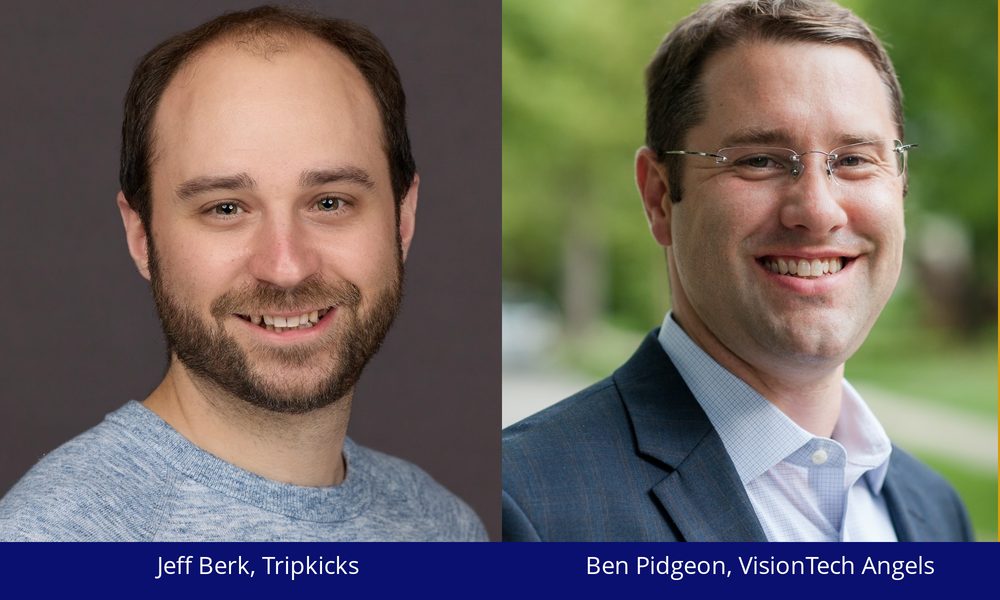
    BP: How did you hear about VisionTech Angels?
    JB: We were introduced through one of our board members, Eric Baum, who is a partner at Solidea Capital. He spoke highly of VisionTech through the work they’ve done with other VisionTech portfolio companies.

    BP: Tell me about your company and how it came to be. What unmet need did you see?
    JB: Before Tripkicks, I was a managing director at consulting firm that specialized in corporate travel, expense and procurement technology. I saw first-hand how incredibly slow the business travel industry moves. Companies were concerned with reducing travel expenses and increasing policy compliance. They spent considerable resources putting in platforms to enable that. Now, as business travel restarts, new objectives are being introduced around important initiatives like health and safety, employee satisfaction and ESG. Companies want to address these priorities, but are also keen to not lose sight of the more traditional goals around cost and policy.

    This, combined with the fact that business travel is re-emerging after a global pandemic, business travel programs are looking for new capabilities as their travelers return to the skies and roads. As an add-on to business travel programs, we provide tools to influence traveler behavior and bring additional information and capabilities that allow travellers to make better decisions that are in line with company goals and individual preferences. Our initial focus is around point-of-sale for the business traveler.

    BP: How are you solving your market’s pain point?
    JB: We’re focused on making business travel better by helping companies address these new priority areas without changing their existing infrastructure. Tripkicks does three things. First, we provide important travel insights such as health and safety information, entry/documentation requirements, local destination intelligence, notifications from employers, and more when travelers are booking a trip.

    We also provide guidance to help these travelers select the most appropriate travel options. Examples of this are that we show travelers which options are the most eco-friendly and where additional benefits are available through their corporate agreements. Finally, we motivate travelers to make specific decisions and change behaviors. Here’s an example, we’ve built an algorithm that introduces rate targets to guide appropriate trip spend, and we can even reward travelers for specific decisions such as choosing a cheaper flight or a more ecofriendly property. This allows them to earn gift cards or fund a carbon offset project.

    BP: What is your traction to date?
    JB: Even though the business travel industry is still finding its legs after the global pandemic, our traction is strong, particularly in the enterprise segment. Early customers include some of the world’s largest companies and cover a wide range of industries like social networks, apparel, technology, media, and pharmaceuticals. We’re currently in implementation with several others, and our pipeline has never been stronger.  We’re a lean team that has been able to build a big reputation in our industry given the problems that we are solving and the high-profile accounts coming onboard.

    BP: How big is your addressable market and what is your revenue model?
    JB: In 2019, the annual spend for online corporate bookings of airlines and lodging was $82 billion. Online travel bookings by Fortune 500 companies are generally between $35 million to $100 million annually, with smaller travel programs spending anywhere from $1 million to $35 million. Much like other business travel companies, Tripkicks takes a percentage of the spend on airlines and lodging.

    BP: With other, increasingly sophisticated options to in-person meetings, why do you think business travel will return to pre-pandemic levels?
    JB: Business Travel is a resilient industry that has a history of coming back faster than expected. We’re already seeing strong signals from the mid-market. Larger companies have been more conservative in restarting travel, but we continue to hear from our clients that platforms like Tripkicks help provide the confidence to restart. Of course, some previous trips will be forever replaced by video conferencing, which is positive for us as a society, but we’re also seeing new types of trips. For example, more frequent and purposeful team travel, a direct result of more remote work environments. Industry trade shows are returning to in-person events, and people are excited to once again meet in-person.  

    BP: What is your competitive advantage?
    JB: We are first to market and have taken full advantage of that by building a strong brand and network of resellers and referral partners to keep us ahead of future competition. A major advantage for Tripkicks is that we don’t replace existing services or technology, which reduces the burden of change for a company.

    Additionally, our partnership and unique integration with SAP Concur, the dominant corporate booking tool, has propelled us into the spotlight. These partnerships give Tripkicks industry credibility while also demonstrating that we work with rather than against legacy service and tech providers in the business travel space.  Business travel is a close-knit industry that is extremely difficult to break into, but once you’re in, the potential exists for rapid growth.

    BP: What raise is this and how much are you trying to raise?
    JB: This is a pre-seed round. We raised $1 million in 2021 for product development. Our goal is to raise an additional $500,000 to support us to a Series A round in early 2023.

    BP: What is you planned use of funds?
    JB: We have rapidly added clients to our portfolio and our pipeline is very strong. This raise will go to continuing our sales growth and supporting clients as they restart business travel in their organizations. Additionally, we plan to expand our ESG-related product functionality and expand into other traveler touchpoints beyond the booking process.

    BP: Why is ESG functionality important? Is that something business travelers or their companies care about?
    JB: ESG is really the perfect storm right now. Not only are we seeing pressure from the top-down as boards of directors mandate new requirements, but it’s also something that is coming from the bottom-up. The environment and social issues are incredibly important to younger generations who make up the majority of business travelers. 

    BP: Give three reasons why VisionTech Angels should invest in your company?
    JB: Sure, Ben. First, our early traction within our primary market, Fortune 500 and large companies, is impressive and demonstrates the desire for Tripkicks’ offering. Second, while we’re focused on sales and client engagement, we continue to build out our platform to add more of the functionality our target clientele wants and can’t find elsewhere. Third, we have an all-star team that is immersed in this industry. We’re highly visibility, capitalizing on opportunities for high exposure among our prospects. As part of that, we’re fortunate to have a brain trust of advisors, board members, and supporters with deep experience in travel and growing companies.

    To learn more about Tripkicks, visit  their website. VisionTech Angels’ March Pitch Events will be virtual on Thursday, April 28 at Noon ET and at 6 p.m. ET. Pitch events are open to our members and accredited investors interested in joining our group. To register, check your email for an invitation, go to our Events page or email Ben Pidgeon at bpidgeon@visiontech-partners.com.


  • Meet November Pitch Presenter #1: Adam Steege, Trio Labs

    Meet November Pitch Presenter #1: Adam Steege, Trio Labs

    I was introduced to Adam Steege, founder, president and chief technology officer of Trio Labs, by another investor in the angel space, John Lilly. He is impressed with the company’s novel imaging technology and materials manipulation techniques that enable rapid, high-precision, additive manufacturing of micro parts needed in medical devices. Given our group’s interest in life sciences startups and expertise in the medical device industry, I invited Adam to present to VisionTech’s Screening Committee. We were also impressed by Trio Labs’ technology and traction and agreed he should present at our November Pitch Events. Here’s a sneak  preview.

    BP: Tell me about how Trio Labs came to be.
    AS: I’m a serial entrepreneur and inventor. One of my previous companies was Agile Endo-surgery that developed articulated surgical instruments to expand the scope of minimally invasive surgery. During my six years with Agile, I really took a deep dive into medtech and more importantly, surgical trends pointing to the need for better, more cost-effective options for micro manufacturing on a millimeter scale. I recognized an opportunity to leverage metal additive manufacturing processes at the desired resolution of five microns, but do it at a high-volume manufacturing scale, something no one else was doing. Trio Labs uses its own technology to produce these miniaturized parts using ultra high-resolution 3D printing of metals. The manufacturing process is different. What’s also different is that we’re selling parts, not 3D printers.

    BP: What pain points did you see in the medical device market that you are solving?
    AS: Medtech is demanding miniaturization for surgical instruments and hollow microneedles to meet clinical demands. Here’s an example: vascular surgeries where the surgeon needs to deploy a valve in a heart procedure and a lot of small components are required to enable this mechanism. Other technologies can’t address this size. Here’s another example: the surgeon has to pull a clot in a stroke patient in blood vessels smaller than 1mm. Small parts make this type of life-saving instrumentation possible. The reality of human anatomy versus existing technology causes a significant pain point. With our ability to create micro parts with precision and manufacture at high volume will solve a lot of industry—and patient—pain.

    BP: Additive manufacturing has been around for a while. Manufacturing at scale has been the challenge. What’s your value proposition?
    AS: Frankly, our ability to scale manufacturing beyond prototyping is a large part of our value proposition. Couple that with the fact that we’re making high throughput micro manufacturing possible for the first time is significant. Innovators within the medical device and micro needle spaces looks at that and their eyes get big as it opens up so many doors to future innovation. In that respect, Trio Labs’ ability to produce micro components with exacting precision and in desired volumes makes us unique and a powerful partner.

    BP: How large is the market? What are your priorities in terms of market segments?
    AS: Globally, it’s a multi-billion market. We’ve identified several segments. First, minimally invasive surgical devices which has a total addressable market of $50 billion. The next largest segment is microneedles used for pain-free drug delivery and diagnostics. This includes auto injectors, infusion systems and blood sampling devices. Globally, this represents a $20 billion market. Diabetes care is a sub-segment of the microneedle application space. It represents a $5 billion market in the U.S. alone. Diabetes is a global issue so this is the tip of the iceberg.

    Trio Labs surgery

    BP: What’s your traction like thus far?
    AS: We have nine customers, many of them household names, with strong interest. They have sent us design files to begin working on. Our model is to acquire customers are the R&D stage and support development. This way our micro parts are specified in the device and support volume production. With all of the innovation in minimally invasive surgical devices as well as in other areas, we believe this approach is sound. We expect to start generating revenue before the end of this year.

    BP: What kind of IP protection do you have?
    AS: Our goal is to have a massive IP portfolio all of which we will own. We are currently working on global patents in 10 jurisdictions. These include our core process and provisional patents. When we’re done, we will have a few hundred patents, which will support our exit strategy.

    BP: What does the competitive landscape look like?
    AS: Micro manufacturing is very difficult to do and do well and that limits competition. However, there are options to Trio Labs: metal injection molding, CNC machining and electrochemical manufacturing. Each has its own set of limitations like cost, speed or lack thereof, and inability to meet the very precise micro specifications at scale. Trio Labs has proven our technology and we can produce at scale at very attractive margins, giving us a competitive advantage over these traditional manufacturing methods.

    BP: This is a $6 million Series A and you’ve raised $5.5M. Who are the other investors? What will the proceeds be used for?
    AS: We’ve gotten excellent support for our Series A so far. Two of our board members have personally invested, and we’ve also gotten support from VentureSouth and the Harvard Business School Alumni Angels Association. We hope to add VisionTech to our cap table.

    In terms of use of funds, we intend to build out our manufacturing infrastructure in 2022. Also, our Series A gives us the runway to continue developing strategic partnerships and ramping up the development projects in our pipeline.

    BP: What’s your exit  potential?
    AS: We believe we will have a number of options, one of which is to be acquired by a larger medical device company that will seize the opportunity to control the micro manufacturing space. Another option is to go the IPO route.

    BP: Why should VisionTech Angels invest in Trio Labs?
    AS: Trio Labs is truly defining a new space in the medical device industry and as minimally invasive surgical procedures have become the norm, the demand for smaller devices and miniaturized parts has grown exponentially. We have the technology, processes, and ability to scale to meet this demand. Our leadership and advisory team are truly impressive. Among our advisors is Bill Hawkins, former CEO of Medtronic, and Stephen Nigro, former president of 3D Printing at HP. Bill, Stephen, and our other advisors are actively involved in our strategy and day-to-day operations. Finally, the impact we can make on patients’ lives and potential financial return for investors will be significant.

    To learn more about Trio Labs, visit their website. VisionTech Angels’ November Pitch Events will be virtual on Thursday, November 18 at Noon ET and at 6 p.m. ET. Pitch events are open to our members and accredited investors interested in joining our group. To register, check your email for an invitation, go to our Events page or email Ben Pidgeon at bpidgeon@visiontech-partners.com.

  • Onboard Dynamics’ Green Natural Gas Fuel Solution Headlines VisionTech Angels’ August Pitch Week

    VisionTech Angels’ Executive Director Ben Pidgeon recently sat down with Rita Hansen, CEO of Onboard Dynamics, to learn more about how the company’s GoFlo® compressors are enabling municipal and commercial fleetswaste haulers, school buses, delivery companiesto replace diesel fuel with clean, zero-carbon emitting natural gas. Interest in the mobile natural gas compressors is high, particularly in states that have mandated all waste haulers move to green-powered vehicles by 2020. Rita, who recently represented the United States as a delegate to the 2019 Global Entrepreneurship Summit in The Hague, Netherlands, will present Onboard Dynamics during VisionTech’s upcoming Pitch Week, August 26-29. Read on!

    Ben Pidgeon, VisionTech

    BP: VisionTech Angels is excited to host Onboard Dynamics during our August Pitch Week. What’s your story?
    RH: Jeff Witwer and I co-founded Onboard Dynamics in 2013 with Dr. Chris Hagen after licensing technology developed in Chris’ clean energy systems lab at Oregon State University (OSU) and initially funded by the U.S. Department of Energy. Jeff is a serial entrepreneur with experience in the energy and software industries. My interests are clean technologies, alternative energy, and renewables that present opportunities domestically and internationally. We saw the tremendous potential of natural gas compression technology to lead the clean fuel revolution in a way that disrupts the status quo without being disruptive to fleet managers and organizations.

    The company got immediate validation. After we licensed the technology, ARPA-E, a government agency that advances energy technologies with the potential to radically improve the U.S. economy, national security and environmental wellbeing, awarded us a $6.6 million cooperative agreement. This allowed us to develop and now commercialize a product from the technology, the GoFlo compressor. We just recently hit $1 million in sales!

    Rita Hansen, CEO
    Onboard Dynamics

    BP: Nice! We like revenue! What problem are you solving in the marketplace?
    RH: The macro problem is a global lack of infrastructure for refueling natural gas vehicles. Currently there are fewer than 1,000 public compressed natural gas stations. These refueling stations are also expensive; they cost more than $1 million to build. If you have a fleet of more than 50 vehicles, the cost can be justified. But for small fleet operators, you need an option that’s more affordable and in many cases, more flexible than a fixed fuel station.

    Another big problem we solve is the push—and in some cases, a mandated push—to convert fleets of vehicles to clean and/or renewable energy sources to reduce emissions of regulated pollutants like NOX and reduce one’s carbon footprint. NOX is a very poisonous emission of diesel fuels. Some people are turning to electric vehicles; I’m sure a few of you drive Teslas and love them. But electric vehicles for fleet use—school buses for example—are very expensive. And in many cases, the electricity to fuel these buses comes from coal-generated electricity. So where’s the win in that?

    BP: How easy are these compressors to use?
    RH: The GoFlo compressor makes the transition from diesel to natural gas-powered vehicles easy and affordable. It can be used in a fleet yard or off-site. It doesn’t require electricity to run, which is great for remote locations and disaster situations. And it accepts any low-pressure natural gas or renewable natural gas source for compression into a cost-effective, clean fuel for vehicles.

    BP: What types of fleets are you targeting?
    RH: We’re targeting government and commercial fleets, including light duty CNG trucks, school and transit buses, delivery vehicles, and a big one for us, waste haulers. California has mandated that the waste hauling industry move to alternate fuels by 2020, creating a significant market for us. What makes the GoFlo compressor attractive to this group—beyond regulatory compliance—is the refueling system pays for itself in less than two years due to lower fuel and labor costs


    One of our customers, an independent waste hauler in Southern California, is going live with a full system in mid-August. They’ve agreed to be a showcase for the more than 100 other similar independent waste haulers. The total market size of independent waste haulers in Southern California alone is 150-200 companies. We’ve also piloted GoFlo with a number of school districts and getting traction there.

    BP: Are there other markets for GoFlo, here or internationally?
    RH: Glad you asked that, Ben. Natural gas utilities are perfect channel partners for us as they can sell the GoFlo compressors to their customer or offer as “Compressed Natural Gas as a Service” with monthly billing. We are also working with Canada’s Department of Natural Resources to certify GoFlo for the Canadian market. We’ve received payment toward the first unit and expect to start installation in Ontario in late fall with full deployment in the first quarter of 2020. Other markets such as Mexico, Latin America, and India represent opportunities to expand due to a lack of natural gas infrastructure and also a real need reduce air pollution.

    BP: What kind of IP protection do you have?
    RH: The original technology has two international patents, and we’ve applied for six PCTs (patent cooperation treaty) on the compressor for national and international protection.

    BP: Why should VisionTech Angels invest in Onboard Dynamics?
    RH: As a nation, leaders in business, and members of the global community, we have a responsibility to adopt green energy technologies to protect the world for future generations. With the GoFlo compressor, Onboard Dynamics has a practical solution that meets government, business and social goals. It reduces emissions, its carbon neutral, it leverages existing natural gas pipeline distribution systems, and saves money. Our team is really good, too. Even with our lean sales team, our pipeline is full. We expect to sell 15 units in 2019 and 55 in 2020. We’re a company that’s in the right place at the right time.

    To learn more about Onboard Dynamics, visit their website. You can also watch their video. To RSVP for VisionTech Angels’ August Pitch Week, visit our events calendar.

  • Atlas Energy Systems: Heat to Electricity, No Moving Parts


    Ben Pidgeon, VisionTech

    VisionTech Angels’ Executive Director Ben Pidgeon recently sat down with Ian Hamilton, founder and CEO of Atlas Energy Systems, to learn more about the company that’s repurposing technology originally developed in the 1960s by NASA for space applications into an exciting new solution for the oil and gas, nuclear and solar energy industries. Ian, a Purdue graduate with a Masters in Nuclear Engineering, will be presenting Atlas Energy during VisionTech’s upcoming Pitch Week, April 15-18. Read on!

    BP: The story behind Atlas Energy Systems’ technology is unique. Tell me about it.
    IH: Our thermionic energy converter (TEC) was inspired by technology previously developed in the 1960’s by NASA for space nuclear power. When the Soviet Union fell in the 1980s, NASA cancelled its space nuclear power programs. Russia was our competitor and with the end of the Cold Way, there was no reason to pursue it further despite the fact the technology was proven to work in space. So patents expired. I learned about it while an undergrad at Purdue, got interested, founded Atlas Energy Systems, and now we’re using NASA technology to develop plasma thermionic energy converters for waste heat power generation, concentrated solar and advanced nuclear reactors.

    BP: How does your technology work – in layman’s terms?
    IH: It’s all in our tagline: Heat to Electricity, No Moving Parts. What we’re doing is directly converting heat from any source you can think of, whether it’s sunlight, nuclear or the waste gas from oil wells, into electricity. If you have a source of high intensity heat, we can generate electricity with a convertor that has no moving parts. Digging deeper, Atlas Energy Systems is leveraging modern materials science, new plasma physics simulations, and advanced manufacturing techniques to develop a thermionic energy converter for the 21st century. Our novel device designs incorporate proprietary electrode materials and coatings as well as an electrode form factor to increase converter performance and reduce operating temperatures. Bringing this new capability to the technology is the necessary step in taking thermionic energy converters from a lab technology to a commercialized product.

    BP: What’s the driver behind the technology?
    IH: The short answer is that it’s a simple way to generate electricity. Also, the technology is proven; we’re not breaking new ground, we’re finding new applications. What makes it attractive is the simplicity of the process and the converter itself. The device has no moving parts so there’s nothing to break. It’s compact and saves space. We were originally thinking of compact power source for nuclear subs, but there are many other applications.

    BP: You were targeting the nuclear industry with batteries made from nuclear waste, but now you’re focused on the oil and gas industry. How did that come about?
    IH: We initially were working on nuclear batteries for NASA and the U.S. Navy and its nuclear subs. We got a call from far left field—a company in the oil and gas industry. They were interested in replacing current three-decades old technology used in oil and gas sensors combustion fuel systems with our thermal electric converters. So it seems oil and gas chose us.

    BP: What benefits do your thermionic energy converters offer the oil and gas industry?
    IH: Oil and gas production sites such as wells and offshore rigs use flare stacks, a gas combustion device, to burn off unusable, waste gas.  The main application of our thermionic energy converters would be to replace the old combustion device with ours and convert the flair gas into electricity. The advantages are significant. Current systems are inefficient and expensive. Our converters turn the waste gas into electricity that can be used at the well site or on offshore rigs. Our converters have no moving parts and are proven to survive in the harshest environment possible, space, so maintenance is minimal; always a good thing in remote locations. Repurposing the waste reduces CO2 emissions and methane, which is good for the environment. Overall, it’s a smart solution for the industry.

    BP: What type of patent protection do you have?
    IH: Original technology designs were either top secret or patent protected. What’s interesting is most of the original patents were for space and nuclear applications and expired in the 1980s when the government lost interest. Now anyone can access the old patents and use the information, which we have done. Atlas Energy Systems now has a patent pending on our plasma thermionic energy converter and will file additional patents on uses and applications.

    Ian Hamilton, CEO, Atlas Energy Systems

    BP: You have the unique honor of being included on Forbes’ 2018 “30 Under 30” list in 2018  that recognizes the brashest entrepreneurs across the United States. You were all of 25 years old when you won. That’s impressive.
    IH: It was exciting and also an honor as I was nominated by two different people. I’ve always been interested in entrepreneurship and, in fact, founded Atlas Energy Systems during my sophomore year at Purdue with three classmates. After earning my masters in Nuclear Engineering, I did a fellowship at Argonne National Labs Chain Reaction Lab in part because of their emphasis on entrepreneurship and how to translate energy tech into the marketplace. I’ve always thought it’s one thing to do research and scientific discovery, but if you can’t turn commercialize your technology and deliver a product the market cares about, it goes to waste.


    BP: Why should VisionTech Angels invest in Atlas Energy Systems?
    IH: Although we’re an early stage energy startup, we’re positioned as a hard tech scalable manufacturing company capable of providing thousands of units to companies. And the oil and gas industry is a great launch pad for us with interest from customers and a potential acquirer that I will discuss in my pitch. We currently have a demonstration unit and money from VisionTech Angels would fund our initial units for immediate sales and support our go to market strategy for oil and gas.

    To learn more about Atlas Energy Systems, visit their website. For details on VisionTech Angels’ April Pitch Week, visit our events calendar.

  • A Conversation with Kim Frazier of TEC Dayton, VisionTech’s Newest Angel Chapter

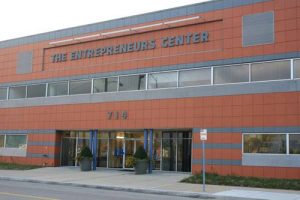
    VisionTech Partners Executive Director Ben Pidgeon recently sat down with Kim Frazier, Director of Growth Initiatives for The Entrepreneurs Center, also known as TEC Dayton. Formerly an international economic development executive in Washington D.C., Kim returned to her home state of Ohio to work on regional economic development, which ultimately led to creating new opportunities for entrepreneurs. She is leading the effort to establish a new VisionTech Angels chapter in Dayton that will further expand opportunities for the regions’ angel investors and entrepreneurs. Here’s their conversation.

    BP: Tell us about The Entrepreneurs Center.
    KF: We are a technology accelerator and business incubator in Dayton, Ohio, that’s focused on helping entrepreneurs achieve their business dreams. The organization was founded as Tec Dayton in 2000 and was strictly an incubator. When Scott Koorndyk came on as president in 2014, the organization became more of a commercialization center. Scott and I had worked together in economic development in the past and he recruited me to TEC in 2016 to help build out our pathways to commercialization programming.

    BP: You had a big win not long after you joined TEC.
    KF: Yes, we did! In 2017, the Ohio Third Frontier Commission selected TEC as the Dayton Region’s Entrepreneurial Services Provider (ESP). This two-year award gave TEC and our collaborative partners about $6.1 million to support the growth and development of regional technology start-ups, including those originating from the Air Force Research Laboratory (AFRL). Thanks to the award, we can provide more early stage services to entrepreneurs. It really helps us fill a critical gap in the Dayton area ecosystem.

    BP: Who are your partners in the ESP?
    KF: Our lead partner is Wright State University, which has strong programs in business, engineering and medicine. Other collaborators include The University of Dayton, Wright Brothers Institute, The Dayton Area Chamber of Commerce, CreativeFuse, and Nucleus CoShare. All of these organizations have a stake in growing Dayton’s commercialization and business startup efforts.

    BP: How did you learn about VisionTech Angels?
    KF: One of our local angel investors, Andy Cothrel, knew VisionTech Partners Co-founder Oscar Moralez and introduced us. Oscar was very generous in sharing his expertise and explaining VisionTech’s investing model. I’m a skeptic, but Oscar impressed me.

    Ben Pidgeon, VisionTech Executive Director

    BP: What makes VisionTech Angels attractive to TEC Dayton and its community of investors and entrepreneurs?
    KF: I really like VisionTech Angels’ overall investing process, from identifying and screening investable companies, to pitch week and the thoroughness of the due diligence. I also like the low barriers of engagement. Angels can invest as little as $5,000 per deal. For startups, they don’t have to pay to pitch. Instead, they are selected on their merits. The other side of it is Dayton’s industry mix, which is primarily aerospace and manufacturing, is much like Indiana’s. VisionTech “gets” us so with the support of many people associated with TEC, we decided to pursue becoming a VisionTech Angel chapter.

    BP: Dayton has a connection with VisionTech Angels. Explain.
    KF: (Laughs) Yes, Spintech LLC , a Dayton area company, is a VisionTech Angels portfolio company. They are a perfect example of the powerful technology being developed in our region— they produce shape memory polymer technologies for composite manufacturing and structural repairs in aerospace, automotive, defense, and other markets—and solid leadership. Spintech CEO Patrick Hood and its president, Craig Jennings, are both serial entrepreneurs. Dayton has a wealth of technology talent like this.

    BP: TEC’s first VisionTech Angel Pitch Week event is next Monday, April 23 at TEC Dayton at 714 E Monument Avenue from 11 am-1 pm What’s the response been?
    KF: We had a kick-off event in mid-February and more than 50 people came to learn about VisionTech Angels; it was great! So far, ten have RSVP’d for Pitch Week next week. Our local angels and entrepreneurs are very excited to have a VisionTech Angel chapter in Dayton. Our investors are excited to be part of a largely, very dynamic and informed angel investing group and entrepreneurs appreciate that they will have broader access to capital. I have gotten so many emails from people interested in what we’re doing. We’re really looking forward to next week!

    To learn more about The Entrepreneurs Center, please visit their website.