INDIANAPOLIS, Indiana (February 17, 2021) – When the COVID-19 pandemic first struck in early 2020, VisionTech Executive Director Ben Pidgeon faced a tough choice: cancel VisionTech Angels’ bi-monthly pitch week events or replace them with a socially distant alternative. With less than three weeks until the next event, during which startup CEOs travel to five cities across Indiana and Ohio to present to VisionTech investors, Pidgeon moved the group’s pitch week events online for the remainder of the year.
VisionTech’s first Zoom-enabled pitch week in April featured two startups, Indianapolis-based MITO Materials and Lexington, Kentucky-based Hippo Manager. Nearly 70 members of VisionTech’s angel investing network, the number normally attracted to its five live events, were in attendance. Ultimately, VisionTech Angel members invested $178,000 in Hippo Manager, a cloud-based SaaS solution for veterinary practices, and $157,500 in MITO Materials, maker of high-performance, advanced-material additives.
Moving to virtual, livestreamed pitch events proved judicious and surprisingly fruitful. By the end of 2020, VisionTech Angels had chalked up more than $3 million in seed investments to 15 companies. Perhaps even more impressive, VisionTech Angels returned $4.3 million in capital to members who had invested in three portfolio companies that exited in 2020. Terms of these exits have not been disclosed.
Since 2014, VisionTech Angels has had 10 portfolio companies exit and has delivered return on investment above the industry average. Eighty percent of the returns have earned greater than 1x MOIC (multiple on invested capital) versus the industry average of 50 percent returning 1x or less. VisionTech Angels members who invested the same dollar amount in all ten of the exited portfolio companies since 2014 would have enjoyed 21.9 percent IRR (internal rate of return).
“Last year ended on a high note,” Pidgeon says. “We had no idea what would happen to our deal flow, if our investors would stay engaged, let alone write checks in the face of uncertainty. Our deal flow remained strong, our investors liked what they saw, continued to invest, and were rewarded with three positive exits in 2020 with returns that ranged from 1.8–5x MOIC.”
He adds, “Angel investing takes a lot of patience on the part of investors. The initial investments on two of the exited companies were made in 2010 and 2016 respectively. Only one delivered a quick return; our initial investment in the third company was made in 2019. Regardless, we are quite happy to return capital to investors. Angel investing is filled with peaks and valleys and requires investors to build a diversified portfolio of privately held companies over many years to be successful.”
Since its founding in 2009, VisionTech Angels has deployed $21 million in capital, investing in 46 companies from across the United States, making it one of the most active early stage investing groups in the Midwest. The group’s next pitch events are scheduled for February 23 and 25. Details here.
CHICAGO, Illinoise (February 2, 2021) — Resonado Labs, a VisionTech portfolio company and audio technology startup out of the University of Notre Dame, today announced its proprietary Flat Core Speaker™ (FCS™) technology will first be available to consumers in the recreational vehicle (RV) industry. This novel technology will first be implemented in iconic travel brand Airstream Inc.’s 2022 Touring Coach model line. The launch will represent the first implementation of FCS technology into an established consumer product line.
FCS technology is hitting the market at a time when everything is becoming sleeker, more efficient, and increasingly immersive. It’s challenging the ubiquity of the century-old conventional conical speaker type, whose form is recognized globally as the volume icon. FCS technology was engineered as a fully scalable sustainable alternative that packs a larger sound into a smaller space enabling unprecedented design innovation. The slim profile and flat diaphragm of the speaker’s architecture caters directly to the growing demand across industries for slim and space-efficient, yet high performance and immersive audio products.
“Having started our company in South Bend, the first industry we really engaged with was the RV industry because of the physical proximity to Elkhart, which is known as the RV capital of the world” said Resonado Labs Co-Founder and CEO Brian Youngil Cho. “With RV as our beachhead market, we were able to gather unique insights that we’ve been able to apply to now active projects in both the automotive and home audio industries. And it’s a privilege to debut our technology in Airstream, one of the most iconic American brands in existence today”
Resonado Labs designed custom speakers built with the company’s patented technology to seamlessly integrate into RVs. FCS technology’s slim yet powerful characteristics enabled a sound system with a beautiful, unobtrusive design that occupies minimal real estate, a key value proposition for an RV, a vehicle that doubles as a home with every essential amenity for travelers. The technology’s form factor also enables the speakers to be placed in previously impossible locations, ideal for a more immersive sound experience. Resonado Labs partnered with RiverPark, the leader in supplying consumer electronics to the RV, commercial vehicle, and adjacent OEM industries, for design assembly and distribution. Details of the Resonado Labs’ speaker system are slated to be unveiled later this year.
“We’re excited to work with Resonado Labs on this launch, and sincerely believe that this will mark a significant milestone by signaling a change of design expectations at the intersection of the audio and RV industries” said Steve Bollero, President of RiverPark.
About Resonado Labs Resonado Labs is an American technology company that designs and licenses proprietary speaker driver technologies to brands and manufacturers. The company’s core pursuit is to develop speaker driver architecture that achieves optimal form and function, without compromise. Resonado Labs’ flagship product, Flat Core Speaker™ (FCS™) technology, is the first manifestation of that pursuit. FCS technology is a novel electrodynamic speaker driver type engineered with a low depth structural profile and high diaphragm aspect ratio as an alternative to the conventional conical driver type to allow for innovative, space-efficient product designs without experiencing tradeoffs in sound performance. Developed to be completely scalable, FCS technology is an audio component solution that can be implemented in products ranging from consumer electronics, to vehicles, to architectural spaces. Resonado Labs was founded at the University of Notre Dame and is now headquartered in Chicago, Illinois. Visit www.resonado.com.
About Riverpark RiverPark was founded in 1981 as a national distributor of mobile audio products to the U.S. Recreational Vehicle Industry. Through the years RiverPark has increased its offerings to include a full line of electronics while expanding into other diverse OEM markets. RiverPark has developed alliances with leading consumer electronics companies to develop OEM products designed for their specific markets. This focus has allowed us to understand the ever-changing needs of our customers. RiverPark distributes major brands including Bose, Connexx, Harman, JBL, Mobileye, Pioneer, Samsung, Sony and Xite Solutions. As a leading national electronics distributor our success is measured by our clients choosing RiverPark and our ability to exceed their expectations. Visit www.riverparkinc.com.
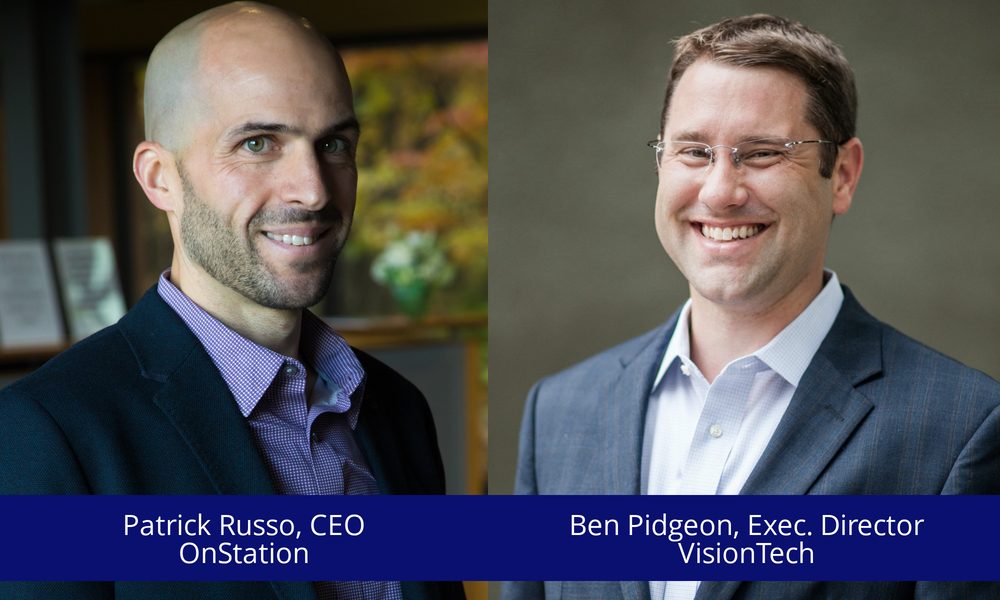
Before meeting Patrick Russo, CEO of OnStation, one of our February Pitch presenters, I checked out his LinkedIn profile. Two things stood out: he’s a triathlete and a fulfiller of dreams. I have to admit I have no intention of competing in triathlons, but that fulfiller of dreams role sounded good. So I asked Patrick about it. After college, he moved out to Vail, Colorado, and started an upscale bakery specializing in wedding cakes. It was extremely successful business; Patrick and his partner created 100 cakes a summer. Brides were so happy, they cried – hence his unique job title. He exited the company and moved to Cleveland where he was a startup mentor at JumpStart before becoming CEO of a SaaS company called OnStation where he’s still exceeding expectations but on a much different stage, America’s roadways. VisionTech is impressed with how OnStation is disrupting the road construction market and with the company’s unlimited potential. Here’s a preview of Patrick’s pitch on February 25.
BP: How did you learn about VisionTech? PR: OnStation was part of the Heritage Group’s Hard Tech Construction Accelerator Group last fall. The director, Scott Kraege, suggested I connect with VisionTech and here we are.
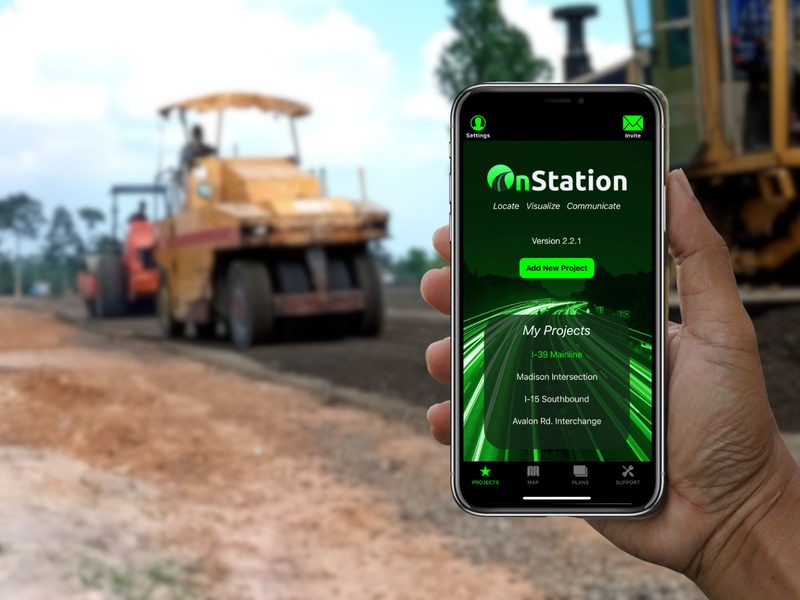
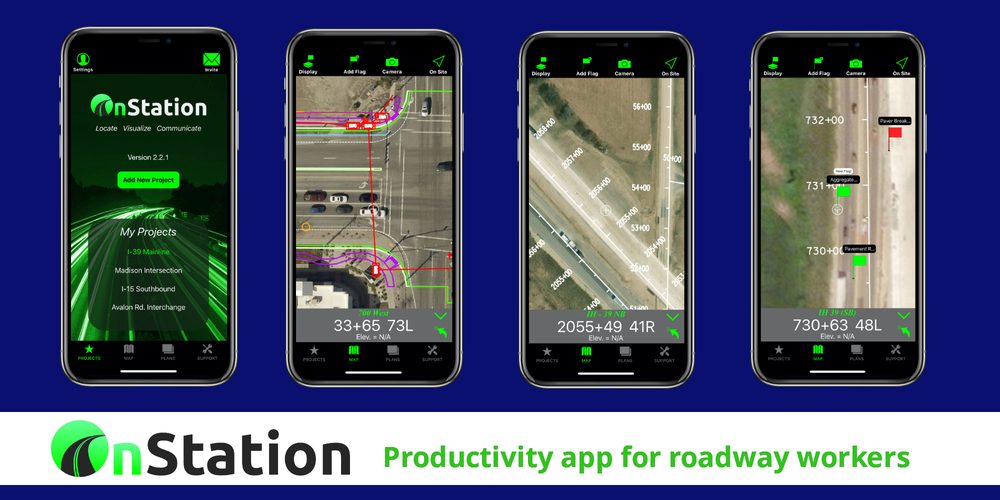
BP: Give me your OnStation elevator pitch. PR: In a nutshell, OnStation is a custom mobile software development company for civil engineering. Our core offering is the mobile app OnStation for roadway workers that provides instant job site location, access to project design plans and contract documents, and a team chat platform. The goals are more efficient workflows, keeping cones off the road, traffic flowing, and work progressing. Ultimately, we want OnStation to be as common on roadway construction projects as hard hats.
BP: What’s OnStation’s backstory? PR: OnStation is the brainchild of Jake Bailosky who worked as a project engineer at the Ohio Department of Transportation (DOT) and got first-hand experience with the day-to-day challenges of the job. Jake taught himself how to code and on nights and weekends, built the first generation of OnStation. What was really helpful was that during his last four years at the DOT, Jake sat on the technology review board and saw all of the tech the agency was considering. He saw holes in project management solutions and built OnStation as a complementary plugin to these larger solutions.
I joined OnStation two years ago after meeting Jake through JumpStart, which is Cleveland’s version of TechPoint, where I served as a mentor. I had experience starting and investing in companies, including the infamous wedding cake company, and was looking for an opportunity to turn an idea into a company. I was fortunate to meet Jake and join OnStation.
BP: You’ve done some pilots and field studies with state departments of transportation. How did they go? PR: We’ve done projects with both the Wisconsin DOT and Utah DOT, which were both highly beneficial. We recently tested our Station Finder tool with the Wisconsin DOT, and they realized 6x in cost avoidance using this feature alone. If you’ve ever seen a plumber in your neighborhood, driving around trying to find a house, imagine what it’s like for DOT employees who have to find a specific guardrail to replace or pothole to fill. A lot of time is wasted looking for the right station—the industry term for location—on the job site.
BP: Who are your ideal customers? PR: Anyone working on road projects in design, construction, and maintenance is a potential customer. So that includes engineering firms, construction companies, inspectors, state and local DOTs, and of course, road workers themselves. We’ve found that it’s easier to get into commercial construction companies as they’re more open to adopting new technology. Hopefully, seeing commercial companies and their employees using OnStation will pull DOTs onto our platform. Road workers are great advocates! We solve the daily issue of “Where am I going and what am I doing?” When your jobsite is eight miles long, that’s a big issue we solve in seconds.
BP: What’s your revenue model? PR: Like most apps, we have a SaaS user-licensing model. Companies or DOTs can buy licenses and assign them to users within their workforce. There is an annual, recurring licensing fee.
BP: How big is the market? PR: The global market for roadway construction and maintenance is over a billion dollars and hundreds of millions in the U.S. alone. If you look around, there are roadway projects happening all over, all the time. The universal problem is aging infrastructure and it needs to be replaced. Roadways are one market, but we see opportunities for OnStation in other essential assets like railways, water and sewer lines, oil and gas lines, and telecommunications.
BP: Has COVID-19 impacted the road construction world? PR: COVID-19 put a kink in things early on in the shutdowns. Roadway projects are funded by the gas tax so a lot of states and municipalities put projects on pause. But here’s the thing: roads still need to be maintained. Some cities and states saw the slowdown in traffic as a great opportunity to work on major interstate projects. Here in Indy, it’s the I-69 Finish Line project; one we hope to be working on soon. As things get back to “normal,” we’ll see a pickup in road projects especially if Washington D.C. directs more funding to infrastructure projects like it’s promised.
BP: Any competitors? PR: We don’t have any direct apples-to-apples competitors, but we’re not the only ones out there trying to tackle this. Mainly, there are bits and pieces of tech like project management for traditional construction and more complicated, expensive solutions for project mapping and stationing. No one is coming at it like OnStation, which is very much user focused, highly intuitive and easy to put to work. As I mentioned earlier, it really helps that Jake lived in the roadway construction world, knows what tech is out there and what the holes are.
BP: What kind of traction are you seeing? PR: Currently, we have 65 active roadway projects in 15 states and 400 active users. In 2020, we saw nearly 85,000 interactions on our app. Given we had just release OnStation 2.0 in December 2019, we’re pretty pleased with this traction.
BP: What will this investment round be used for? PR: Three things: team, traction and time. We want to add to our external and internal sales teams to sell and onboard customers. We also plan to hire a lead gen/marketing specialist and another senior developer. In terms of traction, we are developing enterprise level tools and a portal customers can use to access all of their projects on OnStation. This is increasingly important as we bring on larger commercial customers and DOTs. Finally, time. We need the funds to grow faster.
BP: Why should VisionTech investors back you? PR: Three reasons. First, the quality of America’s roads is a D. It’s a problem that’s not going away; interstates, state highways, city streets all need to be maintained and built. We bring efficiency, saving time and money, to this ongoing challenge. Second, to attract a younger workforce that lives on their smart phones, the industry needs to be tech-enabled. We do that. I just had a conversation with a younger guy who told me he uses OnStation every day and loves it. Finally, we have the very real opportunity to be the industry standard for private construction companies as well as DOTs. And while DOTs are hard business to win, once you’re in, those contracts are hard to break.
To learn more about OnStation, visit their website. VisionTech Angels’ February Pitch Events will be virtual on Tuesday, February 23 and Thursday, February 25 at 6 p.m. Pitch events are open to our members and accredited investors interested in joining our group. To register, check your email for an invitation, go to our Events page or email Ben Pidgeon at bpidgeon@visiontech-partners.com.
INDIANAPOLIS, Indiana (December 14, 2020) – Toralgen, an Indiana-based biotechnology company has announced the successful completion of its second seed funding round, raising a total of $8.3 million. The preclinical stage company will use the funds to further development of their novel nanoparticle drug delivery platform and advance industry partnerships.
All of the company’s original investors participated in this second seed round. CEO Gerald Rea said, “This is a clear sign of confidence in our drug delivery platform technology and its commercial potential. Our strong preclinical data, growing world-class team, and industry interest give our company and investors great confidence going forward.”
Toralgen’s poly-bile nanoparticle platform is unique in that it eliminates the challenges of oral drug delivery in one, simple-to-fabricate nanopill. These nanopills also localize delivery of drug agents and potentially improve efficacy and safety of a wide range of therapies. Toralgen currently has two candidates in preclinical testing for the oral delivery of diabetes agents.
The company was recently accepted into the FDA’s Emerging Technology Program, which was established to help companies advance technologies that the FDA believes have the potential to improve drug safety and efficacy. This will allow Toralgen to have more regular dialogue with the FDA as it advances its poly-bile nanoparticle platform.
About Toralgen, Inc. Toralgen, Inc. is a preclinical stage biopharmaceutical company focused on the development and commercialization of human therapeutics. Its poly-bile nanoparticle platform eliminates many of the innate challenges of biologics and has the potential to improve outcomes through optimized drug delivery. Toralgen is currently studying treatments for diabetes and autoimmune disorders. For information or to inquire about possible collaborations, visit our website.
About VisionTech Founded in 2008, VisionTech is a privately held company that links investors to high-potential, early-growth companies. Based in Indianapolis, VisionTech’s angel investing network includes 175 members and chapters in Bloomington, Fort Wayne, Indianapolis, and Lafayette, Indiana; and Dayton, Ohio. As of December 2020, VisionTech has deployed more than $21 million in capital, investing in 46 portfolio companies from across the United States. Membership in VisionTech Angels is open to accredited investors. Those interested in joining are encouraged to contact VisionTech.
The global pandemic has caused incredible social and economic disruption—that includes pulling the plug on the sports world. I know I was disappointed when the NCAA cancelled March Madness last spring. It’s only now that sporting events are getting back on track, but at very limited capacity. How can leagues and teams reactivate their fan bases and revenue streams? Rebus, a sports tech startup and 2020 participant in the Techstars Sports Accelerator Powered by Indy, has the answer: an artificial intelligence-driven system that suggests unique and tailor-made experiences for every single sports event attendee or online viewer. I was introduced to Rebus CEO Juliana Villalbal by VisionTech Angels member Kerry Perry, who is also a Rebus mentor. The VisionTech Angels screening committee was impressed and invited Rebus to participate in our October Pitch Week. Here’s a preview!
BP: Tell us about Rebus – why did you and your co-founders start the company? JV: The idea of Rebus started back in 1993. When Jose H. Berrio (co-founder and CPO) was nine years old, his father gave him the surprise of a lifetime. He took him to a soccer match, but instead of walking to the stands, they went to the locker room to meet one of the greatest soccer players of all time. That moment changed Jose’s life forever.
As an adult, Jose realized most of his friends never experienced unforgettable moments like his, and he became obsessed with the idea of creating memorable experiences for other fans.
I met Jose at an innovation event where we were both speakers about event experiences (me) and event technology (Jose). At the end of the event, we shared a 40-minute ride to the airport and realized we both shared a passion for events, sports and living experiences worth remembering. A few months later, we decided to join forces to create the first company that was 100% focused on helping teams and leagues offer experiences worth remembering and unlock the 80% of their fan bases that could be engaged and monetized.
Rebus co-founders Jose H. Berrio and Juliana Villalba
BP: How does your technology help amateur and professional sports? JV: We help sports properties find new ways to engage with their fan base while driving incremental revenue. Here’s a simple example: the Pacers’ arena can hold around 20,000 spectators, but the Pacers have 5 million fans on social media. Right now, they’re only monetizing the avid ticket buyer fan. We help monetize the rest via our add-on engine that helps sports teams and their sponsors generate revenue and fan engagement by powering unique product offerings and meaningful ancillary experiences. Our widget and messaging engine takes just a few hours to set up and works seamlessly across any sports properties’ digital assets such as websites and social platforms.
This makes every sporting event an awe-inspiring fan experience. Some of our experiences include engaging in a private VIP hangout with players of the team of choice, bedtime storytelling by a team mascot for your children, participating in an unforgettable sweepstakes contest for a one-on-one workout session with former or star players, and having the opportunity to bid on exclusive, once-in-lifetime memorabilia such as game-worn jerseys, signed game balls, and VIP access to the biggest games! Today, thanks to Rebus, teams are able to reach their entire fanbase, sell experiences worth remembering and allow fans to seamlessly purchase unique products and services.
BP: Is your technology patentable? JV:No, but it is proprietary developed inhouse with a team of full stack engineers and AI experts.
BP: How big is the market? JV: The Latin American market is big, about $7 billion U.S., but the North American sports market is 10 times bigger at $70 billion U.S. There are more than 150 million sports fans in the United States alone.
BP: What is your competitive advantage and what makes your solutions a must-have for sports teams and leagues? JV: Think of Rebus as a retail end-cap display of the digital world. We expose and target fans to ai-enabled special promotions and “limited edition” experiences from their favorite teams and sports franchises on fans’ live screens. We guarantee clients a minimum 15% conversion rate, which is three times more than traditional e-commerce platforms. That’s pretty hard to pass up!
BP: Who are your competitors? JV:The competitive landscape for fan engagement technologies is crowded; however, most companies are heavily focused on avid fans like Experience, Fanatics and Fevo. We help teams monetize casual or fair-weather fans, something our competitors aren’t doing.
BP: Is it a tough sell or do sports properties immediately understand your value proposition? JV:Teams and leagues understand our value proposition immediately as they face challenges producing and selling experiences to their fan base. The vast majority of teams monetize only about 20% of their fan base.
Rebus uses AI to create individualized experiences for the 80% of fans not at the game, creating new sources of revenue for teams and leagues.
BP: What kind of traction do you have to date? JV:We currently service about 100 clients in sports, entertainment and corporate events, and deliver conversion rates of more than 15%, which is three times higher than traditional e-commerce solutions like Amazon or Shopify.Since starting the Techstars Sports Accelerator Powered by Indianapolis in July, we have closed deals with teams from the WNBA and USL, the World Boxing Council, esports teams, and soccer teams from Latin America and Europe. Additionally, we have more than 20 teams and organizations reviewing our pilot proposal as we speak. Our September revenue was $80,000 and average monthly revenue growth is 40%.
BP: How has the COVID pandemic affected Rebus? JV:Regardless of the global pandemic, people still love their sports teams. This year we’ve had an impressive ramp up in clients and users—20% month-over-month growth in clients and 30% in users.
BP: I hear you’re moving your company headquarters from Bogotá, Colombia to Indianapolis—congratulations! Why is Indiana the ideal place for you to grow your business?
JV: Indianapolis is a top sports market with several professional teams and the headquarters of the NCAA. The city provides access to industry specific talent, strong networking opportunities and a great entrepreneurial environment.
BP: What will Rebus use this fundraising round for? JV: The majority will go to finance our U.S. expansion and building out our sales and business development teams. We also plan to continue product development including getting to an omnichannel status and increasing our AI conversion rate.
BP: Why should VisionTech Angels members invest in you? JV: Indianapolis is well known for being America’s sports capital and a thriving startup and tech ecosystem. Rebus is a perfect match for VisionTech Angels’ investment thesis focusing on early growth startups. We have a top-notch and growing customer base, a great product and the right team to execute our vision.
To learn more about Rebus visit their website. VisionTech Angels’ October Pitch Events include a live event on Tuesday, October 27 in Fort Wayne at the Pine Valley Country Club at 6 p.m. and a virtual pitch event on Thursday, October 29 at 6 p.m. Pitch events are open to our members and accredited investors interested in joining our group. To register, check your email for an invitation or email Ben Pidgeon at bpidgeon@visiontech-partners.com.
Michael Bloomberg once explained farming in this tongue-in-cheek way: “You dig a hole, you put a seed in, you put dirt on top, add water, up comes the corn.” Even I, a city guy, know that farming is a lot more complicated than that. In fact, agtech is among the hottest and arguably sophisticated tech sectors today. That’s why I’m excited to introduce our first October Pitch Week presenter, Jon Jackson, president of Global Neighbor Inc. (GNI). His company may be on the verge of transforming how farmers around the world control a growing problem, herbicide-resistant weeds, using a green technology called Directed Energy to kill weeds and their seeds rather than chemical-based herbicides. GNI has secured $3 million in support from the U.S. Department of Defense and the USDA and captured the attention of farmers. Here’s a preview of the investment opportunity Jon will share in detail at VisionTech Angels’Pitch Events later this month. Enjoy!
Ben Pidgeon, executive Director, VisionTech Angels
BP: How did you get interested in agtech? JJ: I have to credit my parents. At 14, they let me farm five acres on the family farm and keep the money from the crop sales. I planted soybeans, sold my harvest, made some money—and wrestled with weeds. Later, I saw my brother’s epic struggle with weed control as he was raising organic soybeans for export to Japan. This “tribal knowledge” coupled with being an engineer, ultimately led to Global Neighbor Inc. (GNI) and helps tremendously when I talk with the farm community about our technology.
BP: You also have a connection with VisionTech Angels. JJ: I do. GNI is headquartered in the Dayton area and we’ve worked with TEC Dayton, which hosts a VisionTech Angels chapter, on multiple projects such as filing our international patents. TEC has also supported us with mentors, who suggested VisionTech Angels should be at the top of our list.
BP: Explain GNI and the problem you’re solving. JJ: Agricultural around the world is at a crossroads in terms of feeding the world and doing so in a sustainable manner. One answer is regenerative agriculture which is a conservation and rehabilitation approach to food and farming systems. Currently, the industry relies heavily on chemical herbicides and insecticides, which can have devastating consequences for the environment and public health. At the same time, weeds are becoming increasingly resistant to chemical herbicides. This increases weeding costs, reduces farmer yields and profits, and exacerbates the excessive use of herbicides that contributes to soil degradation and also the incidence of non-Hodgkin’s lymphoma. Farmers using combines to harvest crops make the problem worse as combines collect and distribute weed seeds back into the field, increasing weeds in following years.
“Weed-related crop losses are a huge issue. Without weed control measures, U.S. and Canadian corn and soybean farmers would see estimated yield losses near 50 percent, losing $43 billion annually. That’s why farmers spend billions annually on weed control measures.“
Jon Jackson, President, Global Neighbor
Our vision is to solve the world’s food sustainability problem with technology. We use high-intensity, multi-wavelength light sources called directed energy to control weeds. This technology has the potential to be deployed at scale economically. When combined with regenerative agriculture techniques, we can provide a novel farming system that will allow wide adoption of sustainable ag practices and reduce dependence on chemical herbicides.
BP: What products do you have in the pipeline? JJ: Though our consumer-directed Weederase is already selling and our SmartSprayer will be out shortly, our first agtech product is the Weed Seed Destroyer (WDSD) that kills weeds at the seed stage. The WDSD addresses the challenge of herbicide-resistant weeds in grain crops, a clear and urgent pain point in terms of lower yields and loss of income. The WDSD mounts to the back of a combine and applies directed energy to basically kill the weed seeds which are in the chaff. We’ve tested the WDSD concept with many farmers, and they immediately grasp the concept and the value. We produced a video with farmers expressing their excitement about directed energy weed control. They are pretty excited! View video here.
BP: How easy will it be to commercially scale your solution? JJ: From a manufacturing perspective, scaling is straightforward. It is not a highly capital-intensive business, and the gross margins are high. Our primary market will be aftermarket sales, which involves retrofitting combines with our WDSD system, a process that takes about an hour. Our sales channel will be through the independent ag dealer network across the country. These dealers already offer similar retrofit and aftermarket technical support to farmers.
BP: What’s the status of your intellectual property? JJ: We are an early pioneer in the use of directed energy for weed control and our approach is unique. This has allowed us to craft our intellectual property to provide broad protection. We have seven issued U.S. patents and four U.S. and international patents pending.
BP: Why hasn’t anyone tried this before? JJ: Until now, sustainable ag practices like non-chemical herbicides have not been widely adopted because of how impractical they are to scale. Others are exploring the use of lasers for weed control but lasers for use in ag are technically complex and cost prohibitive. The most direct competition for weed seed control are chaff mills, which use high-speed mills to grind weed seeds. Chaff mills, although highly effective, are high price—up to $100,000. There are other issues, but chaff mills are gaining market acceptance. Our WDSD system will sell for about half the price, use approximately half the power, and will not suffer from excessive maintenance or result in system downtime.
BP: Who is your ideal customer? JJ: Our target market is small grain owner-operator family or smaller corporate farmers that own combines. These farmers care about their land, and herbicide resistant weeds reduce the value of their farmland and a farm’s profitability. There are approximately 120,000 operating combines in the United States, with approximately 100,000 of them owned by family or small corporate farmers that farm more than 500 acres of grain crops.
BP: You have the USDA’s support via an SBIR Phase I grant. What captured their interest? JJ: We are thrilled to have won an SBIR from USDA to support our WDSD development! Their interest is driven by the acceleration of global trends. First is the tremendous growth in the number of herbicide-resistant weeds in the United States and worldwide. Research out of Australia confirm that a major tool in the fight against herbicide-resistant weeds is harvest weed seed control; that is, making the weed seeds non-viable at the time of harvest. Finally, our approach of using non-chemical directed energy to control weed seeds is novel and consistent with consumer preferences and government policy trends, reflecting a tidal shift toward sustainable ag.
BP: What will this fundraising round be used for? JJ: We are raising a $375,000 seed round to leverage our USDA SBIR funding. This will be used to bring on a key engineering hire, support product development efforts including prototype and demonstration expenditures, and support initial marketing outreach and initial product sales. Our goal is to achieve a significant value inflection milestone prior to raising our next round.
BP: Why should VisionTech Angels members invest in GNI? JJ: Two reasons. First, it takes the chemical industry $300 million and 10-plus years to develop a new herbicide with a new mode of action to destroy weeds. We’ve received $3 million in non-dilutive grants and with this substantial R&D investment, we’re developing alternative weed control modes of action for substantially less money and in far less time than the chemical industry.
Second, there are many companies applying software, the internet of things, machine learning, robotics, and genomic tech to agriculture, all in attempt to disrupt the industry. Many of these attempts will fail as they are a technology searching for a market, a me-too strategy not substantially differentiated, or are burdened by substantial costs of development and deployment. We are not falling into these traps. Instead, we are integrating a proven technology, directed energy weed control, into a farmer’s normal operating practices, and leveraging existing equipment to solve real problems. We believe we have the potential to disrupt the industry and change the world.
To learn more about Global Neighbor Inc., visit their website. VisionTech Angels’ October Pitch Events include a live event on Tuesday, October 27 in Fort Wayne at the Pine Valley Country Club at 6 p.m. and a virtual pitch event on Thursday, October 29 at 6 p.m. Pitch events are open to our members and accredited investors interested in joining our group. To register, check your email for an invitation or email Ben Pidgeon at bpidgeon@visiontech-partners.com.
INDIANAPOLIS, Indiana (August 31, 2020) – In the height of a global pandemic that eliminated in-person pitches to potential investors, MITO Materials CEO and Co-founder Haley Marie Keith has achieved the impossible, oversubscribing the $500,000 seed investment round in her advanced materials technology startup by a multiplier of two. With six investors including VisionTech Angels joining force, MITO Materials closed the round with more than $1 million raised. Fifteen VisionTech Angels members invested a total of $157,500.
Joining VisionTech Angels in the round are HG Ventures and Elevate Ventures, Indianapolis; round leaders Dipalo Ventures and Clean Energy Trust, Chicago; and CavAngels of Virginia. When the round closes, the National Science Foundation offers a two-to-one match, potentially bringing the raise up to $1.5 million.
Keith wasn’t sure what to expect when COVID-19 sparked a global economic lockdown on March 13. “We were scheduled to do in-person pitches, including VisionTech Angels’ five-city pitch week in late April, when everything was literally shut down. Fortunately, the investor groups quickly moved their pitch events online. It was hard presenting virtually and fielding questions from 60-plus investors. We had no idea if investors would have a stomach to put money in a startup in the middle of an economic shutdown, but VisionTech’s members surprised us by investing far more than anticipated.”
MITO Materials develops and produces chemical additives for manufacturers seeking superior performance, flexibility, and durability in polymer composite products. The company’s flagship graphene product enhances toughness up to 60 percent and increases glass transition temperatures in coatings, sealants, fiber-reinforced thermoplastics, and other materials. These attributes are important to industries like aerospace, automotive, freight trailers, recreational vehicles, and wind turbines that want to lightweight products without sacrificing performance. Light-weighting reduces fuel consumption, which in turn reduces carbon emissions.
VisionTech Angels Executive Director Ben Pidgeon has two reasons to celebrate his group’s investment in MITO Materials. “This was our first virtual pitch event and I had no idea what to expect from our group, which is spread across five cities in two states. Nearly 70 VisionTech Angels participated in Haley’s pitch and 25 liked what they heard, advancing the deal to due diligence. Ultimately, 15 of our angels invested.”.”
Keith says investors were swayed by the uniqueness of MITO Materials’ technology and the company’s ability to scale and bring customers on board. Currently, MITO Materials is completing a pilot program with a major Indiana-based freight-related manufacturer that wants to transition from metal framing to composite materials. Other customers are in the pipeline.
Funds from the seed investment round will be used to scale MITO Materials’ manufacturing operations with Monument Chemical as well as ramp up sales and marketing efforts. Funds will also help prepare for its Series A round, which is anticipated in the next 18 months.
MITO Materials was founded in Stillwater, Oklahoma, using technology developed at Oklahoma State University. The company relocated its headquarters to Indianapolis to be closer to potential customers and the Midwest’s growing capital market.
The investment is part of a bridge round raise intended to accelerate Resonado’s entry into the home audio, wearables, automotive and leisure vehicles industries.
INDIANAPOLIS, Indiana (August 25, 2020) – – VisionTech Angels, one of the premier angel investing networks in the Midwest, has successfully completed a $210,000 investment in Resonado, a startup out of the University of Notre Dame whose Flat Core Speaker™ (FCS™) technology is changing the shape of sound and disrupting multiple industries that use audio in their products.
Resonado is currently closing a $500,000 bridge round that began in early 2020. The round is oversubscribed at just under $1 million. Other investment groups participating in the round are Queen City Angels, Connetic Ventures, Lofty Ventures, and a number of private investors.
Commenting on the announcement, VisionTech Angels Executive Director Ben Pidgeon said, “We’re extremely pleased to add Resonado to our investment portfolio. More than half of our 125 members participated in Resonado’s virtual pitch in March and of these, one-third made investments. That speaks volumes about the opportunity.”
Pidgeon added, “The investment is also meaningful because our members, many of whom have founded and run successful companies themselves, are committed to supporting startups that launch from Indiana universities, whether through investment or business expertise. Indiana, and the Midwest at large, continue to strengthen its position as an innovation-rich ecosystem, launching startups and fueling investment.”
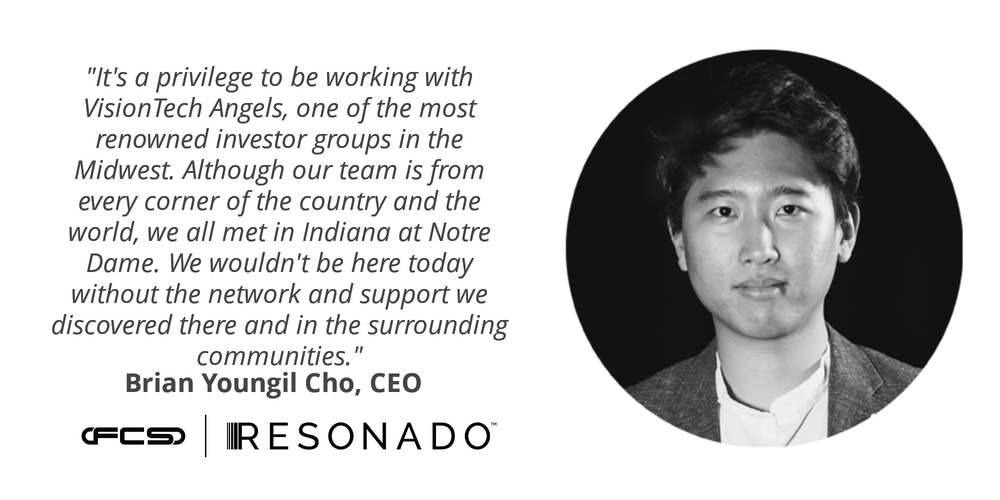
Resonado CEO and Co-founder Brian Youngil Cho welcomes VisionTech Angels to the team. “It’s a privilege to be working with VisionTech Angels, one of the most renowned investor groups in the Midwest. Although our team is from every corner of the country and even the world, we all met in Indiana at Notre Dame and Resonado wouldn’t be here today without the network and support we discovered there and in the surrounding communities. Part of the support when we were first starting out was from investors at VisionTech Angels, and so this investment is particularly meaningful for us. We’re determined to keep working hard to take our company to the next level and hope to represent Indiana and the Midwest well along the way.”
Resonado was founded in 2017 by Notre Dame students Cho, Christian Femrite, Erikc Perez-Perez, and Peter Moeckel, who were focused on developing audio technology more in-line with today’s devices. The result is a thinner, lighter, and more versatile speaker architecture that replaces the century-old speaker “cone” and gives manufacturers and brands greater flexibility to create and integrate into their products. This is welcome news for the wireless audio device industry, estimated to reach $134.2 billion by 2025 the automotive sound system market, and others that rely on innovative design and sound quality to drive consumer demand.
Resonado plans to apply the proceeds of the round to strengthening its intellectual property protection, support ongoing research and development, and finetune market readiness and manufacturing. The company signed a licensing agreement with leading audio manufacturer Zylux in late June and has three products set to hit store shelves before the end of the year.
About VisionTech Partners I VisionTech Angels Founded in 2008, VisionTech Partners I VisionTech Angels is a privately held company that links investors to high-potential, early-growth companies. Based in Indianapolis, capital of one of the nation’s most vibrant innovation regions, VisionTech Angels has chapters in Bloomington, Fort Wayne, Indianapolis, Lafayette, Dayton, Ohio. Our investment portfolio includes 35 companies, and more than 130 members across Indiana and Ohio. Membership is open to accredited investors. Those interested in joining are encouraged to contact VisionTech Angels.
About Resonado Resonado is an American technology company that designs and provides proprietary speaker transducer technologies to brands and manufacturers. The company’s flagship product, Flat Core SpeakerTM (FCS™) technology, is redefining the shape of sound with a fully scalable, thin-profile, lightweight, premium electrodynamic speaker transducer type. FCS technology’s thin structure and high aspect ratio enables unprecedented design innovations to products in industries including aerospace, automotive, consumer electronics, home theater, and marine. Resonado launched the brand nationwide as the Official Sound Partner of Notre Dame Athletics in late 2019 with plans to enter the marketplace in 2020. The company was founded by four undergraduate students at the University of Notre Dame in 2017 and is based in South Bend, Indiana. Learn more at resonado.com.
I recently met with CarrierHQ CEO Scott Prince, an Indianapolis-based company that focuses on optimizing small fleet insurance and payments and offers a much-needed solution to small carriers in the form of an online marketplace where they can get insurance, bring down premium costs, and enjoy a host of other add-on services that make running a small business easier and more profitable. Here’s a preview of the CarrierHQ story Scott will share in detail at VisionTech Angels’Pitch Events later this month. Enjoy!
BP: How did you learn about VisionTech Angels? SP: I’ve lived in Indianapolis since 2007 and have been on the board of The Venture Club of Indiana and other investing groups. When we started our fundraising, I mentioned it to Oscar Moralez and he referred me to VisionTech Angels.
Ben Pidgeon
BP: Explain CarrierHQ and the problems you’re solving. SP: Just like any industry, the commercial carrier industry is driven by two things, time and money. You have to get products to their destination as cheaply, safely, timely, and as profitably for yourself as possible. And you have to do it by insuring your tractor-trailer rigs. While challenging, the big carriers keep their insurance costs under control by negotiating contracts for thousands of trucks at a time. That’s not the case for small fleet owners. The biggest problem they have is getting and paying for insurance, which has doubled in the last few years, with some paying over $20,000 per truck. Compounding that is insurance companies want large premium down payments. With thin operating margins and weekly receivables, small operators find it hard to start a policy without adding the expense of premium financing and then find it difficult to pay the quarterly installments. Helping their cash outflows match up with weekly inflows can really strengthen their business.
Our solution is similar to ones being used in the personal vehicle space that combine in-vehicle telematics data with an insurance premium risk and rating algorithm to qualify and track active driver performance and reward those with safe driving practices. An example of this is State Farm’s Drive Safe and Save program. We’re applying that same approach to the commercial carrier industry. Earlier this year, we launched Fleet Advantage, the first and only usage-based insurance to the motor carrier industry in partnership with Aon and Crayhill Capital Management. Aon is a $40 billion, publicly traded, global professional services firm that sells a range of financial risk-mitigation products including insurance. Crayhill supplies us with a $150 million factoring facility we can turn dozens of times each year. By tracking driver performance and rewarding those who adopt safer driving habits, we can bring down insurance costs by as much as 50%. We provide actionable data into their drivers’ on-the-road behaviors so they can coach or make other changes.
BP: What are the other benefits? SP: We’re following the consumer model there, too. With CarrierHQ, small fleet owners can go to our online portal, get a quote, purchase their insurance, manage payments, and update their policy—all in minutes versus days or weeks. This is a huge time-saver for people juggling all of the other tasks associated with running a fleet. No more time wasted with back and forths with brokers, supplying frustrating loss data and faxing. Yes, faxing is still prevalent in the industry if you can believe it. Additionally, we offer factoring, and without going into a lot of detail here, so they pay monthly for their insurance and enjoy a no money down option. It’s very similar to automatic bill pay. It’s a huge solution for small fleets that often have problems with cash flow.
Scott Prince, CarrierHQ
BP: Is insurance your only offering? SP: No, but it is our primary focus along with payments. We offer some add-on products like Comdata OnRoad fuel and funds cards, ELDs, leasing, and business formation services, and eventually will leverage the unique data we’re collecting across the motor carrier value chain in a number of ways.
BP: Who is the ideal customer – small or large fleets? SP: Our ideal customer is the small, privately owned commercial carrier company with a fleet of less than 20 tractors. These folks tend to be very entrepreneurial, typically have a high school education, pretty good at juggling all aspects of the business, but challenged by insurance premium costs and slow cash flow. We also meet with larger fleets and aggregators in the industry that want to consolidate contractors or convert fleets to owner-operators.
BP: What do fleet owners like about CarrierHQ? SP: The biggest thing is the money we save them direct control of their big insurance cost. We’re effectively turning insurance from a fixed to a controlled variable cost. It can cost up to $20,000 a year to insure a Class A truck. Semi-tractors like this can gross over $200,000 a year, and it’s painful when 10 percent of that has to go to insurance. If they drive safely, they get an initially competitive rate that can go down by as much as 30 percent in-term. Instead of spending $15,000-20,000 per truck, they’re spending $8,000-12,000. Putting that kind of money back in their pocket makes them very happy and gives them the ability to add equipment to their fleet. Conversely, if they don’t drive safely, their rates increase. Either way they get access to data so they can instantly manage their drivers. Fleet owners also like the fact they can manage everything on the CarrierHQ portal on their smartphones. When you’re on the road like they are, that convenience is greatly appreciated.
BP: How big is the market? SP: There are a million small fleet motor carriers with 20 or fewer trucks, and many have fewer than five. In terms of the usage-based, pay-as-you-go insurance market, it’s anticipated to cross $115 billion (US) by 2026. Our initial focus is a 250,000-truck market of safer driving small fleets with annual premiums of $36 billion. We’ll expand from there.
BP: Do you have competitors? SP: No. We’re the first and only usage-based motor carrier insurance. Progressive and Great West are major players in the motor carrier market, but don’t yet have comparable products to compete with us. BP: What is your competitive advantage? SP: It’s definitely being first to market with a solution for a major business-killing pain point. Also, companies have to meet individual state requirements and be approved by state departments of insurance as well as meet federal regulations. Currently, we’re approved in 22 states with another 12 states pending. We’ll be in 47 states by the end of the year.
BP: There’s been tremendous disruption in the logistics and trucking industries due to COVID-19. How has it affected your business? SP: Like everyone else, we were closely monitoring how the pandemic would impact our business. Instead of slowing down, it has boomed. While some industry sectors have slowed, ecommerce and consumer products-related hauling is active, and smaller fleets have adjusted much more quickly to the new normal. While the larger fleets have had difficulty quickly adapting to supply chain disruptions, small fleet owners are often more flexible. And CarrierHQ is right there with them, keeping them covered and supplying them with essential, competitively priced and easy to use back-office services to help them grow.
BP: What will this fundraising round be used for? SP: Right now, we have a productive team of 13. We’ve purposefully hired people who are experienced, very good at their roles and can multi-task. As we bring on states, we’ll need to scale our team. The new funds will largely be directed toward product development, customer acquisition and marketing, and expanding our client service team.
BP: Why should VisionTech Angels invest in your company? SP: There are two reasons. What CarrierHQ is doing should be an interesting play to anyone with experience in insurance technology, fintech or transportation; they know the pain points. And frankly, we want investors who won’t stand on the sidelines, but will share their expertise. Second, the financial return could be significant. We’re very much tech-driven and tech-enabled and while we’re solving an immediate need, insurance, the data we’re collecting opens the door to more opportunities. All of this makes CarrierHQ exciting and attractive to investors.
To learn more about CarrierHQ, visit their website. VisionTech Angels’ August Pitch Events include a live event on Tuesday, August 25 in Fort Wayne at the Pine Valley Country Club at 6 pm and a virtual pitch event on Thursday, August 27 at 6 pm. Pitch events are open to our members and accredited investors interested in joining our group. To register, check your email for an invitation or email Ben Pidgeon at bpidgeon@visiontech-partners.com.
Disruptive startups have the ability to change entire industries. Think about Airbnb and how they disrupted the vacation rental industry. Or Instacart, which is changing how we shop for groceries. Rajan Kumar, founder and CEO of Ateios, our first August Pitch Event presenter, has big plans to redefine the battery industry with a technology called conformal electronics. I have to admit, I had no idea what that was before meeting Rajan. In a nutshell, it’s a battery printed on flexible material that conforms to the application’s requirements. This is the polar opposite of traditional rigid batteries that fit into products designed to accommodate their shape. Rajan’s battery technology is driven by the $6.7 billion primary market demanding thinner, lighter power sources for a wide range of electronics. Here’s a preview of the Ateios story Rajan will share in detail at VisionTech Angels’s Pitch Events later this month.
Ben Pidgeon, Executive Director, VisionTech
BP: How did you learn about VisionTech Angels? RK: I met Oscar Moralez for coffee through the TechStars Accelerator powered by The Heritage Group. After sharing the Ateios story, he suggested VisionTech Angels was a better fit given the stage of the company. So here I am.
BP: Why did you relocate Ateios from the West Coast to Indiana? RK: Actually, we’re bi-coastal. Our business team is located in San Diego to be accessible to Southern California and Silicon Valley. Our R&D and manufacturing team, including myself, relocated to Indiana to take advantage of the Battery Innovation Center (BIC), a $15 million R&D and commercialization center in southern Indiana. We had landed a significant customer and they were concerned about our ability to manufacture. The BIC could help us with scaling our manufacturing. Since we began collaborating with the BIC, we’ve improved our battery capacity by 30%.
BP: Ateios’ focus is “conformal electronics?” What exactly is this? RK: Conformal electronics includes materials, components, and devices that exhibit some degree of mechanical strain tolerance or stretchability. Traditionally, batteries used in electronics are very rigid and shaped like a cylinder or coin. The technology has not changed in more than 40 years. Here’s an example, if you wanted to integrate a heart monitor into clothing, conformable electronics make the device thinner, less bulky, more forgiving with body movement, and infinitely more wearable than a rigid device. Ateios is building paper-thin, flexible batteries that enable this.
BP: Explain Ateios and the problem you’re solving? RK: Basically, what we’ve done is enable any material to be printed with energy with three key attributes: our batteries are paper thin, they achieve 2-5 times the energy density of coin cells and they’re customized to the needs of the product. These printed, stretchable batteries satisfy the trend of ever thinner electronics and personal devices. There is tremendous growth in etextiles used in the fitness and medical device industries; shirts and other garments that can monitor heart rates, blood pressure, diabetes, etc. Another application is industrial IoT such as sensors that monitor temperature, humidity, and vibrations in a manufacturing or distribution environment. Rigid batteries just don’t work for these applications.
Rajan Kumar, CEO, Ateios
The other major problem we’re solving is how to produce these batteries at a cost attractive to customers. We can manufacture our batteries 10 times faster and at one-third the cost of our competitors. This will drive innovation and adoption.
BP: What kind of IP do you have? RK: Our company started with the invention of the first printed, stretchable battery. We have progressed a portfolio of intellectual property structured around systems, analytics, materials, and technologies that are needed to reshape batteries through rapid, custom manufacturing.
BP: What’s your business model? RK: Our goal is to manufacture and sell the batteries to customers. We plan to build our manufacturing facility in Indiana as the state has deep experience with battering technology and a strong manufacturing presence. We have also received incentives from the Indiana Economic Development Corporation (IEDC) to locate here.
BP: How big is the market? RK: Huge. Primary batteries for electronics, typically zinc oxide, is a $6.7 billion market. The rechargeable battery market is a $15 billion market. We are concentrating our efforts on the primary battery market such as wearable devices first. However, we also will pursue larger opportunities in industrial IoT space that includes soft robotics and complex sensors used by global companies like Amazon and others for asset tracking.
BP: Do you have competitors? RK: ThinFilm in San Jose, California, is our largest competitor and they’re looking at one billion in unit sales by 2025. There are smaller companies as well. Ateios’ advantage is that we’ve achieved price parity with coin batteries, and we have great partnerships to scale manufacturing. The latter has been a challenge for competitors.
BP: What will this fundraising round be used for? RK: We are in the process of closing an $800,000 investment round and plan to use the funds to convert three to four customers – two in wearables and two in industrial IoT – into multi-million-dollar customers. We also plan to strengthen our IP and increase our customer pipeline to 10 to 12 customers. In addition, our recent success with NSF SBIR proposal, we are confident the funding round will give us beyond 18-month runway to achieve these goals.
BP: Why should VisionTech Angels invest in Ateios? RK: We have a compelling product with paying customers. Our management team has more than 30 years of experience in the semi-conductor and battery industries, giving us tremendous industry credibility. Our partners—Techstars, The Heritage Group and the Battery Innovation Center—are exceptional. Lastly, we will be extremely efficient in our use of funds.
BP: Sounds great! We’re looking forward to the pitch events.
To learn more about Ateios, visit their website. View VisionTech Angels’ August Pitch Events schedule here. The pitch events are open to our members and accredited investors interested in joining our group. To reserve your spot, check your email for an invitation or email Ben Pidgeon at bpidgeon@visiontech-partners.com.















 BP: Do you have competitors?