Indiana’s largest pitch event is bringing big name speakers, top startups to the stageof the NCAA Hall of Champions Convention Center Wednesday, September 1
INDIANAPOLIS, Indiana (August 19, 2021) — When Chris Baggott launched and then successfully exited ExactTarget to Salesforce for $2.7 billion in 2012, little did he know he’d go on to co-found not just one, but two more industry-transforming companies, Compendium Software in 2006 and ClusterTruck in 2012. Baggott will share his entrepreneurial “secret sauce” for success in creating and scaling cutting edge software companies as one of the featured guest speakers at the 13th Annual Innovation Showcase sponsored by the Venture Club of Indiana.
Baggott, who now serves as CEO of ClusterTruck, a tech company redefining the on-demand food delivery market, will be joined in a fireside chat format by Don Aquilano of Allos Ventures, is part of an all-star line-up of guest speakers sharing personal insights at The Innovation Showcase on September 1 at the NCAA Hall of Champions. Doors open at 11:00 a.m. to the Entrepreneurs’ Expo and lunch with the formal program, which includes the signature pitch competition featuring the “best of the best” Indiana startup companies, starting at 1:00 p.m.
Tapping into Indianapolis’ rich history in racing, Paul Mitchell, CEO of Energy Systems Network, will tell the story behind the state’s next big disruption, the “Indy Autonomous Challenge – Race to the Future.” Mitchell will be joined onstage by Dave Roberts, chief innovation officer, IEDC; and Stefano Deponti, CEO and general manager, Dallara Car Factory. Set for October 23 at the Indianapolis Motor Speedway, the Indy Autonomous Challenge is the world’s first self-driving racecar event in which teams of college students will go head-to-head in a 20-lap race of automated Dallara AV-21 race cars. The first team over the finish line in 25 minutes or less will capture the top prize of $1 million. Mitchell will discuss how the competition will catapult game-changing autonomous vehicle technology forward and inspire the next generation of automotive engineers and innovators.
The Showcase also welcomes as keynote speaker, John Lilly, managing member of Lateral Capital, former senior executive at Proctor & Gamble and CEO of the Pillsbury Company, who over the course of his 27-year career in the consumer products industry built more than 50 branded businesses in 25 countries. Lilly is now a full-time investor in early-stage companies, and Lateral’s six funds have invested in more than 90 companies across 23 states. Lilly will share stories of successes and failures during his keynote, “Don’t Do This! What Early-Stage Companies Need NOT To Do When Raising Capital.”
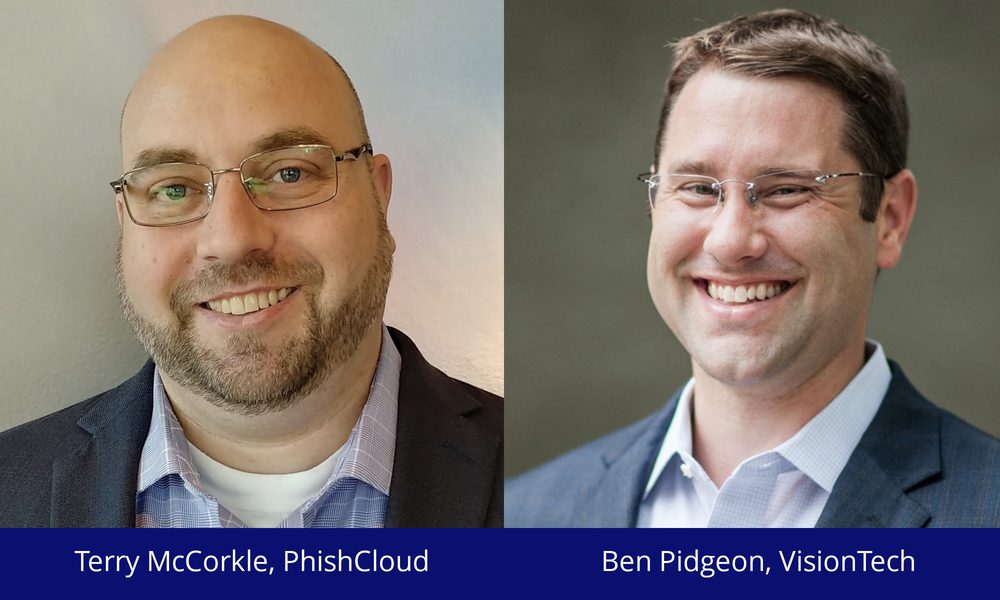
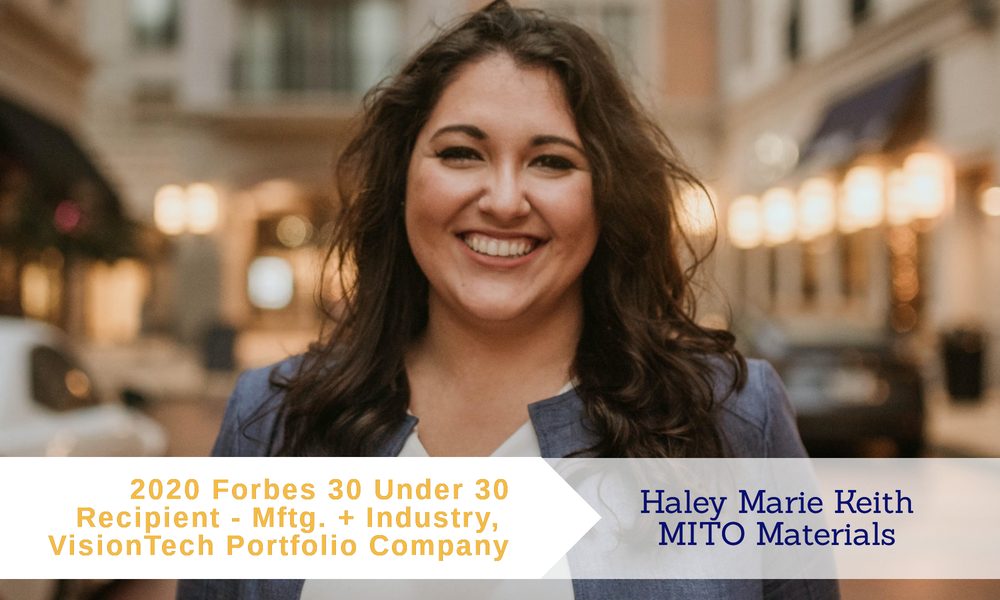
Other featured speakers include two of Indy’s top female entrepreneurs, Christine McDonnell, CEO of Codelicious and Haley Marie Keith, CEO of MITO Materials and 2020 Innovation Showcase winner, who will be interviewed by Ben Pidgeon, executive director of VisionTech Angels.
The public is invited to attend Indiana’s premier event for investors, capital sources and fundable game-changing companies. Details on The Innovation Showcase and ticket information are available here.
I was introduced to Doug Rowe and Dylan Vester, co-founders of GeoH, by Oscar Moralez, VisionTech’s managing director. He had worked with Doug years ago when still at Biostorage. After learning more about GeoH’s solution for the home health industry, Oscar referred them to me and I was immediately impressed. Doug owns a home care company, and he understands the pain and inefficiency of an industry still reliant on paper for billing and payroll. Three years ago, he and Dylan set out to provide a cloud-based alternative. Fast forward, and their traction is impressive. Both are running hard and enjoying every minute, so the VisionTech Angels Screening Committee invited them to pitch. Here’s a sneak preview. I hope you’ll join us to hear Doug and Dylan during our August Pitch events on the 24th and 26th of this month.
VisionTech’s Ben Pidgeon
BP: Many founders have a personal passion behind their company. What’s the back story on GeoH? DR: I started a home care company in Indiana four years ago, and the business grew fast. The only problem was that everything about the business was paper based, from how caregivers tracked their patient visits to billing and payroll. Total and complete nightmare. I wanted an app to solve the problems I was facing in the business, so I called my now co-founder Dylan Vester. We worked to make something that not only solved the problems I was facing in the home care space, but was built on bleeding-edge cloud technology so iterations and features can be easily added. As of today, we provide online scheduling, billing, payroll, reporting and analytics, user management, and notifications. Because of changes in the industry brought on by regulations and laws like the Cures Act and market events like COVID, we are constantly evolving and enhancing our platform to meet current and new pain points.
BP: What pain point are you solving with GeoH? DR: The home health industry is primarily owned by small independent agency owners/operators. Some of them have been in the business for decades, and many still use paper forms as a tracking mechanism. It’s an issue because they have to save paperwork for seven years. If you have a larger operation, you have a warehouse full of old documents. Outside of the obvious administrative burdens we relieve as a digital solution, we also satisfy the 2016 Cures Act for Electronic Visit Verification (EVV). We make running an agency more efficient while simultaneously keeping agencies compliant.
BP: When did you launch and what kind of traction are you getting to date? DR: We launched the company in 2017, spent a year in development, and began selling in 2019. We’ve been adding users and caregivers ever since. We’re now in 11 states with aggregators, with 130 agencies, plus more than 3,000 users and counting. I give a lot of credit to Dylan for our traction. The product, our user interface, and user experience drive agencies to us from other software solutions.
DV: (smiles) I spent a lot of time on the user experience. Before this, I worked with Salesforce and Microsoft, and I’ve applied much of the same sophisticated backend computing and automation you find in their products. We may be a small company, but our platform and app are very sophisticated and work well.
BP: What benefit is most appreciated by customers? DV: Our customers are not typically computer savvy, so we’ve designed the platform and the app to be super simple and intuitive to use. We can have new clients live in five minutes. There is not a long, steep learning curve to work in the solution from a functional side. People understand the platform and workflows immediately. Caregivers only have to go to one screen to document their visits. Again, super easy, intuitive, and they don’t have to spend time writing paper notes and turning them in. Their work notes go straight into the agency’s system.
DR: As a home care agency owner myself, I like that we’ve made paper obsolete for operations like payroll. Our software tracks a caregiver’s days, hours, and waiver code for each patient visit, making documenting patient visits so much easier for caregivers. GeoH has a client with 14 locations and 1,000 caregivers. It would take him two days to do payroll because each caregiver’s hours, visits, and coding differed. So basically, it was like doing payroll 1,000 different ways. Because employees’ time and visits are captured digitally, go straight to the cloud, and because the process is automated, payroll takes under an hour. This owner has a $20 million business and by switching to GeoH, we’re saving him $1.2 million annually in reduced overhead. That would not have happened if he’d stayed with paper.
BP: What’s your revenue model? DR: As a cloud-based, SaaS solution, it’s a user-based pricing model determined by the length of the contract. Two-year contracts are $10 per user; one-year contracts are $12 per user, and month-to-month is $15 per user. We have a 97% retention rate with clients and are very sticky regardless of their plan. Once we launch the skilled version (nursing, therapy), our monthly recurring revenue jumps 4x based on current clients and the additional cost of the new features while opening a new vertical.
BP: Is GeoH unique in the market or do you have competitors? DR: There are many competitors out there with home health management software but nothing like GeoH. The short answer is our platform and app work. But here are some examples. We’re a standalone solution but we’ve completed critical integrations with state aggregators in 11 states, with more coming on shortly. We work with government agencies like the Indiana Department of Health, CMS, and ACHC to stay informed on regulations and upcoming changes to add those nuances to the software. This advantage garnered my agency’s perfect survey results with zero deficiencies and zero tags the past two times. We’re also integrated with managed care organizations. Our users love us and refer others to us weekly.
DV: From a software perspective, our app is native unlike competitors’ apps so it opens up much like Facebook without requiring a webpage login. We work equally well on iOS, Android, tablets, and PCs. The app is intuitive and the workflow mimics that of a home health agency. Additionally, our support for the software is second to none. Not only do we have a standard call in/email support system, but we also utilize newer technologies for faster response through SMS messages.
We are now working on our next release that will include the initial patient assessment, 485 doctors’ orders and sending the transmission of data to Oasis in Texas, which is how Medicaid determines billing amounts by service. These are the feature sets required for the skilled side that do not already exist in our platform. This functionality is huge and as Doug mentioned, will significantly increase our monthly recurring revenue.
BP: Is there any IP or patents that protect your market position? DV: We have trade secrets in the way the platform is built to manage large volumes of data, provide safety and security of information, and to massively scale as the business grows. Our algorithms also help streamline operations across multiple operating systems and allow us to integrate seamlessly with multiple external applications to provide robust business tools. Many competitors are attempting to do what we do; however, we’re using new, cloud-based technology that is synchronous, giving us a significant advantage over competitors.
BP: How big is the market? How are you prioritizing your rollout? DR: With the aging population, the market is huge. There are three million caregivers In the United States and the industry is expected to add another 1.5 million by 2024. We’re targeting states with the highest amount of Medicaid dollars where we can grow the fastest.
BP: How much are you planning to raise and what will the proceeds be used for? DR: This is a seed round and our goal is to raise $1.5 million. Funds will be used primarily on head count and adding more functionality. A big focus will be on the development team and sales team as this is a one-on-one sales play.
10) Why should VisionTech Angels invest in your company? DR: The home care industry faces a government mandate to be EVV compliant with charting, billing and payroll practices. No one wants to change but they have to, and ours is the only solution that’s easy to implements and ensures compliance. To put it in perspective, in Indiana alone there are 1,400 agencies that need to be compliant now. The opportunity is significant. We are well-positioned and believe VisionTech Angels will want to be a part of GeoH’s success.
To learn more about GeoH, visit their website. VisionTech Angels’ August Pitch Events will be virtual on Tuesday, August 24 and Thursday, August 26 at 6 p.m. Pitch events are open to our members and accredited investors interested in joining our group. To register, check your email for an invitation, go to our Events page or email Ben Pidgeon at bpidgeon@visiontech-partners.com.
Many years ago when I was a Purdue student, I worked part-time at a local retirement and long-term care facility in West Lafayette. It was the “cream of the crop” in terms of quality of care and resident experience, but even then, I could see the constant demand by family members for information on loved ones and how this challenged staff. That said, staff also had information needs not always easy or immediate to satisfy. I first met Doug Wilcox, CEO of Safekeeping, at a VisionTech Angels Screening Committee meeting a few years back. Although we liked the business model, it was very early stage, so we passed. Time passed and when Doug pitched the committee a second time we said yes because of Safekeeping’s impressive traction and market trends that could accelerate adoption. We invited Safekeeping to present during our August Pitch Week. Here’s a sneak preview. I hope you’ll join us to hear Doug and participate in the discussion on this investment opportunity.
BP: There’s a good personal story behind the founding of Safekeeping. Do you mind sharing it? DW: Not at all. It’s kind of a two parter. My co-founder, Matt Prasek, started the company while a senior at Ball State University. His grandfather had a skiing accident that left him incapacitated and in nursing facilities for the rest of his life. Matt felt like he was constantly badgering his grandfather’s caregivers for updates so for his senior class project, he came up with a communications tool, which was named Best New Venture at Ball State. The second part is my own experience with my mother who spent the last 18 months of her life in a long-term care facility. I would have to drive two hours just to get questions answered about her care and condition. The facility gave me a flier on Safekeeping and intrigued, I reached out to Matt and joined him in 2017. At the time, Safekeeping had one customer, the facility where my mother lived.
BP: What pain points do you address with Safekeeping and the How’s Mom platform and app? DW: America is aging out. Seventy percent of the population age 65 and over will require long-term care at some point in their lives. Every day, 10,000 Americans turn 65. This is a huge population. And all of them have families who want to know how mom or dad is doing in long-term care. Complicating matters is the fact that many adult children do not live in the same city or town as mom and dad, which makes it harder to get information on their loved one.
Another pain point is at the caregiver level. The workforce is under incredible stress. Turnover is huge. Workloads are heavy. There simply is no time to respond to all the requests they get for information, the need to share information, and also, to gather critical information such as consents. The long-term care industry, users and providers, needs a digital solution that improves communication, quality of care and relieves a huge burden from caregivers and administrators.
BP: What is your value proposition? DW: Safekeeping’s How’s Mom platform is an automated, self-service family connection integrated with a long-term care or senior care center’s electronic health record (EHR) system. At the core of the solution is the How’s Mom Connections Hub that allows a facility to easily manage all family interactions such as share details on their clinical charts, document compliance with CMS communications rules within the EHR, communicate with families via text, email and the How’s Mom app, and automatically synch family contacts.Families have real-time, on-demand access to information they want and need about their loved one. They can schedule visits and receive notifications through the app. Patients also benefit from our platform.
BP: Where are you in the commercialization process? DW: We are fully commercial and working on platform enhancements and functionality.
BP: What’s your traction like thus far? Any barriers to sales? DW: We currently have 172 paying facilities in 32 states, with another 128 facilities actively participating or planning 30-day pilot programs. The biggest barrier to sales is the perception that IT implementations are difficult and time consuming. So there’s this cringe factor when people hear “software deployment.” The reality is our How’s Mom platform is nothing like that. Because we integrate with existing EHR systems – PointClickCare and MatrixCare as of today – implementation can be done in days with a minimum of effort. And truthfully, from our end, it takes less than an hour. The platform is very intuitive, so staff training is minimal. Families simply download the app and they’re live. That said, we offer 30-day free pilots to facilities so they can try it with no obligations.
BP: COVID had a profound impact on nursing facilities and created fear and anxiety among families, patients and caregivers. How has it affected Safekeeping? DW: As you mentioned, COVID created anxiety among families especially in states that locked down long-term care facilities. The need for information on loved ones exploded when families could not visit in person. On the other side of the spectrum, facilities were under enormous pressure to stay staffed and create a safe environment for workers. Because of COVID, there has been tremendous turnover in staff such as nurses, social workers and particularly among CNAs. Add to that, new demands on staff time and no money to fund new protocols so we’ve seen long-term care facilities shut down as a result. So this is a stressed industry.
Safekeeping has thrived under COVID because we remove communication and administrative burdens from staff and provide that critical, real-time connection point to information for families and loved ones.
BP: The federal Cures Act is also working in your favor, correct? DW: Absolutely. This is an act passed in 2016 and is intended to give patients safe and secure access to health data so they can better manage their care and make more informed healthcare decisions. It was first implemented in hospitals and medical practices – you’ve likely used the portals hospitals now have on their websites – and now it is set to be implemented in long-term care facilities. Healthcare providers need to be ready to share certain electronic health records with patients and family members on request to be Cures Act compliant.
Here’s the deal. While some of our clients are aware of the Cures Act and are specifically implementing our platform as their solution, many long-term care facilities are not aware they have to be compliant with the Act. Those not in compliance will face financial penalties in the form of lower reimbursements. As far as we know, Safekeeping, with our clinical focus and EHR integration, has the only platform that is Cures Act ready. Other apps will pop up, but this is not an easy integration. It will take at least 12 months, and probably longer, for a competitor to develop a solution.
BP: Do you have any IP protection? DW: We are looking into patents and IP protection with our legal team. We do have it on our radar and likely will use a portion of funds from our next raise to begin the process.
BP: Do you have competitors? DW: We do. Kind of. There are a number of companies focused on the social side of long-term care. They address social engagement, sharing photos and videos between mom and dad and their families. That’s the easy stuff. But it doesn’t solve anyone’s problems. Social apps make work for caregivers, add additional processes, and some require additional hardware and software—all of which are big turn-offs for senior care operators.
Safekeeping’s How’s Mom platform does the heavy lifting in terms of functionality and usability. Caregivers, families, and patients get a much richer, more complete experience in a self-serve format. Because we’re integrated with a facility’s EMR system, families can access information on their family member’s vitals, conditions, medications, and nutrition – the type of information people normally must call in to get.
BP: How much are you planning to raise and what will the proceeds be used for? DW: This is a seed round and we’re hoping to raise $1 million to get us ready for a Series A raise. Half of this raise will go to continuing to add functionality to the platform that will drive adoption. The other half will go to sales and marketing. We just hired our first employee, a full-time salesperson, and customer support representatives will be added soon as well.
BP: Why should VisionTech Angels invest in Safekeeping? DW: Four reasons. Founders who have personally lived the pain points of the industry and have a passion for delivering the right solution for caregivers, families and patients. Momentum in the industry; we’re integrated with the largest EHR company in the long-term care industry which provides instant credibility and ease of use. We’re market proven with nearly 200 users. And finally, timing is in our favor. Because of the Cures Act, long-term care facilities may soon be mandated to provide the type of information Safekeeping makes accessible now without adding any burdens to users. I hope VisionTech investors go big.
To learn more about Safekeeping, visit their website. VisionTech Angels’ August Pitch Events will be virtual on Tuesday, August 24 and Thursday, August 26 at 6 p.m. Pitch events are open to our members and accredited investors interested in joining our group. To register, check your email for an invitation, go to our Events page or email Ben Pidgeon atbpidgeon@visiontech-partners.com.
INDIANAPOLIS, Indiana (July 8, 2021) – – In the largest initial investment in the group’s 12-year history, VisionTech Angels have invested $575,000 in road construction productivity app OnStation, in a seed round that closed at $1.4 million. Cleveland, Ohio-based OnStation also has the distinction of being VisionTech Angels’ 50th portfolio company.
VisionTech Angels led the round, with 53 of its investors participating. Joining VisionTech Angels in backing OnStation were HG Ventures, Indianapolis; Jumpstart, Cleveland; and Golden Angel Investors, Brookfield, Wisconsin. The round, which will be used to scale the company nationally, was oversubscribed by $400,000.
VisionTech Executive Director Ben Pidgeon said the investment was significant on many levels. “Unlike a venture fund which writes one check, angel groups like VisionTech are composed of individual investors who decide whether or not to participate in a deal. Leading the investment round in OnStation with participation from this volume of members is a real achievement when the average check per VisionTech investor was just over $10,000. It came down to our investors having a lot of trust and confidence in OnStation’s Founder and Chief Technology Officer Jake Bailosky and CEO Patrick Russo.”
Pidgeon adds, “We’re impressed with the current abilities of the product, the problems it solves for the road construction industry, customer feedback, market size, and growth potential.”
The OnStation app, which enables better communications, productivity, and efficiency for road construction projects could not be better timed. On Thursday, July 1, the U.S. House of Representatives passed a $715 billion highway and water infrastructure bill that would direct $343 billion to highway and bridges infrastructure projects. The U.S. Senate is currently debating a $1.2 trillion infrastructure deal.
While there’s no deal yet in Washington D.C., OnStation’s Russo says the company will primarily use the funding to scale the company, which is currently in use in 23 states. “We recently hired a growth marketer and civil technology engineer and have immediate plans to add sales professionals and additional developers so we can rapidly add more functionality to the app and automate the project onboarding process. Once a federal infrastructure bill is passed, we anticipate more states initiating roadway construction projects. Tools like OnStation will support better project management and greater productivity and efficiency to road construction teams. The volume of construction projects will make OnStation’s app essential to keep projects on track.”
OnStation is the brainchild of founder and CTO Bailosky who worked as a project engineer at the Ohio Department of Transportation (DOT) and who experienced first-hand the daily challenges of managing road construction projects. Bailosky also served on the Ohio DOT’s technology review board for four years and saw all of the tech solutions the agency was considering. He taught himself how to code and built the first generation of OnStation, the first jobsite productivity app that serves as a complementary plugin to larger road construction tech solutions.
Today, OnStation is an industry leading application that brings better communication and efficiency to jobsites. Bailosky and Russo also credit JumpStart Cleveland, which mentored and supported the startup for four years, for much of their success to date. Over the last seven months, OnStation’s customer base is up seven-fold.
Russo says it’s just a start. “We want to be on every jobsite and every road in the United States. And beyond!”
About VisionTech Founded in 2009, VisionTech is a privately held company that links investors to high-potential, early-growth companies. Based in Indianapolis, VisionTech’s angel investing network includes more than 120 active members and chapters in Bloomington, Fort Wayne, Indianapolis, Lafayette, Indiana; and Dayton, Ohio. As of December 2020, 180 VisionTech members deployed more than $21.5 million in capital, investing in 50 portfolio companies from across the United States. Membership is open to accredited investors. Those interested in joining are encouraged to contact VisionTech.
About OnStation OnStation is a highly collaborative mobile application created by PROJiTECH that empowers road construction workforces by supporting location-based documentation and communication across the entire project. This includes automatic location, access to project design files and contract documents, streamlined issue tracking, and group communication features. Through higher engagement and connectivity, OnStation enables more efficient jobsite workflow, keeping cones off the road, traffic flowing and work progressing. Learn more.
While we were reviewing companies for June Pitch Week, a colleague at Lateral Capital, a micro VC in Sarasota, Florida, suggested VisionTech Angels take a look at Sensytec, a tech company out of Houston with a solution for the concrete industry. When I connected with the company’s CEO and Co-founder Ody De La Paz, he explained just how old school the concrete industry is and as a result, what a bottleneck and budget buster it’s become for the construction industry. Their solution is two-pronged, wireless real-time monitoring of concrete and an app that keeps a contractor’s fingers on the pulse of a job’s concrete, potentially saving a tremendous amount of time and money. The VisionTech Screening Committee and I invited Ody to present during our June Pitch Week. Here’s a sneak preview. I hope you’ll join us to hear Ody and participate in the discussion on this investment opportunity.
BP: How did you get involved in the concrete industry? OD: I worked in the construction industry in my late teens and early 20s and found out quickly that working with concrete, specifically pouring and breaking test cylinders, was back-breaking work. I literally waited for the concrete trucks to come to the job site, they’d fill my wheelbarrow, I’d shovel the wet concrete into cylinders, wait for it to dry, and then break the cylinders to see if it had set correctly. It was time consuming and like I said, back breaking!
Later, as a student in the University of Houston’s entrepreneurship program, I met Anudeep Reddy, a civil and structural engineering student. He was working on a “smart cement” technology for monitoring the structural health of concrete and cement. I was intrigued. We started working together and in 2016 we co-founded Sensytec.
BP: What pain point did you see in the market? OD: Concrete is a paint point for the construction industry. (Laughs) As complicated as it can be, the process of pouring, curing, and monitoring concrete is pretty much a guessing game. It’s largely reliant on manual tests that involve casting test cylinders, waiting for them to cure, and sending them to a lab to perform a break test. This is extremely time consuming. There are also many variables that can go wrong with concrete such as weather, the wrong mixture of water and cement and human error. During this last year, we’ve seen a labor shortage, causing more issues. Finally, problems with concrete can set a project back weeks and when a project goes past a deadline that costs money and contractors lose bonuses for meeting deadlines.
Our solution, called SensyRoc™, is a wireless sensor that is embedded into the concrete as it’s poured. The sensor collects real-time data as the concrete cures, sending it wirelessly to our free mobile app where users, contractors, and their teams can instantly see and share what is happening with the concrete. Monitoring in place with Sensytec means no more cylinder tests are needed, less manual labor is needed and no waiting days for results. It’s all there on their smart phones when they need it, which is usually now. Time is money, and if you can save even a day on pouring, that’s significant. On average, we save contractors two days per pour on their projects, which equates to about $7,000- $10,000 a day.
BP: That’s impressive. What kind of data are you tracking? OD: We’re tracking and monitoring a number of things like the in-place temperature of the concrete as that impacts the quality of the cure. We’re also tracking the setting time and compressive strength. And finally, the thing that really sets Sensytec apart is that we’re monitoring the electrical resistivity. When concrete is poured there can be voids, air pockets if you will, that won’t be detected by monitoring temperature alone. Electrical resistivity identifies the nature of voids. If there’s a problem, it can be addressed immediately and not weeks, months, or years down the road when it could become a structural or even liability issue. Electrical Resistivity also provides data on Hydration of concrete, water & cement ratio, and slump of concrete allows contractors to fully understand their concrete mix and better optimize their mix designs for their projects.
BP: What kind of IP do you have? OD: We currently hold a worldwide patent on Smart cement technology and have a patent pending on SensyRoc that is intended to also be a worldwide patent. These patents are protecting the electrical resistivity measurements using embedded sensors in concrete, asphalt and other materials.
BP: What kind of traction do you have? OD: We are commercial with our sensors in Texas, Oklahoma, Florida, Minnesota, and Iowa. Some of our customer are Flatiron, Meyer Contracting, Harvey Builders, and Silverstar Construction. BP: What is the competitive landscape? OD: There are competitors in this space. Hilti, which is a large supplier to the concrete industry, has a sensor solution. There’s also Giatec and Kryton that offer monitoring solutions. These products are all the same tech and only use temperature measurements. What sets us apart though is the electrical resistivity measurements. When concrete is poured, there can be voids, air pockets if you will, that won’t be detected by monitoring temperature alone. Electrical resistivity identifies the nature of voids. If there’s a problem, it can be addressed immediately and not weeks, months, or years down the road when it could become a structural or even liability issue. Electrical resistivity also provides data on hydration of concrete, the water and cement ratio. This allows contractors to fully understand their concrete mix and better optimize mix designs for their projects.
BP: What is the potential for exit? OD: Potential acquirers include large tool companies like DeWalt and Bosch that are adding to their technology solutions. RediMix, which is the leading concrete company in the U.S., is another potential acquirer.
BP: What will this round be used for? OD: We are raising a $1 million seed round which we will use to expand outside of Texas, scale our manufacturing, and make key hires in sales, manufacturing and electrical engineering.
BP: Why should VisionTech investors back you? OD: The concrete sector of the construction industry has tremendous room for improvement as it is still reliant on time-intensive manual processes. We believe there is a significant opportunity as our sensors and app will save contractors a tremendous amount of time and money. We are specifically looking for investors who bring more than capital and will serve more as partners in our growth and can potentially make introductions in the construction industry.
To learn more about Sensytec, visit their website. VisionTech Angels’ June Pitch Events will be virtual on Tuesday, June 22 and Thursday, June 294at 6 p.m. Pitch events are open to our members and accredited investors interested in joining our group. To register, check your email for an invitation, go to our Events page or email Ben Pidgeon at bpidgeon@visiontech-partners.com.
Ozan Selcuk knows a few things about the importance of organizational culture. Over his 23-year tenure at Leaf Software Solutions in Carmel, Indiana, the last four as CEO, his company has been recognized among the best places to work in Indiana. Not one time, but ten times. By achieving this feat, Leaf is one of only three small companies in the Indiana Chamber’s Hall of Fame.
Selcuk explains the decade-long streak of being among the best workplaces in Indiana:
“We are proud to be a principle-centered company. Our principles guide us throughout our corporate life, how we behave in the community, and how we treat our employees as well as our clients.”
OZAN SELCUK, CEO, LEAF SOFTWARE SOLUTIONS
Leaf’s principle-based culture is the foundation of the company’s longstanding success in the very competitive world of custom software development and enterprise resource planning, says Selcuk. “This is not only about doing the right thing, but also about creating a principled culture as a business decision with long-term implications. I encourage all startup CEOs to build a culture as they are building their companies as this will carry you through challenging times and good times.”
Selcuk, a VisionTech sponsor and member of the screening committee, recently sat down with us to share specific advice for startup CEOs and culture building.
Why startups must spend scarce time on creating a culture. If you’ve never started or run a company before, it’s easy to think culture is some kind of mumbo jumbo. Startups are fun, but they’re also volatile. Culture dictates how you treat people and how you communicate. Culture creates cohesive, inclusive companies. It’s what carries you through difficult times. I advise startup CEOs and founders to set their culture and exercise it during good times as well as challenging times. Don’t put a sign on the wall and call it done.
You equate a company’s culture to love. Very much so. Like love, culture needs to be nurtured and invested in constantly otherwise it deteriorates.
Culture is different than business strategy. Startups tend to focus on their product, processes, efficiency, and fundraising but without the right culture, none of these can be positive. As Peter Drucker said, “Culture eats strategy for breakfast.” No matter how effective your strategy may be, people and how they treat and work with each other, and respond in challenging times is what makes the difference.
Where do company cultures come from? Culture comes from what’s important to the company founders. It starts with leadership and grows at the grassroots. My advice to startup founders is to sit down and discuss with your partners what’s important to you, what you value, what should be a driving force, and finally, how to build that into your company. It’s very personal; there is no recipe and it’s different for every company.
You can’t fake culture. Culture is something you live day in and day out. If you’re faking it and there’s a crisis, culture goes out the window. At Leaf, we include our culture on our website, put it into action so there’s culture “momentum” among our team and constantly talk about it in our staff meetings. Here’s an example, when doing postmortems on recent projects, we evaluate how we did based on our culture. Could we have done things differently? If so, how? Such discussions make culture real.
“Leaders must swim in an ocean of humility and constantly act as servants to clients, employees and community. Your job as a CEO or founder is to be a cheerleader to your culture. Be natural. Lead by example. Get out of people’s way. Make sure you do not de-motivate people. Leaders who yell or otherwise act badly are setting a bad example. If that’s your behavior, how do you expect employees to treat each other and clients?”
OZAN SELCUK, CEO, LEAF SOFTWARE SOLUTIONS
Discuss what is important with your team. Our people are analytical, so we’ve always done our best to communicate in a structured, organized fashion. People enjoy it and absorb more. What should you discuss? Business topics such as product design, strategy and fundraising, but also company values and how they apply to what you’re doing as a company. Don’t forget that discussions are two-way; actively engage people to see if they have anything to add or challenge. Create an environment where different points of view are valued. At Leaf, we realized the value of structured communication became even more important during the pandemic as we learned what resonated for the people in our company.
Don’t make everyday business as usual. Prior to COVID, we hosted a catered breakfast on Fridays. It gave everyone an opportunity to relax and chat about family, what they were reading, the upcoming weekend. We also have a gym onsite and games people can play. Now, since we’re still working remotely, we do a half-hour Zoom on Fridays where we feature one employee a week. It’s harder to maintain culture remotely, but you can do it if you work at it.
Not sure where to begin with your startup’s culture? Get a mentor. Startups CEOs often have lots of mentors who coach them on their business plan, product-market fit, funding strategy, marketing, and legal matters. Don’t overlook having a culture mentor. It can be the leader of a company you admire. Or, turn to a group like VisionTech Angels whose members are happy to share their knowledge and experiences.
Last word? I’m looking forward to getting back in the office and having fun with the team.
VisionTech is honored to have Leaf Software Solutions as a sponsor, investor and now culture mentor. You can learn more about Leaf Software Solutions here.
Member Meet-Up is a new series from VisionTechto showcase our members and why they chose to become angel investors with our group.
Larry Williams Jr. has an eye for opportunities. While earning a degree in physical therapy from Indiana University-Purdue University Indianapolis, he determined that working as a security guard was a great way to earn a living and attend classes full-time.
In April 2013, Williams was horrified to learn that two young terrorists with homemade bombs had easily infiltrated crowds attending the Boston Marathon, killing three and wounding hundreds. Had there been better security, he reasoned, this tragedy could have been avoided.
“At that point I decided to start my own security company, Rowley Security Firm, in Indianapolis with family members,” he explains. “We provide armed guards, typically off-duty cops, for sporting events, festivals, construction sites, manufacturing operations, office buildings, and churches throughout the state of Indiana. We also install security systems.”
“As a small, family-owned Black business in Indianapolis, we’ve done well. My mother, uncle, sisters, and cousins are all with the company.”
Larry Williams, Jr., Rowley Security Firm
In 2015, a study revealed that only two percent of Indiana’s businesses were Black-owned. Seeing an opportunity to advocate for minority-owned businesses in his home state, Williams founded the Indy Black Chamber that same year with the goal of bringing economic empowerment and the independence that comes with it to Indianapolis’ Black community.
Williams, who serves as president and chairman of the Indy Black Chamber, is committed to developing more entrepreneurs within the Black community. In addition to mentoring, educational seminars and networking events, he spearheaded the creation of a two-story co-working space downtown next to City Market in June 2020. The co-working space provides young companies with access to affordable conference rooms, high-speed internet, printing, and fax services—things that can make or break a new entrepreneur and their dreams.
He also helped establish a Food Incubator in City Market to encourage and lift up all types of food entrepreneurs. “We provide kitchen space to help caterers and food trucks get out of their homes, we help restaurants with rent and equipment, and we help those who want to break into the retail food business. We also welcome carts to sell crafts like beads and tee shirts.”
Williams’ hustle is catching. Within five years, he has successfully grown the Indy Black Chamber to nearly 400 members. Corporations, appreciating his enthusiasm and results, have enlisted his help with initiatives to promote and grow entrepreneurship within the Black community. For example, he worked with Comcast to award $2,500 grants to 18 Black-owned businesses. More recently, Cummins engaged Williams to promote and administer nearly $1 million in grants to minority businesses. Some 892 applied and 88 were awarded grants worth more than $600,000.
This “seed capital” is critical to building a more vibrant and diverse business base in Indianapolis and across the state, Williams says. “The Black community hasn’t had angel investors to turn to start companies so the Indy Black Chamber has been serving in that role. We want to see people and businesses grow so we invest.”
Working with large corporations have given Williams a deep appreciation for accountability and return on investment. Given the Indy Black Chamber encourages members to be lifelong learners, he saw an opportunity to learn more about investing by joining VisionTech Angels in early 2021.
“VisionTech Angels invests on a much larger scale than we do at the Indy Black Chamber and I want to understand the screening process, how to evaluate pitches and due diligence. As a new member, I plan to get involved but first I’m here to observe. I want to see how it goes and how it flows,” he says.
LARRY WILLIAMS, JR., PRESIDENT, INDY BLACK CHAMBER
“VisionTech Angels invests on a much larger scale than we do at the Indy Black Chamber and I want to understand the screening process, evaluating pitches and due diligence. As a new member, I plan to get involved but first I’m here to observe. I want to see how it goes and how it flows,” he says.
At the Indy Black Chamber, Williams invests in all kinds of small businesses, but mainly in the service sector. Now, as a Vision Angel, he admits he’s not looking at specific industries; he prefers to consider the individual entrepreneur. “I listen to the person. If he or she knows their industry, they can make money. I’m sold based on that.”
Among the many assets he brings to VisionTech is a growing statewide network of Black-owned business connections. He has helped establish Black chambers in Evansville, Marion and Muncie, and is working on another in South Bend. He also has his eye on launching a statewide Indiana Black Chamber of Commerce.
Ultimately, Williams would like to put more Black entrepreneurs in front of VisionTech Angels and other Indiana-based investing groups. “We need to recruit more people with deeper pockets to the Black community. Together, we can create bigger opportunities if we invest as a group.”
I had never met a professional computer hacker before Terry McCorkle, CEO and co-founder of PhishCloud, and a master hacker having done it for literally his entire career. We were introduced by Pat LaPointe of Frontier Angels, who thought we should take a look at Terry’s company as a possible investment opportunity for our angel network. During my initial conversation with Terry I learned that phishing was the top cybercrime in 2020 and 65% of American companies had been victims of phishing attacks last year. He says it’s only going to get worse as cyber criminals increase the sophistication of their phishing expeditions. The VisionTech Screening Committee and I were so intrigued, we invited Terry to pitch during our April Pitch Week. Here’s a sneak preview. I hope you’ll join us for Terry’s pitch.
BP: How does one gets to be a certified hacker? TM: I’ve been in cybersecurity for 22 years now and when I started there was no school for hacking. The Internet was new so I started from scratch, learning on the job, which has been a big advantage for me. I got my start while in the Army and later with the Air National Guard, working first in radio and telephone systems, then computer networking, and finally into cyber security. While with the Air National Guard, I was part of the Information Warfare Squadron and traveled the globe doing penetration testing and red teaming, both elements of hacking. My role was to act as an attackerusing phishing. I served for 15 years in the military in this role.
BP: The first company you founded and exited was Spearpoint Security Service. What’s the story? TM: My partner Billy Rios and I founded Spearpoint in late 2010 with a research project that set out to determine just how vulnerable the industrial control systems (ICS) of major companies like Siemens, Rockwell and Honeywell were to cyber attacks. Our goal was to find 100 bugs in 100 days. We did it the right way, working through the U.S. Department of Homeland Security, By the end of the 100 days, we’d uncovered 665 bugs simply by accessing their systems on the Internet. We were amazed at just how easy it was. Many corporations had never conducted threat assessments and had no idea of the risks. We went on to work with these and other companies to fix their vulnerabilities.
This was Billy’s and my first startup and we revolutionized the cybersecurity industry. Two years later, in early 2012, we sold Spear point to Cylance. Blackberry recently acquired Cylance for $1.6 billion.
BP: What’s your PhishCloud elevator pitch? TM: I’m going to borrow from Wikipedia on what exactly phishing is: the fraudulent attempt to obtain sensitive information or data such as usernames, passwords, credit card numbers, or other sensitive details by impersonating oneself as a trustworthy entity in a digital communication. In the past, phishing was somewhat obvious if one was paying attention. However, the threat is growing as cybercriminals have gotten increasingly sophisticated, using artificial intelligence and analytics to drive their schemes in emails, social media sites, and literally everywhere people go on the web.
PhishCloud is real-time phishing detection; a user-focused endpoint solution that can stop the threat in real time by showing users which links are safe, unsafe, or potentially risky before they click. PhishCloud runs on Windows and Apple OS X; supports Chrome, Firefox, Microsoft Edge and Outlook Desktop; social sites like Facebook, Twitter, LinkedIn, and Reddit; and instant messaging platforms. When companies deploy PhishCloud across their enterprise to employee users, not only can they reduce phishing attacks, but they can also respond quicker to attacks and reduce false reports.
BP: What unmet need in the market are you filling? TM: The biggest gap is the lack of adequate IT security protection. Seventy-five percent of all organizations are targeted every year. Many are compromised and don’t even know it because the network protection is either not there or cybercriminals know their way around it.
The other thing is every employee who works online is a point of risk. Traditionally, employers have used training to try to thwart phishing attacks that start with employees. But training just isn’t enough. Cybercriminals are attacking from everywhere and using encryption to fly under the radar. During the pandemic, with more employees working remotely, the threat has only gotten worse as people use their work laptops for shopping, socializing, and likely let their kids use them, too. A colleague at Aon Insurance told me the click rate on phishing sites is up 20% with employees working remotely. So the threat level to employees is at an all-time high. And, it’s not their fault. That TurboTax or Microsoft link looks safe sothey click. If it’s a phishing attack and they click, you’re toast.
The final gap in the market is most cybersecurity solutions are reactive, addressing issues after the damage is done. PhishCloud’s approach is entirely different. We live in the browser, below the encryption level, to proactively assess threats and alertusers: a red message means stop, it’s malicious; a yellow message means to pause; and green means go. Employees are empowered to spot phishing attacks and avoid them. BP: Who are your competitors? TM: There are similar looking companies but their focus is the top 100 brands like Amazon. The big difference is they are reacting to threats and PhishCloud is proactively stopping them.
BP: How big is the market? TM: The global cybersecurity market as a whole is predicted to reach just under $200 billion (US) by 2025. The market PhishCloud is focused on, the endpoint market, is currently $9.2 billion and predicted to grow to $15.4 billion by 2024.
BP: What kind of traction are you seeing? TM: We currently have 13 direct customers and eight managed service providers in the United States, Canada, and Japan that offer our solution to their customers. What’s really exciting for us is our relationship with a Japanese telecom company. They have used PhishCloud for a year and have recently decided to be a reseller. This is a significant opportunity as their country is not as advanced as the U.S. in their anti-phishing efforts.
BP: What will this investment round be used for? TM: We’re raising $750,000 and the majority of this is for API (application programming interface) development with our partners. This includes API for Microsoft Team and Slack, communications platforms many medium to large companies have come to depend on over the last year. We will also direct some of the funds to marketing.
BP: You’ve had one exit. What’s your strategy for Phish Cloud? TM: Our goal is definitely to be acquired. There are three potential categories of acquirers: a complementary IT security company, a phishing training company that wants a more robust offering, and finally, an integrator like the Japanese company we’re currently working with. But first, I want to have a million users.
BP: Why should VisionTech investors back you? TM: Looking at VisionTech’s current investment portfolio, I think PhishCloud is a good fit. The second reason is a bit more altruistic. Phishing is a huge threat to governments, energy grids, companies of all sizes, and individuals. We need to enable and empower users to protect themselves from an increasingly sophisticated enemy that is relentless. This is not a scenario of lone hackers going after individuals. This is an all-out war against attacks by foreign governments and the dedicated “skim shops” that exist to takeover bank accounts. We need to subvert them. PhishCloud is a powerful solution. If you believe what we’re doing is important, invest in us.
To learn more about PhishCloud, visit their website. VisionTech Angels’ April Pitch Events will be virtual on Tuesday, April 27 and Thursday, April 29 at 6 p.m. Pitch events are open to our members and accredited investors interested in joining our group. To register, check your email for an invitation, go to our Events page or email Ben Pidgeon at bpidgeon@visiontech-partners.com.
There’s no doubt that 16 Tech is THE address for those in the Indianapolis innovation ecosystem. 16 Tech is an urban innovation district being developed in the historic Riverside neighborhood and within the Indiana Avenue Cultural District on the northwestern edge of downtown Indianapolis. It’s where innovators and entrepreneurs in the fields of life sciences, technology, advanced manufacturing, and engineering are coming together to leverage their skill sets, draw inspiration from the region’s top-ranking research universities and global corporations, and channel their combined creative energy to plant the seeds for Central Indiana’s future economic growth.
Given the energy at 16 Tech, it makes sense that VisionTech, which has one of the most active angel investing networks in the Midwest and an investment portfolio pushing 50 companies, should be in the center of things.
As of March 31, VisionTech has a new home and address in 16 Tech at 1220 Waterway Boulevard, Suite H108, Indianapolis, IN 46202.
While much of the last year has been virtual, we look forward to enjoying our new physical location in 16 Tech and collaborating with others with a passion for innovation, developing new tech, supporting entrepreneurs, and growing companies.
Haley Marie Keith, CEO and co-founder of MITO Material Solutions, knew she and her co-founder Kevin Keith were on to something with their advanced hybrid polymer modifiers. But startups in manufacturing and materials science often face an uphill climb when looking for funding. You see, there are plenty of investors who understand apps and SaaS, but few who really understand more traditional hard tech.
As with everything else in her life, Haley employed her own due diligence when looking for potential investors. When the the company relocated to Indianapolis in 2019, she started putting feelers out in the Indiana venture community. One name kept coming up in her conversations: VisionTech.
“I had heard good things about VisionTech as being one of the more active groups Indiana. I was impressed that Indiana had such a connected and well-organized angel group. I was also impressed with the fact that VisionTech had invested in hard science before and they weren’t afraid of it. That made me eager to pitch to the group.”
Haley Marie Keith, CEO + Co-founder MITO Materials
When she reached out to VisionTech Executive Director Ben Pidgeon, the two realized they’d already met at the Angel Capital Association meeting in 2017. After the re-introduction, Ben invited Haley Marie to present to VisionTech’s Screening Committee for a chance to present to the group’s 120-member strong angel investor network.
A highly competitive selection process
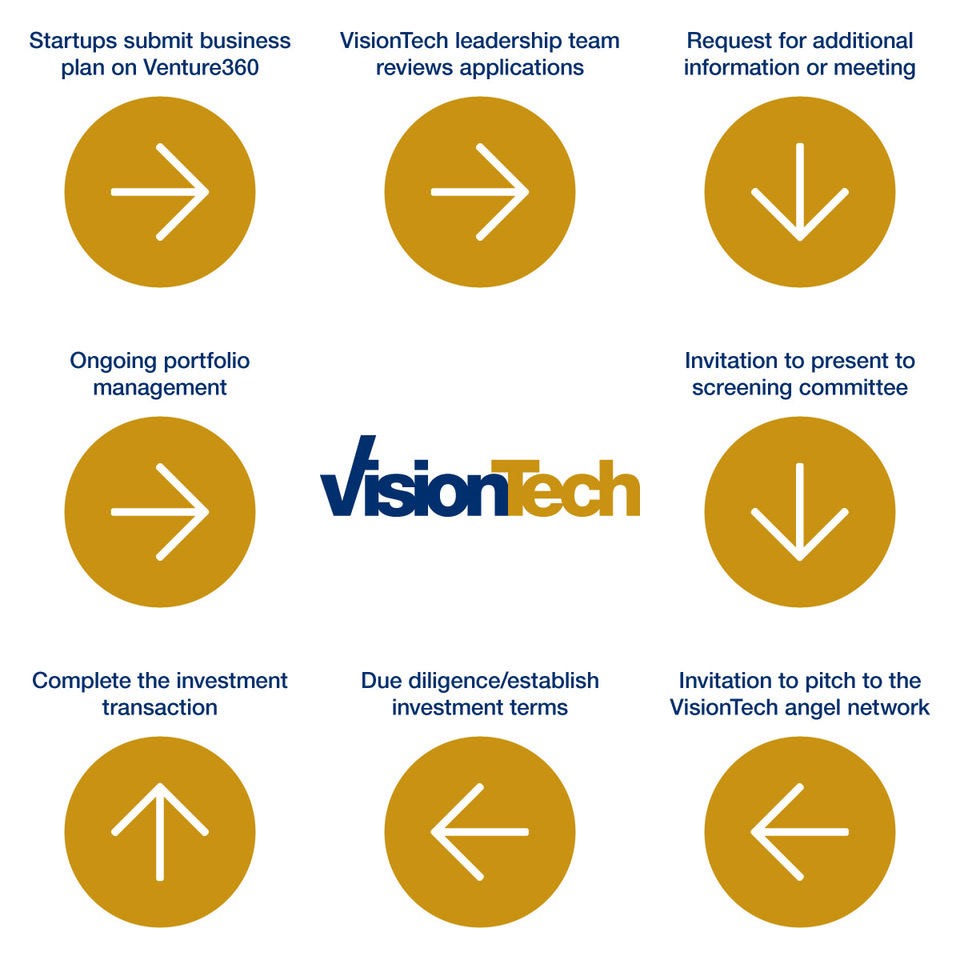
And so began MITO Material’s journey through VisionTech’s rigorous road to becoming a portfolio company with one of the Midwest’s most active, hands-on angel investing groups. Each year, the VisionTech leadership team receives some 400 inquiries from startups looking for funding. Of these, 80 are invited to meet virtually with the Screening Committee composed of experienced businesspeople-members, which does a preliminary but thorough assessment of a company’s investment potential. Only 12 to 16 startups a year make it to the final round and an invitation to pitch to VisionTech Angels during the group’s bi-monthly investor events.
Haley and MITO Materials made the cut; she was invited to pitch in April 2020. But instead of the group’s typical five-city, two-state barnstorm of live pitch events, Haley was one of the original “virtual” pitch presenters when VisionTech moved its investor events online when the global pandemic broke. That created a new level of pressure, but Haley received additional one-on-one coaching from Ben as a result.
VisionTech Managing Director Tony Petrucciani says the group has honed its screening process over the last decade to emphasize quality over quantity. “We balance a rigorous process to meet two objectives. First, provide the best opportunities for our investors and second, provide feedback to founders seeking capital so they can put their best foot forward with our group and others that may follow. It’s mutually beneficial.”
Fair, organized and thorough
Haley describes her experience with VisionTech’s screening process as “incredibly fair and organized.”
“It felt like a conversation with members of the group who A) had experience and interest in my technology and end markets and B) asked logical, thoughtful, and thought-provoking questions in a way that didn’t seem like they were seeking for their version of the ‘right’ answer,” Haley recalls. “This happened to me in other angel groups and it was exhausting. I also appreciated that VisionTech Angels were more apt to hop on a call if they had a question rather than ask me to make more materials to illustrate a point.”
With VisionTech Angels, each investor makes their own decision on which deals to participate in and how much to invest. For this reason, members are encouraged to question startup CEOs during the pitch events and take part in due diligence of the companies that advance in the process.
“The investment process is exciting because our investors really get to know founders after a level of investment interest has been determined. We have weekly meetings with the founders with the theme of ‘trust but verify’ which helps our investors identify the key risks—what needs to be believed—and the opportunities. It’s insightful for investors, but also for the entrepreneurs as they get to know our investors and their expertise.”
Ben Pidgeon, Executive Director, VisionTech
A mutually beneficial process
Haley experienced this firsthand when the screening committee wanted a deeper dive into MITO Material’s customer pipeline. A VisionTech investor offered to speak with MITO Material’s head of business development. “They’re both from Brazil and had a great conversation in Portuguese about our pipeline, strategy, and how our team functioned under married founder leadership, which was an appropriate thing to investigate as an investor. I think in many ways that sealed the deal for me because it made my team feel like they were a part of the funding success and that our investors are invested in helping them succeed as well.”
MITO Materials came through due diligence and negotiation of investment terms with flying colors; VisionTech Angels joined other investment groups in an oversubscribed $1 million seed round.
It’s important to note that VisionTech’s process does not end with a check to the now portfolio company. The group and its collective experience across industries remains actively involved with its portfolio companies, providing as needed:
Referrals to other investor groups
Follow-on investments
Technology and business plan evaluation
Strategic planning
Marketing support
Financial controls and reporting
Interim executive management
Key management interviews
Critical vendor selection
Business continuity planning
Haley is grateful for the relationship and access it affords to people who can help advance MITO Materials. “If there is ever something I think Ben can help me with, I don’t hesitate to ask. Ben is very supportive and approachable. I also pulled on some other VisionTech investors when I need connections or help and they have always come through.”
She adds, “It was definitely worth the effort to become a VisionTech portfolio company.”
VisionTech invites startups in need of capital to visit our website for details on our screening and due diligence process. If you believe you are a good fit, we encourage you to submit your business plan for review. Also, take a look at our portfolio companies and our calendar of events for this year’s pitch events. We hope to hear from you.