Tag: Indiana angel investing

  • VisionTech Angels’ Final February Pitch Company Is “CRäKN” to Hit the Road with Ben

    Industry experience is among the things we look for in startups that want to pitch our group. How can you offer a better solution if you haven’t experienced the problem in some manner? I recently sat down with CRäKN President and CEO Scott Mindrum who gave up the life of a CPA to enter the “death care” industry more than 20 years ago. He was, in fact, very hesitant; funerals are kind of a downer. But his wife convinced him it was O.K. Today he’s happy he did. Scott launched and successfully exited one company in this space before launching his new company, which he will be pitching during VisionTech Angels’ February Road Show. It’s a good story and even better opportunity for our investors. Here’s our conversation:

    Scott Mindrum, CEO, CRaKN

    Also, over the last 15 years, funerals have moved from being very traditional religious ceremonies to being celebrations of life with cremations rather than in-ground burials. So the expectations of families and friends of the deceased are changing, which places a bit more pressure on funeral directors to meet these evolving expectations. I have deep experience in the industry, have founded and sold a very successful business in this space, and after a few years of retirement and a little angel investing of my own, felt the time was right for a new SaaS venture.

    BP: Where did the name CRäKN come from. I envision giant octopus crawling over ships.
    SM: (Laughs) Yes, the name was inspired by the legendary kraken, a Nordic octopus-like sea monster that terrorized sailors. When we were naming the company, we wanted something memorable and meaningful. Funeral directors are, by nature, world-class jugglers. Our tools give them extra arms to get the job done. The CR and KN in our name stand for customer relationships and knowledge respectively, which are important in the death care profession. But, the name also makes funeral directors smile—the ones that envision a giant octopus—which is nice to do in this industry. Finally, the name has personal meaning for me. My father, who has passed away, was 100% Norwegian and my north star so in a way, CRäKN is my homage to him.

    Ben Pidgeon, Executive Director, VisionTech

    BP: Explain your solution.
    SM: Death care is not a glamorous business, but the people who work in the industry have a high degree of empathy and are driven to help people. It’s very much a detail-oriented business that can be overwhelming. CRäKN’s software platform makes all of the processes that go into end-of-life arrangements far easier to manage. Here are some examples. A large part of a funeral director’s day is spent pulling information from several systems and paper files. CRäKN’s single entry system eliminates duplicate administrative tasks. Call answering services can be integrated with the accounting system. Pre-need records can be converted to at-need arrangements? All with a click of a button.
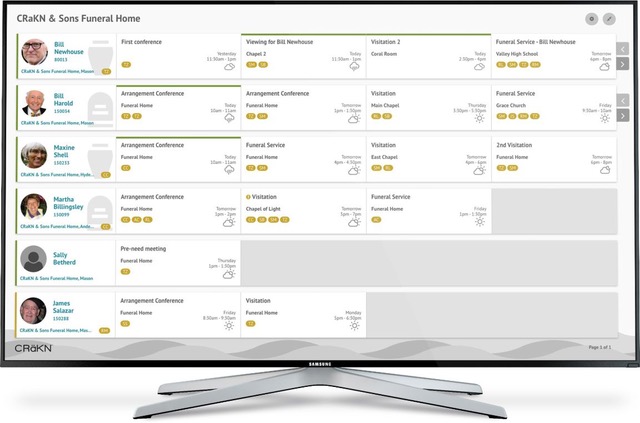
    CRäKN also allows all events to be tracked using the digital whiteboard. Funeral directors can see who is working an event and details that still need to be finalized, so the ball never gets dropped. All of this can be done from a laptop, tablet or smartphone. Funeral directors get calls at all hours so this is a big plus! We also make the compliance side of the business easy and transparent.

    BP: Do you have competitors that offer solutions comparable to yours?
    SM: We do, but other software companies catering to this market are typically not SaaS and are focused on the accounting side of the business, while CRäKN addresses the entire business from relationship management to finance and accounting and all of the important services provided by funeral homes. Our intent is to automate processes so funeral directors and their staffs can focus on the families and getting them through a challenging time.
    BP: What is your competitive advantage?
    SM: The biggest advantage is we address the enter funeral home enterprise and not just a portion of it so clients don’t have to manage and maintain multiple software licenses and vendors. And while competitors’ solutions require user training, CRäKN’s patented technology is very intuitive, easy to use and requires little or no training.

     BP: What is your revenue model?
    SM: We’re a SaaS solution, but with a twist. Instead of charging our clients by the number of users or “desks,” we offer an unlimited license and charge by the number of funerals per month. This way, any person on the funeral home staff can access the CRäKN software. This makes the monthly fee a variable, but allows us to grow with our clients or retract if their business slows. This is attractive because there is some seasonality to the death care industry; flu season and post-holidays can cause spikes. Also, cities that are either losing or gaining population like the financial flexibility.

    BP: What market traction do you have to date?
    SM: Strong. We’ve grown 1000% year-over-year since 2018. Our client base is a good cross section of the industry, ranging from very small funeral homes to very large, multi-location and publicly traded businesses.

    BP: How much money are you raising and what will the funds be used for?
    SM: The target is $800,000. This is a syndication deal through Queen City Angels. They’ve done due diligence and have already funded $300,000. In addition to VisionTech Angels, we’re talking with two other angel groups and hope to close the round with angels rather than VCs or private equity groups. We plan to use the funds to accelerate our national rollout.

    BP: Why should VisionTech Angels invest in CRäKN?
    SM: You may not know this, but Indiana is the world’s headquarters for casket manufacturing and a major state for investing in funeral startups. Aside from that, CRäKN has a number of things going for us that should be attractive to investors. Our technology is state-of-the-art. Collectively, our team has been in the death care industry for 100-plus years so our relationships and contacts are deep. Lastly, our terms are friendly to angel investors.

    To learn more about CRäKN visit their website. To RSVP for the VisionTech Angels’ February Road Show, visit our events calendar. Accredited investors interested in learning more about joining our group should contact Ben Pidgeon, bpidgeon@visiontech-partners.com.

     

  • Qumulex Has a Strategy – and the Leadership – to Move the Physical Security Industry to the Cloud

    Never underestimate the value of an experienced leadership team. Fishers, Indiana-based Qumulex has this in spades. The seven founders have all worked together in the commercial physical security industry and have successfully launched and exited two companies before founding their new endeavor in September 2018. I recently sat down with Qumulex President Dan Rittman who will be presenting during our February Road Show on its strategy of moving this legacy system industry to the cloud. Here’s our conversation:

    Ben Pidgeon, Executive Director, VisionTech

    BP: What are the trends within the commercial video surveillance/access control space?
    DR: Cyber security dominates conversations today yet physical security is a huge concern. Every time there’s a school shooting, a breach at a military installation or an intruder at a workplace, the first thing people ask is, what could we have done differently? Physical security systems, specifically those that are video-based, have undergone major technology shifts. Today, there’s a push to move away from on-premise equipment to cloud-based solutions. The commercial security industry is among the last to move to the cloud even though benefits are significant. Given the role of video and point-of-entry security in identifying, responding to and managing threats in real time and often in concert with law enforcement, the time for industry disruptors is now.

    BP: Explain the Qumulex solution.
    DR: Qumulex offers a cloud-based, mobile-first, unified access control and video surveillance solution for physical security integrators that serve commercial markets. We’re unique in that our mission is to provide integrators with a transition path for customers to embrace cloud technology and mobile accessibility and a subscription-based business model without an integrator having to turn their back completely on the legacy approach based on existing technology and transactional revenue. As this transition happens, Qumulex’ product line will support any mix of systems from on-premises to the cloud. The system is designed to be cloud-agnostic, but will launch with the Google cloud.

    Dan Rittman, President, Qumulex

    BP: Do you have competitors that offer solutions comparable to Qumulex?
    DR: Legacy solution providers control 95% of the market and they are the “comfort zone” for many potential Qumulex integrators and end users. Cloud competitors include Verkada, a Silicon Valley startup that raised an $80 million Series C with a $1.6 billion valuation in late January 2020, and more established companies like Eagle Eye Networks that has solid customers – McDonalds, Shell and Volvo – but has failed to achieve significant market traction.

    BP: What is your competitive advantage?
    DR: The biggest one is the experience and connections of our seven founders within the physical security integration industry. Even though Qumulex is new, the leadership team is a known and trusted in the space. The second advantage is that we’ve designed our product so transitions from legacy systems to the cloud are easier and more manageable. Our hybrid model allows customers to be both on premise and on the cloud. In our demos, people love this approach because end users get the accessibility, redundancy, and mobility benefits of video on the cloud without having to entirely replace a legacy system.

    BP: Who is your ideal customer and what market traction do you have to date?
    D
    R: Every school, hospital, university, military installation, retail/hospitality, office or manufacturing plant is an ideal customer. That said, Qumulex is a channel marketer; we sell directly to physical security integrators who sell to end-users. There are about 10,000 security integrators in North America that range from single person shops to major global integrators. Our ideal customer is in the middle; integrators that currently sell our type of product and at our price point.

    In terms of traction, there is tremendous pent-up demand. We hosted a suite at ISC West last April, which is the largest physical security show in North America. Over the course of two-and-a-half days, we had 91 booked appointments with integrators. We’ve been to other, smaller shows with the same high interest level. We currently have beta tests in progress and plan to launch in late Q2. There’s a lot of anticipation. So far, we’ve signed 11 sales rep firms to cover the United States.

     BP: What are the barriers to adoption?
    DR: The commercial security industry, like others comfortable with legacy systems, is slow to move. People tend to go with what they know so there’s an education process involved. What has really helped us is the rapid adoption of cloud-based consumer solutions like Ring smart home security. People have seen it, used it, and want that type of convenience and accessibility for their business security systems.

    There’s another market pressure working in our favor. The integrator market is consolidating, with larger companies acquiring the little guys. However, acquirers are interested in those with at least 20% in recurring revenue. Most don’t know how to move from a transactional business model to monthly recurring revenue. We can get them there so they are a more attractive acquisition target, but also better positioned should they prefer to remain independent.

    BP: What is your revenue model?
    DR: The commercial security industry is a traditional transactional business so our revenue model is both transactional and SaaS. We sell equipment for on-premise systems, but our main focus is recurring revenue from our software.

    Qumulex Team

    BP: How much money are you raising and what will the funds be used for?
    DR: Our current raise is a Series Seed 2 with the goal of raising $2 million. This will take us to our commercial launch in late Q2, and then through a year of commercial activity before a Series A round. It will supplement a significant investment made by the founders and an earlier seed round.

    BP: Why should VisionTech Angels invest in Qumulex?
    DR: I really have to go back to our leadership team: we know what we’re doing. All of us have been in the industry for 20-plus years and know the market well. We also understand startups, having founded and exited two companies to date: Integral Technologies, which we exited in 2000 for $50 million, and Exacq Technologies, exited in 2015 to Tyco for $150 million. We believe the commercial security market has reached a technology inflection point and Qumulex is positioned to disrupt, but equally important, provide a practical bridge from legacy systems to the cloud that makes adoption easier.

    To learn more about Qumulex, visit their website. To RSVP for the VisionTech Angels’ February Road Show, visit our events calendar. Accredited investors interested in learning more about joining our group should contact Ben Pidgeon, bpidgeon@visiontech-partners.com.


  • VisionTech Angels Kick Off the 2020 Investment Season with Materials Handling AI and Robotics Disrupter, SIERA.AI

    I’ve come to believe that with startups, timing is everything. It’s particularly true in the case of SIERA.AI, an Austin-based company that has created and is now commercializing autonomy software solutions for materials handling in the manufacturing and logistics industries. Though SIERA.AI is a young company, they’re building an impressive book of business with Fortune 500 companies. I recently sat down with SIERA.AI CEO Saurav Agarwal who will be presenting during our February Road Show, on just how well his company’s positioned for the market and the opportunities this affords. Here’s our conversation.

    Ben Pidgeon, Executive Director, VisionTech

    BP: What are the trends within the materials handling space that made you believe you could solve the industry’s challenges?
    SA: In short, it’s explosive growth and the growing pains that have come with it. Over the last five years, there’s been a boom in the logistics industry, due in part to the transformation that’s taken place in the retail industry. These numbers are a bit dated, but from 2014 to 2016, 833 million square feet of warehouse space came online in the U.S. alone. You can look at Indiana’s I-65 corridor and see expansion is still occurring.

    In response, manufacturing and logistics companies are adding about a million forklifts to their operations each year. At the same time, there’s a shortage of 43,000 certified operators. It’s not an easy job. Drivers  operate 10,000-pound machines in tight spaces. There’s no room for error. Sometimes drivers get careless. According to OSHA, there are 96,000 forklift-related accidents a year, with losses of upwards of $9.5 billion a year and lost wages of $3o billion. And that’s just the U.S. The opportunity for disruption was obvious.

    Saurav Agarwal, CEO, SIERA.AI

    BP: Explain your solutions.
    SA: SIERA.AI builds autonomy software for forklifts. We have two primary offerings: a basic version, for accident prevention, and a pro version, for full automation. The SIERA Safety System (S3) is added to existing driver-operated forklifts to sense and prevent accidents before they happen. The system constantly tracks driver behavior and streams real-time data to the cloud for deep analytics. The monitoring has a distinct impact on driver behavior and that coupled with S3’s ability to prevent accidents has a profound impact on safety, productivity and loss due to accidents. Driven by SIERA.AI is our autonomous mobile robot technology; forklift robots if you will. The robots map and navigate in the customer’s facility on their own, interface using Wi-Fi with the MES/ERP systems and industrial controls, and get the job done safely and reliably. Both options can be added to existing forklift fleets or can be licensed by OEMs.

    BP: What’s your revenue model? Is it an initial purchase and then monthly licensing?
    SA: Yes, there are unit sales and annual recurring revenue from licensing our software.

    BP: What market traction do you have to date?
    SA: We have five active pilots, two flagship clients converting to full adoption, and over $6 million in deals we’re currently negotiating. One of our clients is Tyson Foods; our SIERA.AI Safety Solution is in their beef processing plant in Dakota City, South Dakota. One of their biggest problems is forklift manufacturers don’t include safety technology, and they wanted to eliminate accidents. In their pilot, which took place over three months, more than 5,000 miles were driven with no accidents or near misses. Management also noted a significant change – for the better – in driver behavior. Tyson Foods has 8,000 forklifts in its fleet and could potentially license 3,000 of them with SIERA-AI, a nice amount of recurring revenue.

    BP: What are the barriers to adoption?
    SA: With the labor shortage and high cost of accidents and lost wages, the SIERA Safety System and our autonomous robots are both very attractive to companies that need to move goods safely and avoid costs. The beauty of SIERA.AI’s solutions is companies can use both the enhanced safety solution and robotics side-by-side for human-robot collaboration.

    BP: What’s your competitive advantage?
    SA: First, we have a great product market fit; SIERA.AI has the only available forklift brand agnostic safety and automation product on the market. Second is our speed to market and accelerating traction. Finally, our solutions will be well protected. We’ve filed four utility patents and four provisional patents and hope to finalize those by Q1 2021.

    BP: How much money are you raising and what will the funds be used for?
    SA: We’re currently raising a bridge round of $500,000-600,000 and have $175,000 in soft commitments. The capital will be used to fulfill current orders – we’ve signed orders (recurring revenue, 5-year contracts) worth $400,000 in mid-January. We also need to hire an additional engineer, deployment manager, and sales and marketing team members so we continue to grow.

    BP: Why should VisionTech Angels invest in SIERA.AI?
    SA: The most compelling reason to invest is the market wants our solution; we’re solving huge industry problems. We’ve booked significant sales and our pipeline includes Fortune 500 companies that recognize our value. We’ve come extremely far in two years with very little capital and with VisionTech Angels’ investment, we can move that much faster.

    To learn more about SIERA.AI visit their website. To RSVP for the VisionTech Angels’ February Road Show, visit our events calendar. Accredited investors interested in learning more about joining our group should contact Ben Pidgeon, bpidgeon@visiontech-partners.com.

  • Carmel startup uses technology developed by NASA in 1960s to turn heat into electricity

    INDIANAPOLIS, Indiana (January 10, 2020) – – Inspired by a physics teacher at Homestead High School in Fort Wayne, Ian Hamilton began as a teenager to seriously contemplate ways to create alternative energy sources.

    Ian Hamilton, CEO, Atlas Energy Systems

    By the time he stepped onto the Purdue University campus as a freshman in 2011, he already had some firm ideas about how to do that.

    But while in a class studying thermionic energy—the conversion of high-intensity heat into electricity—he dug into some long-forgotten technology developed by NASA in the 1960s during the space race with Russia.

    The technology’s patents had expired, making the science fair game for new applications.

    “I saw that this technology matched the ideas in my head for energy generation,” Hamilton said. “Really, it was pure happenstance that I found that old technology.”

    He studied it intently and said to himself, “This could work.”

    Read the rest of the story>

  • VisionTech Angels Leads Successful Seed Investment Round in Atlas Energy Systems, Exceeding Goal by Nearly 35 Percent

    VisionTech Angels Leads Successful Seed Investment Round in Atlas Energy Systems, Exceeding Goal by Nearly 35 Percent

    INDIANAPOLIS, Indiana (January 2, 2020) – VisionTech Angels closed 2019 by leading a Series A seed round investment in Carmel, Indiana-based Atlas Energy Systems, LLC, exceeding the energy technology company’s goal of $400,000 by nearly 35 percent. When the funding tranche closed December 27, 2019, the Indianapolis-based angel investing group succeeded in leading a $558,000 raise. West Suburban Angels of Naperville, Illinois, and Lateral Capital of Sarasota, Florida, also participated in the round.

    Although VisionTech Angels has invested in 43 startup companies since 2008, this is the first investment round it has led in last 18 months, says Executive Director Ben Pidgeon. He credits the triple value proposition of the company’s technology, strength of the leadership team, and exit potential for the incredible momentum of the investment round’s first tranche.

    “Atlas Energy Systems CEO Ian Hamilton originally pitched to VisionTech Angels for funding in April 2019 and while they were early in the commercialization process, our investors immediately liked what they saw. Based on investor interest, we started due diligence,” explained Pidgeon. “We also connected Ian with Scott Noble, who has mentored a number of startups associated with the Purdue Foundry and the Notre Dame IDEA Center, for his business acumen and experience with mergers and acquisitions activity. Scott is now Atlas Energy Systems’ chief financial officer.”

    Although Atlas Energy Systems is a startup, its patent-pending technology, thermionic energy converters for waste heat power generation, concentrated solar, and advanced nuclear reactors was originally developed by NASA in the 1960s. The original technology designs were either top secret or patent protected. However, most of the original patents were for space and nuclear applications and expired in the 1980s when the government lost interest in the space program. Hamilton first learned about the technology while an undergrad at Purdue University—he now holds a Masters in Nuclear Engineering—and has since repurposed the thermionic energy converting technology for contemporary industrial energy applications.

    Hamilton says interest his company’s technology is high. “We’ve been approached by multiple industries and have chosen to focus on the oil and gas industry for our commercial launch. The main advantages of our thermionic energy converters are their compact size, high power density and no moving parts operation, making them virtually maintenance free even in the harshest environments. We can provide onsite power using flare gas, while reducing CO2 emissions and the environmental impact of drilling sites.”

    He adds that the seed round funding will be used in part to deliver converters for oil and gas power generation as soon as the first half of 2020.

    In conjunction with the successful seed investment raise, Atlas Energy Systems has added three new board members. Scott Baxter, a VisionTech Angel member, will serve as the seed investor reserved director. James Barkley, also a VisionTech Angel member, will serve as the board observer. Former GE executive George Sassine joins the board as the at-large independent director. Atlas CEO Ian Hamilton is the board chair. The first board meeting is scheduled for late January.

    VisionTech Angels who invested in Atlas Energy Systems and reside in Indiana qualify for the Indiana Venture Capital Investment income tax credit.

    Funding momentum continues as Atlas Energy Systems has been invited to pitch to Tamiami Angels of Naples, Florida, January 9.

  • Cyber Threat Detection Startup Stamus Networks Commands the Last Spot for October Pitch Week

    Talking with Stamus Networks CEO Ken Gramley is like talking with an old friend. He’s been a successful tech entrepreneur in Indiana for last seven years, during which time he served as CEO of Emerging Threats (acquired by Proofpoint) and as an entrepreneur-in-residence for Elevate Ventures. It’s exciting to have Ken present his new venture to VisionTech Angels’ five chapters across Indiana and Ohio during our last Pitch Week of 2019, October 21-24. Enjoy our discussion.

    Ben Pidgeon, Executive Director, VisionTech

    BP: Tell me a little about how and why Stamus Networks was founded. What unmet need did you identify within the IT security space?
    KG: The company was founded by Eric Leblond and Peter Manev, two experts in network security who saw the lack of innovation in large security vendors’ products and believed that combining network traffic analysis with threat detection would provide security practitioners with a previously unachieved clarity in viewing the security state of their networks. The company is headquartered in Westfield, Ind., with an office in Paris. I joined Stamus as CEO in December 2018, after spending the last 15 years in IT security. This includes my time as CEO of Emerging Threats, during which time I oversaw the company’s 20x increase in sales and revenue and ultimate acquisition by Proofpoint.

    BP: How is your product different from other IT security offerings?
    KG: We’ve combined a Network Traffic Analyzer that analyzes protocol and flow data on a network and married it with an Intrusion Detection System that provides deep packet inspection of network traffic. The combination of these two approaches provides a level of correlated security data never previously achieved in a single solution. We then added a Threat Hunting interface that gives security practitioners the ability to quickly and efficiently search through their data to examine, validate, and resolve the security incidents that they face on a daily basis.

    This graphic helps explain what we do at a high level. Each of the circles is a different Gartner quadrant, making us the only company that crosses intrusion detection, threat hunting and network traffic analysis into a single cost-effective solution.

    BP: Who is the ideal customer for Stamus?
    KG: We are very appealing to mid-size enterprises ($100 million to $1 billion) that have relatively immature security teams and are looking to improve their security posture. A company’s increasing compliance issues often drive demand. As an example, iHerb, an online natural products retailer, contacted us because they are required to be Tier 1 PCI (payment card industry) compliant, and they believe our solution is the fastest path that they have found to achieve network compliance issues required by PCI.

    BP: What market traction do you have to date?
    KG: We have 16 companies using our solution, including customers in technology, banking, defense, retail, and government. Seven of those have come back to expand their usage of our tools with additional purchases, which is tremendous validation.

    BP: What are the barriers to adoption?
    KG: Like any startup, barriers are really opportunities. One early issue was finding the right product-to-market alignment. In the last year, we solved this barrier by restructuring our product to better fit features to specific customer use cases. This has allowed us to sell different feature sets at different price points, helping us overcome pricing issues for customers that only wanted entry level functionality. Our next challenge to conquer has to do with customer knowledge, or lack thereof, about Stamus as a company. We are relatively unknown; however there is a segment of the market that knows us as providing an open source solution, a perception we need to overcome. Creating awareness and brand clarity will include updating all of our messaging and branding to better address the differences between our paid and open source products and the added value that our paid solutions provide.

    BP: How much money are you raising and what will the funds be used for?
    KG: We’re raising $1.5 million, which will primarily be used for sales and marketing. We have not yet done any outbound marketing, and we need to revamp our branding and messaging to take what we’ve learned from our customers and improve our storytelling. We’ve hired our first U.S. sales person and plan to hire a sales person for Europe, where the majority of our current customers are. We also will be hiring our first sales engineer. These additions will free up an enormous amount of the founders’ time so they can focus more on product strategy, features and development, and less on customer demos.

    BP: Why should VisionTech Angels invest in Stamus Networks?
    KG: Network security is a universal problem and the solutions on the market today are stagnant despite the billions being spent on network security by enterprise-sized companies. Stamus represents a unique investment opportunity for VisionTech Angels for several reasons. First, we’re one of the only companies actually innovating in the network traffic analysis and threat detection space. Second, our product, the Scirius Enterprise, could be used by every enterprise-sized company in the world with an average sale in the upper five figures or low six figures. Our traction to date validates this. Finally, the last company I ran in the security space, Emerging Threats, provided a 9x return to investors within three years. Matt Jonkman, the founder of Emerging Threats and an active member of VisionTech Angels, and I believe that this is a MUCH larger opportunity than the market that Emerging Threats addressed. I can tell it’s going to be an awesome ride!


    To learn more about Stamus Networks visit their website. To RSVP for VisionTech Angels’ October Pitch Week, visit our events calendar.


  • Giving Parkinson’s Patients a Voice: Meet October Pitch Company SpeechVive

    VisionTech Angels is mixing up our blog a bit, inviting sponsor Gretchen Bowker, CEO of Pearl Pathways, to preview pitch company SpeechVive. Pearl Pathways is a comprehensive life science regulatory, quality compliance, and clinical services consulting company providing strategic guidance and project-based support for emerging to mid-size biopharmaceutical, medical device, and diagnostic companies. Given her background and Pearl Pathways’ experience working with companies like SpeechVive, it is fitting to have Gretchen introduce Steve Mogensen, CEO of SpeechVive and the company’s medical device for those with Parkinson’s disease. Steve will present SpeechVive during VisionTech Angels’ upcoming Pitch Week, October 21-24. Enjoy their discussion!

    Gretchen Bowker, CEO
    Pearl Pathways

    GB: VisionTech Angels is excited to host SpeechVive, a startup based on Purdue technology, during October Pitch Week. What’s your story?

    SM: SpeechVive was founded in 2011 based on the research of Purdue University professor of audiology and speech sciences, Jessica Huber, PhD. Our focus is enabling people with Parkinson’s disease to speak louder, slower, and more clearly through the use of a device that resembles a Bluetooth device. The SpeechVive device works by playing background noise in the patient’s ear when it detects the patient speaking. The noise serves as a cue that causes the patient to reflexively speak louder through the “Lombard Effect,” a well-known phenomenon where we naturally speak louder when there’s background noise. What’s great about the device is it does not require training to use, there is no risk of harm to the wearer, and it works! SpeechVive completed a three-and-a-half year clinical trial where 75 percent of those using the device received immediate benefit. Another 15 percent experienced a benefit after wearing it for eight weeks. Our product is in the market, generating revenue and we’re now fundraising to drive sales.

    Steve Mogensen, CEO SpeechVive

    GB: Does SpeechVive meet a clinical or quality of life need?

    SM: Both. SpeechVive is medically necessary and a quality of life device. Parkinson’s is a neurodegenerative disease. As it progresses, patients often experience changes in speech or have difficulty speaking. Their voice becomes softer, whispery or hoarse. They also slur words and talk slowly. The inability to communicate is a huge issue for patients and their loved ones. The traditional way to treat this is speech therapy, which is effective in only about 10 percent of cases. SpeechVive allows patients to benefit from treatment without special training or effort. The device also collects data about device usage to support achieving therapeutic goals.

    GB: The number of Americans with Parkinson’s reported varies from 930,000 to as high as 1.5 million. What’s the actual market size?

    SM: Some movement disorder neurologists I’ve spoken with believe the actual number of people with Parkinson’s disease is more than two million and likely closer to three million. We use 1.5 million as most Parkinson’s disease prevalence numbers are under-reported because the disease is often misdiagnosed. Many people with Parkinson’s go undiagnosed for up to ten years. About 60,000 new cases are diagnosed each year.

    GB: Does the SpeechVive device require a prescription?

    SM: Ideally, Medicare and private insurance will cover the SpeechVive device. In which case, a neurologist will prescribe the device and submit a letter of medical necessity to the insurance company. Customers can choose to pay for their device out of pocket.

    GB: What are the barriers to adoption?

    SM: Currently, it’s reimbursement. The average age of our customers is 68. Most are retired and on a fixed income, so a $2,495 device is a significant purchase. Gaining Medicare reimbursement will significantly open up the market opportunity for SpeechVive and remove the financial burden from people who will benefit from our device.

    GB: You’ve designated the SpeechVive device as a Class 1 medical device. Explain your decision.

    SM: Class 1 devices pose little to no risk to patients. Five years ago, we notified the FDA that we were going to market with SpeechVive as a Class I exempt device. This was due to the low risk of harming patients using our device. The exempt status, which is the route we took, is a self-declaration of Class I. The FDA lets you know if they object. Otherwise, you’re safe to market said product.

    GB: What kind of IP protection do you have?

    SM: SpeechVive is protected by two U.S. patents, which cover the device and method claims.

    GB: How much are you trying to raise and how will the funds be used?

    SM: We’re raising a $1 million bridge note, leading to a larger Series A raise of about $4 million. We plan to use the funds to drive the Medicare and insurance process by securing a specific HCPCS code for SpeechVive for reimbursement, hiring additional sales people, and creating infrastructure support to manage the Medicare billing process in-house.

    GB: What makes SpeechVive an investable company for VisionTech Angels?

    SM: There are two parts to this answer. SpeechVive represents a unique opportunity to make a difference in the lives of people with Parkinson’s who have severe difficulty communicating; 90 percent who use SpeechVive benefit. The ability to speak again is a gift to individuals and their loved ones.

    From a practical perspective, we have eliminated most of the risks inherent in a medical device startup. SpeechVive is in the market and generating revenue. We’ve penetrated the VA market; they cover our device 100 percent. We started filing claims using a miscellaneous code in February, have received reimbursement and have received paid claims from both Medicare and commercial insurance companies. Our team has demonstrated the ability to eliminate risks while focusing on the larger market opportunity, which is Medicare reimbursement. We also have a realistic exit on the horizon with one of the large, deep brain stimulation companies like Abbott/St. Jude, Medtronic or Boston Scientific, which will create significant value for all shareholders.

    GB: Thanks for sharing your story, Steve! See you later this month.

    To learn more about SpeechVive, visit their website. To RSVP for VisionTech Angels’ October Pitch Week, visit our events calendar.

  • VisionTech Angels Reap Rewards as Salarius Pharmaceuticals, Inc. Completes Merger with Flex Pharma

    VisionTech Angels Reap Rewards as Salarius Pharmaceuticals, Inc. Completes Merger with Flex Pharma

    INDIANAPOLIS, Ind., (September 17, 2019) – – When Salarius Pharmaceuticals (Nasdaq: SLRX) President and Chief Executive Officer David Arthur rang the opening bell at Nasdaq in New York City on July 30, recognizing the company’s successful merger with Flex Pharma and listing on the public exchange, another group was celebrating in Indiana: VisionTech Angels. The angel investors are realizing a surprisingly quick liquidity event on their investment in Salarius in the form of common stock with the value based on the current stock-trading price.

    The merger provides VisionTech Angels’ investors with the opportunity to retain their stock and wait for the next chapter to be written or cash in on their investment by liquidating some or all of their holdings. Commenting on the merger, VisionTech Angels Executive Director Ben Pidgeon said, “Given the potential of Salarius to bring new therapeutic options to children and young adults with Ewing Sarcoma and other cancers, I anticipate many of our investors will retain their shares in the company.”

    He added, “This is a significant win for the VisionTech Angels members who invested in Salarius in December 2018. The biotech drug development industry typically requires tremendous patience as it can take as long as a decade to get a new drug from the lab to pharmacy—if it ever does. There’s also a small likelihood of success; only five percent of all prospective new drugs are commercialized. For our investors to realize liquidity on their investment in Salarius in less than ten months is remarkable.”

    Salarius is a clinical-stage oncology company targeting the epigenetic causes of cancers and has active clinical development programs for patients with refractory and relapsed Ewing sarcoma and advanced solid tumors. Ewing Sarcoma is a rare bone and soft tissue cancer that afflicts children and young adults that Salarius believes has no approved targeted therapies. The advanced solid tumor clinical program includes patients with prostate, breast, ovarian, and other solid tumor cancers who have not responded or are no longer responding to standard-of-care treatment.

    Epigenetics refers to the regulatory system that affects gene expression. In some cancers, epigenetic regulators often become dysregulated and incorrectly turn genes on or off leading to cancer progression. Drugs that are able to safely modify the activity of these epigenetic regulators may correct the gene changes that are driving the disease.

    The Food and Drug Administration (FDA) has granted Salarius’ lead drug candidate, Seclidemstat, Orphan Drug and Rare Pediatric Disease designations, which confers regulatory benefits and commercial advantages upon FDA approval. The company recently enrolled its first patient in a Phase 1 clinical study of its lead compound, Seclidemstat, in patients with advanced solid tumors. The company’s Ewing Sarcoma program is progressing in a dose escalation/dose expansion Phase 1 clinical trial. Salarius has financial support for its research and development efforts from the Cancer Prevention and Research Institute of Texas and National Pediatric Cancer Foundation.

    Salarius will continue to follow its clinical plan with the goal of reporting early patient cohort data in 2020.

    VisionTech Angels has 32 companies in its investment portfolio, including four added thus far in 2019. The Indianapolis-based angel network has more than 130 members across Indiana and Ohio. Membership is open to accredited investors. Members choose the companies they want to invest in and the amount invested. Those interested in joining are encouraged to contact VisionTech Angels. The group’s next Pitch Week is October 21-24.


  • VisionTech Portfolio Company Toralgen Closes $1.9M Seed Funding Round

    VisionTech Portfolio Company Toralgen Closes $1.9M Seed Funding Round

    INDIANAPOLIS, Ind. (September 10, 2019) – – Toralgen, Inc., an Indiana-based biotechnology company, announced the closure of its seed funding round, raising more than $1.9 million. Participants in the round include VisionTech Angels, Elevate Ventures, and Solyco Advisors as well as investors and strategic partners with deep domain expertise. Toralgen is a preclinical stage company focused on improving drug delivery and will use the funds to further development of their innovative platform.

    “Our unique technology has the potential to not only transform how a variety of drugs are administered, but to improve their pharmacology,” said Toralgen CEO Gerald Rea. “Through our team’s discoveries and the support of our investors, we are laying the groundwork for a portfolio of commercially transformative assets. We look forward to fully characterizing our improvements in the delivery of insulin, incretins and immunomodulatory combinations.”

    Toralgen is commercializing a nanopill system formed from polymerizing naturally occurring bile acids.  This founding technology is the result of over 20 years of cutting-edge nanoparticle research by inventor and Toralgen cofounder, Dr. Tarek Fahmy. Dr. Fahmy is a leader in the field of nanoparticle development and associate professor at Yale University.

    “The platform’s first important feature is enabling oral delivery to improve compliance and simplicity for the patient. The second important feature is addressing three major issues with diabetes concurrently—immediate blood glucose control, restoration of pancreatic function and re-normalizing immunity in the pancreatic environment. The potential is enormous for diabetes and other disease states as well. Our goal is to simultaneously address the causes of diabetes in the same easy manner that we treat a headache. I am excited to leverage the platform’s future capabilities into other autoimmune diseases and cancers,” Dr. Fahmy explained.

    “We’re thrilled that investors are recognizing the potential in this novel drug delivery platform, and we look forward to continuing our collaboration with Toralgen” added Dr. John Puziss, director of business development in Yale’s Office of Cooperative Research.

    Toralgen, Inc. was established in 2017 to commercialize a new type of nanopill licensed exclusively from Fahmy Labs at Yale University. The company was founded by Gerald Rea, Tarek Fahmy, Ph.D, associate professor of Biomedical Engineering, Chemistry & Environmental Engineering, OB/GYN/Reproductive Science, Immunobiology at Yale University; and David Horwitz, M.D., chief of the Division of Rheumatology and Immunology (1980-2007) for Keck School of Medicine. Learn more>


  • 20 Startups Are Ready to Pitch for Prizes and Investment Capital at the 11th Annual Innovation Showcase

    Ben Pidgeon, VisionTech

    Among my responsibilities as executive director of VisionTech Angels is screening startup companies. Each year, my committee members and I review more than 400 companies seeking investor dollars, selecting about 12 to pitch to our angel investors. It is, by design, a grueling process. I mention this because the Venture Club of Indiana took the same rigorous path for selecting the pitch companies for this year’s Innovation Showcase. Venture Club President Aaron Gillum and Pitch Competition Chair Travis Stegemoller took the “Road to the Showcase,” personally traveling to nine cities across Indiana to find the best of the best to pitch at the Showcase on August 22. My hat’s off to you both plus all of the folks who put on the local pitch competitions. Now, read on for details on the Innovation Showcase Pitch Competition!

    Aaron Gillum, President, Venture Club of Indiana

    The Venture Club of Indiana likes to say we have Indiana’s largest pitch competition, but this year it’s also among the most carefully curated. With the help of local sponsors in nine Indiana cities, we met many enthusiastic entrepreneurs who pitched a wide range of high tech and socially conscious solutions. Choosing the 20 we believed to be the most investor ready to participate in The Innovation Showcase was tough! Here are the 2019 pitch companies:


    Evansville
    Heliponix
    Safekeeping

    Fort Wayne
    Bukal Beverage Co.
    Cool Corp, Inc.

    Greater Lafayette
    Adranos
    Amplified Sciences
    Rogo AG, LLC

    Indianapolis
    AfterSchool HQ
    Atlas Energy
    Away Zones
    Pinpoint Pharma
    Plan Forward

    Muncie
    Tudr
    What’s Up 24/7

    New Albany
    Moxie Girl
    Total Mindcare

    Northwest Indiana
    FlykeArt

    South Bend
    Frost Control Systems
    SIMBA Chain

    Terre Haute
    Zoro, Inc.

    Here’s What You Need to Know About the Pitch Competition

    Showcase pitch companies are competing for $20,000 in cash plus in-kind prizes. Equally important, they’re competing for the attention of the VCs, angel investors and individual investors in the audience. We’re looking for a big crowd. Have you purchased your tickets yet? Get them here.

    We kickoff the Innovation Showcase with registration at 11 a.m. followed by lunch. After welcoming remarks by Venture Club President Aaron Gillum, we get down to business with great speakers, the Expo Hall, and the pitches. See the complete Showcase schedule here.

    There are two pitch sessions, one at 2 p.m. and the second at 3:30. With Emcee Dr. Don Kuratko of the IU Kelley School of Business cheering them on, each startup will have three minutes to make their case to the judges. The scores will then be tallied and the judges will huddle before announcing the winners at 5:30.

    The day ends on a high note with the VIP Reception and Expo Hall from 5:45 – 7:30p.m. Showcase attendees and entrepreneurs have plenty of time to connect for one-on-one discussions and networking.

    The Venture Club of Indiana extends special thanks for our 2019 Innovation Showcase sponsors, without whom this event would not be possible.

    Elevate Ventures
    Allos
    Barnes & Thornburg
    Deftly Creative
    50 South Capital
    Innovation Connector
    Katz Sapper & Miller
    Lux-Writes
    Novel Coworking
    Ontario Systems
    Purdue Foundry
    Purdue Ventures
    Signature Bank
    VisionTech Angels 
    When You Leave the Room

    Find more information on The Innovation Showcase here. Purchase tickets here.