Tag: Pitch Week

  • Meet September Pitch Presenter Justin Wiseman of MS Pen, Diagnosing Tumors in Real Time During Surgery

    Meet September Pitch Presenter Justin Wiseman of MS Pen, Diagnosing Tumors in Real Time During Surgery

    Justin Wiseman, CEO of MS Pen, has a long history with VisionTech Angels. While CEO and president of Prosolia, a Purdue startup that developed molecular imaging tools, he pitched the company to StepStone Partners, our group’s previous brand. Though we didn’t invest, he led Prosolia to a successful exit to Waters Corporation in 2018. Elevate Ventures suggested VisionTech take a look at his new venture, MS Pen, which seeks to diagnose tumors intraoperatively—in real time, during surgery. If successful, this technology has the potential to improve cancer survival rates and reduce healthcare costs. I liked MS Pen’s vision and pedigree, so I invited Justin to a VisionTech Angels Screening Committee. The group was impressed with the company’s vision to radically transform tissue diagnostics starting with lung cancer and invited him to present at our September 6 pitch events. Here’s a preview.

    BP: Tell me a little about yourself.
    JW: I was born and raised in Indianapolis, went to Southport High School, worked at Lilly, before earning a PhD in Analytical Chemistry at Purdue University. During graduate school, I developed some technology that was spun out as a startup company, Prosolia. After seven years as president and CEO, the company had a positive exit to Waters, a tech company and leading provider of lab equipment, supplies, and software for scientists across the world.

     In 2022, I was approached by the founders of MS Pen to help them scale the company. What’s interesting is the inventor of the mass spectrometry pen technology, which is the basis of MS Pen, is Dr. Livia Eberlin, who was a graduate student at Purdue. We had the same academic advisor and worked with some of the same people while in graduate school at Purdue. After meeting the team and reviewing the technology and vision to make molecular data on tissue samples available in real time during surgery to optimize treatment options for patients and improve survival rates, I was in.

    BP: Explain the problem you are solving.
    JW:  This will sound crazy, but modern cancer surgery still relies on a legacy, 117-year-old method to assess tumor margins during surgery. Here’s how it works. Surgeons remove suspected tissue from the patient, with the goal of complete removal of the tumor while preserving the surrounding margin of healthy tissue. A sample of the margin is sent to the laboratory where it’s frozen, cut, stained, and looked at under a microscope by a pathologist. At a minimum, it takes 30 to 45 minutes for the lab to process the sample while the patient is still in surgery. After that long wait, the results are still somewhat inconclusive. The extra time that the patient is in the operating room is unnecessary and increases the risk of post-operative complications. The biggest reason we need a precision medicine approach is locoregional cancer recurrence can be as high as 40%. This is not comforting for patients.

    BP: Explain your offering and how it works.
    JW: MS Pen is developing a platform for tissue detection and diagnosis that combines the simplicity of our proprietary MasSpec Pen technology, the performance of mass spectrometry, and the power of AI/ML software. Our solution exploits the fundamentals of tumor biology to detect cancer on a molecular level in vivo to guide surgical decision making in real-time. Our initial focus is lung cancer, a deadly disease that claims more lives in the US and TX than breast, colon and prostate cancer combined, and where curative resection is highly dependent on intraoperative decision making. Using a hand-held device called the MasSpec Pen, a droplet of biocompatible solution is delivered to the tissue site. Diagnostic molecules are extracted from the tissue into the droplet. The droplet with the diagnostic molecules is delivered to the mass spectrometer for real-time analysis. The surgeon gets the results in seconds rather than hours or days. This allows the surgeon to make decisions based on the molecular patterns driving the disease rather than relying on what they see or feel in a patient and without waiting on the lab to get results back.

    There are three main components of our solution: the MasSpec™ Pen, which can be handheld or robotic;  the transportable medical mass spectrometry system console we call Ultiss™ that the pen is connected to; and the software powered by artificial intelligence and machine learning algorithms interpreting the data from the sample. The platform is easy to use, and is a faster, less intrusive and more accurate process.
    BP: Why did you choose lung cancer as your first indication?
    JW: The platform is tissue agnostic, so we could have chosen any number of cancers including breast or pancreatic but decided on lung cancer as our first indication. Looking at the numbers, more Americans die of lung cancer each year—127,070—which is three times that of the second deadliest cancer, colorectal. Another factor is surgery is the number one treatment for lung cancer and there’s a more than 50% recurrence rate. We believe there’s lots of room for improvement in the first surgery if using the MS Pen platform when margins can be checked and validated with a high degree of accuracy.

    Globally,  the intraoperative lung cancer detection serviceable market is $2.1 billion, total addressable market is $6 billion.

    BP: What are your competitive advantages?
    JW: Our fundamental competitive advantages are these. First, traditional methods involve taking a tissue sample and sending it to the lab during or post-surgery and don’t permit in vivo analysis of tissue prior to or during resection—taking a tissue sample while the patient is still undergoing surgery. MS Pen does not require a tissue sample and results are available at the point of care immediately.

    The analysis done by MS pen is non-destructive to the tissue of interest or any surrounding tissue. No injectable products are required for our test. Finally, using the MS Pen platform during surgery does not disrupt traditional surgical workflows. The device is wheeled in and out of the operating room. The pen is handed to the surgeon just like any other instrument. It’s disposable so once used, you’re done. 

    BP: What is your path to commercialization?
    JW: The good news is that the MS Pen and platform are already being used in research by the Baylor College of Medicine, MD Anderson Cancer Center at the University of Texas and Johns Hopkins School of Medicine. To date, more than 20 surgeons have used the system with more than 200 patients.  We’ve had more than 250 inquiries from around the world over the last 15 months. This includes Stanford Medical, the Mayo Clinic, Yale School of Medicine, Kings College London, and University of Bern in Switzerland to name a few.

    To leverage this early traction, we’re launching a plug-and-play interface platform called Uniss™ for direct molecular analysis targeting clinical research in early 2024. The follow up is under development, an advanced data analytic and machine learning software to convert the complex metabolic data into actionable results. By 2006, we plan to launch the Ultiss™, an integrated platform that combines our MasSpec pen, a compact mass spectrometer and machine learning decision support software.

    BP: Do you have IP protection?
    JW: Our IP protection is very broad on the device and how it works. We currently have six patents with more than 50 patents pending. Six or seven of those should be issued by the end of August.

    BP: Any competitors?
    JW: Obviously, we aren’t the only ones who realize traditional pathology isn’t cutting it for surgeons and patients. We have at least four competitors trying to solve this issue, but none have the breadth of feature sets than MS Pen does. With our growing presence in clinical research with top medical and cancer centers, we believe we are ahead of the competition.

    BP: What round is this?
    JW: This is a seed round. Our goal is to raise up to $5 million in non-dilutive capital over the next 12 to 18 months.

    BP: What is your planned use of funds?
    JW: We’ve proven the tech in research, and now it’s time to develop the platform that will scale. We’ve allocated 50% of the raise to platform development. This also includes supporting our channel partners. Then, 20% will go to talent and operations; 15% to quality and regulatory, which includes finalizing our regulatory plans for our first indication and reimbursement strategy; and another 15% to marketing and other expenses.

    BP: This is a platform technology. What other applications do you foresee?
    JW: There are a number of uses beyond cancer for our MasSpec pen system: agriculture, food authentication, forensics, clinical toxicology, and manufacturing QA/QC are just a few. The platform applies to industries needing rapid identification of a substance at the molecular level to inform real-time decision making.

    BP: Give me three reasons why VisionTech Angels members should invest.
    JW: First, this is a disruptive technology change for surgical oncology that will solve a large problem in healthcare: reducing cancer recurrence with in vivo tissue diagnostic and thus improve patient outcomes. Second, we have a path to market that is non-regulatory, selling the technology for research purposes. Finally, MS Pen has an outstanding leadership team and board that knows how to bring technology to market. This includes known innovation and commercialization-minded physicians and PhDs. I point to my co-founder, creator of our platform and now CTO of MS Pen, Livia Eberlin, a MacArthur fellow, Genius grant recipient and Forbes 30 under 30 in Medicine; and to board member Thomas Milner, a prolific innovator who has founded two medtech companies and licensed technology to six others.

    BP: Looking forward to your pitch on Wednesday, September 6!

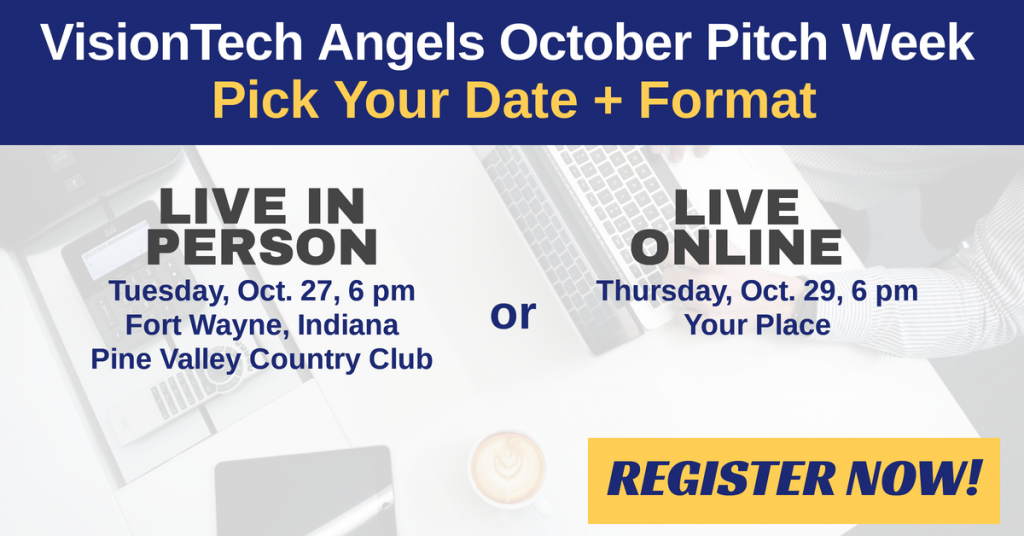
    VisionTech Angels’ Pitch Events will be held Wednesday, September 6. The Noon Session is virtual. The Evening Session at 5:30 pm ET is your choice of in-person with dinner at KSM at 800 E 96th St #500, Indianapolis, or virtual, which starts at 6 pm ET. Pitch events are open to our members and accredited investors interested in joining our group. To register, check your email for an invitation, go to our Events page where you’ll find the RSVP links. You can also email Ben Pidgeon at bpidgeon@visiontech-partners.com.


  • Meet June Pitch Presenters Wade Lange + Dave Skibinski of FiberX, a New Spin on a Hoosier Staple

    Meet June Pitch Presenters Wade Lange + Dave Skibinski of FiberX, a New Spin on a Hoosier Staple

    I’ve known Wade Lange for many years, mainly through his past role as vice president and chief entrepreneurial officer at the Purdue Research Foundation. Like me, Wade grew up in West Lafayette and went to Purdue. He went off to a career at Lilly and later with a series of biotech startups before landing at Purdue. He is now the co-founder of FiberX with Dave Skibinski, an Indiana University grad and former team manager for famed IU coach Bobby Knight. I’m sure Dave’s got some stories! The two serial entrepreneurs have teamed up with FiberX, which is converting the familiar ag waste product, corn stover, into bio-based industrial products that are sustainable alternatives to petroleum-based products. I invited Dave and Wade to meet with the VisionTech Angels Screening Committee in May. The group was impressed with FiberX, its novel approach to the need for sustainable biopolymers and invited them to present at our June 22nd virtual pitch events. Here’s a preview.

    (L to R) Wade Lange, Dave Skibinski, Ben Pidgeon

    BP: How do you know VisionTech Angels?
    WL: I go way back with VisionTech, maybe even before you were Stepstone Partners because of my relationship with Oscar Moralez. We were both involved in biotech companies and with Purdue, so our paths crossed often. When you joined VisionTech, I leaned on you to come speak to faculty and student entrepreneurs at the Purdue Research Foundation

     BP: How do you two guys, graduates of huge rivals, IU and Purdue, know each other?
    DS: I wish I could say we met at a basketball game in Bloomington, but that’s not the case! The real story is Wade tried to recruit me to Purdue in 2021 when he was the chief entrepreneur officer at the Purdue Research Foundation. He thought I would make a great entrepreneur-in-residence based on my background in medical technology and with a startup I’d co-founded called SnapMD, which was at the forefront of telemedicine. We exited in early 2021 and I needed a new challenge. While I turned Wade down on the residency, we ended up launching a new venture together, FiberX.

    BP: How’d you pull that off, Wade?
    WL: Working at Purdue I was exposed to some incredible faculty and their technologies. One of them was Jim Caruthers, a chemical engineering professor who has dedicated his career to polymer science. He’d developed technology to convert biomass such as corn stover into “green” adhesives for engineered wood products. When Dave mentioned he wanted to start another company, I introduced him to Jim. Dave saw the potential immediately. After much discussion, we decided to co-found FiberX. Dave is the CEO focused on building the business and our core capabilities angle, while I’m chief commercial officer and boots on the ground here in Indiana.

    BP: What exactly is corn stover?
    DS: I can’t believe you’re from Indiana and don’t know what corn stover is, Ben! Corn stover is the stalks, husks, leaves, and cobs that remain after field corn is harvested. While some is used to feed livestock and as bedding, the bulk of it is not commercially used. In many cases, farmers leave it in the field to degrade to help control soil erosion and to return nutrients such as nitrogen, potassium and phosphorus to the soil when they plow the stover back into the soil. Corn stover is the world’s and Indiana’s largest agricultural waste product.

    BP: What unmet need are you solving?
    WL:  We’re solving problems on both sides of the coin. Farmers have taken a beating these last few years. Their input costs are up, commodity pricing for corn is down, and they’re always battling Mother Nature for a good crop. Corn stover is FiberX’s raw material. By purchasing this byproduct following the corn harvest, we’re creating a new revenue stream for farmers. Talking with many Indiana farmers, we know that they are open to selling stover if the economics work out because their high corn yields are producing tremendous amounts of stover.

    The other side of the coin are the industrial markets that are interested in replacing petroleum-based adhesives and plastics with environmentally friendly biomaterials that have the same if not better performance characteristics. We’re  bioindustrial resins and biocomposite plastics with sustainable corn stover as a feedstock rather than petroleum. With our resins, we’re also eliminating the use of formaldehyde as a curing agent. Although widely used in the production of plywood, other manufactured board and resins as well as cosmetics and medicines, formaldehyde is highly toxic, flammable at room temperature, and can be a cause of lung disease and cancer. So for manufacturers, eliminating the need for formaldehyde removes a potential safety and health hazard.

    BP: The push to replace petrochemical-based adhesives and plastics is a global movement. What is your initial target?
    DS: It absolutely is. Global companies that use plastics in their products or packaging have clear, and in many cases, aggressive sustainability goals regarding plastics. This includes recycling, reusing, reducing the amount of plastic used, reducing the amount of petroleum used to manufacture those products, and ultimately replacing plastics with renewable biomaterials. The demand for alternatives is there. However, the biomaterials market is in its infancy. There are products on the market and in aggressive testing with corporate partners.

    We have three different product categories we’re focused on, with increasing product value. First up and the fastest route to market entry is processed corn stover, which is added to synthetic or natural plastics to create biocomposite plastics. Next are intermediate products, lignin and cellulose, which are used as sustainable ingredients if you will for many products, including packaging. Finally, we have our proprietary formulations, the adhesive resins for composite wood products that include flooring, furniture, sheathing, and cabinets that are made from composite and engineered wood products rather than solid wood. For example, La-Z-Boy upholstered furniture is made with composite woods as is much of the furniture from IKEA and Target for example.

    BP: How is your material different from other biopolymers already on the market?
    WL: The big difference is our raw material, corn stover. It’s plentiful and an agricultural waste product versus corn, soybeans, and wood pulp that are also used in biopolymers, but are all primary market products. Currently, there’s only one marketed non-petroleum adhesive resin. It does not meet customer requirements and it’s really expensive. We want to step up quickly with a sustainable resin that works.

    BP: What is your total addressable market?
    DS:  The total addressable market for green chemicals and materials globally is projected to reach $229 billion by 2030. The global market for our initial products, adhesive resins, is $8 billion.

    BP: What kind of intellectual property protection do you have?
    WL: We have an exclusive option from Purdue to license five pieces of intellectual property that cover the manufacturing processes for the adhesive resin. Our plan is to exercise the options in the second  half of this year. We will also have numerous trade secrets as every product formulation we create will be unique to its target use case.

    BO: Where are you in terms of commercialization?
    WL: From the supply side, we’re building relationships with farmers and agronomists and also working with farmer-owned cooperatives in the Midwest to build the raw material supply chain. Some are ready to start right away, and others want to wait and see, which is common regardless of the industry.

    DS: We’ve achieved our proof of concepts on our stover processing and have produced product prototypes. We are in discussions with several of the largest lumber and engineered wood companies in North America that are looking for sustainable resins and materials that won’t compromise performance but will help meet sustainability objectives. We have a terrific project with Purdue this summer with our resin, and the early results are very exciting. We have also completed our proof-of-concepts for our biocomposite plastic product line. We are now conducting iterative product development to refine these product formulations. Our goal with  these biocomposite plastics is to replace 40% of petrochemical-based plastics. This is a win for global companies as it reduces their reliance on traditional plastics and helps them reach their sustainability goals.

    BP: What round is this?
    DS: This is a $500,000 pre-seed round.

    BP: What is your planned use of funds?
    DS: The primary uses are to build and refine our stover processing and supply chain, produce sample resin and boards to take to the engineered wood industry, and finally, produce samples of biocomposite plastics to take out to a variety of industries committed to reducing their use of traditional plastics.

    BP: Give me three reasons why VisionTech Angels members should invest.
    WL: FiberX is creating an entirely new industry for Indiana and has a huge market opportunity with a short-term path to revenue. Second, we’re leveraging Indiana’s strengths in agriculture and manufacturing. Finally, we have an exceptionally strong team including two serial entrepreneurs with experience and multiple exits in hard tech, our CTO Tom Santelli who has led technology and product development at the largest board manufacturers, a multi-generational Indiana farming family, and a tremendous team at the Purdue School of Chemical Engineering

    DS: Plus, we’re leveraging the industrial manufacturing and rural farming assets of Indiana. And there’s the whole IU-Purdue thing.  Something for everyone who likes to support Indiana companies.

    BP: Thanks guys! This sounds like a great pitch and opportunity.

    VisionTech Angels’ Pitch Events will be virtual on Thursday, June 22 at Noon and live at 6 p.m. ET at KSM at 800 E 96th St #500, Indianapolis. Pitch events are open to our members and accredited investors interested in joining our group. To register, check your email for an invitation, go to our Events page where you’ll find the RSVP links, or email Ben Pidgeon at bpidgeon@visiontech-partners.com.

  • Meet Our April Pitch Presenter: Diana Caldwell of Amplified Sciences, Amplifying Trace Enzymes for Earlier Diagnosis

    Meet Our April Pitch Presenter: Diana Caldwell of Amplified Sciences, Amplifying Trace Enzymes for Earlier Diagnosis

    I first met Diana Caldwell when she was the co-founder and CEO of Pearl Pathways. Pearl was among VisionTech’s corporate sponsors and an invaluable commercialization resource for our life sciences portfolio companies. It didn’t take long for Diana to become a member of VisionTech Angels, giving us deep bench strength as a subject matter expert in drug development and FDA regulatory paths. When she co-founded a new diagnostics startup with pancreatic cancer as its first target, Amplified Science, I was eager to learn more. Pancreatic cancer is the third most deadly cancer, killing 74 of 100 patients within a year of diagnosis, largely because it is rarely discovered early enough to treat successfully. I invited Diana to meet with the VisionTech Angels Screening Committee earlier this month. The group was impressed with Amplified Sciences, its novel technology, progress to date, and invited her to present at our April 27 virtual pitch events. Here’s a preview.

    BP: Tell me a little about yourself. Is this your first startup?
    DC: This is actually my second startup. I was also a co-founder of Pearl Pathways. After earning an MBA at the IU Kelley School of Business, I joined Lilly where I held commercial and cross functional roles for the next 16 years. Lilly really gave me a broad foundation of experience in leadership and developing teams in the biotech space. Eventually, a desire to be an entrepreneur and get back into product development for unmet clinical needs brought me to the startup space.

    BP: What’s the backstory on Amplified Sciences? How did you connect with your co-founder, Dr. V. Jo Davisson?
    DC: I was working at the Purdue Foundry as an entrepreneur-in-resident, helping a half a dozen startups and shopping for IP for my next startup. While I was there, I met Jo,  a Purdue faculty member and biochemist with 30 years of experience in drug and diagnostic discovery and development. He had invented a chemistry reagent platform for the early detection of debilitating diseases, had founded the company, and was looking for a CEO with deep business experience. For the next nine months we had the opportunity to work alongside each other—Purdue has this great knack of pairing entrepreneurs with scientists! In the summer of 2019, I became a co-founder and CEO with Jo as our CSO, and we got to work. 

    BP: What is your product and how is it different?

    DC: Our lead product is a diagnostic reagent for accurately detecting a biomarker that is an indicator of potential malignancy for pancreatic cancer.  Amplified Sciences’ chemistry reagent platform is a suite of patented reporter dyes that amplify biomarker signals. What’s novel about our technology is the ability to detect indicators of disease at a much lower concentration – up to 10,000 times improved limits of detection – than comparable technologies.  Our ultrasensitive dye probes work particularly well when there is a low abundance of the target biomarker and when there is a low volume sample involved. These features are important when you’re working with low volume samples such as with a cyst or when a disease is in its very early stages.

    BP: Let’s discuss your lead assay, PanCystProTM. Why pancreatic cancer? Where are you in its development?
    DC: We chose pancreatic cancer for our lead assay for several reasons. First, because of the deadly nature of the disease—roughly three out of four patients are dead within a year of diagnosis—and the unmet medical need for early-stage diagnostics to help increase survival rates. Pancreatic cancer is a “silent cancer” in that symptoms don’t show up until late stage if they show up at all. By then it’s too late to treat effectively. Early detection is the only way to significantly change outcomes.

    Here’s an example for you. Supreme Court Justice Ruth Bader Ginsburg had colon cancer. It was caught early, and she survived. Later, when she was undergoing a full body scan, an early-stage cyst was found on her pancreas. She was treated with a surgical removal of that cyst, and survived for years. It was only by chance that her pancreatic cancer was found when still treatable.

    Why is it so hard to find? For one thing, the pancreas is deep within the body, behind the stomach, so it’s hard to see in imaging. Most of these cysts are found by imaging incidentally meaning they are found in a cat scan or MRI when doctors are looking for something else .

    Our PanCystPro™ assays test the fluid from these cysts, which are very small so fluid sample sizes are small. This works in our favor because of the ability of our technology to operate with very small sample volumes. Our initial PanCystPro assay is a minimal sample assay for protease biomarkers and is a “rule out” test to determine if the cyst is benign. At +90% sensitivity and specificity, it is more accurate than competing tests.

    We have additional assays in this disease state in development.  I’d also like to mention that we were just awarded a Phase 1 SBIR grant of $400,000 from the National Cancer Institute. This will help accelerate development of our second assay for pancreatic cancer. The award validates the huge clinical need for this test.

    BP: Where are you in development?

    DC: We are making steady progress. The PanCystPro test has been used in clinical samples and is ready for translation to a clinical lab and to enter the regulatory process. Our team, which includes three Ph.D. scientists, is set to expand soon. Research and development on additional assays are underway and this includes active institutional review board (IRBs) studies with three premier research universities.

    BP: What is your total addressable market?
    DC: The in-vitro diagnostics market is huge, about $88 billion. For initial market entry, we are focusing on the pancreatic cancer diagnostic market, which is $2.2 billion including imaging. Drilling down to our real value proposition, more accurate diagnosis of patients with pancreatic cysts, the market is $300 million with a potential market share of $80 million. Pancreatic cancer in-vitro diagnostics is just the start so keep in mind, this is a platform technology that will be leveraged to other disease states.

    BP: What kind of intellectual property protection do you have?
    DC: We have a suite of global composition of matter patents exclusively licensed from Purdue. We are adding patents on our individual products.

    BP: What round is this?

    DC: This is our Series Seed Preferred Round. We completed a previous Series Seed convertible note round in early 2021, raising $1.78 million. In this round, our goal is to raise $3-3.5 million. We have two co-leads, Elevate Ventures and OCA Ventures, that have done their due diligence. They, alongside two other venture firms, closed $1.5 million in Wave 1 of the open round on March 3, 2023. We’d like to raise another $1.5 to $2 million so there’s still plenty of room for VisionTech Angels.

    BP: What is your planned use of funds?
    DC:  The largest portion will be directed to research and development on two additional assays, followed by CLIA regulatory approval, targeted launch with key opinion leaders, clinical utility and trials, sales and marketing, and capital equipment.

    BP: Give me three reasons why VisionTech Angels members should invest.
    DC: First, this is an opportunity to help us build a great diagnostics company focused on earlier, mor accurate detection starting with pancreatic cancer. Second, others believe we are up to the challenge. We already have two respected investors leading the round, Elevate Ventures and OCA Ventures, both of which have invested in diagnostics companies in the past and are familiar with the space. Third, we are a clinical stage company making measurable progress and are planning our commercial launch by end of year. I’m going to sneak in a fourth: we have identified multiple paths to exit and are working hard on the milestones needed for a near term exit.

    VisionTech Angels’ April Pitch Events will be virtual on Thursday, April 27 at Noon and at 6 p.m. ET. Pitch events are open to our members and accredited investors interested in joining our group. To register, check your email for an invitation, go to our Events page where you’ll find the RSVP links, or email Ben Pidgeon at bpidgeon@visiontech-partners.com

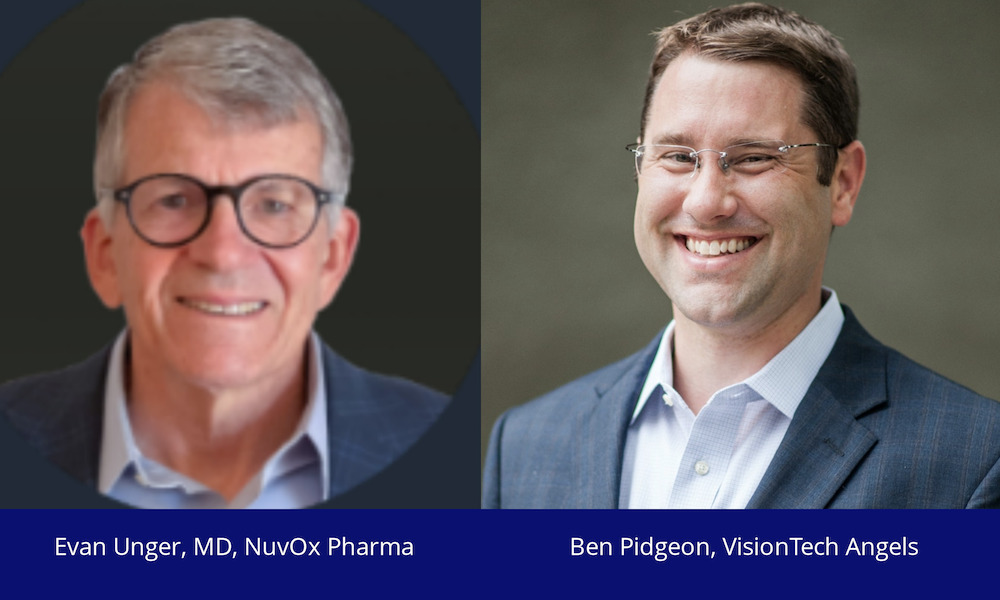
  • Meet Our February Pitch Presenter: Dr. Evan Unger of NuvOx Pharma, Using Oxygen to Amplify Treatments

    Meet Our February Pitch Presenter: Dr. Evan Unger of NuvOx Pharma, Using Oxygen to Amplify Treatments

    I was introduced to Dr. Evan Unger by Mike Eckert of the NOLA Angel Network in New Orleans. Their group is syndicating an investment opportunity in NuvOx Pharma, a clinical stage pharmaceutical company developing a drug that significantly improves the flow of oxygen from lungs to blood and from blood to tissue. The drug has applications in treating cancer, stroke, acute respiratory distress syndrome, and other fatal diseases. I invited Evan to meet with the VisionTech Angels Screening Committee earlier this month. The group was impressed with NuvOx, its leadership team and board, traction, and the investment opportunity, and we invited him to present at our February 23rd virtual pitch events. Here’s a preview.

    BP: I went through your website and was very impressed by your team, starting with yourself.
    EU: I’ve been busy: board-certified radiologist and inventor; 30 years as a professor of radiology and bioengineering; have 120 issued patents; have founded four biotech companies, the first of which exited to DuPont at a 20x return; and now CEO, president and co-founder of NuvOx. My experience with startups helps me avoid the common pitfalls!

    Our leadership team is impressive. Rong Wang is our CFO/COO and is a very strong organizational leader . Prior to joining NuvOx, she was an executive in investor-backed companies and led multiple successful exits. She’s also worked for Fortune 500 companies such as Baxter International. Jennifer Johnson, PhD, is a co-founder and chief scientific officer of NuvOx. She has more than 20 years of deep R&D and regulatory experience, including tenure with Roche. Our skillsets are very complementary, and we form a high performing team.

    I can’t thank our board and scientific advisory members enough. We have physicians, a former Roche executive, biotech CEOs, and the former U.S. surgeon general, Richard Carmona. They provide comprehensive board governance structure, investor introductions, advice and more.

    BP: Explain the unmet need and how your solution, NanO2, addresses it.
    EU: The problem we’re solving is hypoxia, a state in which oxygen is not available in sufficient amounts at the tissue level to adequately maintain normal functions. This lack of oxygen is responsible for death or morbidities in cancer, stroke, heart attack, traumatic brain injury, acute respiratory distress syndrome (ARDS), and other diseases.

    Our solution is NanO2TM. It is a gas-based active pharmaceutical ingredient (API) that is nanobubble emulsified into liquids to reverse hypoxia in specific medical conditions via simple IV injection. It is designed for use primarily as an adjunct treatment that is synergistic with the standard of care and improves the effectiveness of the treatment. Here is an example. Glioblastoma, a malignant brain cancer, is typically treated with radiation and chemotherapy. Cancer tumors have low levels of oxygen, which makes them resistant to treatment. NanO2 is administered 30 to 60 minutes before chemoradiation to bring up the oxygen level in the tumor. This elevates the effectiveness of the therapy because the standard care, chemoradiation, needs the oxygen in the tumor to be effective. In our initial clinical trial, median survival increased by 40%.

    NanO2 can also be applied as an adjunct treatment for ischemic stroke. When it’s administered immediately after stroke in multiple doses, it provides the necessary oxygenation to preserve brain tissue (penumbra ) for about six hours. This exceeds typical door-to-needle treatment window of the American Heart Association, and significantly improved functional independence in our trial.

    BP: Where are you in terms of commercialization?
    EU: Our product has already been developed in formulation, and we are manufacturing it ourselves for upcoming clinical trials. We can easily scale up our manufacturing and at the appropriate time, engage a contract manufacturer. We’ve completed initial clinical trials for glioblastoma with good results and are preparing for a Phase IIb clinical trial for glioblastoma to start in Q1 2023. We have orphan drug status, giving us the advantage of speed to market in the $100 billion oncology market. A second Phase IIb trial in stroke will commence later in 2023. We seek to leverage our active and planned clinical programs with additional non dilutive funding.

    BP: You mention this is a platform technology. In addition to cancer and stroke, that other conditions can potentially be addressed by NanO2?
    EU: While we have clinical evidence in glioblastoma and stroke, we also have pre-clinical evidence in animal models and current or potential grant funding for immunotherapy, heart attack, sickle cell diseases, and ARDS. Other clinicians have suggested applications in wound care such as diabetic foot. There are so many possibilities to leverage our platform, but we remain focused on our clinical programs, so we’re not spreading ourselves too thin.

    BP: What kind of IP do you have?
    EU: We currently have eight patent families that includes seven U.S.-issued patents and their international equivalents that cover China, Europe, Canada, Australia, Japan, and Korea. We plan to file new patents for key excipient, which would give us an additional 20 years’ runway of protection.

    In terms of additional protection, we have two orphan drug designations with seven-year market exclusivity. Our drug is potentially regulated as a biologic, which, if we achieve this regulatory status, comes with 12-year market exclusivity. We have also protected our position with an exclusive supply agreement, control of our key ingredients and proprietary manufacturing know how.

    BP: What investment round is this?
    EU: This is a bridge round following a $10 million Series A. It’s worth noting we’ve been very successful in attracting $13 million in non dilutive funding from the National Institutes of Health, Department of Defense and other government funders.

    BP: What is your planned use of funds from this round?
    EU: We plan to use proceeds of the raise to fund our Phase IIb trials for glioblastoma, which begins enrolling patients very shortly. We also will start a Phase IIb trial for stroke in 2023. That clinical trial is being funded by the United Kingdom government.

    BP: Why should VisionTech Angels invest in your company? EU: We are addressing a massive market with an unmet need with a drug that has been substantially de-risked, has strong IP protection and a clear pathway to commercialization. We don’t have effective competitors in this field and are very capital efficient. A significant benefit for investors is we have secured more than $13 million in non-dilutive funding and are close to securing an additional $4 million. Finally, our leadership team, our board, and our scientific advisors have deep experience in all aspects of drug development and commercialization and have played a critical role in our success thus far.

    VisionTech Angels’ February Pitch Events will be virtual on Thursday, February 23 at Noon and at 6 p.m. ET. Pitch events are open to our members and accredited investors interested in joining our group. To register, check your email for an invitation, go to our Events page where you’ll find the RSVP links, or email Ben Pidgeon at bpidgeon@visiontech-partners.com

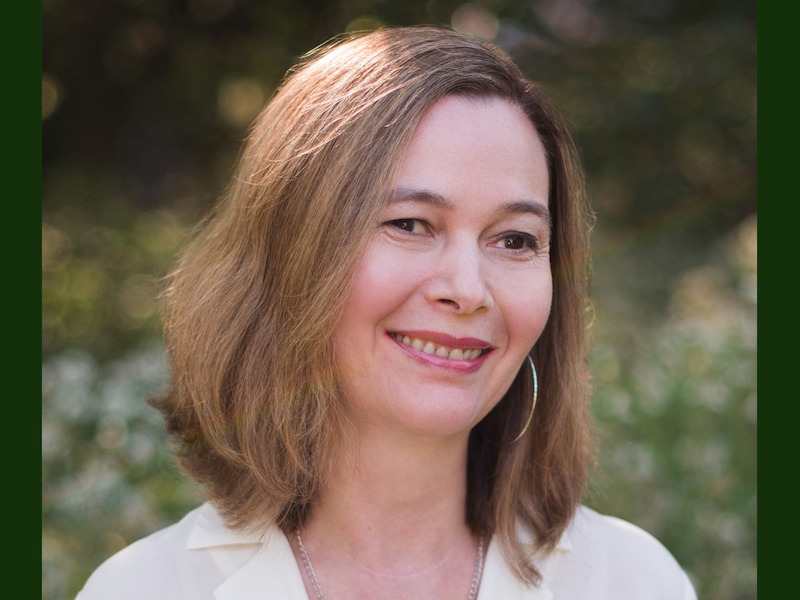
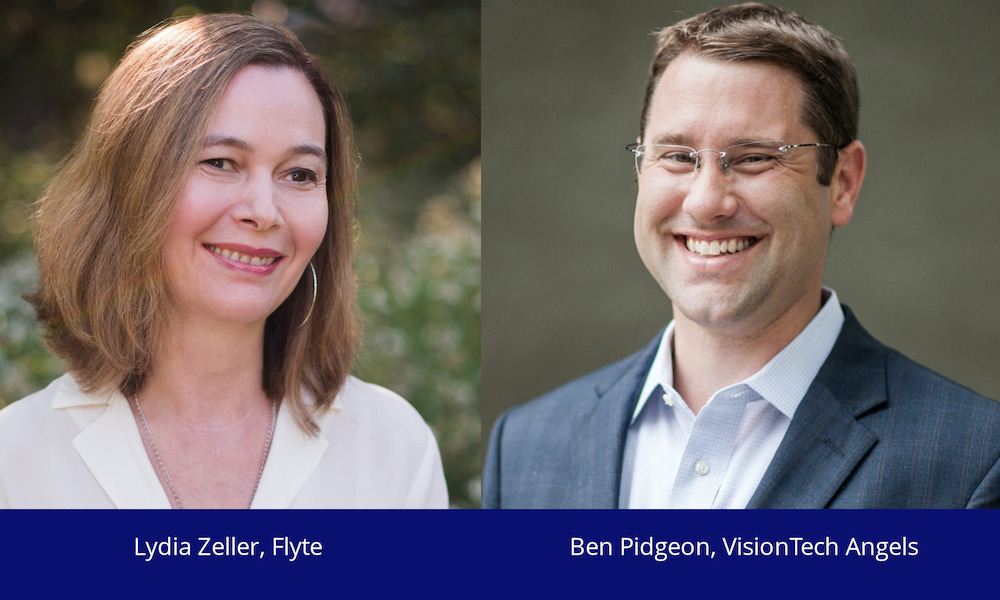
  • Meet February Pitch Presenter: Lydia Zeller of Flyte, Addressing Incontinence with Confidence

    Meet February Pitch Presenter: Lydia Zeller of Flyte, Addressing Incontinence with Confidence

    I first met Lydia Zeller, CEO and president of Pelvital (dba Flyte) a femtech solution for stress urinary incontinence in women. If you are unfamiliar with femtech, it is a category of software, diagnostics, products, and services that use technology to focus on women’s health. While VisionTech Angels has invested in a wide range of life sciences companies, this is our first femtech company, a sector that’s recently begun experiencing a lot of growth. I invited Lydia to meet with the VisionTech Angels Screening Committee earlier this month. The group was impressed with Flyte, how they are addressing a significant unmet need, the investment opportunity and Lydia, and we invited her to present at our February 23rd virtual pitch events. Here’s a preview.

    BP: Tell me a little about yourself. Is this your first startup?
    LZ: No, I’ve actually been an entrepreneur for 25 years and have a lengthy background in digital health. The last company I founded and where I served as CEO was Kiio, a digital health company in the musculoskeletal space, which exited in late 2021. I was brought onboard at Flyte in 2022 to take a fresh look at the go-to-market strategy. Outside of Flyte, I’m the board president of the Wisconsin Startup Coalition and a member of Women Business Leaders of the U.S. Health Care Industry Foundation.

    BP: What’s the backstory on Flyte?
    LZ:  First, 60% of women suffer from some form of urinary incontinence, so it’s a big problem. Flyte was originally developed by researchers, physicians, and physical therapists at the Arctic University of Norway. They were frustrated by the fact that nothing worked for patients who came in with stress urinary incontinence. Mechanotherapy was being used to treat astronauts who’d lost muscle strength in space. The question was asked, “Can we use this healing modality to revitalize the pelvic floor of women?” That started the effort at Arctic University to develop the technology that became Flyte.

    BP: I didn’t realize incontinence was such a big issue.
    LZ: Most people don’t. And one of the reasons is it’s embarrassing for women to talk about even though one in two have stress or mixed urinary incontinence. It happens when a woman laughs, coughs or bounces during exercise. It can develop after pregnancy. Athletes suffer from it. Incontinence is also part of the aging process. As common as incontinence is, more than 80% of women just put up with it without treatment. Some wear pads or absorbent undergarments, which are expensive. Some do Kegel exercises at home to strengthen muscles. A very small percentage, less than 3%, opt for surgery.  That’s expensive, there’s the risk of complications and it doesn’t always work. A lot of women are frustrated and end up living with leaks.

    BP: How is Flyte different?
    LZ: Flyte is a safe, non-surgical, bladder leak treatment for stress urinary incontinence in adult women. It is the only product to apply mechanotherapy to pelvic floor. It is a quick, easy treatment patients can do for just five minutes per day to strengthen their pelvic floor and realize dry or near-dry results in just six weeks.

    Now here’s how the “magic” of mechanotherapy works. The Flyte device is a wand made of soft, medical-grade silicone that is placed in the vagina. During treatment, it delivers a series of gentle pulses while the patient contracts her pelvic floor muscles. This amplifies the benefits of each squeeze—commonly called Kegels—by 39 times. This promotes the healing response in the pelvic floor muscles and restores strength and bladder control. Length of treatment is six weeks. Women can continue to use Flyte to maintain pelvic floor muscle tone if they like.

    BP: You’ve done clinical trials in Norway and the United States, and the results are impressive.
    LZ: Thank you! We have done the largest clinical trials of stress urinary incontinence in the world, with a total of 179 participants. The first trial was done in Norway at one center with 60 women. After six weeks, 83% of the women were continent. After two years, 77% will still continent. A second study was done in the United States with multiple centers and 119 women. After six weeks, 81% had improvements and at 12 weeks, 91% reported improvements. Overall, 71% achieved dry or near dry in two to 12 weeks.

    BP: What are the barriers to adoption and how are you addressing?
    LZ: Among consumers, there’s a lack of awareness that there’s something new available to them and that it works. We’ve also found that women are a little leery. Surprisingly, incontinence is a noisy space. A lot of people are selling snake oil. And even traditional treatments aren’t that effective. Many women who have tried something that didn’t work give up. Being new, we have to create awareness and educate women that our treatment works, and it’s quick. Some women achieve total dryness in two weeks, for others it’s six weeks of more. Increasing our presence on social media and through digital healthcare companies will help us increase awareness.

    B2B partners get it, particularly clinicians who see the problem day-in and day-out, know their patients struggle with current options and are not solving the problem. They are impressed with the results of our clinical trials. Our price point, $395 per device, would be more attractive if covered by insurance or Medicare/Medicaid. So we are working on getting a reimbursement code.

    Interestingly enough, we also have to overcome barriers with potential investors. Femtech is a new category of investing. Men often don’t realize what a debilitating issue incontinence is for women because women hide it so well. Unlike back surgery or a cancer drug, it’s not always easy to explain our return on investment. Incontinence ROI is more complicated. It’s been linked to depression, urinary tract infections, withdrawal from various activities in professional and personal settings, stopping exercise—the list goes on.

    BP: What is your go-to-market strategy and where are you seeing traction?
    LZ: To date, B2C has been our primary focus, and we are making a small profit here. Last year, we concentrated on reducing our customer acquisition cost and succeeded in cutting it in half. Once we close this round, we will be more involved in our B2C outreach through social and digital channels. Where we’re putting more effort is B2B. In the virtual healthcare arena, we are in advanced discussions with multiple partners and have signed a contract with a large Minnesota healthcare system. B2B deals take more time to develop and close but will allow us to scale more quickly.

    BP: What kind of intellectual property protection do you have?
    LZ: Our technology is very well protected, and we did that intentionally. We have 17 patents in all:  seven in North America, four in Europe, four in Asia, and two in Australia.

    BP: What round is this?
    LZ:  We are currently in our seed round and the goal is to raise $4.5 million. Boomerang Ventures is leading the round through their fund.

    BP: What is your planned use of funds?
    LZ:  Our priorities include securing a reimbursement code so we are accessible to more women through private insurance and Medicare/Medicaid; building out our next generation product, a connected device that will enable Cloud capture of data, a mobile apps for users, and features for virtual healthcare companies, health systems and clinicians; and making key hires in sales, marketing and business development that support commercialization. We will also be building our inventory in anticipation of increased demand.

    BP: Give me three reasons why VisionTech Angels members should invest.
    LZ: Do I have to limit it to three? I have five.

    BP: Sure! Go ahead.
    LZ: First off, women’s stress incontinence is a huge market with an unmet need. Second, Flyte is the right product at the right time. At long last, women’s health has become a priority, and this coincides women finally realizing it’s okay to talk to taboo topics like incontinence and demand for solutions for all women. Our timing coincides with the rise of digital health, which thanks to Covid, became mainstream.

    Third, we have a differentiated, patent-protected, novel approach that has been de-risked through clinical trials and has regulatory clearance for over the counter and prescription sales. Fourth, our business model aligns with direct-to-consumer retail and digital health, with women and partners looking for a real solution to stress incontinence. We are that solution. Fifth, we have a great team!

    VisionTech Angels’ February Pitch Events will be virtual on Thursday, February 23 at Noon and at 6 p.m. ET. Pitch events are open to our members and accredited investors interested in joining our group. To register, check your email for an invitation, go to our Events page where you’ll find the RSVP links, or email Ben Pidgeon at bpidgeon@visiontech-partners.com

  • Better Bovine Reproduction: Meet March Pitch Presenter Dr. Jim Donahue of ReproHealth Technologies

    Better Bovine Reproduction: Meet March Pitch Presenter Dr. Jim Donahue of ReproHealth Technologies

    I have known Dr. Jim Donahue since 2016 when he joined VisionTech Angels as an investor through AngelBOM, a chapter made up entirely of physicians. He is one of our more active members, often joining us for our “Breakfast with Ben” gatherings despite his busy schedule as a fertility specialist. I was a little surprised to learn that he was pivoting his career from helping human parents conceive to helping farmers and ranchers with cow reproduction with a startup called ReproHealth Technologies. Intrigued, I invited Jim to present to VisionTech’s Screening Committee. We were impressed by ReproHealth’s device and the potential to dramatically change this important part of agriculture with technology and invited him to present at our special March Virtual Pitch Events. Here’s a sneak  preview.

    BP: You’ve been an investor with VisionTech Angels? For six years. Did you ever see yourself pitching to the group?
    JD:  I had no idea! It is exciting being part of such a great group of docs and investors. That said, I’ve always been an innovator. Our medical practice did the first ever blastocyst embryo transfer in 1998, the first GIFT procedure at a Catholic hospital, and most recently, the first successful pregnancy with an intravaginal embryo culture device in 2018. ReproHealth was the next step.

    BP: You’re a fertility specialist for people. How did you get into the cattle reproduction business?
    JD: It’s kind of amazing on a number of levels. First, I’m a city boy from Miami. What do I know about cows? But here’s a little-known fact. Human in vitro fertilization (IVF) began with cattle. Dr. Bob Edwards did the first successful human IVF with the birth of Louise Brown in 1978, later winning the Nobel Prize for this breakthrough. I did my master’s degree in Human Embryology at the University of Leeds 20 years ago. Dr. Edwards trained the people who trained me. He said to me one time that since it worked in cows, he knew it would work in humans. It finally worked on the 101st attempt!   

    Fast forward to 2017, my medical practice team did the first human intravaginal embryo culture procedure in Indiana using an outdated FDA approved device. The patient got pregnant with twins and the embryos were of exceptional quality. We explored the market and we discovered that bovine IVF does not work well. I knew that we could create a better, more effective device that would solve a technical problem. In talking with farmers, they understand what we’re doing and want to try what is now known as the Embvita device. This led to the formation of ReproHealth Technologies.I have met a lot of farmers who seem to want to try the device. Seeing the problem, identifying a solution, and getting early market validation led to the formation of ReproHealth Technologies.

    BP: What pain points did you see in the cattle business?
    JD: In modern agriculture where farmers are breeding for very specific traits like milk production or more heavily muscled animals, cows are often impregnated with artificial insemination, embryo transfer or IVF. While IVF has overtaken embryo transfer as the preferred method, results are disappointing due to the fact that embryos do not grow well in lab incubators. Also, the eggs are typically collected at sites far removed from the farm and shipped to regional IVF labs for insemination and embryo culture. By the time the eggs make it to the lab, they’re old and less than ideal. Typically, of the 17 or so eggs collected, only 25% are fertilized and suitable for implanting in a cow. It’s not very efficient or effective.

    Our device, which is implanted in the cow vagina, is essentially a culture chamber, doing the same job as a lab incubator. It brings together the eggs and sperm in a more natural environment. This results in twice as many fertilized eggs that mature into healthy, transplantable embryos. Another advantage is the procedure is done at the farm rather than at a far-off lab. Farmers immediately see that it’s less complicated and results in more calves from their prized dairy or beef cow.

    BP: What makes the Embvita device a must have among cattle producers?
    JD: We recently met with a major U.S. dairy producer. Although they had never seen a company like ours before, they recognized our technology has the potential to completely change how they replace their cattle. They also invited us to come back and work with them for four weeks as part of their accelerator program. Although we’re not a must have yet, it’s impressive when a potential customer that produces over 20% of dairy in the U.S. pays you $10,000 just to travel to their headquarters and work with them.

    BP: The typical dairy or beef cow produces one calf a year. With the Embvita device, you can produce as many as eight embryos from one cow in a single season. In effect, you’re turning cows into super producers.
    JD:Amazing, isn’t it? But it’s not just about the volume of embryos.Our goal is to help farmers optimize the genetic traits that lead to dairy cows that produce more milk and beef cattle that are better meat producers. So yes, with the help of the Embvita device, cows with highly desirable traits have the potential to exponentially produce more high-quality offspring. And with cryopreservation, the farmer controls supply and demand in terms of deciding how many of the embryos are immediately implanted in surrogate mother cows and how many are held for a future date. There is huge potential in maximizing the number of offspring of these ideal mama cows.

    Additionally, we feel strongly that our technology and requirements to utilize it are simple enough that it can easily be deployed in parts of the world where there is food insecurity and a need to increase their cattle herds. Our technology could help them. Helping other parts of the world is very important to us.

    BP: The cattle industry is under fire by some because of their gas production. How do you counter this?
    JD: It’s possible that by breeding higher producing cattle with the Embvita device, we will need fewer cattle to produce the same amount of milk or meat. Fewer cows should lessen the greenhouse gas footprint of dairy farms and cattle operations, a plus for the environment .

    BP: Explain your revenue model.
    JD: Our revenue model is pretty simple; it’s based on selling the Embvita device and culture media to veterinarians or larger operations. A typical vet may purchase 600 devices and culture media a year. The device is single use. Depending on how the farmer uses the resulting embryos – either one at a time and freezing the rest or implanting all of the embryos into surrogate cows – we expect repeat sales over the life of the cow.

    BP: What is the market size?
    JD: There are about 40 million beef and dairy cows in the United States. Each year, some 15% (six million) are replaced using IVF, artificial insemination and embryo transfers. The artificial insemination market is much bigger than the IVF market, but the potential to optimize the number of desired trait offspring may make them switch to our device. A cow naturally produces only one offspring a year. With our device, she could produce many more per year. Capturing the current segment where human intervention is used is a significant opportunity. But looking at the market overall, it has the potential to be much bigger.

    BP: What’s your competitive advantage?
    JD: We have three main competitive advantages. First, there is little or no transporting of the cows; we bring the lab to the farm. The cows stay at their home farm which reduces stress on the animal and eliminates transportation time and expense. Second, our Embvita device results in two times as many embryos as the competition. From 17 eggs, we typically get eight embryos while the competition gets four. Third, we have incredible expertise on our team. In addition to my background in IVF, my co-founders include a biomedical engineer at Cal-Poly and an embryologist. We also have a partner who is a veterinarian who specializes in cattle.

    BP: Do you have IP protection?
    JD: We have filed for provisional and utility patents in United States, European Union and Brazil. We have 3D printed a prototype and have testing going on right now.    

    BP: What round is this and how will funds be used?
    JD: Up until this time, I have bootstrapped the company on my own. We’ve reached an inflection point where we need more capital to fast track our product development. We also would like to bring additional human capital onboard. So we are raising a $1 million pre-seed round.

    BP: What would you say to VisionTech Angels considering an investment in ReproHealth?
    JD: I have been a human fertility specialist for 30 years, and now plan to focus 100 percent of my time on ReproHealth. We have a unique opportunity to change entire industries, the dairy and beef industries, through a more modern process that also has the potential to decrease livestock-related greenhouse gas emissions. I’m a city boy raised in Miami, but I’m drawn to  agtech, the people and the opportunity. With that being said, investing is a personal decision, and I leave it up to each investor to make his or her own decision about investing in ReproHealth.

    To learn more about ReproHealth Technologies, visit  their website. VisionTech Angels’ March Pitch Events will be virtual on Thursday, March 24 at Noon ET and at 6 p.m. ET. Pitch events are open to our members and accredited investors interested in joining our group. To register, check your email for an invitation, go to our Events page or email Ben Pidgeon at bpidgeon@visiontech-partners.com.

  • Meet February Virtual Pitch Presenter #1: Peter Dunn of Your Money Line

    Meet February Virtual Pitch Presenter #1: Peter Dunn of Your Money Line

    A colleague suggested that I meet Peter Dunn, CEO and founder of Your Money Line, as he was raising a seed round and I’m always interested in investing opportunities. Prior to meeting with him, I did a little research and discovered this was no ordinary CEO, this was Pete the Planner®, an award-winning comedian, USA Today columnist, and author of 10 books on financial wellness. It was really hard not to be intrigued. We met and after learning more about Your Money Line, a SaaS company that helps employers connect employees to confidential financial guidance to solve common money woes. The VisionTech Screening Committee was also impressed with what Peter’s doing so we invited him to present at our February virtual pitch events.

    BP: What’s the story behind Your Money Line?
    PD: I worked as an investment advisor from 2000 to 2012 in Carmel, where I live with my family. I soon realized that most people don’t need a wealth advisor, they need a personal financial advisor to help them through a myriad of financial issues such as dealing with student loan debt, buying a home, finding money to save for retirement. In 2005, I started my media career doing television appearances on the local news. That led to a radio show and eventually an opportunity to write for USA Today and the Indianapolis Business Journal. I ultimately wrote ten books, appeared on a number of national news shows, and made various appearances on Good Morning America.

    In 2017, I launched Your Money Line Powered by Pete the Planner®. Your Money Line is a fintech company that is the culmination of my experience and identifying a huge need among companies to help their people achieve financial wellness for productivity reasons, human reasons and ultimately, so people can achieve financial security to retire.

    BP: You launched five years ago. What makes Your Money Line a must-have now?
    PD: People have had money issues as long as there’s been money. But seriously, the last two years of COVID and the uncertainties it’s caused have put extreme financial pressures on everyone. Now with inflation, people are really stressed and need help. That goes for business owners and their employers. Given our offering, now is the right time to scale our company and start helping people get on track with their finances and sanity.

    BP: How does it benefit employees?
    PD: Employees have access to two things, the Your Money Line Call Line and the Your Money Line Dashboard. The call line is our financial concierge service. Employees with questions call into a dedicated line that connects them with one of our trained money experts. These experts provide answers and also follow up with additional resources if needed. The dashboard takes the call line a step further by providing an online hub for a wealth of money resources. This includes a personal debt tracker,  a budgeting tool and video courses. To really personalize the service, people can complete a brief quiz and the dashboard provides a specific financial path based on individual needs. This really helps people understand what they need to do and how to do it to overcome the financial stresses of life.

    BP: How does this benefit employers?
    PD: There are so many benefits. First, there’s the human factor. If you have employees who are constantly worried about money, who are faced with unexpected expenses, whose partner has lost their job—well, how well can they concentrate on work? Traditional employee benefits don’t address this kind of issue. Providing access to a service like Your Money Line is a much more empathetic, proactive approach to employees’ financial wellbeing and mental health! So we help employers solve underlying financial issues for many employees that keep them from living their best life, purchasing homes and saving for retirement.

    There’s also a significant financial benefit. Employees who aren’t burdened by debt are better able to participate in company 401(k)s and prepare for retirement at age 66 or 67. Unfortunately, employees who have not saved for retirement tend to work longer, which has huge financial ramifications for employers. It’s far better to prepare employees to retire “on time.”

    A final benefit and what’s truly unique is our technology which helps employers track employee engagement with the money line, dashboard,  videos, and other resources. We show on average where employees stand financially and their behavioral changes through on-demand reporting and quarterly reports. So companies see exactly how and where we are making a difference, and if an employee is having difficulties, it creates an opportunity for intervention: a conversation, show of empathy, kindness. And guidance.

    BP: What kind of traction do you have?
    PD: We currently serve employees in all 50 states, which is exciting because we know we’re making a difference for people. Our sweet spot is with legacy companies with large workforces that take a long-term approach to the needs of their employees, particularly within the realm of retirement readiness. We also have traction with school districts. You may be curious about that, but many teachers start their careers with tremendous debt due to student loans. It’s a huge financial burden. In the fall of 2021, we worked with teachers in three school districts to get their loans forgiven and succeeded in helping them increase their combined net worth by $3 million. They can now concentrate on teaching and also building retirement accounts.

    BP: What’s your financial model?
    PD: We are a SaaS model. Customers pay an annual, per employee fee for their entire workforce. Our target customers are companies with 1,000 plus employees. They typically sign three-year contracts with us so there is built-in stickiness.

    BP: How much are you raising?
    PD: Up until this point, I’ve bootstrapped the company. Now, however, we are ready to scale. This is a seed round and we set a goal of $2.5 million. I am happy to say we’ve oversubscribed but are keeping the round open for VisionTech Angels.

    BP: What will the funds from this round be used for?
    PD: We are really focused on executing our go-to-market strategy. The funds from our seed round will be used to add to our sales, marketing and technology team.

    BP: Why should VisionTech Angels investors write checks to Your Money Line?
    PD: I have four reasons. First, even at this early growth stage, we have great traction in revenue, renewal rates among existing customers are high, and we have a robust pipeline. Second, we have significant partnerships within the global financial industry. Some of the world’s largest financial companies entrust us with their clients. Third, we have the right team to scale the company. Finally, we’re providing a service that is sorely needed by many Americans.

    To learn more about Your Money Line, visit their website. VisionTech Angels’ February Pitch Events will be virtual on Thursday, February 24th at Noon ET and at 6 p.m. ET. Pitch events are open to our members and accredited investors interested in joining our group. To register, check your email for an invitation, go to our Events page or email Ben Pidgeon at bpidgeon@visiontech-partners.com.

  • Meet August Pitch Presenter #1: Doug Wilcox, CEO of Safekeeping

    Meet August Pitch Presenter #1: Doug Wilcox, CEO of Safekeeping

    Many years ago when I was a Purdue student, I worked part-time at a local retirement and long-term care facility in West Lafayette. It was the “cream of the crop” in terms of quality of care and resident experience, but even then, I could see the constant demand by family members for information on loved ones and how this challenged staff. That said, staff also had information needs not always easy or immediate to satisfy. I first met Doug Wilcox, CEO of Safekeeping, at a VisionTech Angels Screening Committee meeting a few years back. Although we liked the business model, it was very early stage, so we passed. Time passed and when Doug pitched the committee a second time we said yes because of Safekeeping’s impressive traction and market trends that could accelerate adoption. We invited Safekeeping to present during our August Pitch Week. Here’s a sneak preview. I hope you’ll join us to hear Doug and participate in the discussion on this investment opportunity.

    BP:  There’s a good personal story behind the founding of Safekeeping. Do you mind sharing it?
    DW: Not at all. It’s kind of a two parter. My co-founder, Matt Prasek, started the company while a senior at Ball State University. His grandfather had a skiing accident that left him incapacitated and in nursing facilities for the rest of his life. Matt felt like he was constantly badgering his grandfather’s caregivers for updates so for his senior class project, he came up with a communications tool, which was named Best New Venture at Ball State. The second part is my own experience with my mother who spent the last 18 months of her life in a long-term care facility. I would have to drive two hours just to get questions answered about her care and condition. The facility gave me a flier on Safekeeping and intrigued, I reached out to Matt and joined him in 2017. At the time, Safekeeping had one customer, the facility where my mother lived.

    BP:  What pain points do you address with Safekeeping and the How’s Mom platform and app?
    DW: America is aging out. Seventy percent of the population age 65 and over will require long-term care at some point in their lives. Every day, 10,000 Americans turn 65. This is a huge population. And all of them have families who want to know how mom or dad is doing in long-term care. Complicating matters is the fact that many adult children do not live in the same city or town as mom and dad, which makes it harder to get information on their loved one.

    Another pain point is at the caregiver level. The workforce is under incredible stress. Turnover is huge. Workloads are heavy. There simply is no time to respond to all the requests they get for information, the need to share information, and also, to gather critical information such as consents. The long-term care industry, users and providers, needs a digital solution that improves communication, quality of care and relieves a huge burden from caregivers and administrators.

    BP: What is your value proposition?
    DW: Safekeeping’s How’s Mom platform is an automated, self-service family connection integrated with a long-term care or senior care center’s electronic health record (EHR) system. At the core of the solution is the How’s Mom Connections Hub that allows a facility to easily manage all family interactions such as share details on their clinical charts, document compliance with CMS communications rules within the EHR, communicate with families via text, email and the How’s Mom app, and automatically synch family contacts.Families have real-time, on-demand access to information they want and need about their loved one. They can schedule visits and receive notifications through the app. Patients also benefit from our platform.

    BP: Where are you in the commercialization process?
    DW: We are fully commercial and working on platform enhancements and functionality.

    BP: What’s your traction like thus far? Any barriers to sales?
    DW: We currently have 172 paying facilities in 32 states, with another 128 facilities actively participating or planning 30-day pilot programs. The biggest barrier to sales is the perception that IT implementations are difficult and time consuming. So there’s this cringe factor when people hear “software deployment.” The reality is our How’s Mom platform is nothing like that. Because we integrate with existing EHR systems – PointClickCare and MatrixCare as of today – implementation can be done in days with a minimum of effort. And truthfully, from our end, it takes less than an hour. The platform is very intuitive, so staff training is minimal. Families simply download the app and they’re live. That said, we offer 30-day free pilots to facilities so they can try it with no obligations.

    BP: COVID had a profound impact on nursing facilities and created fear and anxiety among families, patients and caregivers. How has it affected Safekeeping?
    DW: As you mentioned, COVID created anxiety among families especially in states that locked down long-term care facilities. The need for information on loved ones exploded when families could not visit in person. On the other side of the spectrum, facilities were under enormous pressure to stay staffed and create a safe environment for workers. Because of COVID, there has been tremendous turnover in staff such as nurses, social workers and particularly among CNAs. Add to that, new demands on staff time and no money to fund new protocols so we’ve seen long-term care facilities shut down as a result. So this is a stressed industry.

    Safekeeping has thrived under COVID because we remove communication and administrative burdens from staff and provide that critical, real-time connection point to information for families and loved ones.

    BP: The federal Cures Act is also working in your favor, correct?
    DW: Absolutely. This is an act passed in 2016 and is intended to give patients safe and secure access to health data so they can better manage their care and make more informed healthcare decisions. It was first implemented in hospitals and medical practices – you’ve likely used the portals hospitals now have on their websites – and now it is set to be implemented in long-term care facilities. Healthcare providers need to be ready to share certain electronic health records with patients and family members on request to be Cures Act compliant.

    Here’s the deal. While some of our clients are aware of the Cures Act and are specifically implementing our platform as their solution, many long-term care facilities are not aware they have to be compliant with the Act. Those not in compliance will face financial penalties in the form of lower reimbursements. As far as we know, Safekeeping, with our clinical focus and EHR integration, has the only platform that is Cures Act ready. Other apps will pop up, but this is not an easy integration. It will take at least 12 months, and probably longer, for a competitor to develop a solution.

    BP: Do you have any IP protection?
    DW: We are looking into patents and IP protection with our legal team. We do have it on our radar and likely will use a portion of funds from our next raise to begin the process.

    BP: Do you have competitors?
    DW: We do. Kind of. There are a number of companies focused on the social side of long-term care. They address social engagement, sharing photos and videos between mom and dad and their families. That’s the easy stuff. But it doesn’t solve anyone’s problems. Social apps make work for caregivers, add additional processes, and some require additional hardware and software—all of which are big turn-offs for senior care operators. 

    Safekeeping’s How’s Mom platform does the heavy lifting in terms of functionality and usability. Caregivers, families, and patients get a much richer, more complete experience in a self-serve format. Because we’re integrated with a facility’s EMR system, families can access information on their family member’s vitals, conditions, medications, and nutrition – the type of information people normally must call in to get.

    BP: How much are you planning to raise and what will the proceeds be used for?
    DW: This is a seed round and we’re hoping to raise $1 million to get us ready for a Series A raise. Half of this raise will go to continuing to add functionality to the platform that will drive adoption. The other half will go to sales and marketing. We just hired our first employee, a full-time salesperson, and customer support representatives will be added soon as well.

    BP: Why should VisionTech Angels invest in Safekeeping?
    DW: Four reasons. Founders who have personally lived the pain points of the industry and have a passion for delivering the right solution for caregivers, families and patients. Momentum in the industry; we’re integrated with the largest EHR company in the long-term care industry which provides instant credibility and ease of use. We’re market proven with nearly 200 users. And finally, timing is in our favor. Because of the Cures Act, long-term care facilities may soon be mandated to provide the type of information Safekeeping makes accessible now without adding any burdens to users.  I hope VisionTech investors go big.

    To learn more about Safekeeping, visit their website. VisionTech Angels’ August Pitch Events will be virtual on Tuesday, August 24 and Thursday, August  26 at 6 p.m. Pitch events are open to our members and accredited investors interested in joining our group. To register, check your email for an invitation, go to our Events page or email Ben Pidgeon at bpidgeon@visiontech-partners.com.

  • Meet October Pitch Company Global Neighbor Whose Green Weed-Beating Agtech May Transform Farming

    Michael Bloomberg once explained farming in this tongue-in-cheek way: “You dig a hole, you put a seed in, you put dirt on top, add water, up comes the corn.” Even I, a city guy, know that farming is a lot more complicated than that. In fact, agtech is among the hottest and arguably sophisticated tech sectors today. That’s why I’m excited to introduce our first October Pitch Week presenter, Jon Jackson, president of Global Neighbor Inc. (GNI). His company may be on the verge of transforming how farmers around the world control a growing problem, herbicide-resistant weeds, using a green technology called Directed Energy to kill weeds and their seeds rather than chemical-based herbicides. GNI has secured $3 million in support from the U.S. Department of Defense and the USDA and captured the attention of farmers. Here’s a preview of the investment opportunity Jon will share in detail at  VisionTech Angels’ Pitch Events later this month. Enjoy!

    Ben Pidgeon, executive Director, VisionTech Angels

    BP: How did you get interested in agtech?
    JJ: I have to credit my parents. At 14, they let me farm five acres on the family farm and keep the money from the crop sales. I planted soybeans, sold my harvest, made some money—and wrestled with weeds. Later, I saw my brother’s epic struggle with weed control as he was raising organic soybeans for export to Japan. This “tribal knowledge” coupled with being an engineer, ultimately led to Global Neighbor Inc. (GNI) and helps tremendously when I talk with the farm community about our technology.

    BP: You also have a connection with VisionTech Angels.
    JJ: I do. GNI is headquartered in the Dayton area and we’ve worked with TEC Dayton, which hosts a VisionTech Angels chapter, on multiple projects such as filing our international patents. TEC has also supported us with mentors, who suggested VisionTech Angels should be at the top of our list.

    BP: Explain GNI and the problem you’re solving.
    JJ: Agricultural around the world is at a crossroads in terms of feeding the world and doing so in a sustainable manner. One answer is regenerative agriculture which is a conservation and rehabilitation approach to food and farming systems. Currently, the industry relies heavily on chemical herbicides and insecticides, which can have devastating consequences for the  environment and public health. At the same time, weeds are becoming increasingly resistant to chemical herbicides. This increases weeding costs, reduces farmer yields and profits, and exacerbates the excessive use of herbicides that contributes to soil degradation and also the incidence of non-Hodgkin’s lymphoma. Farmers using combines to harvest crops make the problem worse as combines collect and distribute weed seeds back into the field, increasing weeds in following years.

    Weed-related crop losses are a huge issue. Without weed control measures, U.S. and Canadian corn and soybean farmers would see estimated yield losses near 50 percent, losing $43 billion annually. That’s why farmers spend billions annually on weed control measures.

    Jon Jackson, President, Global Neighbor

    Our vision is to solve the world’s food sustainability problem with technology. We use high-intensity, multi-wavelength light sources called directed energy to control weeds. This technology has the potential to be deployed at scale economically. When combined with regenerative agriculture techniques, we can provide a novel farming system that will allow wide adoption of sustainable ag practices and reduce dependence on chemical herbicides.

    BP: What products do you have in the pipeline?
    JJ: Though our consumer-directed Weederase is already selling and our SmartSprayer will be out shortly, our first agtech product is the Weed Seed Destroyer (WDSD) that kills weeds at the seed stage. The WDSD addresses the challenge of herbicide-resistant weeds in grain crops, a clear and urgent pain point in terms of lower yields and loss of income. The WDSD mounts to the back of a combine and applies directed energy to basically kill the weed seeds which are in the chaff. We’ve tested the WDSD concept with many farmers, and they immediately grasp the concept and the value. We produced a video with farmers expressing their excitement about directed energy weed control. They are pretty excited! View video here.

    BP: How easy will it be to commercially scale your solution?
    JJ: From a manufacturing perspective, scaling is straightforward. It is not a highly capital-intensive business, and the gross margins are high. Our primary market will be aftermarket sales, which involves retrofitting combines with our WDSD system, a process that takes about an hour. Our sales channel will be through the independent ag dealer network across the country. These dealers already offer similar retrofit and aftermarket technical support to farmers.

    BP: What’s the status of your intellectual property?
    JJ: We are an early pioneer in the use of directed energy for weed control and our approach is unique. This has allowed us to craft our intellectual property to provide broad protection. We have seven issued U.S. patents and four U.S. and international patents pending.

    BP: Why hasn’t anyone tried this before?
    JJ: Until now, sustainable ag practices like non-chemical herbicides have not been widely adopted because of how impractical they are to scale. Others are exploring the use of lasers for weed control but lasers for use in ag are technically complex and cost prohibitive. The most direct competition for weed seed control are chaff mills, which use high-speed mills to grind weed seeds. Chaff mills, although highly effective, are high price—up to $100,000. There are other issues, but chaff mills are gaining market acceptance. Our WDSD system will sell for about half the price, use approximately half the power, and will not suffer from excessive maintenance or result in system downtime.

    BP: Who is your ideal customer?
    JJ:
    Our target market is small grain owner-operator family or smaller corporate farmers that own combines. These farmers care about their land, and herbicide resistant weeds reduce the value of their farmland and a farm’s profitability. There are approximately 120,000 operating combines in the United States, with approximately 100,000 of them owned by family or small corporate farmers that farm more than 500 acres of grain crops.

    BP: You have the USDA’s support via an SBIR Phase I grant. What captured their interest?
    JJ: We are thrilled to have won an SBIR from USDA to support our WDSD development! Their interest is driven by the acceleration of global trends. First is the tremendous growth in the number of herbicide-resistant weeds in the United States and worldwide. Research out of Australia confirm that a major tool in the fight against herbicide-resistant weeds is harvest weed seed control; that is, making the weed seeds non-viable at the time of harvest. Finally, our approach of using non-chemical directed energy to control weed seeds is novel and consistent with consumer preferences and government policy trends, reflecting a tidal shift toward sustainable ag. 

    BP: What will this fundraising round be used for?
    JJ: We are raising a $375,000 seed round to leverage our USDA SBIR funding. This will be used to bring on a key engineering hire, support product development efforts including prototype and demonstration expenditures, and support initial marketing outreach and initial product sales. Our goal is to achieve a significant value inflection milestone prior to raising our next round.

    BP: Why should VisionTech Angels members invest in GNI?
    JJ: Two reasons. First, it takes the chemical industry $300 million and 10-plus years to develop a new herbicide with a new mode of action to destroy weeds. We’ve received $3 million in non-dilutive grants and with this substantial R&D investment, we’re developing alternative weed control modes of action for substantially less money and in far less time than the chemical industry.

    Second, there are many companies applying software, the internet of things, machine learning, robotics, and genomic tech to agriculture, all in attempt to disrupt the industry. Many of these attempts will fail as they are a technology searching for a market, a me-too strategy not substantially differentiated, or are burdened by substantial costs of development and deployment. We are not falling into these traps. Instead, we are integrating a proven technology, directed energy weed control, into a farmer’s normal operating practices, and leveraging existing equipment to solve real problems. We believe we have the potential to disrupt the industry and change the world.

    To learn more about Global Neighbor Inc., visit their website. VisionTech Angels’ October Pitch Events include a live event on Tuesday, October 27 in Fort Wayne at the Pine Valley Country Club at 6 p.m. and a virtual pitch event on Thursday, October 29 at 6 p.m. Pitch events are open to our members and accredited investors interested in joining our group. To register, check your email for an invitation or email Ben Pidgeon at bpidgeon@visiontech-partners.com.

  • Meet August Pitch Company Ateios, Maker of the First Flexible, Paper Thin, Customizable Battery

    Disruptive startups have the ability to change entire industries. Think about Airbnb and how they disrupted the vacation rental industry. Or Instacart, which is changing how we shop for groceries. Rajan Kumar, founder and CEO of Ateios, our first August Pitch Event presenter, has big plans to redefine the battery industry with a technology called conformal electronics. I have to admit, I had no idea what that was before meeting Rajan. In a nutshell, it’s a battery printed on flexible material that conforms to the application’s requirements. This is the polar opposite of traditional rigid batteries that fit into products designed to accommodate their shape. Rajan’s battery technology is driven by the $6.7 billion primary market demanding thinner, lighter power sources for a wide range of electronics. Here’s a preview of the Ateios story Rajan will share in detail at VisionTech Angels’s Pitch Events later this month.

    Ben Pidgeon, Executive Director, VisionTech

    BP: How did you learn about VisionTech Angels?
    RK: I met Oscar Moralez for coffee through the TechStars Accelerator powered by The Heritage Group. After sharing the Ateios story, he suggested VisionTech Angels was a better fit given the stage of the company. So here I am.

     BP: Why did you relocate Ateios from the West Coast to Indiana?
    RK: Actually, we’re bi-coastal. Our business team is located in San Diego to be accessible to Southern California and Silicon Valley. Our R&D and manufacturing team, including myself, relocated to Indiana to take advantage of the Battery Innovation Center (BIC), a $15 million R&D and commercialization center in southern Indiana. We had landed a significant customer and they were concerned about our ability to manufacture. The BIC could help us with scaling our manufacturing. Since we began collaborating with the BIC, we’ve improved our battery capacity by 30%.

     BP:  Ateios’ focus is “conformal electronics?” What exactly is this?
    RK: Conformal electronics includes materials, components, and devices that exhibit some degree of mechanical strain tolerance or stretchability. Traditionally, batteries used in electronics are very rigid and shaped like a cylinder or coin. The technology has not changed in more than 40 years. Here’s an example, if you wanted to integrate a heart monitor into clothing, conformable electronics make the device thinner, less bulky, more forgiving with body movement, and infinitely more wearable than a rigid device. Ateios is building paper-thin, flexible batteries that enable this.

    BP: Explain Ateios and the problem you’re solving?
    RK: Basically, what we’ve done is enable any material to be printed with energy with three key attributes: our batteries are paper thin, they achieve 2-5 times the energy density of coin cells and they’re customized to the needs of the product. These printed, stretchable batteries satisfy the trend of ever thinner electronics and personal devices. There is tremendous growth in etextiles used in the fitness and medical device industries; shirts and other garments that can monitor heart rates, blood pressure, diabetes, etc. Another application is industrial IoT such as sensors that monitor temperature, humidity, and vibrations in a manufacturing or distribution environment. Rigid batteries just don’t work for these applications.

    Rajan Kumar, CEO, Ateios

    The other major problem we’re solving is how to produce these batteries at a cost attractive to customers. We can manufacture our batteries 10 times faster and at one-third the cost of our competitors. This will drive innovation and adoption.

    BP: What kind of IP do you have?
    RK: Our company started with the invention of the first printed, stretchable battery. We have progressed a portfolio of intellectual property structured around systems, analytics, materials, and technologies that are needed to reshape batteries through rapid, custom manufacturing.

     BP: What’s your business model?
    RK: Our goal is to manufacture and sell the batteries to customers. We plan to build our manufacturing facility in Indiana as the state has deep experience with battering technology and a strong manufacturing presence. We have also received incentives from the Indiana Economic Development Corporation (IEDC) to locate here.

     BP: How big is the market?
    RK: Huge. Primary batteries for electronics, typically zinc oxide, is a $6.7 billion market. The rechargeable battery market is a $15 billion market. We are concentrating our efforts on the primary battery market such as wearable devices first. However, we also will pursue larger opportunities in industrial IoT space that includes soft robotics and complex sensors used by global companies like Amazon and others for asset tracking.

    BP: Do you have competitors?
    RK: ThinFilm in San Jose, California, is our largest competitor and they’re looking at one billion in unit sales by 2025. There are smaller companies as well. Ateios’ advantage is that we’ve achieved price parity with coin batteries, and we have great partnerships to scale manufacturing. The latter has been a challenge for competitors.

    BP: What will this fundraising round be used for?
    RK: We are in the process of closing an $800,000 investment round and plan to use the funds to convert three to four customers – two in wearables and two in industrial IoT – into multi-million-dollar customers. We also plan to strengthen our IP and increase our customer pipeline to 10 to 12 customers. In addition, our recent success with NSF SBIR proposal, we are confident the funding round will give us beyond 18-month runway to achieve these goals.

    BP:  Why should VisionTech Angels invest in Ateios?
    RK:  We have a compelling product with paying customers. Our management team has more than 30 years of experience in the semi-conductor and battery industries, giving us tremendous industry credibility. Our partners—Techstars, The Heritage Group and the Battery Innovation Center—are exceptional. Lastly, we will be extremely efficient in our use of funds.

    BP: Sounds great! We’re looking forward to the pitch events.

    To learn more about Ateios, visit their website. View VisionTech Angels’ August Pitch Events schedule here. The pitch events are open to our members and accredited investors interested in joining our group. To reserve your spot, check your email for an invitation or email Ben Pidgeon at bpidgeon@visiontech-partners.com.