Join VisionTech at a very special event: our first ever Member-Guest Live Pitch Event on Tuesday, August 5. Co-hosted by longtime sponsor KSM CPAs + Advisors, the event includes networking and drinks, catered dinner from City Barbecue, and pitches by two portfolio companies, Ateios Systems and Nexosome Oncology, looking for funding to fuel their commercial breakthroughs.
This event is about more than just deal flow. It’s about engaging with bold founders, exchanging ideas, and having fun along the way. VisionTech members are encouraged to bring a guest who’s curious about angel investing and VisionTech—a friend, colleague, or future co-investor. We’ll cover their dinner and drinks.
Fueling Hope with Greatly Improved Early-Stage Cancer Diagnostics The earlier a person’s cancer is diagnosed, the better the chances are for long-term survival. For example, if breast cancer is diagnosed during stage 1 or 2, the survival rate is 100%. If breast cancer is diagnosed in stage 3 or 4, the five-year survival rate drops to 30% . Likewise, when colon cancer is diagnosed in stage 1 or 2, the survival rate is 91%. That drops to 18% when diagnosed in stage 3 or 4.
Nexosome Oncology is transforming early-stage cancer diagnostics with novel plasma proteomics. Current diagnostic tools have sensitivity rates that range from 3% to 57% for stage 1 cancer. Nexosome Oncology’s sensitivity and specificity rates for stage 1 cancer is greater than 95%.
Technology Nexosome Oncology’s EV-based proteomics platform enables a complete system-wide view of a cancer’s patient’s biomarkers. The platform looks at three things:
Tumor-cell specific biomarkers that have a small signal.
Tumor microenvironment specific biomarkers that have a modest signal.
Immune response and metabolic changes that have a large signal.
When all of this data is analyzed together, early-stage cancer is nearly 100% detectable, increasing the possibility of successful treatment.
Nexosome Oncology’s technology encompasses a proprietary EV isolation and liquid biopsy, accelerated proteomic biomarker discovery enabled by machine learning, and fast clinical translation into assays attractive to strategic partners for income-generating pilot studies, clinical studies, licensing and sales.
Here Are the Benefits Ultimately, the most important benefit is creating the opportunity for people to have an earlier diagnosis of life-threatening cancer and greater chances of an extended life.
Commercially, numerous pharmaceutical and diagnostics companies can benefit from using Nexosome Oncology’s platform that looks at all biomarkers rather than just cancer cells to detect the presence of cancer. This has the potential to make current and future cancer detection tools more effective at diagnosing cancer in its earliest, most treatable stages.
About this Round This is Nexosome Oncology’s Seed Plus Round. The company seeks to raise $2 million on a pre-money valuation of $24 million. They are open to oversubscribing up to $3 million. All VisionTech investors are welcome to participate in this round.
Use of Funds Nexosome Oncology will use funds from the raise to continue R&D, increasing its IP protection with plans to file for up to six new patents, hire additional staff, and general operations. Additionally, the company has set these goals for 2025-2026:
Add four new strategic partners
Achieve strategic sponsored clinical program of $1-3 million
Secure four to six licensures with royalties over two years
Generate $2.6 million in profit from these collaborations
Exit by licensure/acquisition
What Makes this an Attractive Opportunity The need for earlier diagnostics of cancer is significant. Nexosome Oncology’s technology is a game-changer that can be licensed or acquired by multiple pharmaceutical and diagnostics companies to improve current solutions or develop new approaches. Through paid strategic partnerships, Nexosome Oncology is de-risking the technology, generating come, opening the door to a potential exit, and creating the opportunity for far better cancer diagnostics.
(Close)
Don’t miss the first ever VisionTech Member-Guest Pitch Event on Tuesday, August 5 starting at 5:30 pm at KSM headquarters at 800 East 96th Street, Suite 500 in Indianapolis. The event is all about networking, great food and drinks, and two incredible investment opportunities. FREE to members and guests. Please RSVP no later than Friday, August 1 so we have plenty of ribs, brisket, and sides for everyone. Here’s the link.
VisionTech and EO Advisors are teaming up on a special event to kick-off the month of May in signature Indianapolis race month style.
Set for Friday, May 2 from 4-6 p.m. at EO Advisors’ office, the “Start Your Engines” May Mingle is a casual networking event. It is designed to bring together angel investors, startup CEOS, and others with a passion for tech innovation and the economic activity it generates. EO Advisors is located at 91 South Main Street, Suite 200, Zionsville, IN.
The Indy 500 race themed Start Your Engines is the brainchild of VisionTech Executive Director Ben Pidgeon and EO Advisors Partner Alex Shortle who recognize the synergy between the two organizations. VisionTech provides capital investment and mentoring to early growth startups to scale their businesses and ultimately position for exit. EO Advisors is an integrated strategic advisory and investment banking firm that serves business owners and entrepreneurs. This includes M&As advisory, strategic advisory and capital formation services.
Ben Pidgeon, VisionTech
“There’s a great deal of interest in angel investing because of the robustness of Indiana’s success in tech innovation and startups, much of it out of the state’s outstanding universities and from serial entrepreneurs,” Pidgeon explains. “The questions I get from people are how do I get involved, what kind of deals do you do, and what’s the advantage of being part of a group like VisionTech.”
He adds, “On the flipside are startup founders who need strategic advisors when they launch, as they fundraise and scale their companies, and the last piece of the puzzle, positioning for exit. Hosting this event is a great way for people to learn more about angel investing, deal flow, the importance of due diligence, and to meet VisionTech member-investors.”
L-R: Alex Shortle, Brian Mihelic, Doug Conner
Start Your Engines also showcases the EO Advisors’ portion of investor-entrepreneur equation. In addition to Alex Shortle, EO Advisors Partners Brian Mihelic and Doug Conner will also be in attendance and available for casual conversation.
Says Shortle, “Our firm is uniquely positioned in that not only do we provide strategic advice to startups and first-time founders, we also advise established, closely held companies, corporations and high net worth individuals. Our diverse backgrounds in finance and entrepreneurship is invaluable in identifying opportunities for clients and positioning them to achieve an optimal outcome for themselves and their stakeholder.”
He adds, “Our group is looking forward to hosting this event with Ben and VisionTech. This is a great opportunity to kick-off Indiana’s most exciting month—thanks to the Indy 500—and for all of us to make connections.”
The Start Your Engines May Mingle on Friday, May 2 at EO Advisors is open to VisionTech member-investors, sponsors and portfolio company CEOs. Advanced registration is required. Register here. If you are not affiliated with VisionTech but are interested in potentially joining our group, please reach out to Executive Director Ben Pidgeon for an invitation.
EO Advisors is located at 91 South Main Street, Suite 200, Zionsville, IN.
Due diligence, the step between pitches and investor commitment, is often framed as a fact-finding mission, a methodical process where investors verify claims, evaluate financials and gauge market potential. Due diligence also involves speculation. Speculation can provide investors with a forward-looking perspective such as identifying emerging trends and potential opportunities. While speculation can be valuable, it also adds uncertainty. Over-reliance on speculation without solid fundamentals can lead to miscalculations and flawed investment decisions.
At its core, the first and most critical responsibility of due diligence is not just confirming what work, it’s identifying what can’t work. To borrow a line from the late John Huston, “Due diligence determines whether this is a fantasy we want to believe.”
I believe there are at least two stages in a due diligence process, if not more. The first stage of due diligence is identifying fatal flaws, the type one errors that no amount of capital, operational execution, or market fit can overcome. Insurmountable obstacles, like unachievable technical milestones, must be spotted early to avoid doomed investments. Identifying these deal-breakers saves investors from sinking resources into fundamentally flawed ventures. This stage is also a gauge for investment thesis fit. Simply, agricultural tech Investors aren’t going to consider a life science Investment and vice versa.
After clearing fatal flaws, due diligence moves into risk assessment, a dynamic process influenced by leadership. Investors must separate known risks from unknown risks. Risk isn’t binary like a fatal flaw. It’s a dynamic spectrum of outcomes that can be determined by the leadership team and its response to known and unknown risks. Investors must recognize and separate the two, weighing the likelihood and impact of each. Some risks are quantifiable—regulatory hurdles, market dynamics, business models, and competitive pressures. Others are more nebulous—team execution, team synergy or lack thereof, shifts in consumer behavior, and technological disruptions.
This phase evaluates whether the team can navigate risks successfully. Like skilled drivers adjusting for road hazards, strong teams identify risks early, adapt, and execute strategically to keep the venture on track rather than derailed. In due diligence, we the investors must understand where we think this risk is and whether or not leaders and their teams can navigate these potholes successfully without doing permanent damage. (Yes, Indianapolis, potholes need to be fixed ASAP!)
Ultimately, due diligence isn’t about eliminating risk. It’s about deciding which risks are acceptable and which could lead to failure. Every early-stage investment carries uncertainty, and the best investors distinguish between risks that can be mitigated and those that spell inevitable failure.
So, when conducting due diligence, ask yourself: Are you assessing the business in a static sense, or are you recognizing its potential to evolve? Equally important, are you betting on the opportunity as it is today—or on the team’s ability to transform risk into opportunity?
In the end, we all want to invest in a successful reality and not an unachievable fantasy.
If you have questions of comments about this post or the due diligence process, please reach out to Ben Pidgeon, Executive Director of VisionTech, among the Midwest’s most active angel investing groups with more than $32 million in deployed capital.
INDIANAPOLIS, Indiana (January 23, 2024) – – In a report issued January 4 by Crunchbase, global investing in startups stalled in 2023, declining by 38%, the lowest level in five years. Lackluster investing left startups scrambling for capital, tightening belts, laying off employees, and even shutting down.
Perhaps VisionTech Angels didn’t get the memo because the Indianapolis-based venture firm bucked the trend, increasing its total amount invested in 2023 by 18%. VisionTech Angels invested $2.88 million in 2023, nearly a half million dollars over the previous year ($2.4 million). The group’s investors ponied up, participating in 18 deals, writing 157 checks. VisionTech ended the year with eight new portfolio companies: Adipo Therapeutics, Amplified Sciences,FiberX, Laxis,Mentavi Health, NuvOx Therapeutics, Pelvital USA, Inc. (Flyte), and Primary Record.
Ben Pidgeon, executive director of VisionTech, says despite headwinds his group stayed the course and continued to invest, taking advantage of the most investor friendly terms in a decade. “We had a really great year in 2023. Company valuations were lower, investors had more leverage on deal terms, and thanks to our great syndication network in Indiana and across the country, we were able to participate in attractive deals on companies generating income and hitting key milestones.”
He adds, “Investors in the Midwest tend to be practical, maybe a bit conservative. In 2023, when VisionTech was presented with good deals, we moved quickly, sometimes in as little as 30 days.”
(L-R) Lydia Zeller, Patrick Russo, Diana Caldwell
One of those was deals was Pelvital, a femtech company based in Minneapolis with a novel device called Flyte for treating urinary incontinence in women. VisionTech was part of a syndicate of investors led by Boomerang Ventures, investing $259,900 in two rounds during 2023. The deal first came to VisionTech in 2021 but the group passed, unconvinced of its ability to scale. When Pelvital circled back in 2023 with a new CEO, Lydia Zeller, a new business model and the ability to meet ambitious milestones, VisionTech’s members embraced the opportunity.
Says Pidgeon, “Lydia is a strong startup founder and leader. Although she faced some skepticism from investors early on, she wasn’t fazed and outperformed her milestones. Pelvital just completed a companion app for their device, has successfully transitioned from a B2C to B2B company, and the results of their clinical trial will soon be published in an important peer-reviewed journal, Therapeutic Advances in Urology. That performance earned her two rounds of investment in 2023 from our group.”
VisionTech investors also reacted strongly to OnStation, a mobile productivity app for roadway workers. Since VisionTech’s original investment in 2021, OnStation has signed contracts with multiple states’ Department of Transportation and more than 100 contractors as their go-to app for interstate construction projects. VisionTech has participated invested in two rounds with OnStation totaling $803,000.
OnStation CEO Patrick Russo says having VisionTech as an investor is a huge advantage for his startup. “Knowing I can count on VisionTech for follow-on investments has made fundraising easier. I can circle the wagons with them, see what I’ve got and what I still need to raise. Because they’ve invested multiple times, that gives new investors the confidence to invest in us, too.”
Another plus is having a VisionTech investor, Scott Noble, serve on OnStation’s board of directors. “Scott sees everything that’s happening in our company; there are no secrets. The trust we’ve built over three years is invaluable.”
Pidgeon says VisionTech investors focused a lot of attention on startup leadership teams in 2023. Investors were impressed with Diana Caldwell, CEO of Amplified Sciences, a startup based on technology developed at Purdue University. “Diana gained deep experience while working at Lilly for 17 years, as founder of Pearl Pathways and an entrepreneur-in-residence at Purdue. This gave our group confidence in Diana; 21 investors wrote checks totaling $165,000 to Amplified Sciences in their fundraising round.”
Caldwell says VisionTech’s funding helped her startup close their seed round of investment which fueled the achievement of major milestones. “We secured our CLIA lab regulatory certificate, have a soft launch of our first test targeted, and are developing two additional tests.”
In addition to continuing to invest, VisionTech also had three exits with positive returns to investors: Allotrope, SmartFile and Smart Apply. Says Pidgeon with a smile, “It’s why we do what we do.”
Looking ahead to 2024, Pidgeon is optimistic. “It’s a great time to be an early-stage investor. Valuations will continue to shift lower and be more favorable to investors. Exit windows are expected to open up. Portfolio companies that survived 2023 are the ones with cash flow to carry them into the new year—there are no substitutes for profitability. Fortune favors the bold and patient. That’s definitely VisionTech.”
About VisionTech
Founded in 2009, VisionTech is a privately held company that links early-stage investors to high-potential, early-growth companies. Based in Indianapolis, VisionTech’s angel investing network includes more than 130 active members across Indiana and Ohio. As of December 2023, 215 VisionTech member investors have deployed more than $27.4 million in capital, investing in 71 portfolio companies from across the United States. Membership is open to accredited investors. Those interested in joining are encouraged to contact VisionTech.
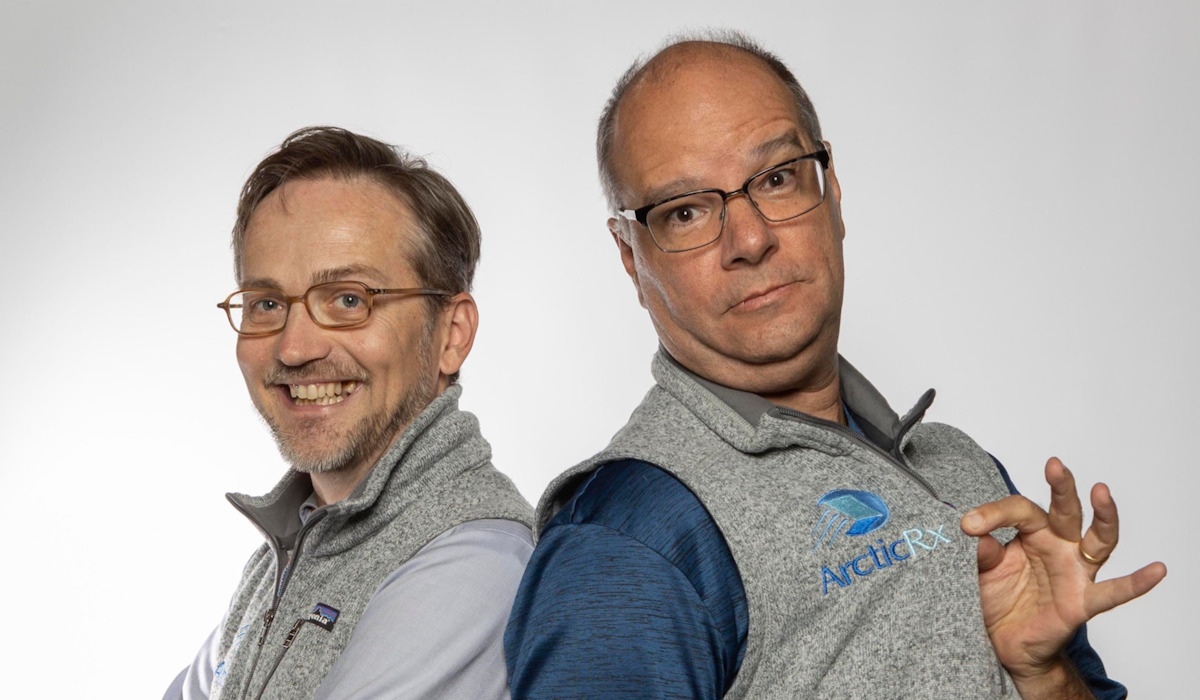
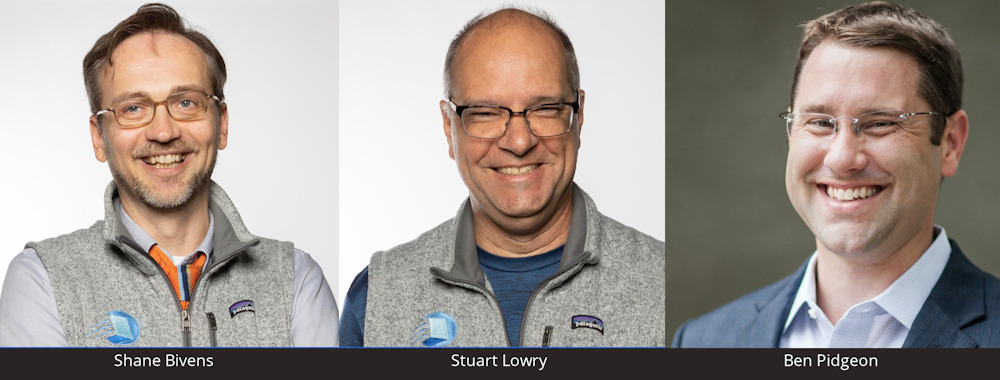
While VisionTech Angels invests in companies from across the United States, we have a sweet spot for Indiana startups. So I was excited when Shane Bivens and Stuart Lowry of ArcticRx reached out to me about pitching to our investors. They had just won the 2023 Innovative Small Business of the Year Award from the Indiana Small Business Development Center and Indiana Economic Development Corporation (IEDC) for their ultra-low temperature transport technology. That definitely got my attention. When they shared details on market trends and unmet needs along with ArcticRx’s product-market fit and traction to date, I invited Shane and Stuart to meet with our Screening Committee. The group was impressed and invited them to present at our June 22nd pitch events. Here’s a preview.
BP: How did you find out about VisionTech Angels? SB: When we started fundraising, we talked to a lot of people and your name kept coming up. “Talk to Ben” is something we heard a lot. When the stars aligned, we reached out to you and VisionTech Angels.
BP: Tell me a little about yourselves and your background as entrepreneurs/startups. SB: I got my start in college when someone said, “You look like a guy who could build a website.” So I did. Since then, I’ve been involved in a number of startups and helped organizations scale.
SL: I am a not-for-profit Thoroughbred. I’ve spent nearly all of my career working with non-profits and government agencies, including IEDC, Heartland Film and the Indianapolis Parks Department. I met Shane while working on a food equity concept and we just clicked. I’m a left brain-right brain kind of person and co-founding a disruptive startup like ArcticRx that can do so much good in the world made sense for me.
BP: What’s the backstory on ArcticRx? You launched in 2020 while we were in the throes of the pandemic. Are the two related? SB: Stuart and I were originally focused on another startup product called ChefsFridge we launched in 2019. We were working on our technology, had investors and then COVID hit. There was an immediate need in the pharmaceutical industry for thermal shippers that could keep coronavirus vaccines at a very specific cold temperature from the date shipped until they reached the final destination. So we pivoted to what is now ArcticRx. There was such an urgency for a solution due to the lack of good cold chain shipping options within the United States and across the world. This urgency caused companies to be more open to change, thus we found the perfect moment to bring ArcticRx to market.
SL: You probably saw the headlines where hospital freezers were breaking, and they were scrambling to give the vaccines before they spoiled. In all of this insanity, Shane and I saw an opportunity to pivot to a new shipping container that could be used as both a shipping and storage container for highly temperature sensitive pharmaceuticals. It would help pharmaceutical companies and governments solve huge, costly issues domestically and create new health equity opportunities in other countries across the global, with a special focus on Africa.
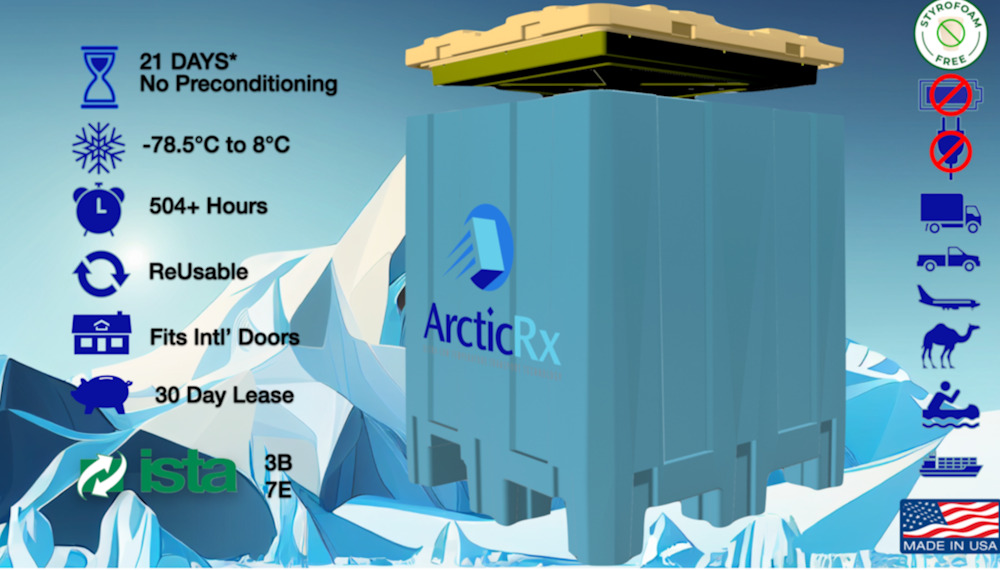
BP: You’ve created what you call “The World’s first Engineered Reusable Non-electrified 21-day ULT Transport and Storage Pod.” Explain. SB: First, I’d like to mention the annual growth rate of cold-chain dependent pharmaceuticals is twice that of shelf-stable medications. So it’s a significant market opportunity. But the other side of the equation is current options don’t cut it in terms of performance, energy use and sustainability.
Our shippers are rugged and capable of protecting temperature-sensitive products for more than 21 days of shipping and storage without a battery or other external energy source. They are made with a durable plastic shell, are Styrofoam free, reusable, stackable for ease of shipping, and lightweight. They can be moved by hand if needed. And we’ve created our technology by tapping into the wealth of expertise found right here in Indiana such as thermal engineering, aerospace and the defense industry, and smart manufacturing.
BP: What role does sustainability play? SL: This is definitely a key driver of our strategy. People hate Styrofoam because it’s not recyclable and yet it’s used everywhere to ship products requiring refrigeration. Based on our meta-analysis, a massive number of current thermal shippers will be regulated out of the market in the next five years because of Styrofoam and other sustainability goals.
SB: Sustainability is integral to ArcticRx. Many cold chain shipping containers are single-use disposables with a large carbon footprint. There’s a lot of waste and expense in shipping containers and frankly people are tired of it. Our products are specifically designed for reusability and for multi-year use. Ideally, they’d be used for two-way shipping. We envision they will be sent to one destination with one product and returned with another. Another plus is our containers do not require a battery or other energy source nor do they need to be transported in refrigerated trucks, saving fuel and lowering carbon footprints.
BP: How is your solution different from others on the market? SB: We like to say our shippers are not an evolution of current technology, but a revolution because we are redefining the category. They’re sustainable, reusable, more affordable than current options, and lastly, stay fully refrigerated for 21 days without a power source.
SL: There is nothing else like it on the market in the passive transport space.
BP: Is it transferable to other industries besides pharmaceuticals? SB: We’re focused on pharmaceuticals which require cold storage now, but definitely the technology can be leveraged across health care for transporting a wide range of products such as blood bags or organs for transplant. ArcticRx will be ideal for relief efforts, war fighter support, medical supplies, and perishable foods.
BP: What kind of intellectual property protection do you have? SL:We have a patent attorney and have completed our freedom to operate analysis and have the green light to apply for patents. Our patent searches showed that we’re free and clear. In fact, our attorney says we’re in rare air as we don’t have any redesign or rework changes.
BP: Where are you in terms of commercialization? SB: We have been very mindful in our development as a company. Since October 2020, we’ve had three distinct phases: engineering, prototyping and contract manufacturer identification, and now sales and marketing. All of our prototypes have been built, tested, and proven so now we’re in the market and having client discovery conversations. We have a number of proposals with defense contacts, global companies and contacts in key African countries. We’ll get into more specifics during our pitch.
SL: It’s a really exciting time! When we get on calls with people—and that includes Indiana companies, other U.S. companies, hospitals, global departments of defense, UNICEF, and many foreign entities—there’s a lot of excitement about what we’re doing. The lead procurement director at UNICEF and others in our conversations have said, “Wow! You’re going to change the world.” They see the possibilities.
BP: What is your revenue model? SB: Our plan is to do long-term leasing to logistics companies with terms of one, three and five years. It’s a common approach in logistics where companies maintain “pools” of reusable packaging that are then leased to companies shipping various products. We will also work with companies on custom applications where we are the “white glove service” for their product packaging and delivery.
BP: What round is this? SB: This is our seed round and our goal is to raise at least $800,000.
BP: What is your planned use of funds? SL: It’s pretty straight forward. We want to quicken our speed to market and that means hiring key people, field testing with potential customers who are anxious to get started, and finally having the capital for manufacturing and warehousing expenses. Right now it’s only Shane and I—which has been great by the way—but we’re at the point where it’s time to move faster and prepare to scale. We’re excited about the field trials and seeing how our products perform with the customers’ products and in their supply chains.
BP: Give me three reasons why VisionTech Angels members should invest. SL: First, we’ve taken the best of Indiana—its manufacturing resources, tech talent, and pharmaceutical companies that will benefit from our products—and created a company that’s ready to take off in a high-end market. We have multiple runways for diversification. Second, we’re a very collaborative company. We always give before we get. Third, we have strong connections within global defense departments and have done technology demonstrations with several military branches that can benefit from our technology. Our first hires will be military veterans. We’re one of the only companies in the state that is part of the U.S. Department of Defense SkillBridge Program that incentivizes veteran hires.
SB: I’ve got another reason.
BP: Sure! SB: We have Indiana’s superpower in spades. We get things done!
BP: Thanks guys! Looking forward to your pitch on June 22.
VisionTech Angels’ Pitch Events will be virtual on Thursday, June 22 at Noon and live at 6 p.m. ET at KSM at 800 E 96th St #500, Indianapolis. Pitch events are open to our members and accredited investors interested in joining our group. To register, check your email for an invitation, go to our Events page where you’ll find the RSVP links, or email Ben Pidgeon at bpidgeon@visiontech-partners.com.
Disruptive startups have the ability to change entire industries. Think about Airbnb and how they disrupted the vacation rental industry. Or Instacart, which is changing how we shop for groceries. Rajan Kumar, founder and CEO of Ateios, our first August Pitch Event presenter, has big plans to redefine the battery industry with a technology called conformal electronics. I have to admit, I had no idea what that was before meeting Rajan. In a nutshell, it’s a battery printed on flexible material that conforms to the application’s requirements. This is the polar opposite of traditional rigid batteries that fit into products designed to accommodate their shape. Rajan’s battery technology is driven by the $6.7 billion primary market demanding thinner, lighter power sources for a wide range of electronics. Here’s a preview of the Ateios story Rajan will share in detail at VisionTech Angels’s Pitch Events later this month.
Ben Pidgeon, Executive Director, VisionTech
BP: How did you learn about VisionTech Angels? RK: I met Oscar Moralez for coffee through the TechStars Accelerator powered by The Heritage Group. After sharing the Ateios story, he suggested VisionTech Angels was a better fit given the stage of the company. So here I am.
BP: Why did you relocate Ateios from the West Coast to Indiana? RK: Actually, we’re bi-coastal. Our business team is located in San Diego to be accessible to Southern California and Silicon Valley. Our R&D and manufacturing team, including myself, relocated to Indiana to take advantage of the Battery Innovation Center (BIC), a $15 million R&D and commercialization center in southern Indiana. We had landed a significant customer and they were concerned about our ability to manufacture. The BIC could help us with scaling our manufacturing. Since we began collaborating with the BIC, we’ve improved our battery capacity by 30%.
BP: Ateios’ focus is “conformal electronics?” What exactly is this? RK: Conformal electronics includes materials, components, and devices that exhibit some degree of mechanical strain tolerance or stretchability. Traditionally, batteries used in electronics are very rigid and shaped like a cylinder or coin. The technology has not changed in more than 40 years. Here’s an example, if you wanted to integrate a heart monitor into clothing, conformable electronics make the device thinner, less bulky, more forgiving with body movement, and infinitely more wearable than a rigid device. Ateios is building paper-thin, flexible batteries that enable this.
BP: Explain Ateios and the problem you’re solving? RK: Basically, what we’ve done is enable any material to be printed with energy with three key attributes: our batteries are paper thin, they achieve 2-5 times the energy density of coin cells and they’re customized to the needs of the product. These printed, stretchable batteries satisfy the trend of ever thinner electronics and personal devices. There is tremendous growth in etextiles used in the fitness and medical device industries; shirts and other garments that can monitor heart rates, blood pressure, diabetes, etc. Another application is industrial IoT such as sensors that monitor temperature, humidity, and vibrations in a manufacturing or distribution environment. Rigid batteries just don’t work for these applications.
Rajan Kumar, CEO, Ateios
The other major problem we’re solving is how to produce these batteries at a cost attractive to customers. We can manufacture our batteries 10 times faster and at one-third the cost of our competitors. This will drive innovation and adoption.
BP: What kind of IP do you have? RK: Our company started with the invention of the first printed, stretchable battery. We have progressed a portfolio of intellectual property structured around systems, analytics, materials, and technologies that are needed to reshape batteries through rapid, custom manufacturing.
BP: What’s your business model? RK: Our goal is to manufacture and sell the batteries to customers. We plan to build our manufacturing facility in Indiana as the state has deep experience with battering technology and a strong manufacturing presence. We have also received incentives from the Indiana Economic Development Corporation (IEDC) to locate here.
BP: How big is the market? RK: Huge. Primary batteries for electronics, typically zinc oxide, is a $6.7 billion market. The rechargeable battery market is a $15 billion market. We are concentrating our efforts on the primary battery market such as wearable devices first. However, we also will pursue larger opportunities in industrial IoT space that includes soft robotics and complex sensors used by global companies like Amazon and others for asset tracking.
BP: Do you have competitors? RK: ThinFilm in San Jose, California, is our largest competitor and they’re looking at one billion in unit sales by 2025. There are smaller companies as well. Ateios’ advantage is that we’ve achieved price parity with coin batteries, and we have great partnerships to scale manufacturing. The latter has been a challenge for competitors.
BP: What will this fundraising round be used for? RK: We are in the process of closing an $800,000 investment round and plan to use the funds to convert three to four customers – two in wearables and two in industrial IoT – into multi-million-dollar customers. We also plan to strengthen our IP and increase our customer pipeline to 10 to 12 customers. In addition, our recent success with NSF SBIR proposal, we are confident the funding round will give us beyond 18-month runway to achieve these goals.
BP: Why should VisionTech Angels invest in Ateios? RK: We have a compelling product with paying customers. Our management team has more than 30 years of experience in the semi-conductor and battery industries, giving us tremendous industry credibility. Our partners—Techstars, The Heritage Group and the Battery Innovation Center—are exceptional. Lastly, we will be extremely efficient in our use of funds.
BP: Sounds great! We’re looking forward to the pitch events.
To learn more about Ateios, visit their website. View VisionTech Angels’ August Pitch Events schedule here. The pitch events are open to our members and accredited investors interested in joining our group. To reserve your spot, check your email for an invitation or email Ben Pidgeon at bpidgeon@visiontech-partners.com.
VisionTech Angels is pleased to share the following news on our portfolio company, React Mobile.
SEATTLE (May 26, 2020) —React Mobile, a robust, open, cost effective and flexible panic button safety platform, today announces it has raised $6 million through a new strategic partnership with publicly traded Brady Corporation (NYSE:BRC). Headquartered in Milwaukee, Wisc., and founded in 1914, Brady is one of the oldest and most successful privately controlled family businesses in the U.S. The company manufactures solutions that identify and protect people, products and places. Together, React Mobile and Brady will jointly develop new solutions that help customers increase safety, security, productivity and performance to further their shared mission of promoting employee safety everywhere.
Robb Monkman, CEO, React Mobile
“This strategic partnership with Brady is a force multiplier that will enable React Mobile products to reach new verticals where our safety solutions can make a massive impact towards making the world a safer place,” said Robb Monkman, React Mobile CEO. “As we leverage Brady’s infrastructure, our installation capabilities will grow exponentially, from installing 30 sites per month to more than 100. This investment solidifies our financial stability and enables us to support hundreds of enterprise customers worldwide.”
React Mobile’s best-in-class safety platform helps businesses keep their employees safe. Their system enables management to deploy resources to the exact location of an emergency within seconds of an alert, getting help to where it is needed fast. The React Mobile platform utilizes GPS geolocation and Bluetooth® beacon technology to provide unparalleled accuracy to locate an employee in distress. The company has the largest hotel customer base of any panic button technology.
Brady Corp. offers a unique combination of software, services, and integrated solutions designed to help businesses build, manage and maintain world-class safety and asset management programs. Brady’s products include high-performance labels, signs, safety devices, printing systems and software. The company has a diverse customer base in electronics, telecommunications, manufacturing, electrical, construction, medical, aerospace and a variety of other industries.
“Brady and React Mobile are synergistic companies that build solutions for a smarter, connected world,” said Michael Nauman, Brady President and CEO. “Like Brady, React Mobile’s panic button solutions outperform their competition, and both companies are dedicated to solving customers’ problems and making their operations more efficient and effective. Our financial support combined with React Mobile’s hospitality domain expertise will enable each to execute their visions and exceed growth projections more rapidly and broadly. This strategic partnership is truly a win-win.”
About Brady Corporation
Brady Corp. is an international manufacturer and marketer of complete solutions that identify and protect people, products and places. Brady’s products help customers increase safety, security, productivity and performance and include high-performance labels, signs, safety devices, printing systems and software. Founded in 1914, the Company has a diverse customer base in electronics, telecommunications, manufacturing, electrical, construction, medical, aerospace and a variety of other industries. Brady is headquartered in Milwaukee, Wisconsin and as of July 31, 2019, employed approximately 6,100 people in its worldwide businesses. Brady’s fiscal 2019 sales were approximately $1.16 billion. Brady stock trades on the New York Stock Exchange under the symbol BRC. More information is available on the Internet at www.bradycorp.com.
About React Mobile
Founded in 2013, React Mobile is a global leader in providing panic button solutions for hotels. Our best in class hospitality safety platform helps hotels keep their employees safe. The React Mobile system is an open and flexible platform that allows management to deploy response resources to the exact location of an emergency within seconds of an alert, getting help to where it’s needed anywhere on or off property. In an emergency quick response times are essential and React Mobile gives you the tools to react fast. For more information, visit www.reactmobile.com.
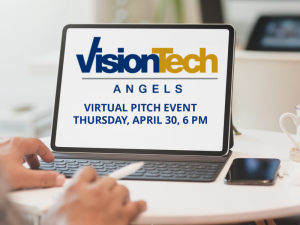
Working from home these past few weeks has been a challenge, particularly when you have two parents who work and three small kids you’re trying to keep on track with school lessons. The one family member who has been very happy with the new routine is our dog. He’s loved the extra attention. Our pets are big business. According to a survey conducted by the American Pet Products Association, 67% of all Americans have a dog. And those dogs – plus, cats, horses, hamsters and other pets – need regular veterinary care. Sam Razor, the co-founder and CEO of Hippo Manager, is helping vets across the country run their practices more efficient and profitably. He is presenting at VisionTech Angels’ Virtual Pitch Event Thursday, April 30 at 6 pm. I hope you enjoy this sneak preview!
Sam Razor, Hippo Manager
BP: Tell me a little about how Hippo Manager and the market problem being solved. SR: Veterinary practices are often woefully behind in technology – 77% are operating on 15-year-old plus server-based technology, and there are a surprising number still working from paper. They haven’t had the influence from insurance companies to standardize and adopt new technologies like the human medical field. Not only does this gap in technology create inefficiencies, but also causes lost revenue for the practices because services and inventory supplies aren’t captured and billed, and now there’s the added pressure of operating safely during a pandemic.
Hippo Manager is the largest independently-owned, cloud-based, veterinary practice management software provider in the United States. We provide more features than any product on the market including SOAP notes/medical records, patient scheduler, reporting, point-of-sale, inventory, reminders, payment processing, reporting, and more.
BP: What is your value proposition? SR: Our cloud-based product means that veterinarians and staff can access medical records and files from anywhere and anytime, which has been tremendously helpful for telehealth, but also in normal day-to-day operations by allowing the flexibility to do curbside check-ins and in-exam room checkouts, both of which are is quickly becoming the best standard of care for patient experience.
Hippo Manager is priced in a straightforward way and at a substantially lower price than the total cost of ownership of a server-based options. Hippo Manager is very easy to use, and we also offer unlimited support and unlimited training, which is unique in our industry. We offer this level of service because it’s just good business for our customers to keep their new staff up-to-date on their daily tools. Our practices see 22% growth in revenue year-over-year versus industry growth of 4%. This is attributable to correctly captured charges, time savings, and better reporting to find growth areas.
BP: What’s your revenue model? SR: We’re a software as a service with addition add-on features creating additional revenue streams.
BP: Who are your competitors? SR: Our primary competition is server-based legacy systems. Many veterinarians adopted server-based solutions 10 to 20 years ago. Those systems are now obsolete. The companies selling them are not software companies so these systems are not being updated.
Ben Pidgeon, Executive Director, VisionTech
BP: What are the barriers to adoption? SR: Historically, veterinary practices have been slow to adopt technology. Those with antiquated legacy systems aare reluctant to change to a new system because the old systems were so difficult to learn. They want to avoid repeating that experience. While Hippo is very easy to use, it does require upfront training of the vets and their staff. Some of their routines will change, too. People can be resistant to change, especially in busy practices.
To counter this, we have an online learning lab with more than 90 short video tutorials. We also do online training and Q&A sessions to answer questions in real time, and recently launched new coaching services to help veterinarians with the change management challenges that go beyond learning how the software works. Once people start using Hippo and seeing the financial impact on their practice, they don’t want to go back.
BP: What is your traction to date? SR: Very good! We have 400 practices on the platform, representing 6,000 users. Of these, 85% are small animal practices. The other 15% are large animal practices for horses and other livestock. We’re a godsend for them as they typically see their patients at farms and they can login into our cloud-enabled platform from an ipad in their truck instead of doing hours of paperwork after returning to their office.
BP: How big is this investment round and how do you plan to use the funds? SR: This is a $750,000 raise. We plan to use it to scale our sales and marketing efforts, including developing channel sales. There will also be some additional product development.
BP: How has the coronavirus pandemic affected your business? SR: Veterinary clinics are considered essential business so unlike other businesses they remain open and treating patients. However, they’re trying to minimize as much direct contact as possible. Hippo can help with curbside check-in, we allow pet owners to pay by text and email rather than credit card, checks or cash, and we also integrate with telemedicine platforms where people can text in videos of their pet for the vet to determine if the pet needs to come in immediately or at a later time. And, thanks to being a cloud solution, vets can login from home, continue to work, and take calls if needed rather than all staff being in the office. Hippo’s features challenge the status quo of old processes and with the pandemic, people are taking a closer look at our solution.
BP: Why should VisionTech Angels invest in your company? SR: Three reasons. We’re located in “flyover country” and are a high performing company with a practical valuation. Our business model is proven and with fuel, we believe our growing customer base will take off. Finally, the pandemic has underscored the need for cloud-enabled solutions that enable veterinary practices to stay open, treat their patients, mitigate risks, and lastly, do more of the job remotely.
BP: Last question: do you have a dog? SR: I do. My family has a rescue dog named George Harrison who appears to be a Corgi-Dachshund mix and two cats. I have never met a dog like George; he’s silly, loves to wrestle, fetch and play. Great dog!
To learn more about Hippo Manager, visit their website. VisionTech Angels’ April 30 Virtual Pitch Event is open to our members and accredited investors interested in joining our group. To reserve your spot, email Ben Pidgeon at bpidgeon@visiontech-partners.com.
INDIANAPOLIS (March 2, 2020) – – VisionTech Partners Managing Partner Tony Petrucciani knows a thing or two about valuing startup companies. He founded his own startup, Single Source Systems, while in college; invested in more than 40 early-stage companies; and today plays an active role in screening the nearly 400 startups that approach VisionTech each year for a chance to compete for angel investment. Now, Petrucciani is sharing his expertise at valuation discussion hosted by the Venture Club of Indiana.
The luncheon event, “How Do I Value My Company for the First Round of Funding,” is set for Thursday, March 5 at 11:30 a.m. at the Columbia Club. The discussion also includes Parker McDowell, managing director of Rev1 Ventures of Columbia, Indiana, and will be moderated by Chelsea Linder, managing director of gener8tor. The event is designed to be insightful for startups as well as seasoned investors seeking a deeper understanding of how companies come to terms on their initial valuations. Valuations can cause disconnects between entrepreneurs and investors due to the risk of a down round of funding where funds are raised using a lower valuation than earlier rounds.
Petrucciani has more than three decades of experience in business leadership and management. He serves as CEO of Single Source Systems and CIO of CasePacer. He first developed a passion for entrepreneurship while a student at Ball State University and now is an advisory board member of the Ball State University Entrepreneurship Center. Petrucciani has been involved with VisionTech Partners as a leader and investor since 2014.
Tony Petrucciani has been an entrepreneur since his senior year in college, when he founded Single Source Systems in Fishers, Indiana, in 1985. Today, he serves as a managing partner in VisionTech Partners, bringing more than three decades of experience in successful business leadership and management to our organization. Tony has personally made 40 + investments into early stage companies.
Since its inception in 1984, the Venture Club of Indiana has served as a catalyst for increased investing in Indiana businesses. The all-volunteer organization is dedicated to helping entrepreneurs, investors and the professional community convene to network.
In his first job out of college, Steve Sehy earned his CPA while at former Big Eight accounting firm Arthur Anderson. Instead of number crunching, Steve jumped into software development, creating accounting software for the firm that eventually became global consulting firm Accenture. Twenty years later, he applied his CPA as an auditor for one of the top U.S. accounting firms. Steve now provides fractional CFO services to SaaS companies. Later this month he’s leading a special VisionTech seminar for the group’s portfolio companies – specifically those without CFOs – preparing for their next capital raise. VisionTech is pleased to support the success of our portfolio companies. Here’s more of Steve’s story:
VT: The name of the seminar is “Igniting Your Next Capital Raise.” This is obviously a hot topic for early growth companies.
SS: Absolutely! This seminar is specifically for the CEOs of VisionTech portfolio companies and other invited startups that have successfully secured angel funds, have momentum and are planning another capital raise in the next 24 months. A professional money capital raise will be a totally different experience; a lot like making the leap from Double-A to the major league. This seminar gives CEOs the game plan they need to prepare for and successfully ignite future fundraising efforts.
VT: What’s the difference between fundraising with angels and Series A rounds?
SS: Angel investors get in on the ground floor of companies so our investment decisions are often based on a company’s leadership, business model and plan, and early successes. In later rounds, investors are laser focused on a company’s financials. Accounting systems must be in place and numbers have to be tight if professional investors are going to trust and ultimately invest.
VT: What was your “ah-hah!” moment regarding the importance of sound accounting systems in capital fundraising?
SS: I was working as a contract CFO for a SaaS company in the K-12 education market that had self-funded for 10 years. They needed an infusion of capital, but even with 20% annual growth, they couldn’t raise the money. One of the challenges was an accounting system that was not based on GAAP. So we attacked that first and by working through other issues to get their financial house in order, they became an attractive acquisition target. A private equity firm made an offer and the deal closed in 30 days. Having the right accounting infrastructure and presenting accurate numbers – in this case, GAAP numbers versus billed or cash – was critical for professional investors and led to a quick close.
VT: Do startup companies overlook the importance of financials?
SS: They don’t overlook financials; they just get busy. What happens is this: the CEO is running the company, marketing, selling, and looking ahead to the next market, the next version of the software, product or service, the next raise. Basic operations sometimes take a back seat. When it’s time to start the next raise, companies aren’t totally prepared. Often they don’t know what they don’t know in terms of what professional investors are looking for in accounting and financial reporting and forecasting.
VT: What will CEOs walk away with from this seminar?
SS: The big takeaway is they will learn what they need to do to meet the financial expectations of potential investors. Each participant will leave the seminar with a to-do list of financial/accounting projects that should be completed before they approach investors for professional money growth financing. If they complete their to do list, they will ignite their fundraising efforts.
VT: Is their something extra for SaaS companies?
SS: Yes, we’ll be taking a deep dive into SaaS accounting for 30 minutes after the main session. So if your company is SaaS, you’ll want to stick around.
VT: There are only 15 spaces for this VisionTech event, Igniting Your Next Capital Raise, on Saturday, January 27, 9-11 am at Katz, Sapper & Miller, a VisionTech sponsor. Click here to RSVP. Event is open to VisionTech Portfolio Companies and guest startups.














 BP: Do you have competitors?



 BP: Last question: do you have a dog?